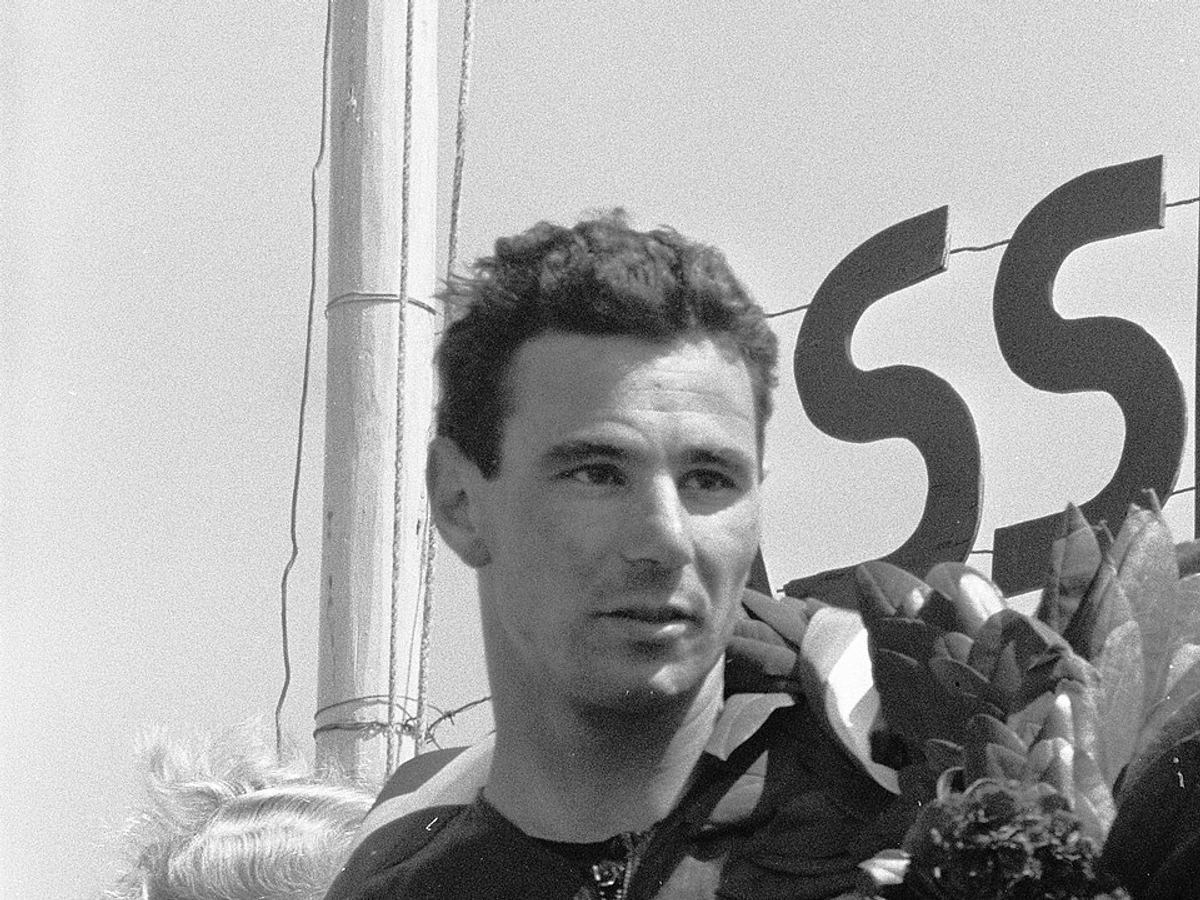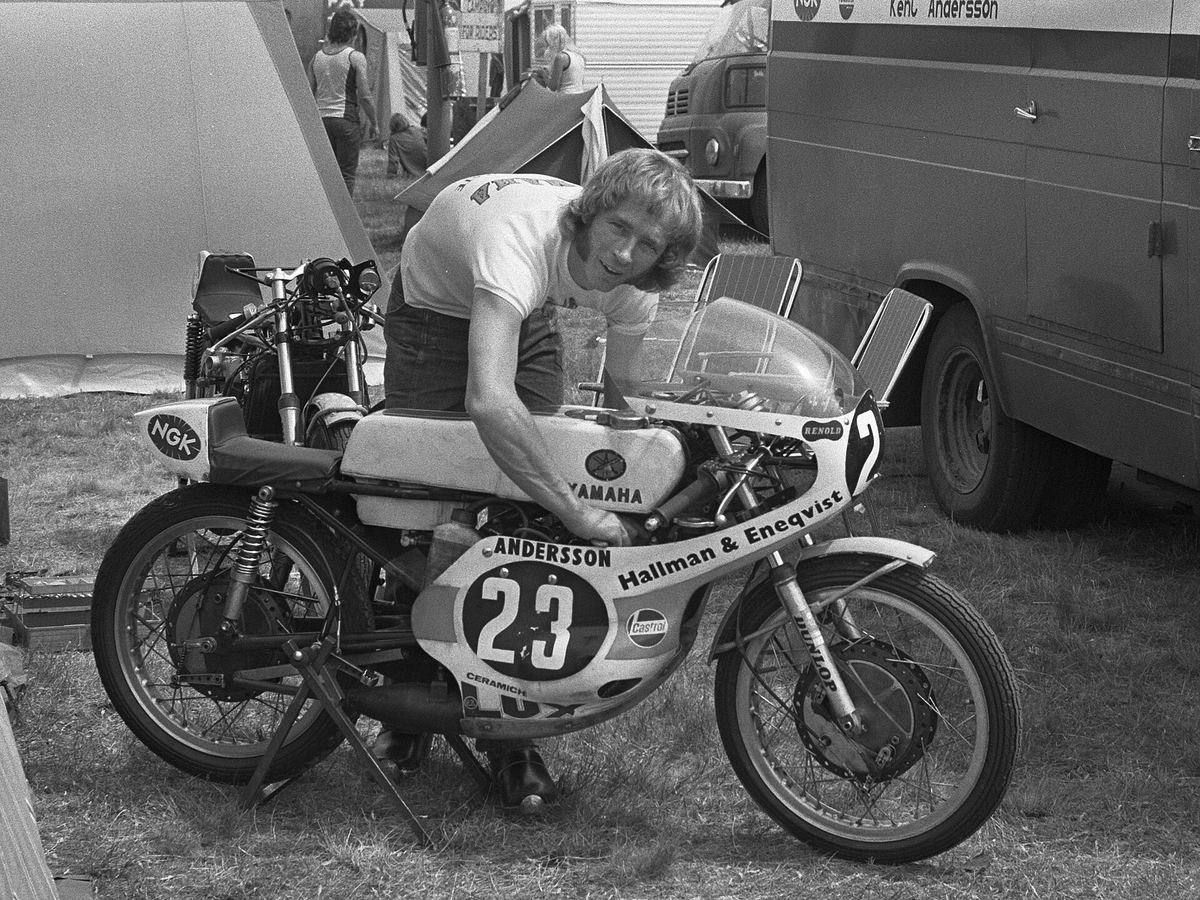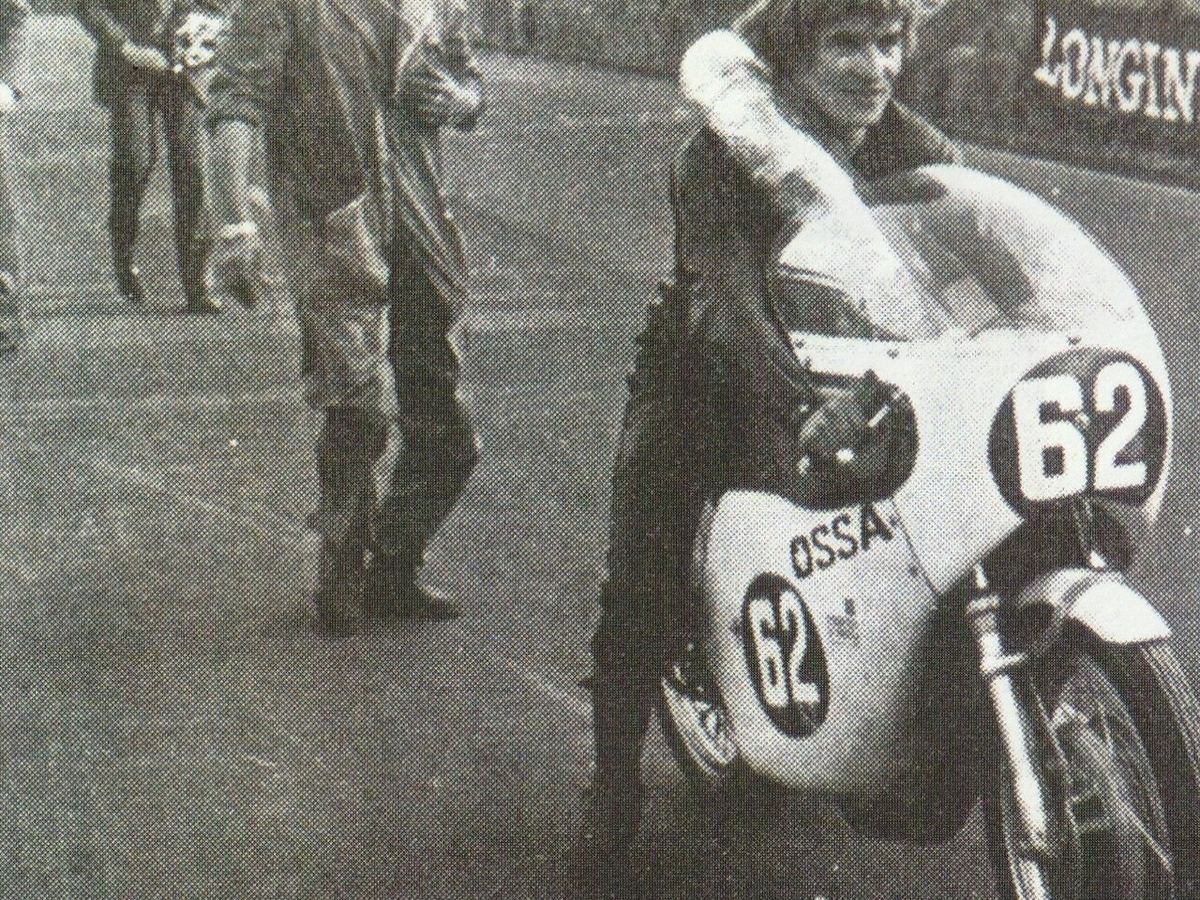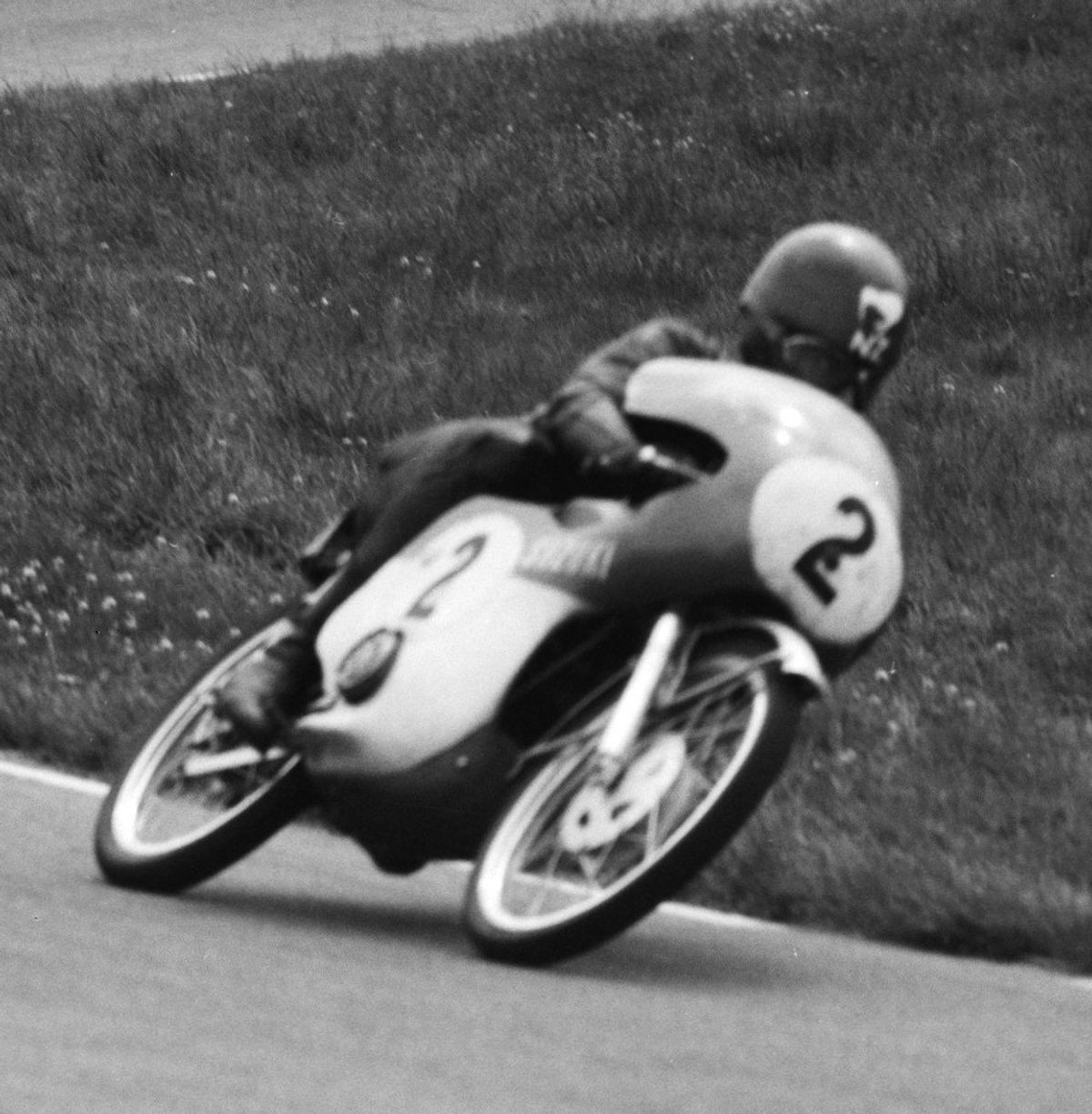
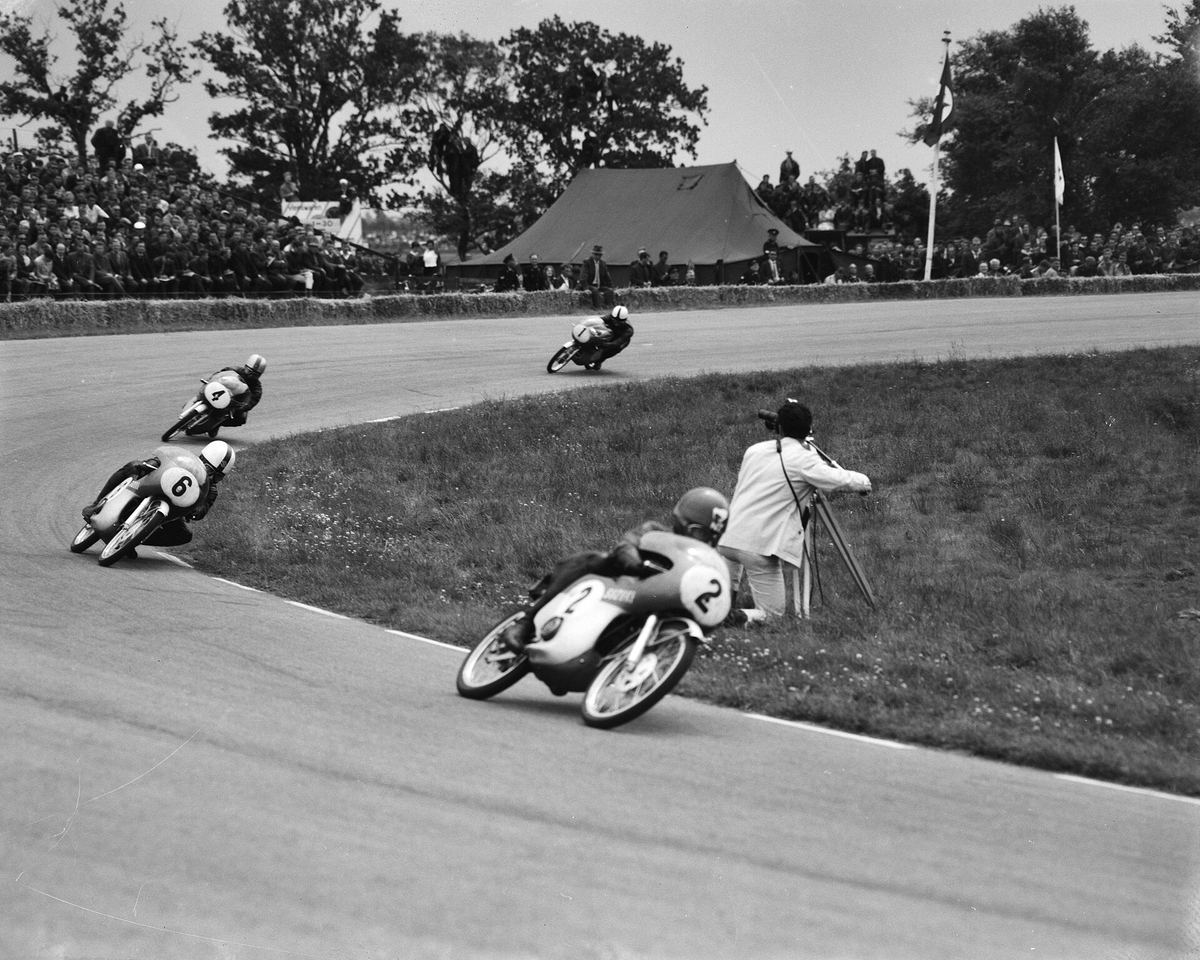
Hugh Anderson (2) in the 50cc race at Assen, 1963, the year he won both the 50cc and 125cc world titles for Suzuki.. Photo: Joop van Bilsen / Anefo / Nationaal Archief, CC0
The 50cc race at the 1963 Japanese Grand Prix, the first world championship round ever held in Japan, was run at Suzuka on 10 November in perfect sunshine, in front of 120,100 people. It was the last race of the season, and it would decide the title between Hugh Anderson's Suzuki and Hans-Georg Anscheidt's Kreidler.
Luigi Taveri took the lead on a Honda twin and simply drove away, gaining what Cycle World estimated at 100 yards a lap. Anscheidt ran second. Then, on the second lap, the Kreidler stopped with what the magazine described as either a seized big end or a seized piston. Anderson inherited second place, finished 31.9 seconds behind Taveri, and became world champion.
Cycle World's reporter wrote that Anderson had "backed into the 50cc crown". It hardly mattered how. He had already won the 125cc world title that year, with six victories, and with the 50cc title he became the first Suzuki rider to win two world championships in one season. He remains the only New Zealander to have won a Grand Prix world title.
Hugh Anderson, from Ohinewai to the Continental Circus
Anderson was born on 18 January 1936 in Huntly, in New Zealand's Waikato, and grew up on a dairy farm at nearby Ohinewai. He first rode a motorcycle on his mother's farm at nine. By 12 he was riding, and crashing, his older brother's bike, and at 14 he rode a motorcycle to school. He also played rugby league for Huntly United, in the same side as Ginger Molloy, another future Grand Prix rider.
In 1946, aged ten, he read the reports of racing returning to the Isle of Man. "I decided I'd like to go there one day but these were gods and I couldn't do that," he told the Waikato Times decades later. At 17 he entered his first dirt bike event on a converted road bike he had built himself and won every race. By 20 he was road racing, and by the end of the 1950s he had a string of New Zealand titles.
In March 1960 he left for Europe and joined the Continental Circus, the travelling band of privateers who raced from one meeting to the next for start money. He later described the culture shock of going from Ohinewai to London. According to the review of his autobiography in Motorcycle Classics, he made his first Grand Prix start under the name of a Rhodesian rider, Shaun Robinson. His first race in the world championship was the 1960 Junior TT, and he finished that season seventh in the 350cc standings on an AJS.
Suzuki was new to Europe then; it had first raced at the TT in 1960. Anderson made contact with the team in 1961, just as it arrived to race in Europe, and became one of its first contracted Western riders. He raced its 50s and 125s, and occasionally its 250s, while keeping his British singles for the bigger classes; in 1962 he rode for AJS and Matchless in the 350cc and 500cc races.
What changed Suzuki's fortunes was Ernst Degner. The East German MZ rider defected to the West in 1961 and brought Walter Kaaden's two-stroke knowledge to Japan. In 1962, the first year of the 50cc world championship, Degner won the title for Suzuki. Anderson won the last round of the season in Argentina in both the 50cc and 125cc classes, Suzuki's first win in the 125s.
Two small two-strokes
For 1963 Honda withdrew from the 50cc class, apart from a single entry at the final round, and the title became a fight between Suzuki and Kreidler. The German factory had only one works rider left, Anscheidt, but his machine had a gearbox that AMCN describes as 12-speed, to keep a tiny engine on a narrow power band.
Suzuki's RM63 50 was an update of the 1962 bike: a 49.64cc single-cylinder two-stroke with rotary disc valve induction, making about 11 PS at 13,000 rpm. The 125cc RT63 was new, an air-cooled twin with disc valves, and according to Motorcycle Classics a great deal of work had gone into heat dissipation to stop the seizures that had plagued the early Suzukis. It made 25.5 PS at 12,000 rpm and could reach 184 km/h.
Anderson was now Suzuki's team leader. Around him were Degner, the Austrian Bert Schneider, Frank Perris, and Japanese riders including Mitsuo Itoh, Isao Morishita and Michio Ichino.
1963: six wins in the 125s, a fight in the 50s
The 125cc championship was the one Anderson controlled. Taveri won the opening round in Spain and Degner won at Hockenheim. From then on, Anderson won in France, at the Isle of Man TT, where he also set the class lap record, at Assen, at the Ulster Grand Prix, at the Sachsenring in East Germany and in Finland. He finished with 54 points counted to Taveri's 38 and Jim Redman's 35, and Suzuki took its first 125cc constructors' title.
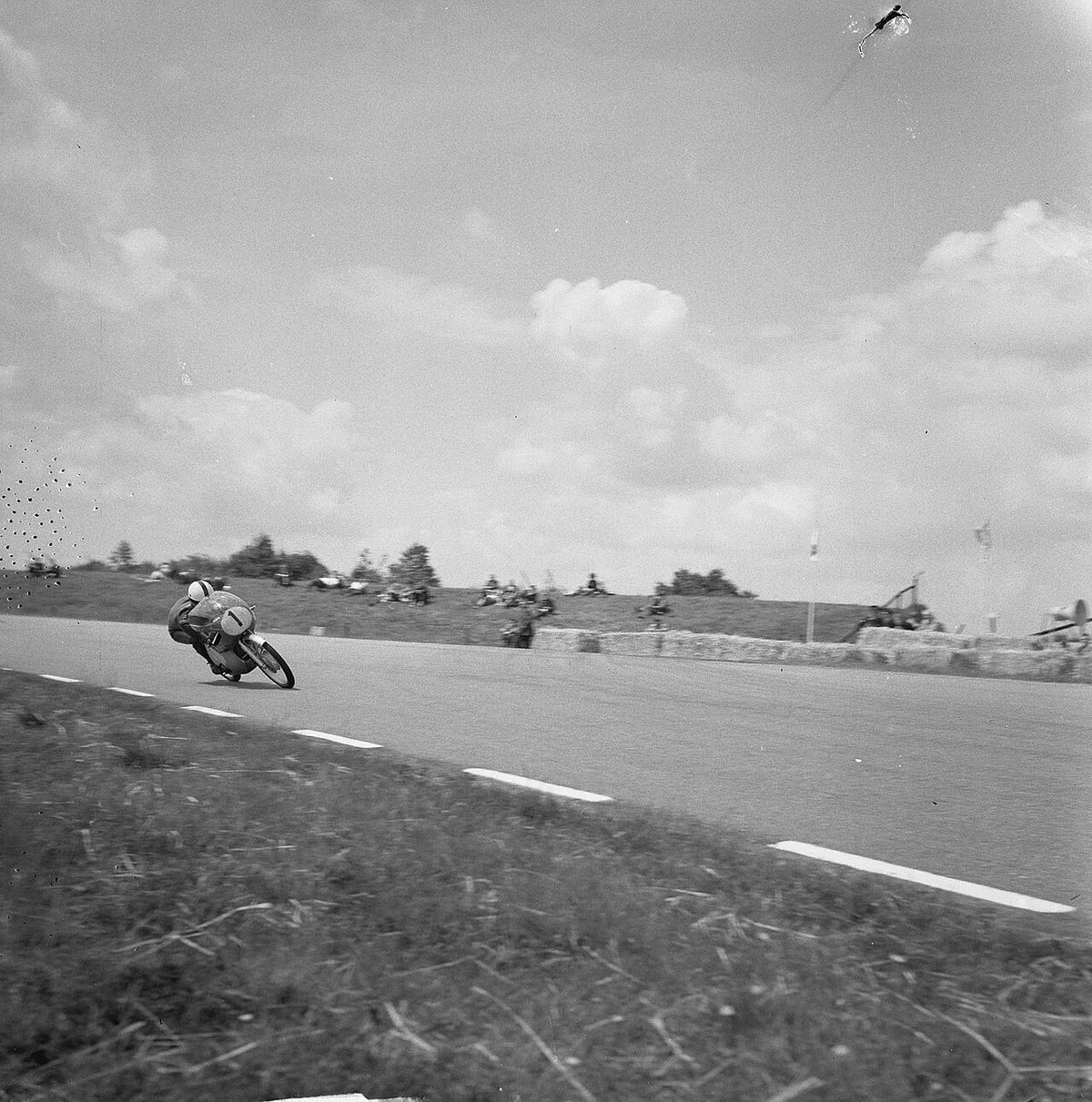
The 50cc championship was a different story. Anscheidt won the opening round at Montjuïc, with Anderson second. Anderson won at Hockenheim, leading a Suzuki one-two-three ahead of Morishita and Degner. Anscheidt won in France. At the TT, Itoh won, becoming the first, and so far the only, Japanese rider to win a TT race; Anderson was second. Degner won at Assen with Anderson second again, and Morishita won at Spa, where Anderson was fourth.
At Tampere in Finland, Cycle World reported, one point separated Anderson and Anscheidt at the start. Anderson took the lead on the second lap "looking like a winner", then fell off on lap four. He rejoined in fifth and recovered to third, behind Itoh, while Anscheidt won.
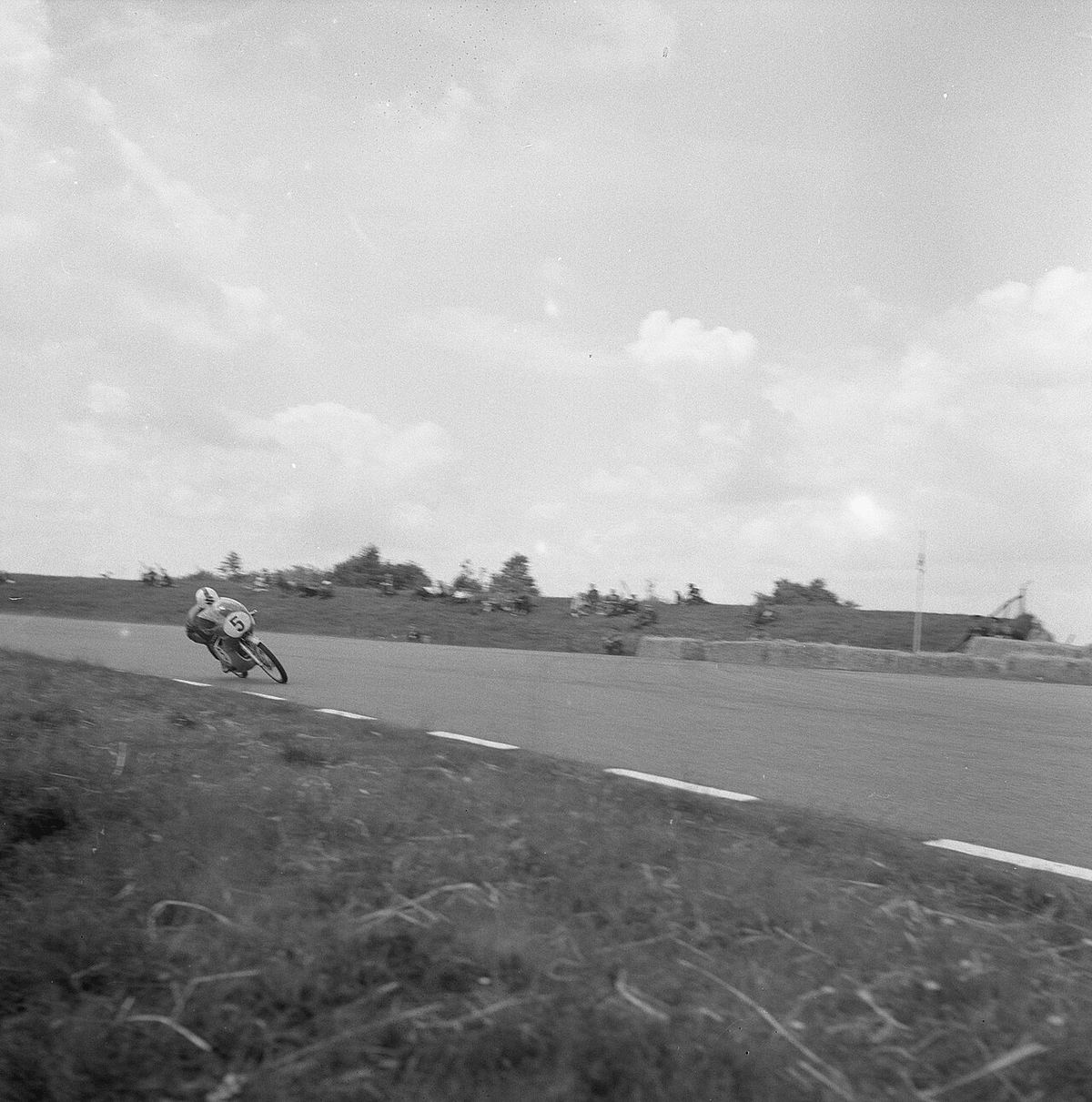
Anscheidt arrived at the Argentine Grand Prix in Buenos Aires as championship leader, but he was injured in practice and could not start. Anderson won, with Degner second. Then the teams flew to Japan, where they practised at Suzuka day after day. Cycle World's preview made Anderson the favourite: he had more laps of Suzuka than Anscheidt, and he was a sentimental favourite for riding a Japanese machine. The Kreidler's failure on the second lap settled it.
The 125cc race at Suzuka, with the title already decided, went less well. Anderson dropped back from lap six, "sliding in the corners", probably on an over-inflated rear tyre, and finished fifth. His team-mate Perris won.
After the flag
The 1964 season opened at Daytona in February, at the United States Grand Prix, and Anderson won both the 50cc and 125cc races. He kept the 50cc title that year after a season-long fight with Ralph Bryans on the Honda, finishing with four wins and 38 points to Bryans's 30. In the 125s, Taveri and Honda took the title, with Anderson third.
In 1965 he won seven 125cc Grands Prix and took his fourth world title, on a water-cooled twin that now had nine gears. His last race for the factory was the 1966 Japanese Grand Prix at Fuji. Then he stopped, to Suzuki's surprise. He had won 25 Grands Prix and finished on the podium 48 times in 68 starts, and won two TTs.
He did not stop riding. Suzuki offered him a contract to race its motocross bikes; he turned it down and worked as a development rider instead, helping the factory build the motocross machine that would win it more world titles. He then raced the European motocross internationals on CZs, finishing in the top four in more than 40 events, and won several New Zealand motocross titles before retiring from that too, in 1973, aged 37.
Back home he helped set up the New Zealand Classic Motorcycle Racing Register in the late 1970s and early 1980s, and raced classic machines in New Zealand, the Netherlands and Australia. In 2008, aged 72, he set his fastest ever lap at Pukekohe on a 1961 Manx Norton. He was appointed MBE in 1994 for services to motor sport, entered the New Zealand Sports Hall of Fame in 1995 and was named a MotoGP Legend in 2022. In 2014 he published his autobiography, Being There, which he wrote, designed, had printed locally and sold himself.
Why it still matters
New Zealand has produced plenty of fast motorcycle racers. Kim Newcombe led the 500cc world championship in 1973 on a König, and was killed before the season ended. But Anderson is still the only New Zealander to have won a Grand Prix world title, and he won four.
His titles came at the start of the two-stroke era, when small Japanese factories were learning how to make tiny engines rev to 13,000 rpm without seizing. Anderson was part of that learning. He helped develop the machines he raced, and later did the same for Suzuki's motocross programme.
The boy who read about the Isle of Man in 1946 and thought its riders were gods went on to win there twice. At Suzuka in 1963, he won a world title by finishing second, half a lap behind the winner, because he was still running when it mattered.
Quick answers
Who was Hugh Anderson?
Hugh Anderson is a New Zealand motorcycle racer, born in Huntly in 1936, who won four world titles for Suzuki: the 50cc and 125cc championships in 1963, the 50cc in 1964 and the 125cc in 1965. He also won two Isle of Man TTs and later raced motocross in Europe.
How did Hugh Anderson win the 1963 50cc world championship?
The title was decided at the final round, the first Japanese Grand Prix at Suzuka on 10 November 1963. Anderson's rival Hans-Georg Anscheidt retired on lap two when his Kreidler seized. Anderson finished second behind Luigi Taveri's Honda and took the title.
What bikes did Hugh Anderson race in 1963?
Anderson raced Suzuki's RM63 in the 50cc class, a single-cylinder rotary-valve two-stroke making about 11 PS at 13,000 rpm, and the RT63 in the 125cc class, an air-cooled rotary-valve twin making 25.5 PS at 12,000 rpm. He won six 125cc Grands Prix on the RT63.
Has any other New Zealander won a motorcycle Grand Prix world title?
No. Hugh Anderson remains the only New Zealander to have won a Grand Prix motorcycle world championship. Kim Newcombe came close in 1973, leading the 500cc championship on a König before he was killed in a non-championship race at Silverstone.