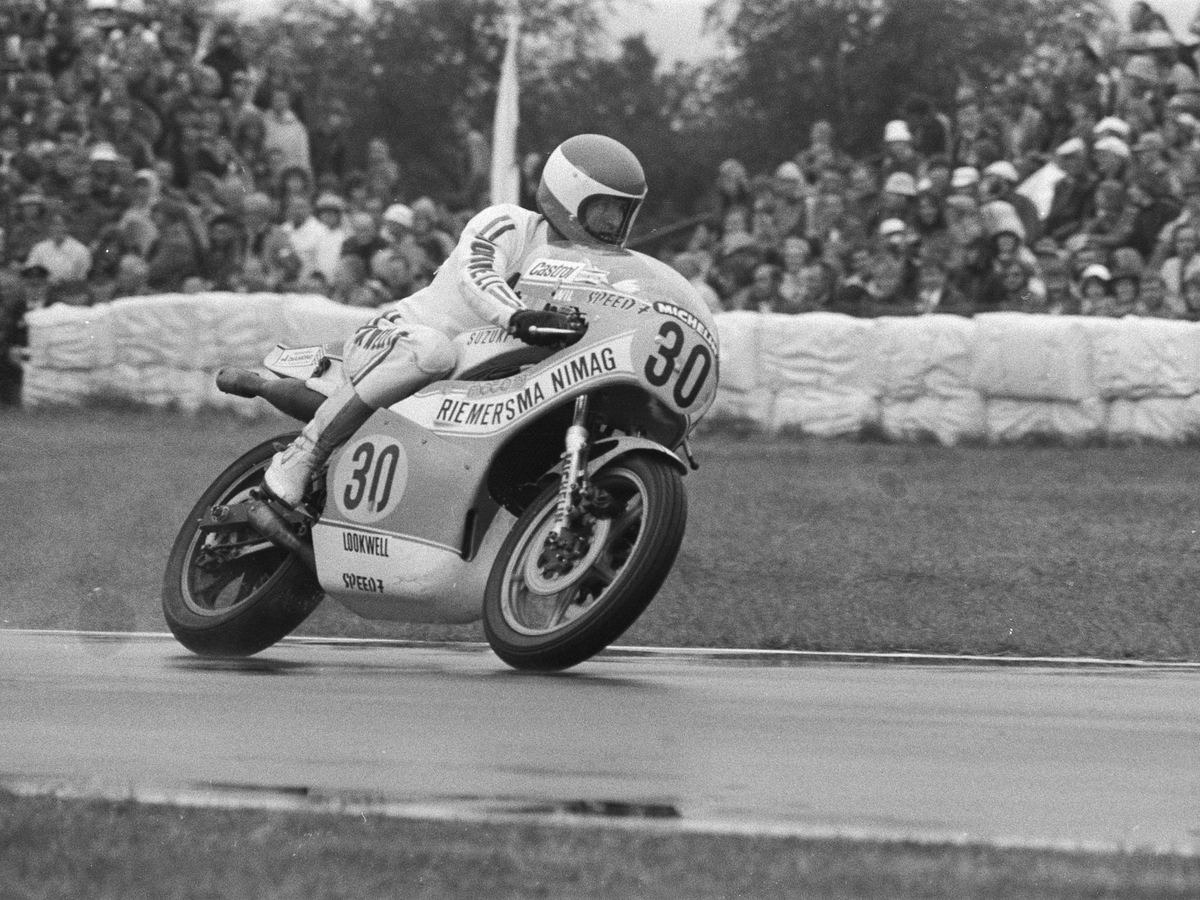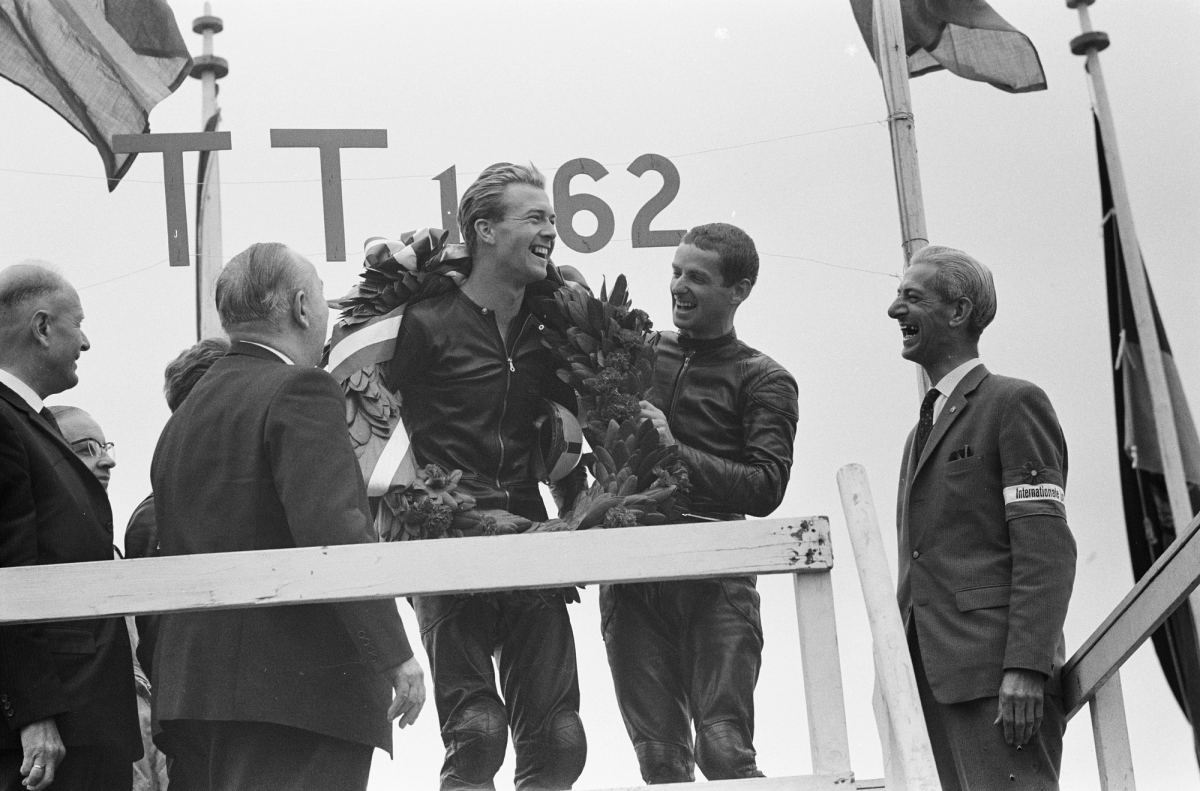
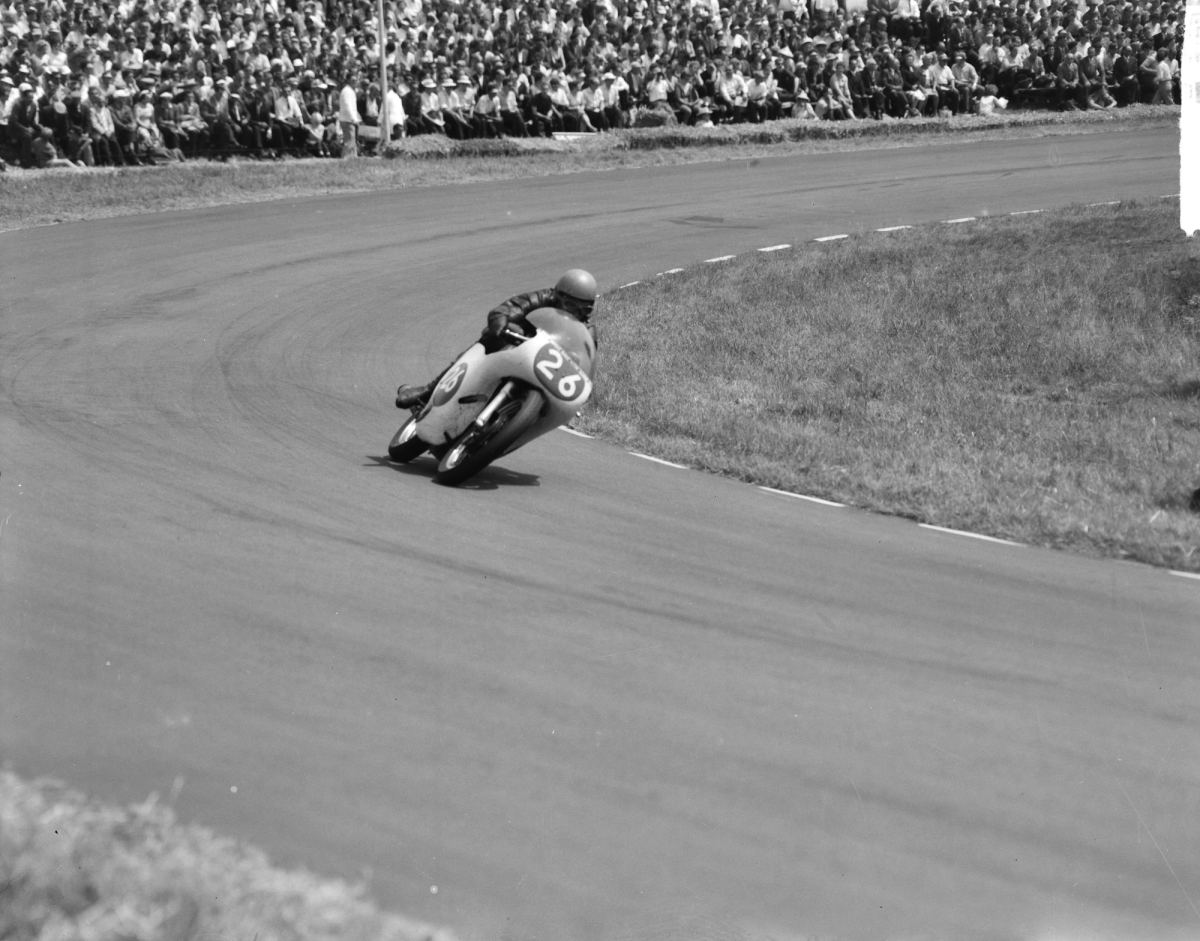
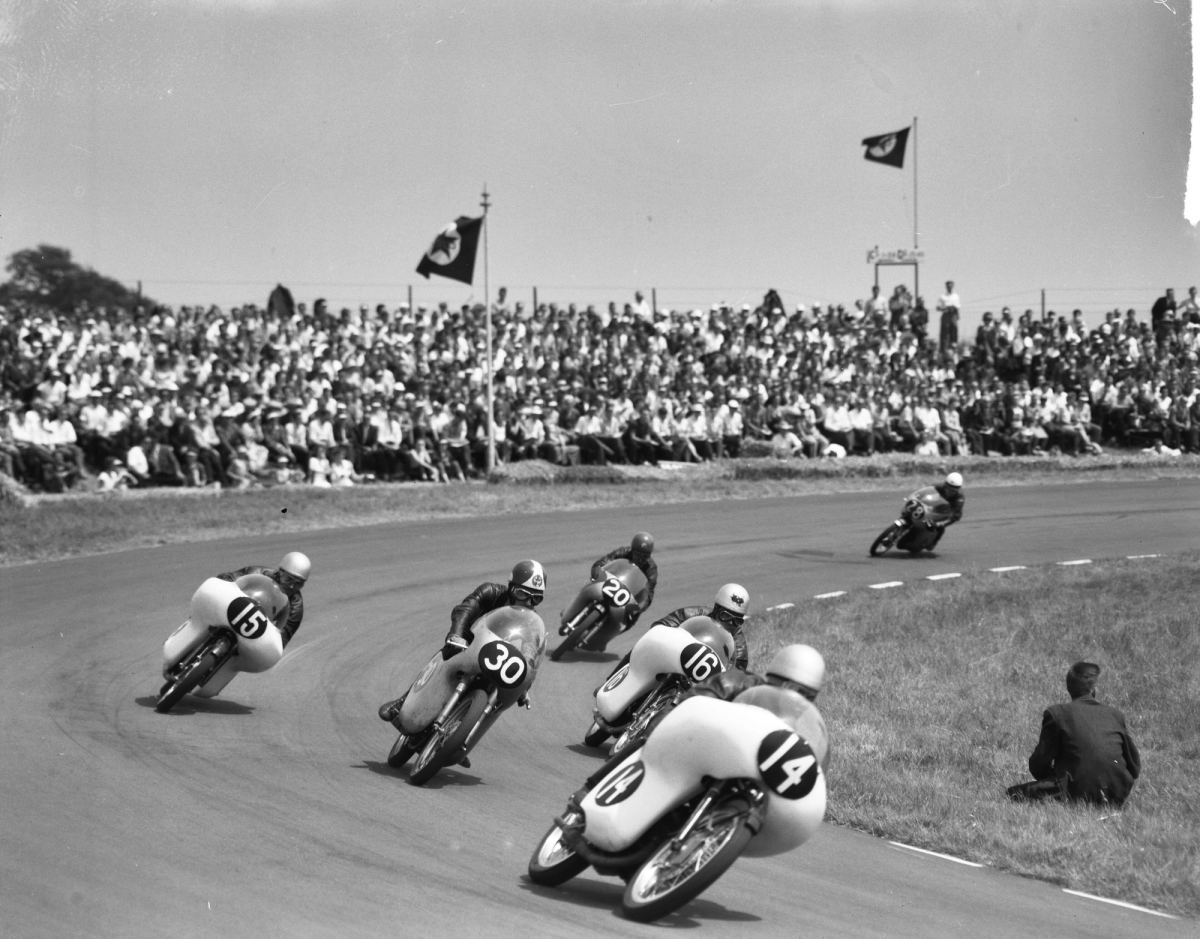
Nine months after his defection, Ernst Degner wins the 50cc race at Assen for Suzuki, 30 June 1962.. Photo: Anefo / Nationaal Archief (CC0)
Kristianstad, Sweden, 17 September 1961. Ernst Degner arrived at the Swedish Grand Prix leading the 125cc World Championship on an East German MZ, and a strong result could have settled the title. According to MCN, the East German state newspaper had already prepared its front page celebrating MZ's victory over the capitalist factories.
Degner had other things on his mind. That weekend, his wife Gerda and their two young sons were lying drugged in a hidden compartment in the boot of a big American car, being driven out of East Germany.
Early in the race, the MZ's engine failed. That night, while the MZ team drowned its disappointment, a Suzuki employee drove Degner into Denmark. In his suitcase were MZ engine parts and drawings. Ernst Degner's defection had begun, and his world title had started to slip away.
The stakes: Ernst Degner, MZ and the 1961 125cc title
Ernst Degner was MZ's star rider and an engineer by training, born in 1931 in Upper Silesia and raised in East Germany. His bike came from Walter Kaaden, who ran MZ's small, underfunded race shop in Zschopau after working at Peenemünde, where Germany's V-1 and V-2 weapons were developed.
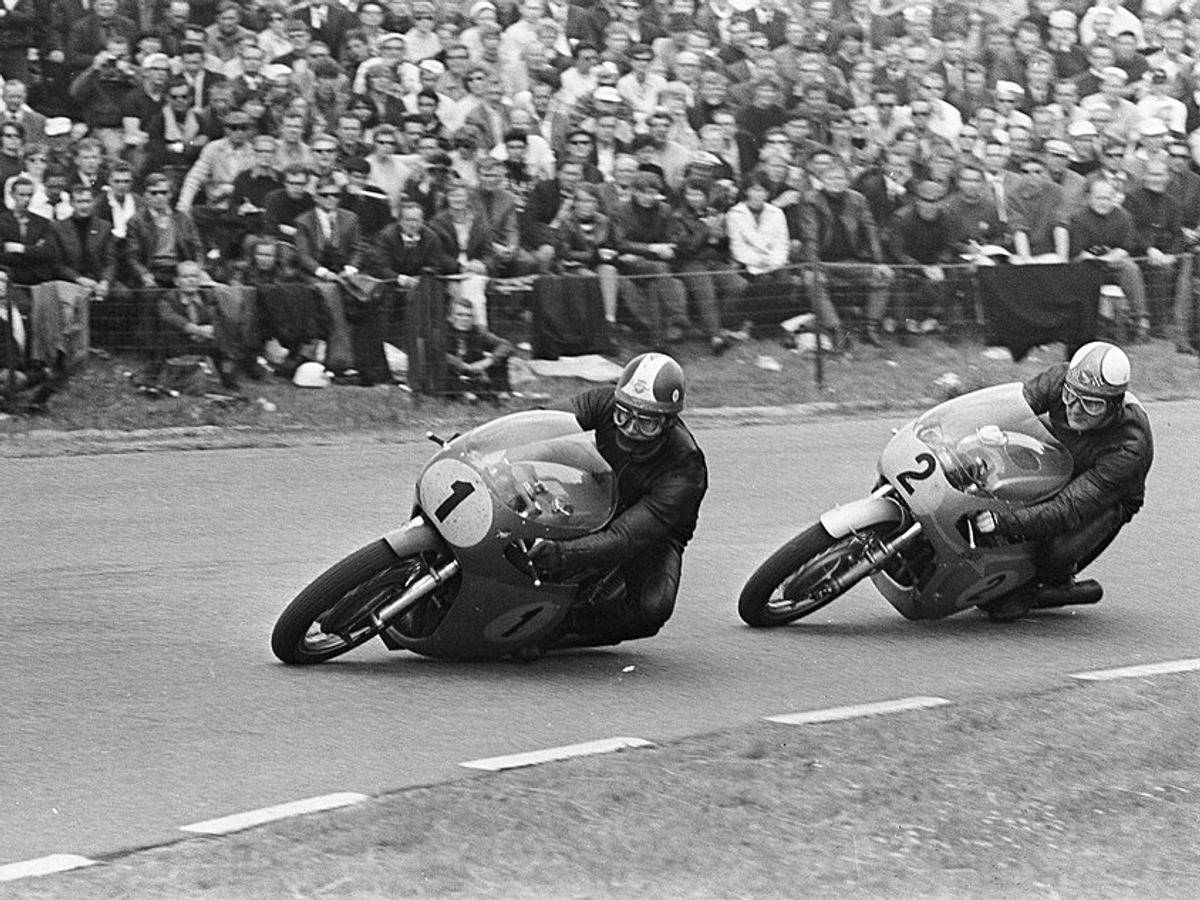
Kaaden combined three ideas in one engine. The expansion chamber is an exhaust shaped to send a pressure wave back to the cylinder and push escaping fuel mixture back in. The disc valve is a rotating disc that times the intake. The boost port is an extra passage that helps fill the cylinder. According to MCN and Motor Sport, the result was the first naturally aspirated engine to make 200 hp per litre, about 25 hp from 125cc.
Against the MZ single stood Honda's four-stroke twin, ridden by the Australian Tom Phillis. Phillis won the opening round in Spain, the first Grand Prix victory on a Japanese motorcycle. Degner answered with wins in West Germany, at the Sachsenring in East Germany and at Monza, and by September he was on the brink of the title.
He also wanted out. MCN reports that MZ paid Degner much the same as its factory workers, while his Western rivals arrived in Jaguars and Porsches. The Stasi, East Germany's secret police, watched him at every race.
Plan A, the Berlin Wall and a car with a false boot
Ernst Degner struck his deal with Suzuki in secret meetings during the summer of 1961. Several accounts place the first contact in a hotel that the MZ and Suzuki teams happened to share. Suzuki needed help: at the 1960 Isle of Man TT its best 125 finished some 15 minutes behind the winning MV Agusta. Degner would help Suzuki build competitive two-strokes and then race them.
The hard part was his family. According to MCN, the rule was that a rider's family stayed in East Germany whenever he raced abroad. Degner's first plan was for his wife and sons to cross from East to West Berlin by train on the morning of 13 August 1961, the day after he raced the Ulster Grand Prix. Overnight, East Germany closed the border and began building the Berlin Wall.
The second plan relied on Paul Petry, a West German who had acted as go-between with Suzuki. Petry bought a Lincoln, built a secret compartment into the boot and, on the weekend of the Swedish Grand Prix, drove Gerda Degner and the boys across the border, all three drugged.
From Kristianstad to Buenos Aires: the 1961 title slips away
Ernst Degner's engine failure in Sweden did less damage than it might have. Luigi Taveri won the race, Tom Phillis finished only sixth, two laps down, and Degner still led the championship with one round left.
That round was the Argentine Grand Prix in Buenos Aires on 15 October, the first Grand Prix held outside Europe. Degner had no bike, so he arranged to borrow an EMC 125 from the British-based engineer Joe Ehrlich, whose two-stroke was close in design to the MZ. According to Motor Sport, the East German federation cabled the organisers that his licence had been revoked. The organisers told the freight company not to send the bike, and it got as far as New York.
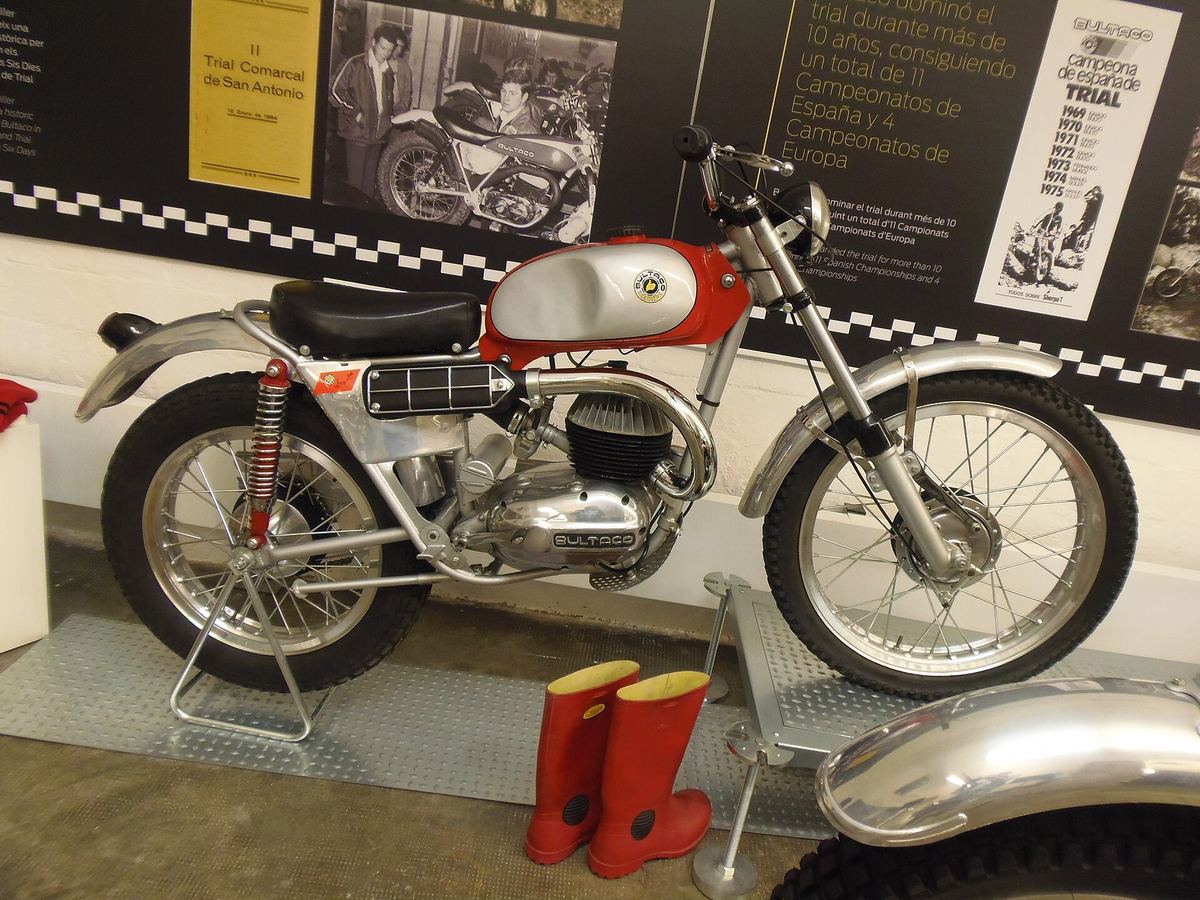
Local riders offered him a Bultaco, a simpler Spanish two-stroke with no chance against the Honda. Degner watched from the sidelines as Phillis won in the rain and took the title. The next morning, according to AMCN, Phillis cabled his parents in Sydney: "Home in three weeks with title".
Phillis finished with 44 points and Degner with 42, with only each rider's best six results counting.
After the flag: Suzuki's first world title
Ernst Degner faced an FIM tribunal after the season, charged by the East German federation with breaking his contract, selling MZ's secrets and failing his obligations to his club. According to Motor Sport, he was found guilty only of the last charge and fined 250 Swiss francs.
He spent the winter in Suzuki's race shop in Hamamatsu. MCN describes the resulting Suzuki 125 as a mirror-image copy of the MZ single, making 24 hp. Suzuki applied the same thinking to a new 50cc racer, the RM62.
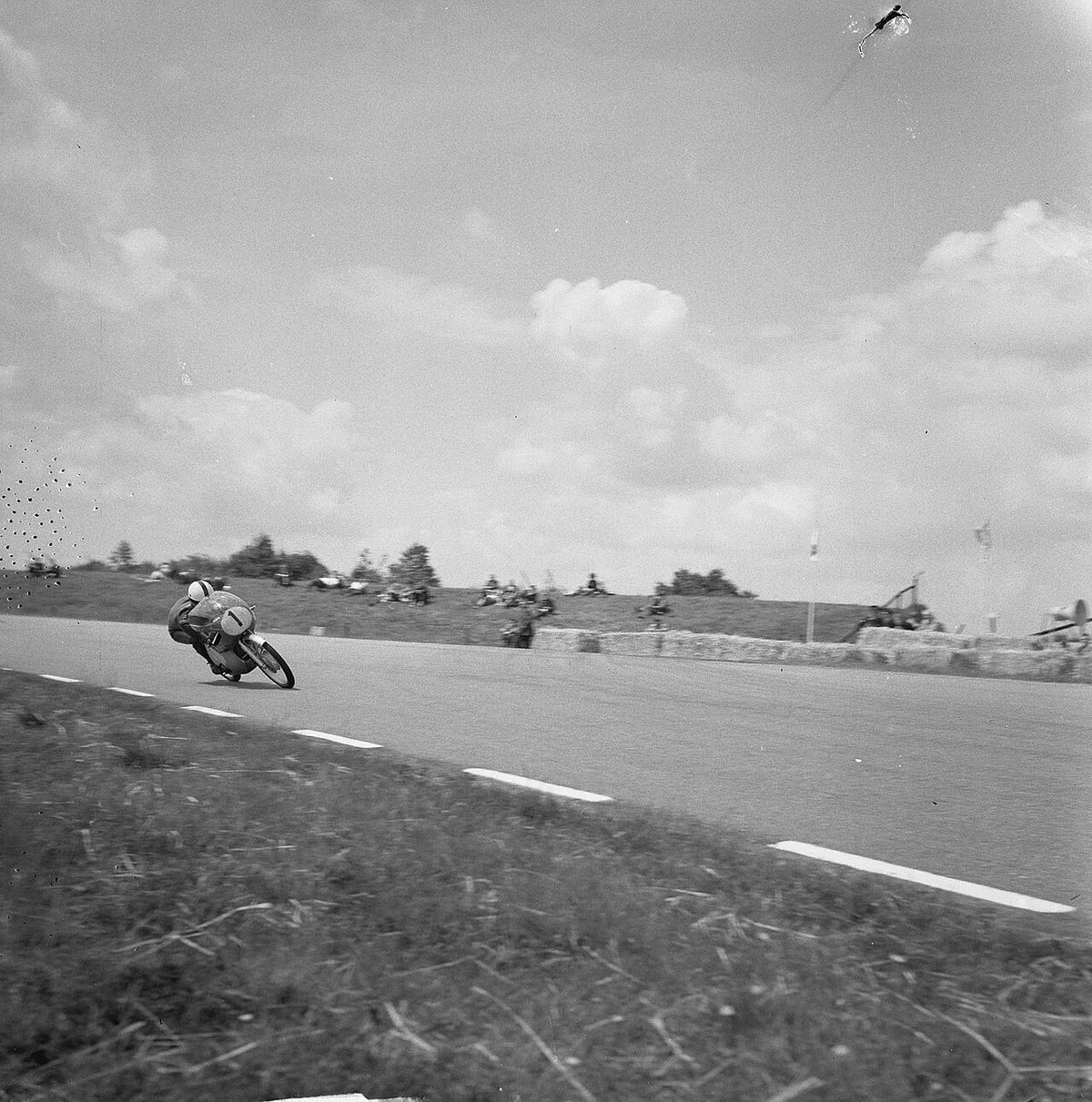
The payoff was quick. In June 1962 Degner won the 50cc Isle of Man TT, Suzuki's first Grand Prix win, and soon afterwards he won the 50cc race at Assen. In October he clinched the first 50cc world championship in Buenos Aires, the city where a year earlier he had been left without a bike. It was Suzuki's first world title and, MCN notes, the first won by a two-stroke.
Tom Phillis did not see it. He was killed at the 1962 Isle of Man TT. Degner was badly burned in a crash at the 1963 Japanese Grand Prix at Suzuka, and the circuit later named a corner after him. Accounts differ on why: Autosport links the name to an earlier fall at that spot, while other sources tie it to the 1963 crash.
Why Ernst Degner's defection still matters
Ernst Degner's suitcase changed Grand Prix engineering. According to MCN, after 1975 no world title was won by a four-stroke until the rules changed for the four-stroke MotoGP era. Mat Oxley of Motor Sport describes the Suzuki RG500 that took Barry Sheene to the 1976 and 1977 titles as four MZ 125s arranged in a square.
MZ paid the price. According to MCN, Kaaden was interrogated by the Stasi after the defection, and MZ's racing in the West was cut back. Kaaden, who died in 1997, later forgave Degner.
Honda won the 1961 125cc title by two points. The idea Degner carried into Denmark that night ruled Grand Prix racing for the next 35 years.
Quick answers
Why did Ernst Degner defect from East Germany?
Ernst Degner defected in September 1961 to escape Stasi surveillance and the low pay of an East German factory rider, and to take up a Suzuki contract. In return he brought MZ's two-stroke know-how to Suzuki, including engine parts and drawings, according to MCN and Autosport.
Who won the 1961 125cc world championship?
Tom Phillis won the 1961 125cc world title for Honda with 44 points, two ahead of Ernst Degner on 42. Degner still led after the Swedish Grand Prix but defected, and his borrowed bike never reached the final round in Argentina, which Phillis won.
What did Ernst Degner win with Suzuki?
Ernst Degner gave Suzuki its first Grand Prix win at the 1962 50cc Isle of Man TT and its first world championship, the 1962 50cc title. According to MCN, it was also the first world championship won by a two-stroke motorcycle.
Why is a corner at Suzuka called Degner?
Suzuka's Degner corner is named after Ernst Degner, Suzuki's star rider of the early 1960s. Accounts differ on the exact reason: Autosport links it to an early fall at that spot, while other sources tie it to his 1963 Japanese Grand Prix crash, in which he was badly burned.