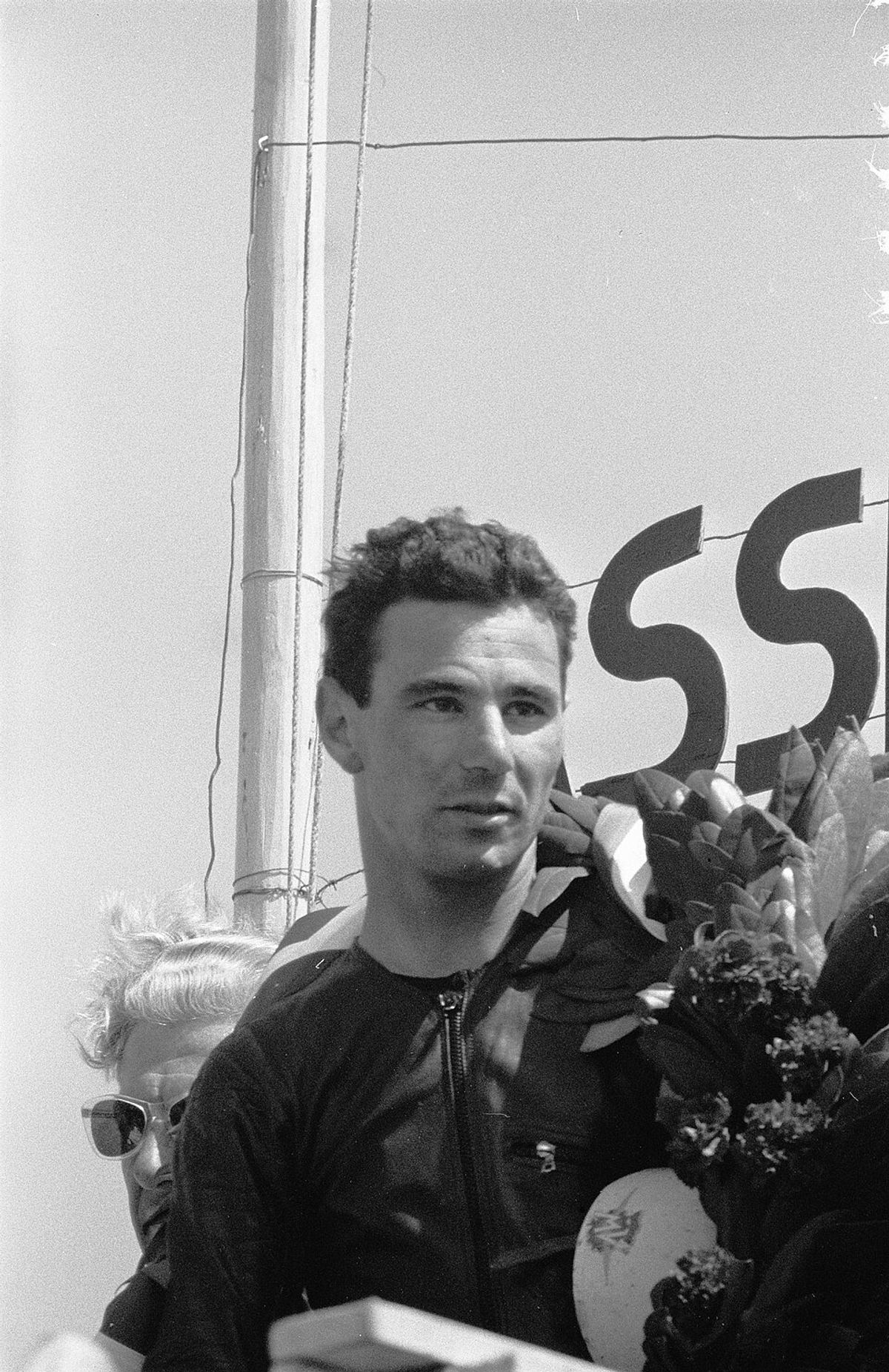
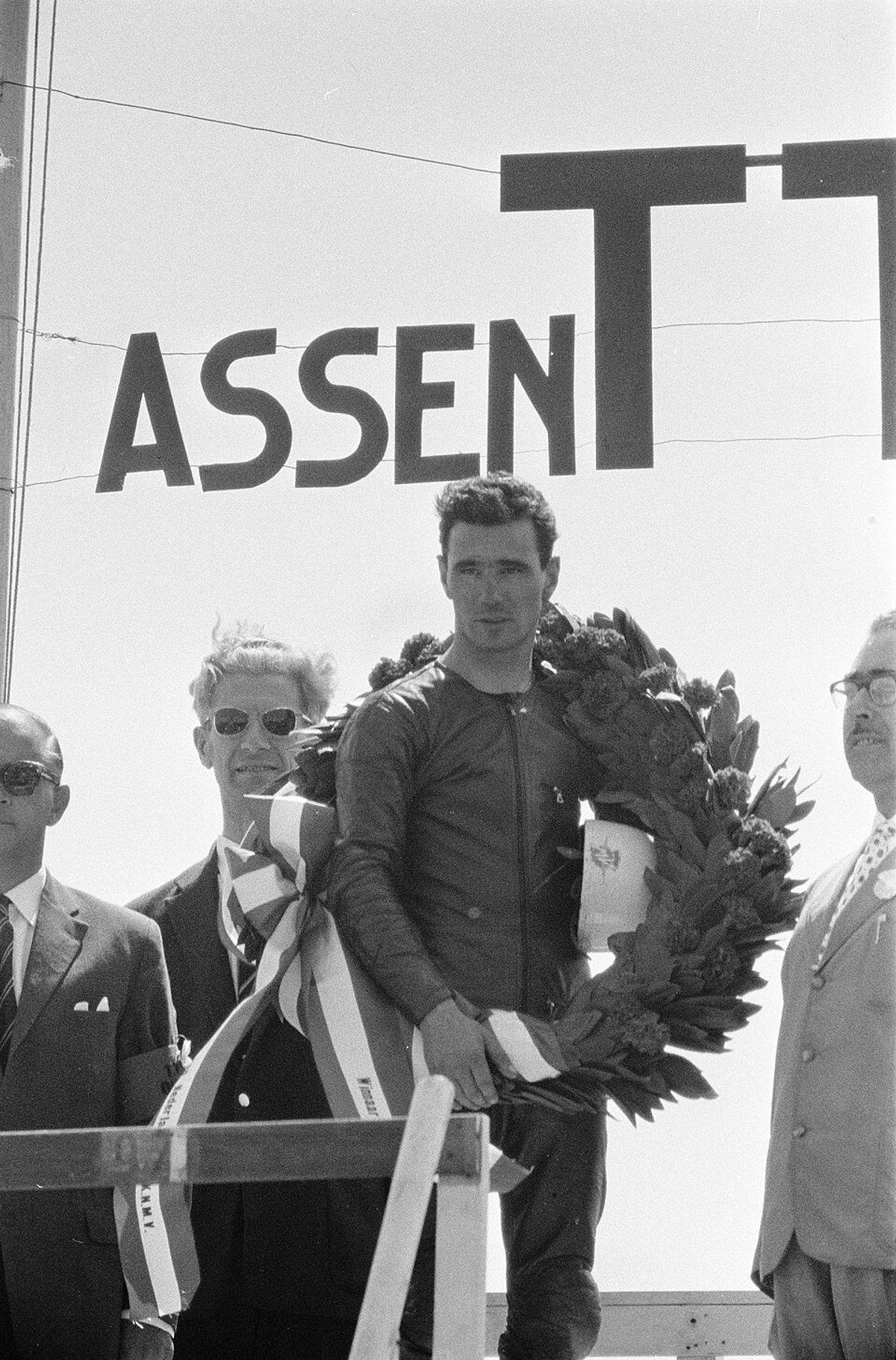
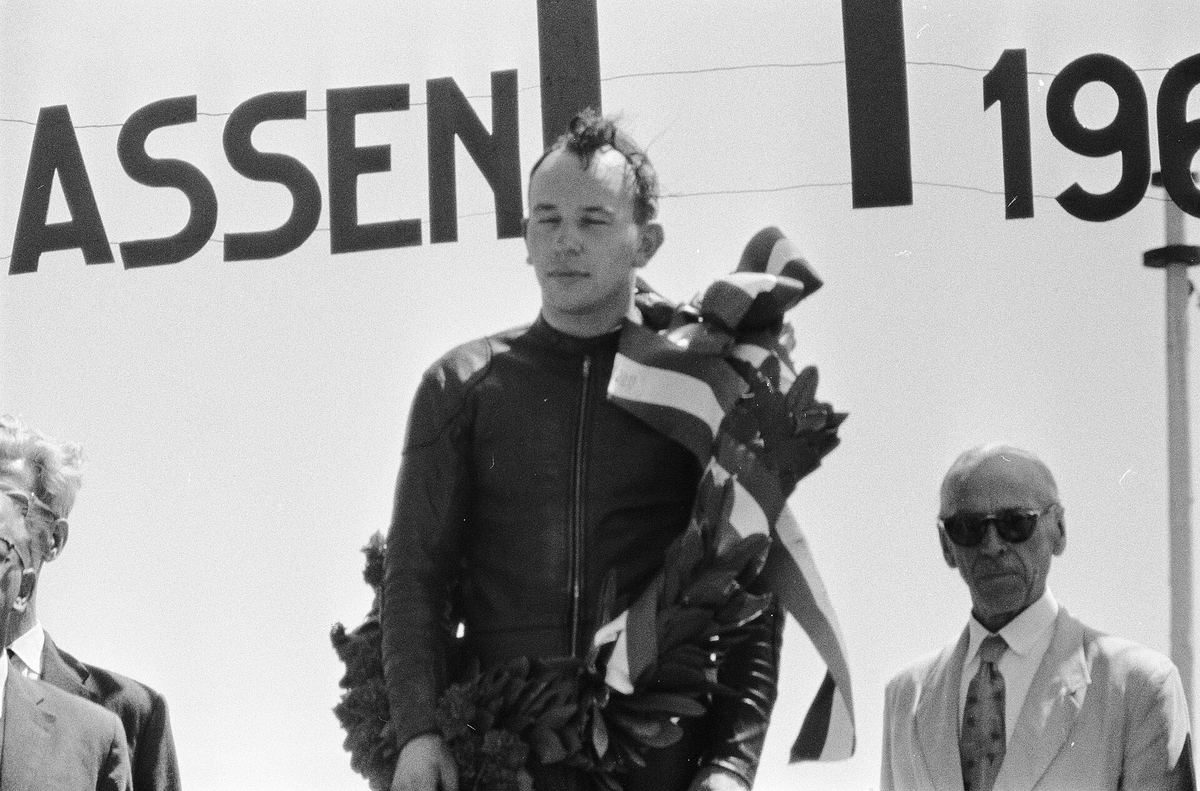
Carlo Ubbiali at Assen in June 1960, after winning the 125cc and 250cc races on the same day. It was his last season.. Photo: Anefo / Nationaal Archief, CC0
The 125cc race at the 1960 Nations Grand Prix, run at Monza on 11 September, was decided in the last few hundred metres. Carlo Ubbiali crossed the line 0.2 seconds ahead of his MV Agusta team-mate Bruno Spaggiari, with Ernst Degner on the two-stroke MZ another two tenths behind. Three bikes, eighteen laps, four tenths of a second.
Spaggiari had set the fastest lap. It did not matter. It was the way Ubbiali had won for a decade: he sat behind, watched, and moved at the end. On the same day he won the 250cc race too, by more than 40 seconds from Jim Redman's Honda. It was the last round of the season, he had won both world titles again, and he was 11 days short of his 31st birthday.
He never raced in a Grand Prix again. Carlo Ubbiali, nine times world champion, retired with the two titles still in his hands, at a time when nobody had won more.
Carlo Ubbiali, the Fox from Bergamo
Ubbiali was born in Bergamo on 22 September 1929 and started competing in 1947. His Grand Prix debut came at the very first 125cc world championship race, at Berne in Switzerland on 3 July 1949. He was 19, possibly the youngest rider on the grid, and finished fourth on an MV Agusta two-stroke that Motor Sport describes as a copy of the pre-war DKW, making about 10.5 hp. Two months later he rode an MV 125 at the International Six Days Trial in Wales and won a gold medal, despite being hit by a car.
For 1950 he moved to Mondial, whose twin-cam four-stroke was the bike to have in the class. He won his first Grand Prix that August at Clady in Northern Ireland, in a race with three starters and two finishers, and took his first world title in 1951. When he lost it in 1952 to Cecil Sandford, MV's first world champion, he went back to MV Agusta. He stayed for the rest of his career.
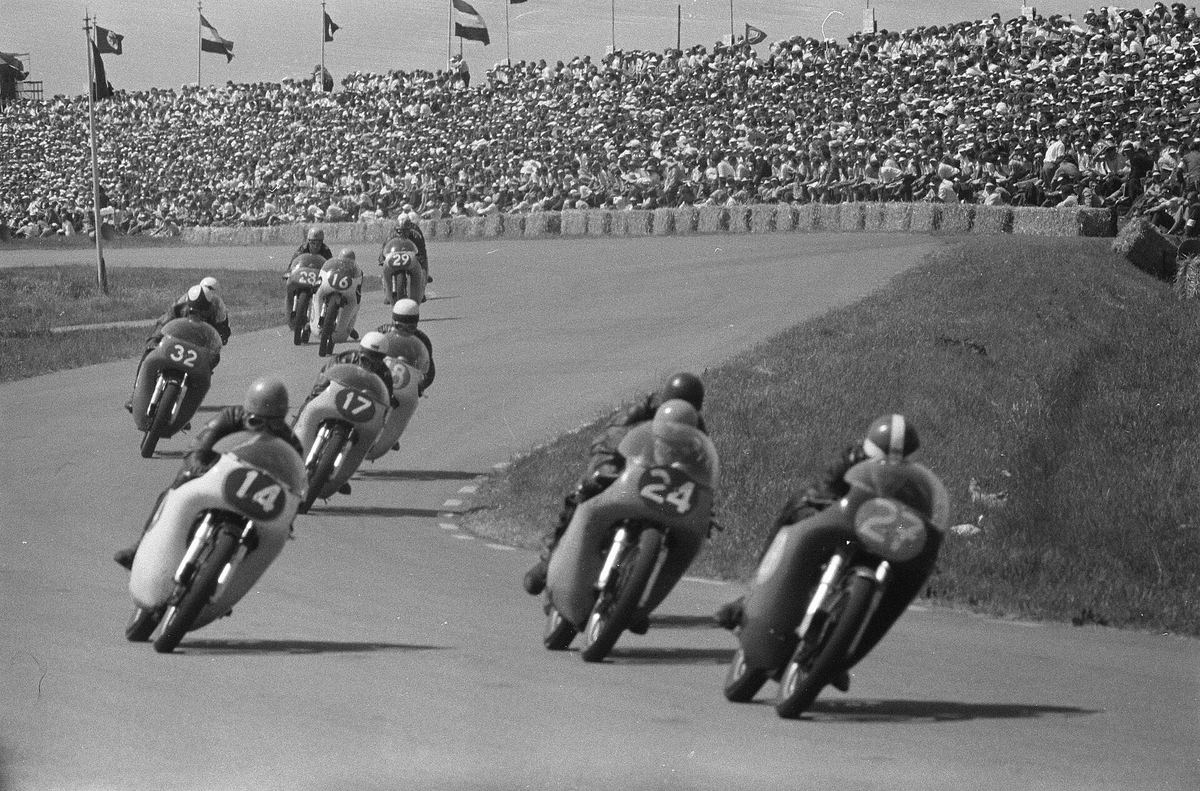
At MV he became Count Domenico Agusta's first-choice rider in the small classes. The Count divided his riders by size, small men on the 125s and 250s and bigger men on the four-cylinder 350s and 500s, and Ubbiali was small. From 1956 the big bikes belonged to John Surtees. The MotoGP website, in its tribute, said Ubbiali never questioned the policy, and retired without knowing whether he could have been a premier-class champion.
In 1955 he became MV's first Italian world champion. In 1956 he won both the 125cc and 250cc titles, with ten wins from twelve starts, the first of many doubles for the Count. In 1957 he missed about half the season and the titles went elsewhere, but he took the 125cc crown back in 1958. By then he had also won five Isle of Man TTs, on both the short Clypse course and the Mountain circuit. One he did not win, the 1954 125cc TT, he lost to Rupert Hollaus's NSU by four seconds.
His method never changed. Motor Sport's Mat Oxley describes a quiet, thoughtful racer who liked to follow the leader, look after himself and his bike, study the other rider's strengths and weaknesses, and attack in the closing laps. That was why they called him the Fox. He was never flashy, kept his own counsel, and went through more than a decade of Grand Prix racing without a major crash.
The threat at the end of the 1950s came from somewhere new. In 1959, at Monza, Ubbiali lost the 125cc race by a fraction of a second to Ernst Degner on the MZ, the first 125cc Grand Prix win for a two-stroke. He still won both titles that year, and at Hockenheim he won the 250cc race with a fastest lap of 183.93 km/h. AMCN pointed out in his obituary that no MotoGP rider has lapped Phillip Island faster. But the four-strokes from Italy were no longer alone.
1960: Hocking, Honda and the MZ
For 1960 Provini left for Moto Morini, and his place in the MV team went to Gary Hocking, a young rider from Rhodesia who had won two Grands Prix on an MZ the year before. Honda arrived with a full factory squad in both small classes, with its 125 twin and 250 four. MZ had Degner, John Hempleman and Alberto Gandossi on its two-stroke singles.
At the Isle of Man TT in June, Ubbiali won the 125cc race with the fastest lap, ahead of Hocking and Luigi Taveri. Hocking won the 250cc race, with Ubbiali second more than a minute behind and three Hondas following Provini home.
At Assen on 25 June Ubbiali won both races. In the 125s he beat Hocking by 3.1 seconds and set the fastest lap, with Redman's Honda fourth. In the 250s the gap to Hocking was 30.3 seconds, with Taveri making it an MV one-two-three. Provini set the fastest lap of the 250cc race on his single-cylinder Morini, but it was Ubbiali on the podium.
At Spa, Degner won the 125cc race on the MZ, with Ubbiali third; Ubbiali won the 250cc race, and Provini crashed at Blanchimont and was taken to hospital. At Solitude in Germany, the Honda rider Bob Brown was killed in practice. There was no 125cc race, and in the 250s Ubbiali fell at the start, got going again and finished second to Hocking. Kenjiro Tanaka's third place gave Honda its first Grand Prix podium.
At the Ulster Grand Prix on 6 August he won both races again, while Hocking retired from the 250 with clutch trouble. That left Monza, and the four-tenths finish in the 125s. The 250cc race there was a warning. Behind Ubbiali, Hondas finished second, fourth, fifth and sixth.
In all, Ubbiali started 11 races in 1960, won eight and never finished off the podium. He took the 125cc title with four wins from five rounds and the 250cc title with four from six, both times with Hocking second. MV won both constructors' championships.
After the flag
Several things came together at the end of 1960. Ubbiali's brother Maurizio had died that year, and the loss affected him badly. In 1996 he told a Northern Irish fan who met him by chance in Bergamo that the Honda had had a little more power than the MVs that season. Published figures back him up: Honda's 125 twin is credited with about 23 bhp, against about 20 for the MV single, although the MV was still the faster bike around a lap in 1960.
He told Count Agusta he was stopping, to run the family business. According to the account in The Classic Motorcycle, the Count replied that without Ubbiali, MV's lightweight racing would end. It did. At the end of the season Agusta withdrew from the 125cc and 250cc classes, where the two-strokes and Honda's multi-cylinder four-strokes were taking over. The same article sums up his thinking in a line: "Better to quit at the top than wait for the inevitable decline or something even less pleasant."
Hocking moved up to MV's big bikes. Honda took over the small classes, and the age of the single-cylinder Italian lightweight was over.
Ubbiali stayed close to the sport. He encouraged a young Giacomo Agostini, also from Bergamo, and helped him sign for MV Agusta in 1964. Agostini went on to break his record of nine titles.
In 1998, aged 68, he won his class at the Assen Centennial Classic, where results were decided on the regularity of lap times. The same year he returned to the Grand Prix paddock as an ambassador for Lucio Cecchinello's 125cc team. Cecchinello told Motor Sport that Ubbiali became an unofficial spotter, reporting on rival riders' lines and gearing, and remembered his precision with the brakes, the throttle and the lines he chose. The FIM made him a MotoGP Legend in 2001.
Carlo Ubbiali died in Bergamo on 2 June 2020, aged 90. He was the last surviving rider from the first world championship season of 1949.
Why it still matters
Ubbiali won 39 Grands Prix and nine world titles, six in the 125cc class and three in the 250s. Nobody won more until Agostini took his tenth in 1971, and only Agostini and Ángel Nieto have won more since. Mike Hailwood and Valentino Rossi share his total.
He did it in an era when, as Oxley put it, simply staying alive was quite a challenge. Loris Capirossi, a three-time champion of a later generation, said it was not easy to race and win in those times, because many times the track was in the middle of a city. Ubbiali raced from 1949 to 1960 and never had a major crash. The MotoGP website described his riding as disciplined, effective and unflustered, and said he left the sport still at the full height of his powers. His method was patience, but he was not slow: he set 30 fastest laps in his Grand Prix career.
The Monza 125cc race of 1960 is the best summary of his career. He let others lead, waited, and won by two tenths of a second. Then he stopped, before anyone could beat him.
Quick answers
Who was Carlo Ubbiali?
Carlo Ubbiali was an Italian motorcycle racer from Bergamo who won nine world titles between 1951 and 1960: six in the 125cc class and three in the 250cc class, almost all for MV Agusta. Nicknamed the Fox, he won 39 Grands Prix and retired at 30.
Why did Carlo Ubbiali retire in 1960?
Ubbiali retired at the end of 1960 after winning both lightweight titles. His brother Maurizio had died that year, he took over the family business, and Count Agusta was withdrawing MV from the 125cc and 250cc classes as Honda and MZ's two-strokes grew stronger.
Why was Carlo Ubbiali called the Fox?
Ubbiali earned the nickname for his tactics. He liked to follow the leader, save himself and his machine, study his rival's strengths and weaknesses, and then attack in the closing laps. His last Grand Prix, the 1960 125cc race at Monza, he won by 0.2 seconds.
How many world titles did Carlo Ubbiali win?
Carlo Ubbiali won nine world titles, six in the 125cc class (1951, 1955, 1956, 1958, 1959, 1960) and three in the 250cc class (1956, 1959, 1960). It was a record until Giacomo Agostini won his tenth in 1971.