Honda Elsinore CR250M: the two-stroke motocrosser Soichiro Honda never wanted to build
The Honda Elsinore CR250M of 1973 was Honda's first two-stroke and its first production motocrosser. It was light, cheap to run and did not break, and in its first season Gary Jones won Honda its first motocross title.
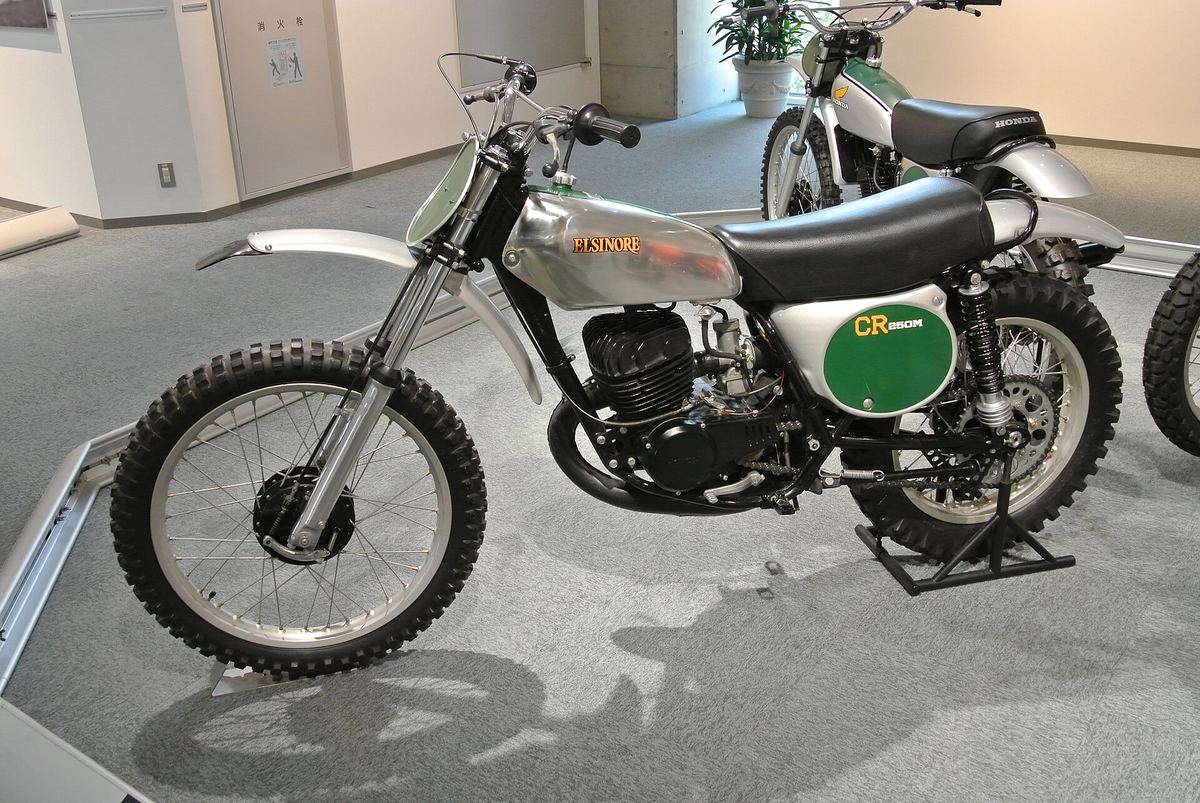
A Honda Elsinore CR250M at the Honda Collection Hall in Japan. It went on sale in the United States in March 1973.. Photo: Rainmaker47 / Wikimedia Commons (CC BY-SA 3.0)
In February 1973 Cycle News took two 250cc motocrossers to the Arroyo Cycle Park in Southern California, the track now called Glen Helen. One was a CZ, the Czechoslovak make that had won more world motocross titles than would fit on a mantelpiece, as the paper put it later. The other was a shiny-tanked newcomer from a company that had never won a major motocross race: the Honda Elsinore CR250M.
They lined the two bikes up for a drag race. The Honda pulled a bike's length on the CZ straight away, and by the end of the 110-yard stretch it had doubled the gap.
Cycle News published its verdict on 13 February under the subtitle "The test you've been waiting for". The Elsinore was "worth the wait…a superb, first motocrosser. For a price of $1150, it's going to be hard to beat." The CZ, it said more politely, "excels to the ultimate limit of their available materials."
Fifty years later the paper's archive columnist Kent Taylor called it "almost a comparison test of motocross eras", the end of one and the beginning of the next.
Honda Elsinore: the two-stroke Mr Honda didn't want
Honda had become the world's largest motorcycle maker on four-stroke engines, and Soichiro Honda did not care for two-strokes. He had said, in effect, that his company would never build two-stroke motorcycles, American Motorcyclist recalls.
Motocross forced the issue, and for several years Cycle News readers were teased with gossip and sneaky photographs of a Honda motocrosser. By the early 1970s American off-road riders had moved to light European two-strokes from Husqvarna, Bultaco, Maico and CZ, after the Husqvarna importer Edison Dye showed in 1966 how much faster they were than the heavy four-strokes that ruled American racing. In Japan, Honda's own four-stroke motocross prototypes were beaten by Suzuki two-strokes in test races, Motocross Action says. Honda's R&D department had already been pushing for a two-stroke; now the company listened.
Soichiro Honda gave in on one condition. "If it has to be a two-stroke, it must win," the chassis engineer Sasaki Osca remembered him saying, in Cycle World's 2022 history of the bike. Osca had been moved from CB road bikes to the project, a small skunk-works effort run by engineers with little motocross experience. "Everything was developed in Japan, but with much reference to Europe," he said. The first Elsinore carried the code name 335A. Mr Honda became so committed that he attended test sessions in California himself.
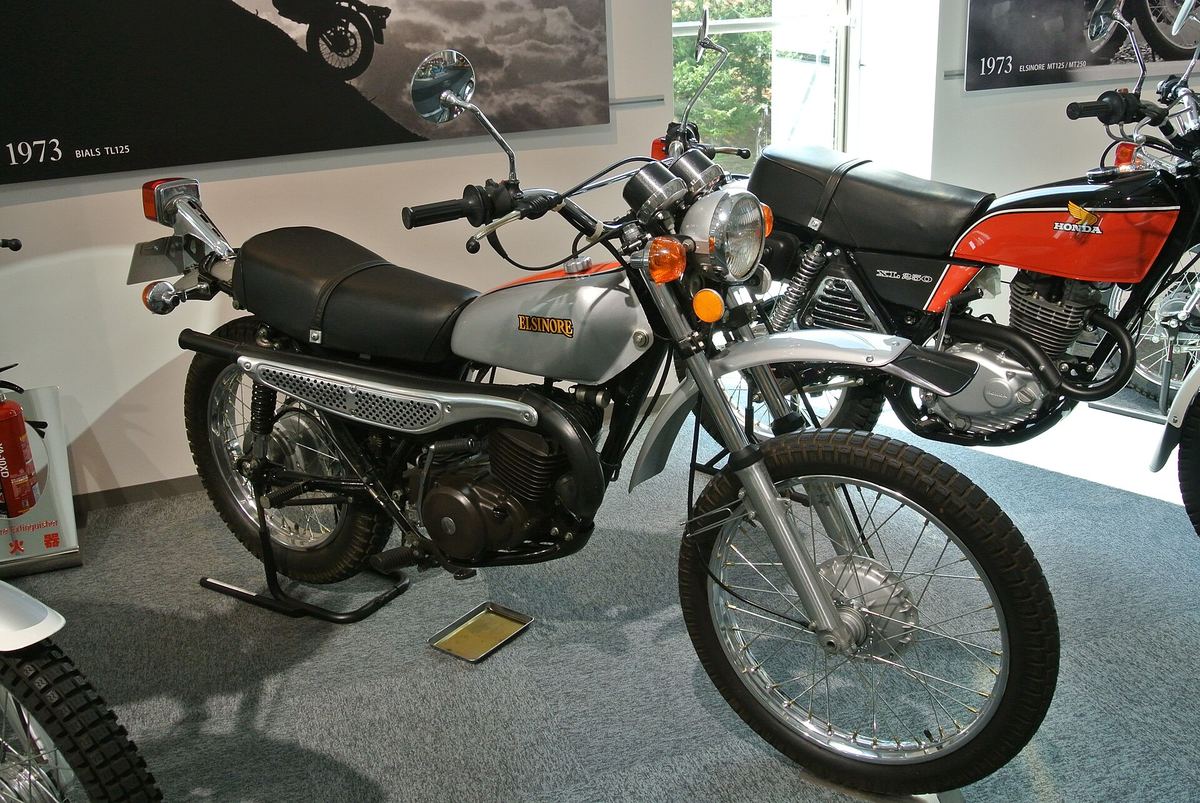
Gary Jones and the race to make it work
Honda's first approach to the Jones family came in 1971. Don Jones ran a motorcycle dealership in the San Gabriel Valley and tuned and built bikes for his son Gary. With a lathe, a mill, a welder and help from the Jet Propulsion Laboratory in Pasadena, they had turned a 1968 Yamaha DT-1 enduro into a winning motocrosser, Ari Henning wrote for RevZilla in 2023. Yamaha used it as the template for the 1971 YZ250, and Gary won the first AMA 250 national championship on one in 1972.
"We were still with Yamaha when Honda approached us in '71," Gary Jones recalled. The Joneses agreed to assess Honda's prototypes, a twin-cylinder scrambler and a single, and found them too heavy and too slow. "I explained that their bike had to be lighter, and that two-strokes were way faster," he said. In his view Mr Honda's real fear was the company's reputation. "Reliability was what he was really worried about."
Honda went away for nearly a year. In late 1972 it came back with a two-stroke prototype, and Soichiro Honda met Don Jones himself. "Mr. Honda wanted me to help develop the new Elsinore with Gary and DeWayne as the riders," Don told Motocross Action. When Don explained what Yamaha was paying, Honda offered to double it. Gary signed to race for Honda in 1973, with the family free to refine the bike.
The works bikes were the problem. "To tell you the truth, we had a lot of problems with the Works bikes," Jones said. "Cylinders seized, and we had a clutch break on the starting line at Daytona." The frames were brittle and cracked, and talking to the factory mechanics was hard. The Joneses told Honda they wanted production CR250Ms instead, or they would quit, Motocross Action says. Honda agreed. The family added a reed valve, cut the frame and changed the steering head and shock angles.
On 9 September 1973, at Motocross West outside New Orleans, Gary Jones won the final round of the AMA 250 championship and with it the title, his second and Team Honda's first, Racer X says. He won six races that season on a modified production Elsinore. In an advertisement in Cycle News, Honda celebrated a year of firsts: "Introduction of our first two-stroke… Our first year of motocross team racing. And now, with Gary Jones as the rider, our first National Motocross Championship."
On the track: "Shifting was perfection"
The magazines that rode it in 1973 struggled to find fault. Dirt Bike, testing it for its June issue, measured slightly over 28 horsepower at the rear wheel on the dynamometer, and nearly nine at only 4,000rpm. The engine would rev to about 8,500rpm, but the testers found it went fastest when they shifted early and let it pull. In a point-to-point drag race it could run alongside most 400s, they said.
The chassis impressed them just as much. Despite a wheelbase of more than 57 inches, "directional changes are ludicrously easy," they wrote, and a rider could change line in mid-corner under full power with a shift of weight. "No one had a word of complaint about the superb shocks." The front brake was a "one-finger-only instrument, with a nice, progressive feel", and the cable-operated rear brake was the first cable brake the staff had liked. "Shifting was perfection."
The complaints were small. The engine was cold-blooded and needed five minutes to warm up, the kickstarter could flop at the bottom of its stroke, the small fuel filler needed a funnel and the stock Dunlop tyres were only average. The kill switch was "the only stupid thing on the entire bike". The verdict: "the best dollar-for-dollar bike a racer can buy."
Fifty years later, Ari Henning rode a restored CR250M for RevZilla expecting a hard-to-manage, overpowered machine. He found the opposite: a light bike with a tractable engine, smooth power, a pleasant gearbox and clutch, gentle but effective drum brakes and well-controlled suspension. Unusually for a two-stroke of its time, it even idled well, under its own blue haze.
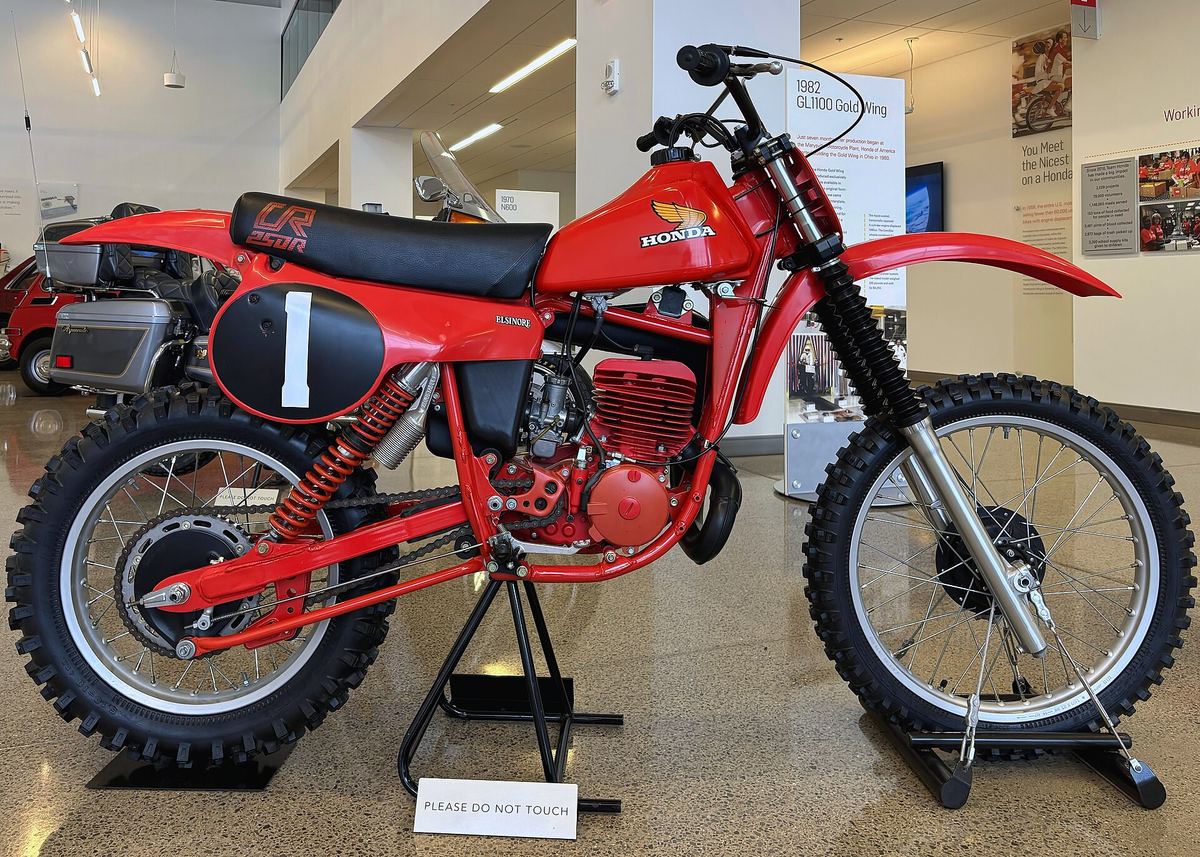
What it took: light, affordable and unbreakable
The Elsinore did not win because it was exotic. It won because it worked. "The big thing was everything just worked," Jones told Cycle World. The European bikes were expensive to buy and to fix, and they broke. A Maico cylinder was a $50 special-order part, Jones remembered. "Pistons were $15, and you could pick them up at any dealership," he said of the Honda. Motocross Action found a 1973 parts list putting a CR250 piston at $11.40 and the rings at $3. Honda's George Etheridge told Dirt Bike what that meant for everyone else: "we're just going to make them get a whole lot better."
Honda worked hard on weight. Motocross Action calls it the lightest production motocrosser in the world when it went on sale, with moulded plastic parts and satin-finished aluminium and magnesium engine cases. Testers praised its lightweight finned rear shocks, though many racers later swapped them for Konis, Motocross Action notes.
Honda also sold it hard. Steve McQueen was at an early test session at Indian Dunes to give his impressions, and Honda later ran advertisements with the film star. The name came from the Elsinore Grand Prix, the Southern California off-road race that On Any Sunday had made famous, Cycle News notes.
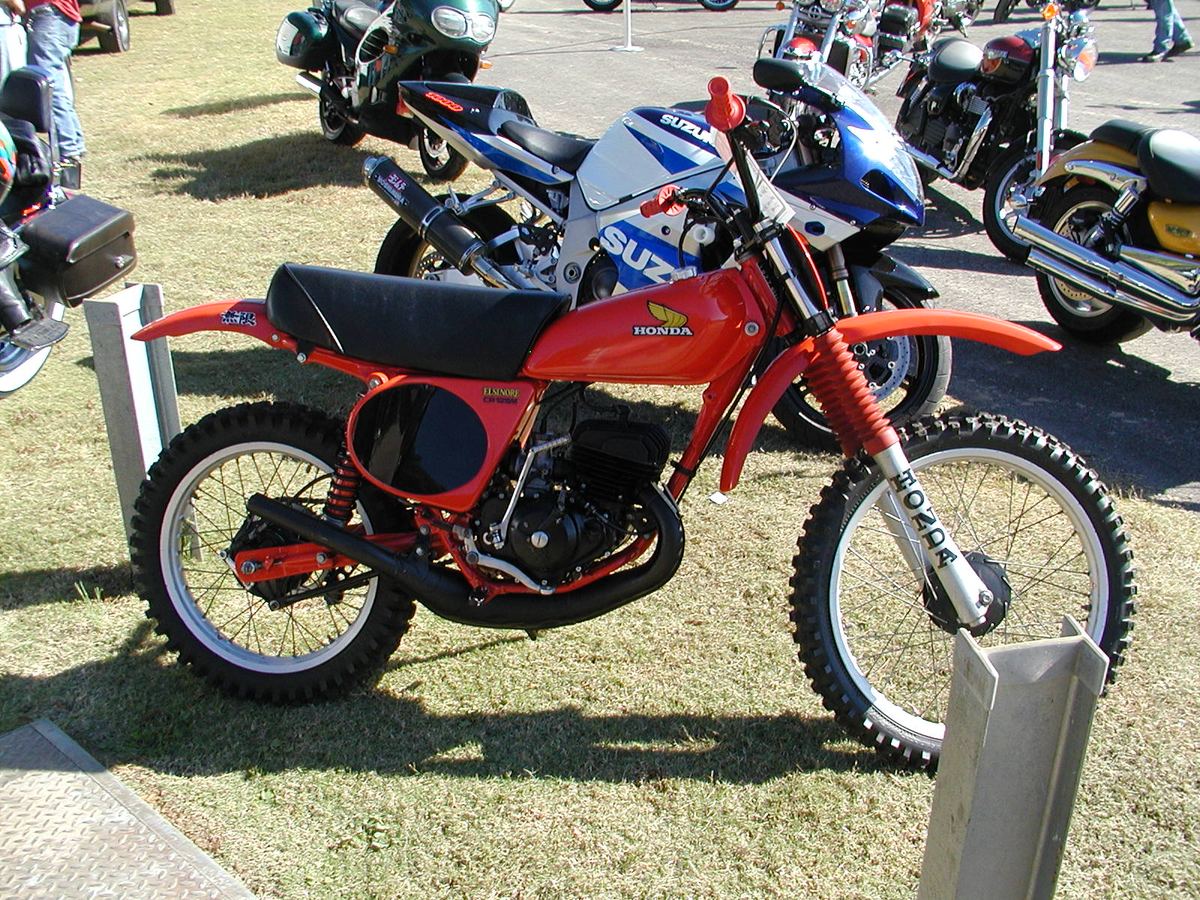
Why it still matters
The Elsinore became a range. A road-legal MT250 Elsinore arrived in 1973, though Cycle World regretted its mild steel frame, steel triple clamps and rims, and lesser rear shocks. Later in 1973 came the CR125M Elsinore at $749, which Cycle World's 2022 history calls an even bigger shock than the 250. Marty Tripes defended his Superbowl of Motocross title on a silver and green Elsinore, Ultimate Motorcycling says.
The lead did not last. Cycle World's 1974 comparison with Yamaha's YZ250 found that the CR250's rear end hopped in some bumps and, unlike on the CR125, upset its stability; and by November 1975 it called the CR250M1 "a fine design that reached the public a year too late to be competitive". Sasaki Osca remembered being moved to emissions work in the mid-1970s, after which development slowed.
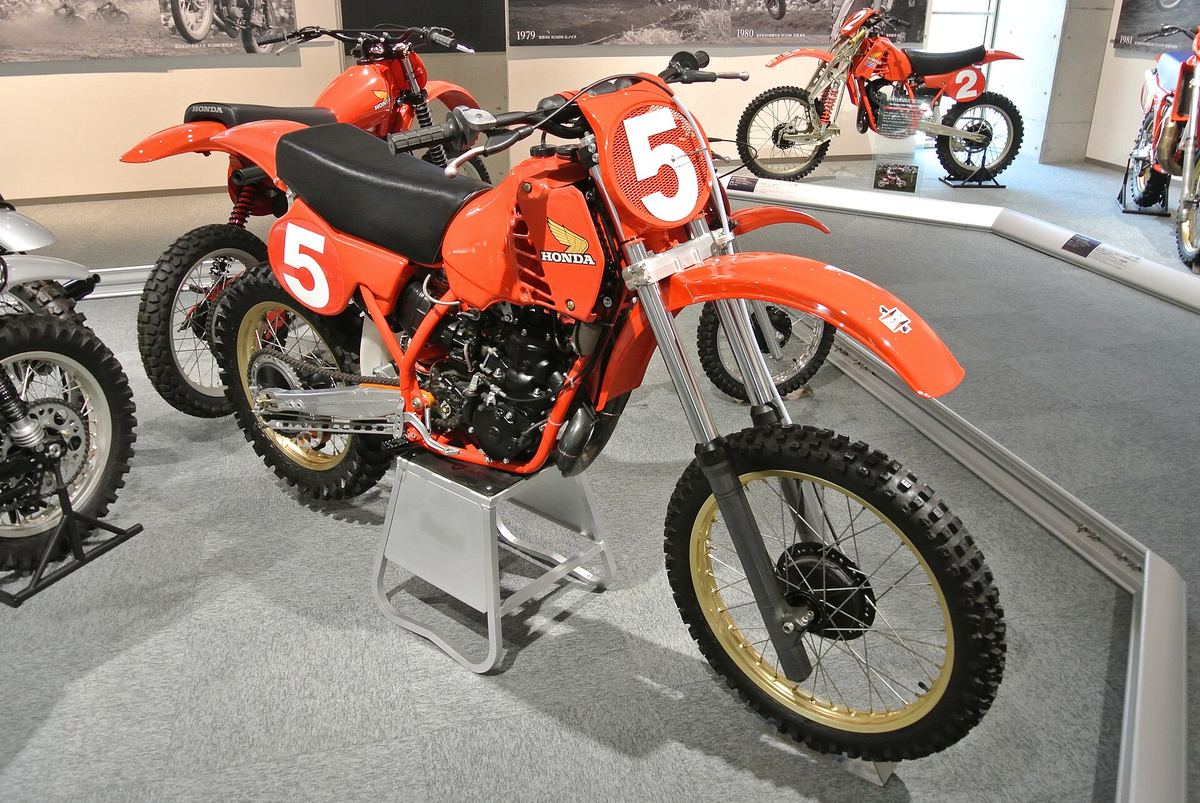
But Honda had crossed the line Soichiro Honda had drawn. Its first two-stroke was the start of the CR line, and Honda kept the Elsinore name into the 1980s. Today an untouched tank is the first thing collectors look for, Motocross Action says. Original tanks have reached $2,000, and the magazine valued the Early Years of Motocross Museum's 1973 example at $10,000.
Quick answers
What is the Honda Elsinore CR250M?
The Honda Elsinore CR250M was a 250cc two-stroke motocross motorcycle that went on sale in the United States in March 1973. It was Honda's first two-stroke and its first production motocrosser. It weighed 229lb ready to ride and cost about $1,150, close to the price of European rivals.
Why was the Honda Elsinore so important?
The Elsinore offered the performance of European motocrossers such as CZ and Maico with Honda reliability and cheap, easy-to-find parts. Gary Jones won the 1973 AMA 250cc national motocross championship on a modified production bike, Honda's first motocross title, and the Elsinore helped bring motocross to a mass American market.
Why is it called the Elsinore?
Honda named it after the Elsinore Grand Prix, a famous off-road race held around Lake Elsinore in Southern California and featured in the film On Any Sunday. Honda kept the name for related models, including the MT250 and the CR125M, and used it on its motocross bikes into the 1980s.
Did Soichiro Honda oppose two-stroke engines?
Yes. Soichiro Honda preferred four-strokes and had said, in effect, that Honda would never build two-stroke motorcycles. He accepted the Elsinore project when four-stroke prototypes lost to Suzuki two-strokes, reportedly telling engineers: "If it has to be a two-stroke, it must win." Gary Jones believed his main concern was reliability.