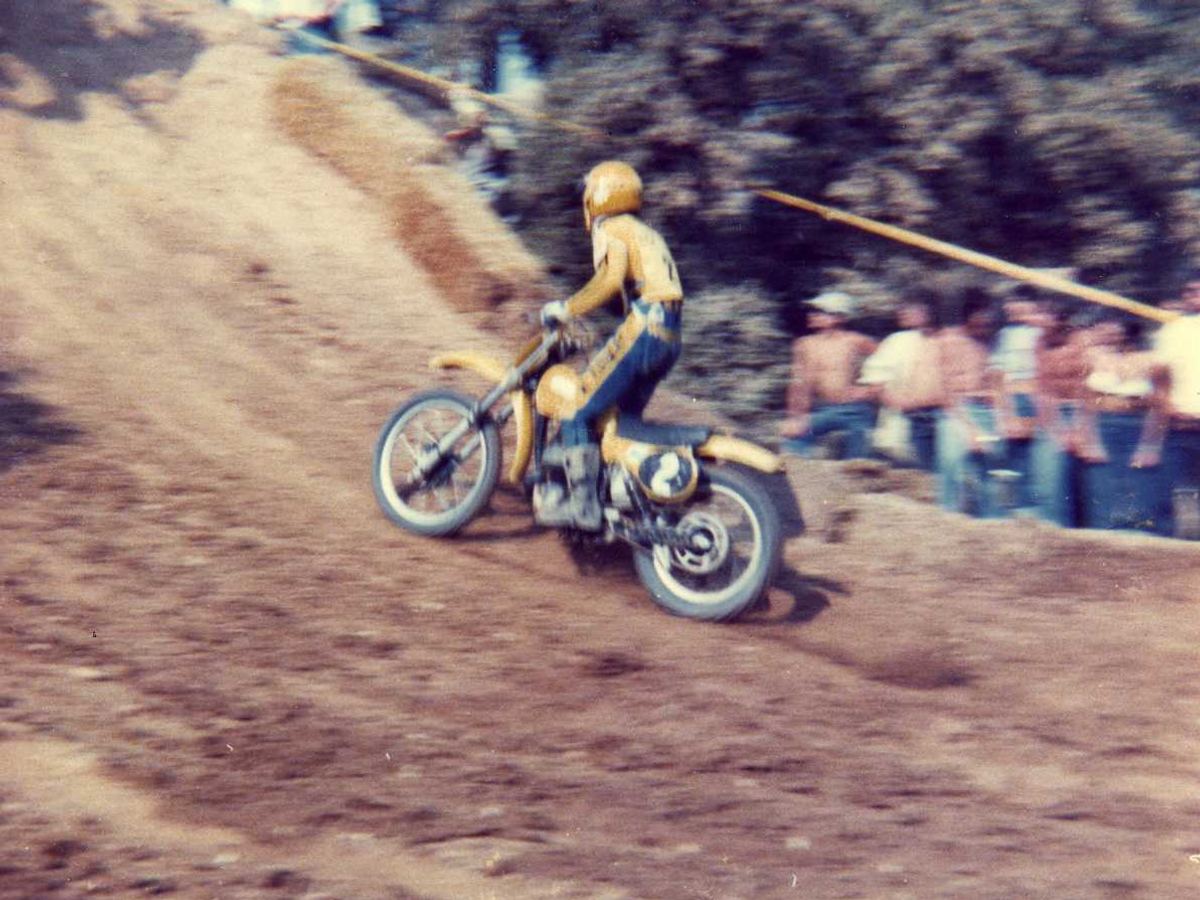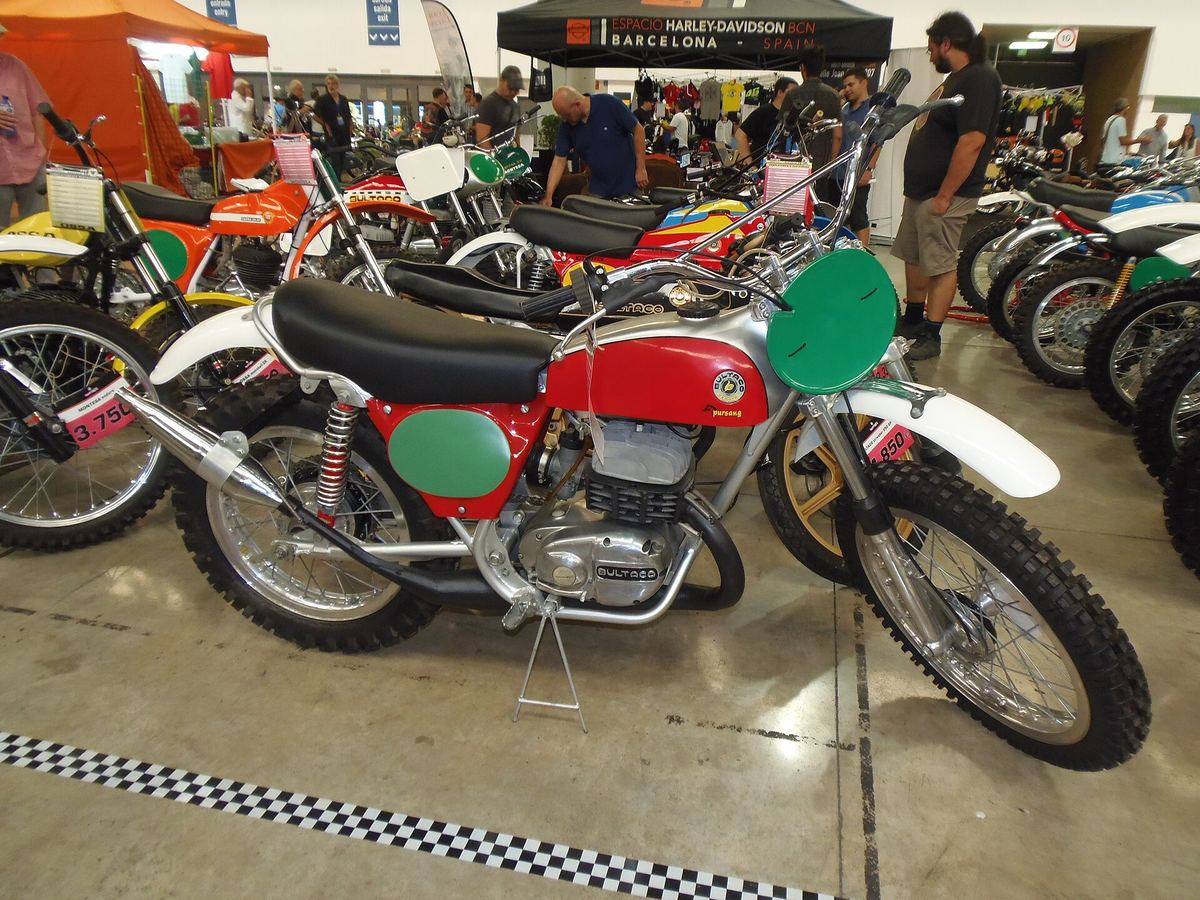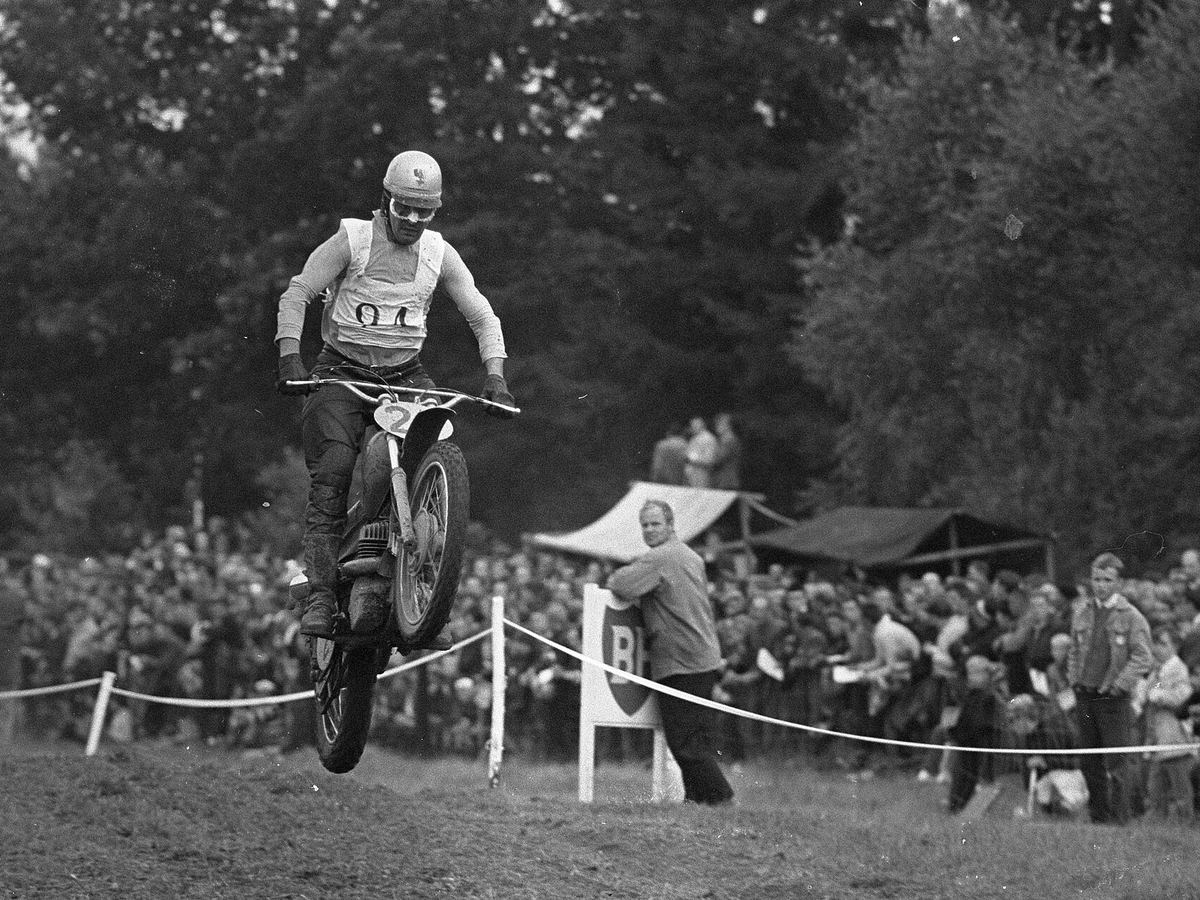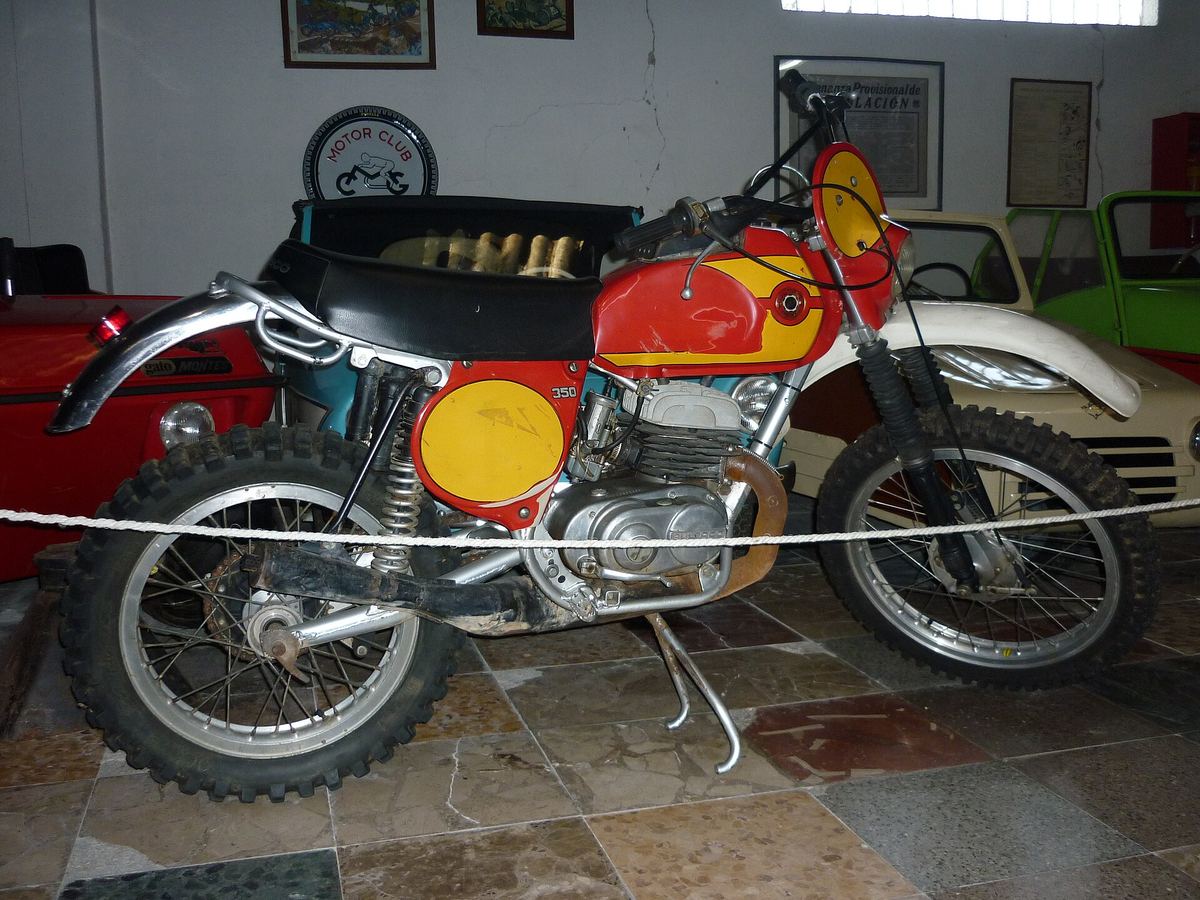
A Bultaco Frontera MK10 of 1976, the year Bultaco riders won gold medals at the International Six Days Trial in Austria.. Photo: Peprovira / Wikimedia Commons (CC BY-SA 3.0)
On the last day of the 1976 International Six Days Trial, in the Bultaco Frontera's second season, in the Styrian Alps of Austria, three Americans on Bultacos ended the week as passengers. Mike Hannon and Charlie Bethards sat on the mudguards of a tractor driven by Johann Edlinger, whose farm housed the American Bultaco support crew and who had the most complete Bultaco workshop in Austria. Behind it, Ben Bower sat on top of three crated Bultacos on a trailer, Dirt Bike reported.
They had a right to celebrate. All three had finished on gold. Hannon rode a 250 Bultaco, and Bower and Bethards 360s, Cycle recorded. Bethards was 54 and had won his first gold medal. Hannon, in his first Six Days, had told everyone he was not fast enough. Their performance, Dirt Bike wrote, "caused much eating of crow".
At the same event the Spanish works rider Toni Soler won a gold medal on a prototype Bultaco Frontera 250, built with parts from the Pursang 125 and the production Frontera.
Bultaco Frontera: born of the Matador and the Pursang
Bultaco had been chasing Six Days gold for more than a decade before the Frontera existed. Its first enduro bike, the Matador, appeared in 1964 with a 200cc engine making 16.5bhp, Cycle World recorded. The magazine described the original as designed by an American for American riders: a competitive enduro and trail machine that could also take its owner to work. By 1971, Cycle World counted twenty International Six Days Trial gold medals won on Matadors since 1964. Americans were among them: Gerry Pacholke won gold at the 1970 Six Days for Bultaco's Cemoto East team, Cycle Guide reported. "There are very few enduro bikes worthy of the name. Bultaco has three of them," ran a Bultaco advertisement in Cycle News in 1971.
The engine grew to 246cc in 1966. The Mk III of 1968 added weight, another gear and a two-stage silencer, and the Mk IV of 1971 brought electronic ignition and revised transfer ports. Cycle World still rated it "a quality machine" and perhaps the best 250 dual-purpose bike on sale, held back only by its strangled exhaust.
Meanwhile Bultaco had split its off-road range in two. The Pursang was its motocross bike and the Matador its enduro bike. A Pursang could not simply be ridden in an enduro. "Pursangs have no lights and therefore are not enduro legal," Cycle World pointed out.
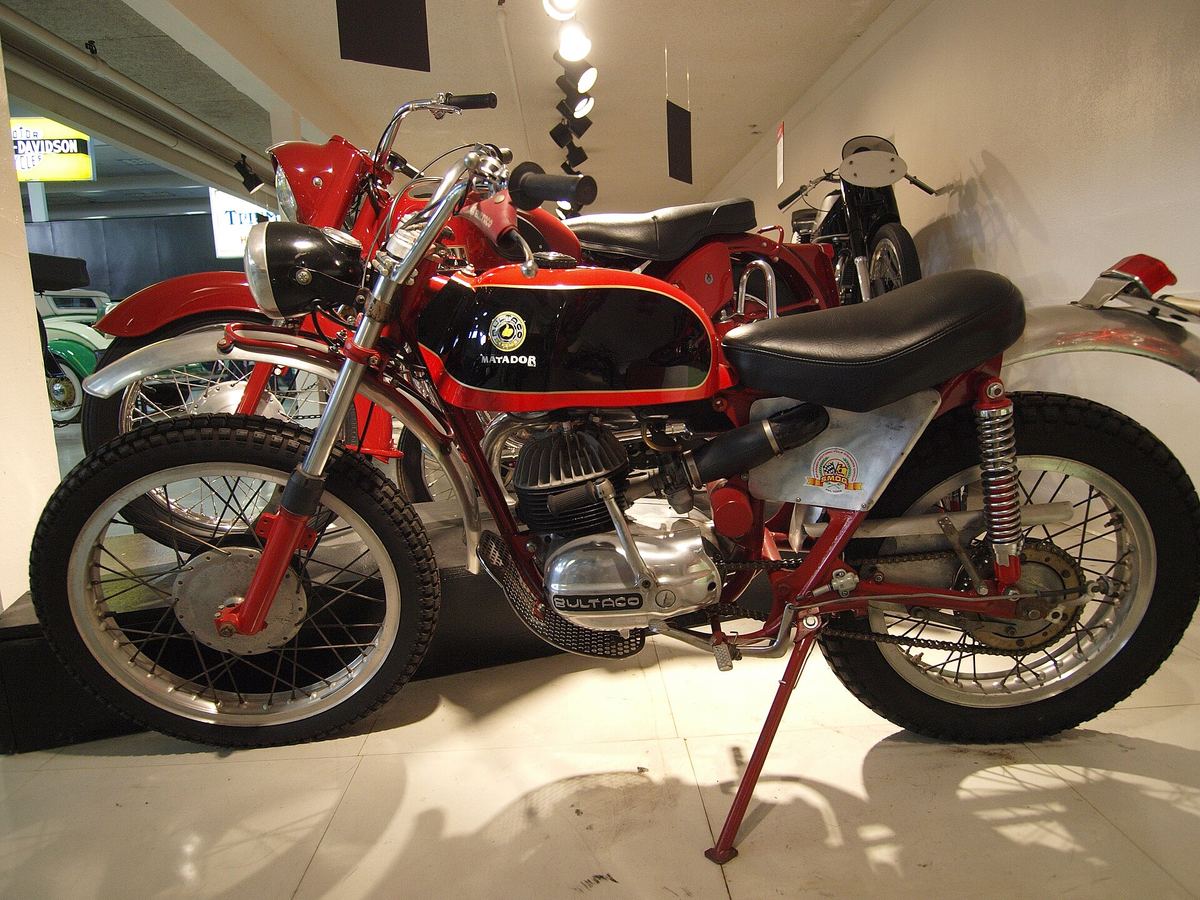
The last Matadors
For 1973 Bultaco built the Matador Mk IV "Six Days", a faithful replica of the bikes that had won four gold medals at the 1972 ISDT. Cycle World stressed that it was "not a dual purpose machine in any sense of the word". Its lights were there only to make it legal for enduros; there was no battery, horn or brake light. It came with a sealed airbox, a welded bash plate, a resettable speedometer, a clock holder, a route card holder, a tool bag and a compressed-air bottle for punctures. The 244cc engine made 28bhp at 7,000rpm, the bike weighed 264lb, and it cost $995. "Riding the Six Days is a joy," the testers wrote, and "the Six Days is a replica that hasn't been cheapened for production." Their only real complaint was the hard rear of the seat: "More padding is needed there."
The SD was as close as a production Bultaco came to a works team bike, Classic Dirt Bike says. Its engine was developed from the Pursang's, with a lower compression ratio and a smaller carburettor for more flexible power. Sammy Miller and Sid Lampkin had ridden a version of it at the 1971 Six Days in the Isle of Man.
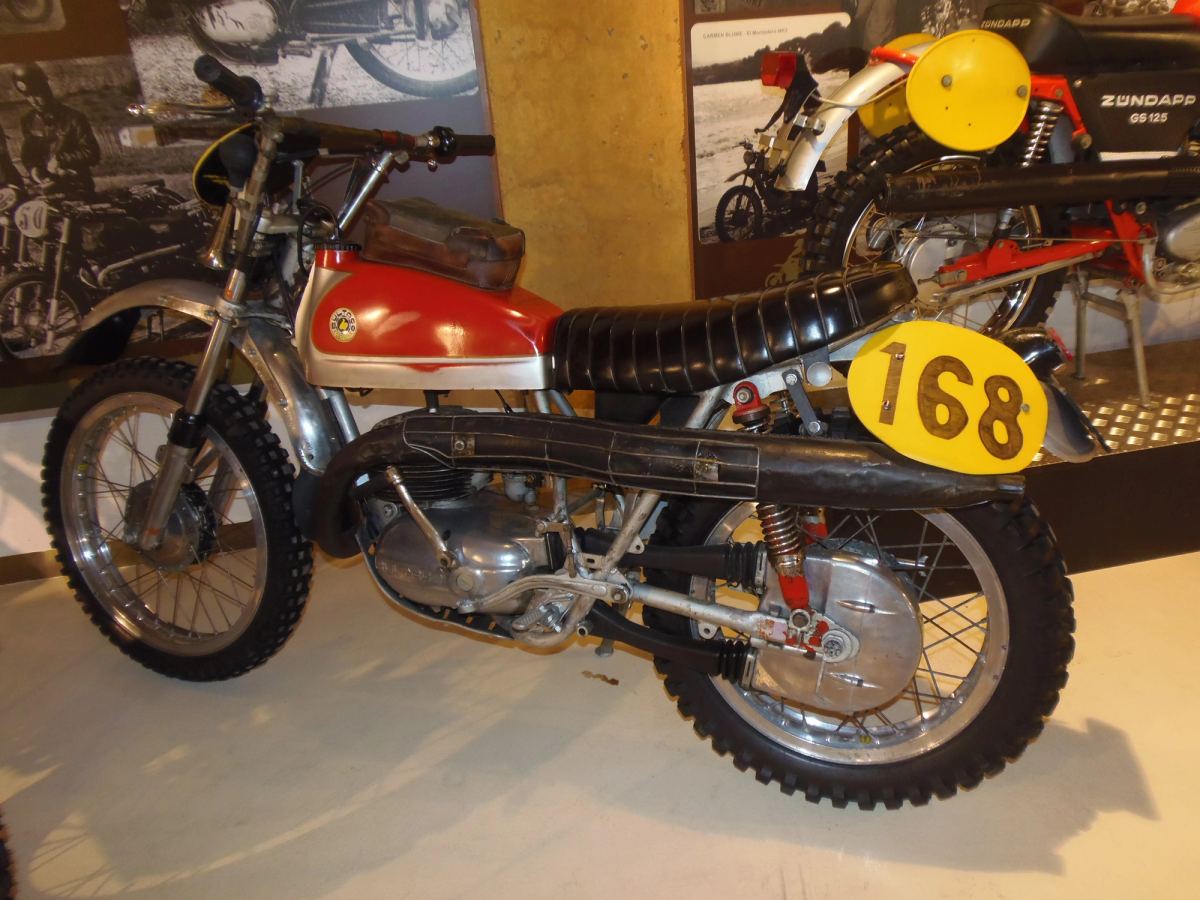
The Mk V that followed for 1974 was less of a success. Bultaco gave it the Pursang Mk V's top end, with more radical port timing, a flywheel magneto, aluminium hubs and wider plastic mudguards. Cycle World's verdict was summed up in its headline: "Improvements? Yes. A Better Bike? No." The new engine had lost the strong low and mid-range power of the Mk IV, and the forks were "far too stiff". It cost $1,195. The testers compared it to a Steinway built from the finest parts, which did its owner little good until it was properly tuned. Classic Dirt Bike calls the Mk V a "barely tamed" motocross bike. In its Frontera test, Cycle World put it bluntly: "The Matadors have remained sluggish because of their weight."
The Frontera: a Pursang with lights
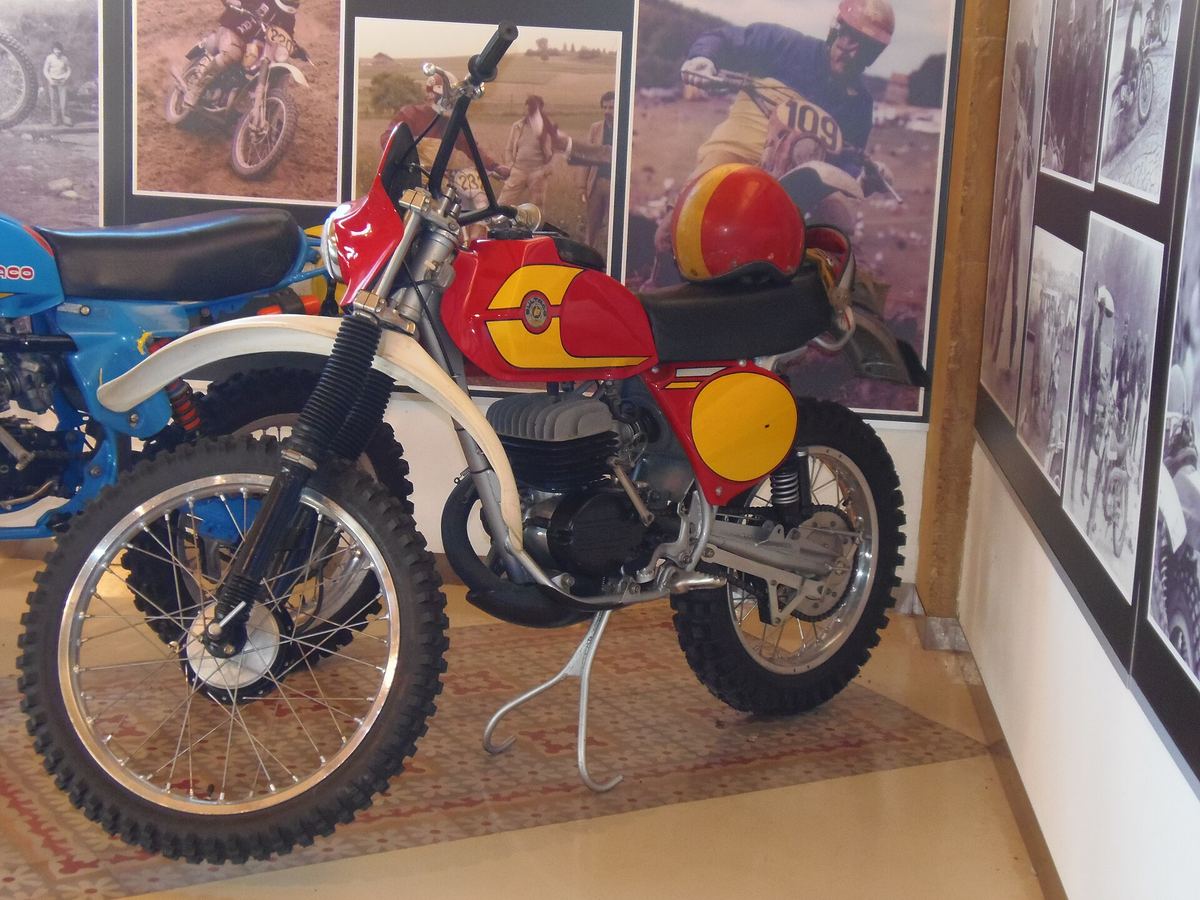
Bultaco's answer arrived in 1975. The Frontera was built to meet the demands of "American Enduro experts", according to its advertising, and the advertisements began "Imagine the lightest quickest Moto-Cross Bike made…", Bikebound recalls. The idea was simple. The Frontera took the Matador's wider gear ratios, extra silencing and lights, and put them on the Pursang's frame, suspension and engine, Cycle World explained.
The engine was left alone. "The Frontera is one of the few machines that can get away with having its engine unchanged," Cycle World wrote. The changes were around it: a wider-ratio gearbox with a left-side gearchange, a new Amal carburettor with an enrichener lever for cold starts, and a magneto and coil in place of the Pursang's Motoplat ignition, to power the lights. There was a larger fuel tank holding 3 gallons, with a small tool pouch behind the filler cap, a speedometer and a spark arrester. The forks had 8.25 inches of travel, and forward-mounted Telesco shocks gave more than six inches at the rear axle. In the United States it cost $1,595.
Cycle World tested one the hard way, entering it in the ISDT qualifier at California City. Its staff rider earned a silver medal. The engine seized mildly two miles in, because the factory set very tight piston clearances; the suspension damping faded on the second day until the factory oil was changed; the fibreglass mudguards cracked. Yet the verdict was warm: "for something that gets on with the gettin' on, the Frontera does it best." The rest of Spain's off-road industry was moving the same way. Testing Montesa's new 250 Enduro that summer, Cycle World called it a step in the right direction, "like the one Bultaco has taken with its Frontera, or Ossa with the new Super Pioneer".
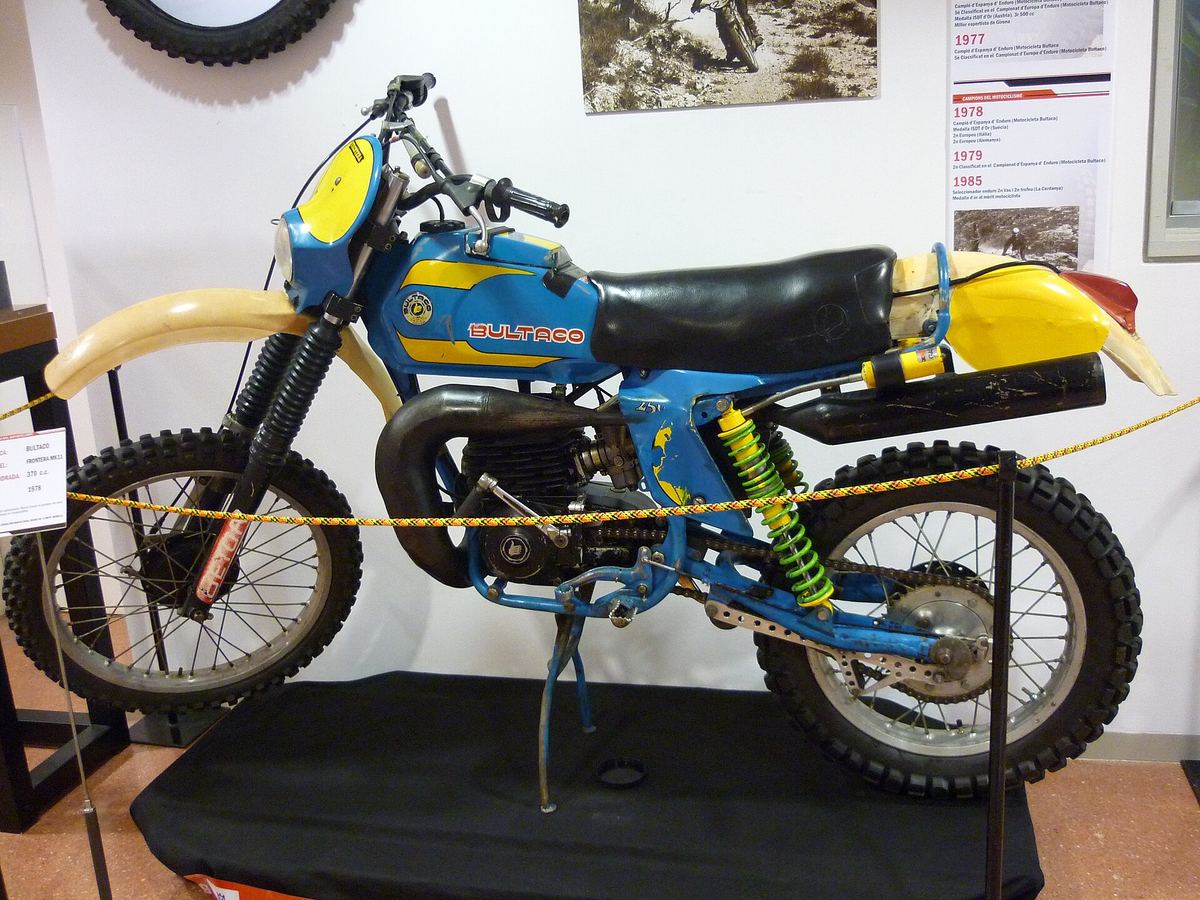
Bultaco also named a Frontera after the Six Days prize. The Gold Medal arrived just eight months after the original Frontera, according to the auction house Aguttes. Bikebound adds that the factory had medal-winning American Bultacos shipped back to Spain for close inspection, and that within two months 250 and 370 Fronteras modelled on them were in production. Cycle magazine liked them. "We didn't expect the Fronteras to be as good as they are, but it's all true…it's the trailbike supreme," it wrote. In a 1977 test it praised their "gutsy, low-down, dig-in, tractable kind of torque".
The factory kept winning with them in Spain. Narcís Casas rode a works Frontera MK11 370 in 1978, won the Spanish championship and took a gold medal at that year's Six Days.
What it took to win gold on a Bultaco
The ISDT was created so that manufacturers could prove how reliable their machines were, Cycle World reminded its readers in 1979. A gold medal was the individual's reward for finishing all six days without a single penalty point, on time at every check.
How hard that was depended on the year. Austria in 1976 was kind to the Americans: 29 of their 34 entries won gold, Dirt Bike reported. The overall winner was the Italian Alessandro Gritti. "He's an animal," Hannon told Cycle. Cycle World noted that 191 riders won gold in Austria in 1976 but only 40 in Czechoslovakia in 1977. Of 33 American entries in 1977 only two, Tom Penton and Dick Burleson, came home with gold, Motorcyclist reported.
The bikes needed care. Cycle World advised Frontera owners to maintain them to factory specifications, check every fastener and replace the mudguards. When Dirt Bike tested the last Frontera 370 in 1979, Paul Clipper found plenty to like. "First good point: torque. Lots of it," he wrote, and "the chain is excellent." He rated its stock effectiveness at 94 out of 100. But starting it on a hillside was a "religious experience", the kickstand was on the wrong side for right-handed riders, and he finished: "But I still hate the kickstarter."
Why it still matters
That 1979 test came as Bultaco's world was shrinking. Dirt Bike explained that it had not tested a Bultaco for a while because, within about a year, it had lost its West Coast distributors for KTM, Montesa, Ossa and Bultaco. The Frontera's test bike had come from Washington state. The Frontera still had no primary kickstart, and rumour said the 1980 bikes would get one. Bultaco suspended payments that same year and stopped building motorcycles in 1983.
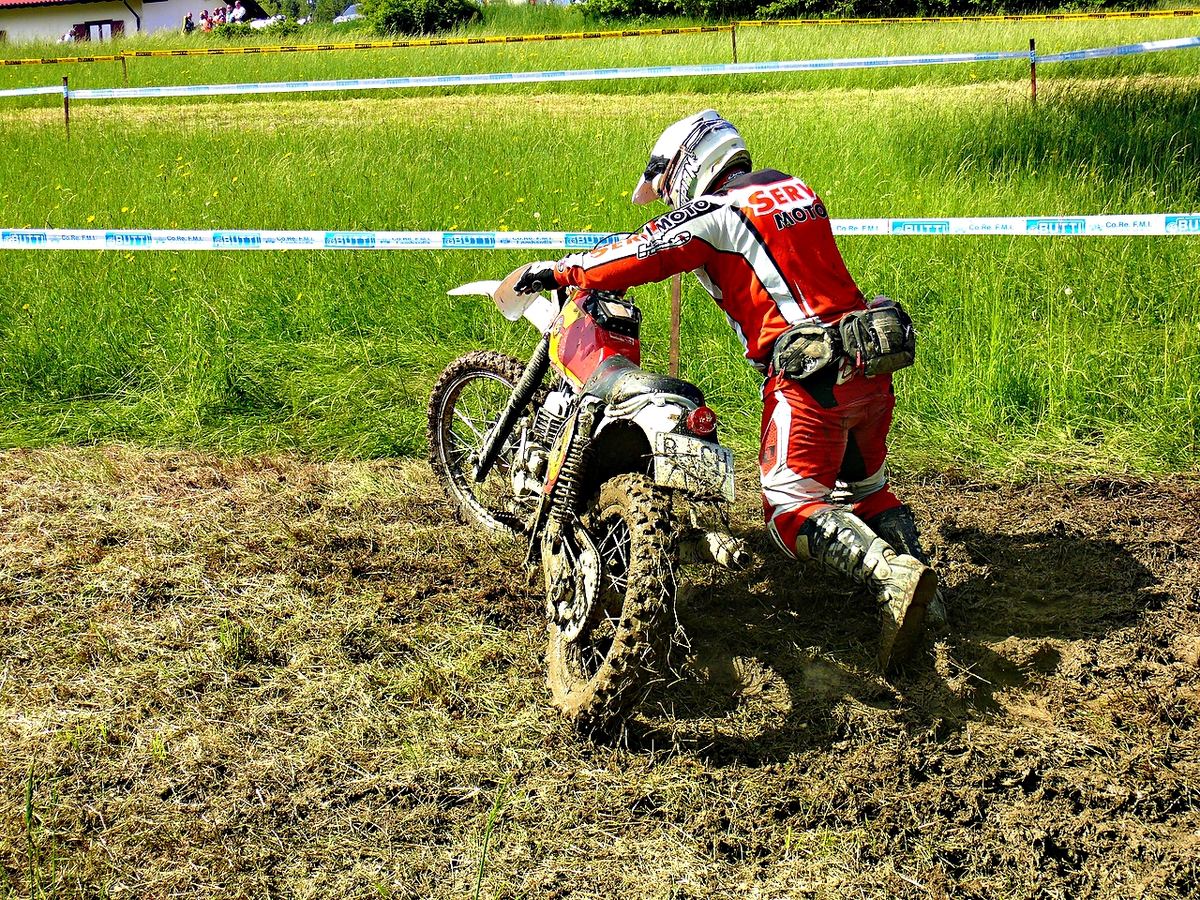
The Fronteras are still racing, and still affordable by the standards of classic motorcycles: Bike-urious recorded a 1975 Frontera 360 selling for $2,700 on eBay. At the 2016 ISDE Vintage Trophy in Navarre, Ignacio Chivite won a silver medal on a 1976 Frontera MK10 370. The Spanish workshop Café Racer Dreams built a BMW R80 RT tribute to the Frontera 370 Gold Medal, with the enduro's tank, headlight and cowl, Bike EXIF reported. Decades after the last one was built, a bike made outside Barcelona for American woods riders still turns up at the Six Days.
Quick answers
What is a Bultaco Frontera?
The Bultaco Frontera was an enduro motorcycle built by Bultaco near Barcelona from 1975. It combined the Pursang motocross bike's engine, frame and suspension with the Matador's wider gearbox, silencing and lights, so it was legal for enduros. It came in 250, 360 and 370 versions, including the Gold Medal model.
What did the Frontera replace?
It replaced the Bultaco Matador, the company's enduro bike since 1964. The Matador won twenty ISDT gold medals by 1971, but later versions were criticised for their weight, and Cycle World called them sluggish. The Frontera used the lighter, more powerful Pursang as its base instead.
Did the Bultaco Frontera win at the ISDT?
Bultaco riders won gold at the 1976 ISDT in Austria: Americans Mike Hannon, Ben Bower and Charlie Bethards, and Spanish works rider Toni Soler on a Frontera 250 prototype. Narcís Casas won gold at the 1978 Six Days on a works Frontera MK11 370. Gold meant finishing without losing marks.
What was the Bultaco Frontera Gold Medal?
The Gold Medal was a version of the Frontera named after the ISDT's top individual award. According to the auction house Aguttes, Bultaco launched it about eight months after the original Frontera. It was offered as a 250 and a 370 and is now one of the most sought-after Fronteras.