Montesa Cota 247: the 1968 trials bike Pere Pi built to take on Bultaco
Montesa's first production trials bike rolled off the line in Esplugues in April 1968. Within a month the Montesa Cota 247 was on the podium in Scotland, and within two years it had made Don Smith European champion.
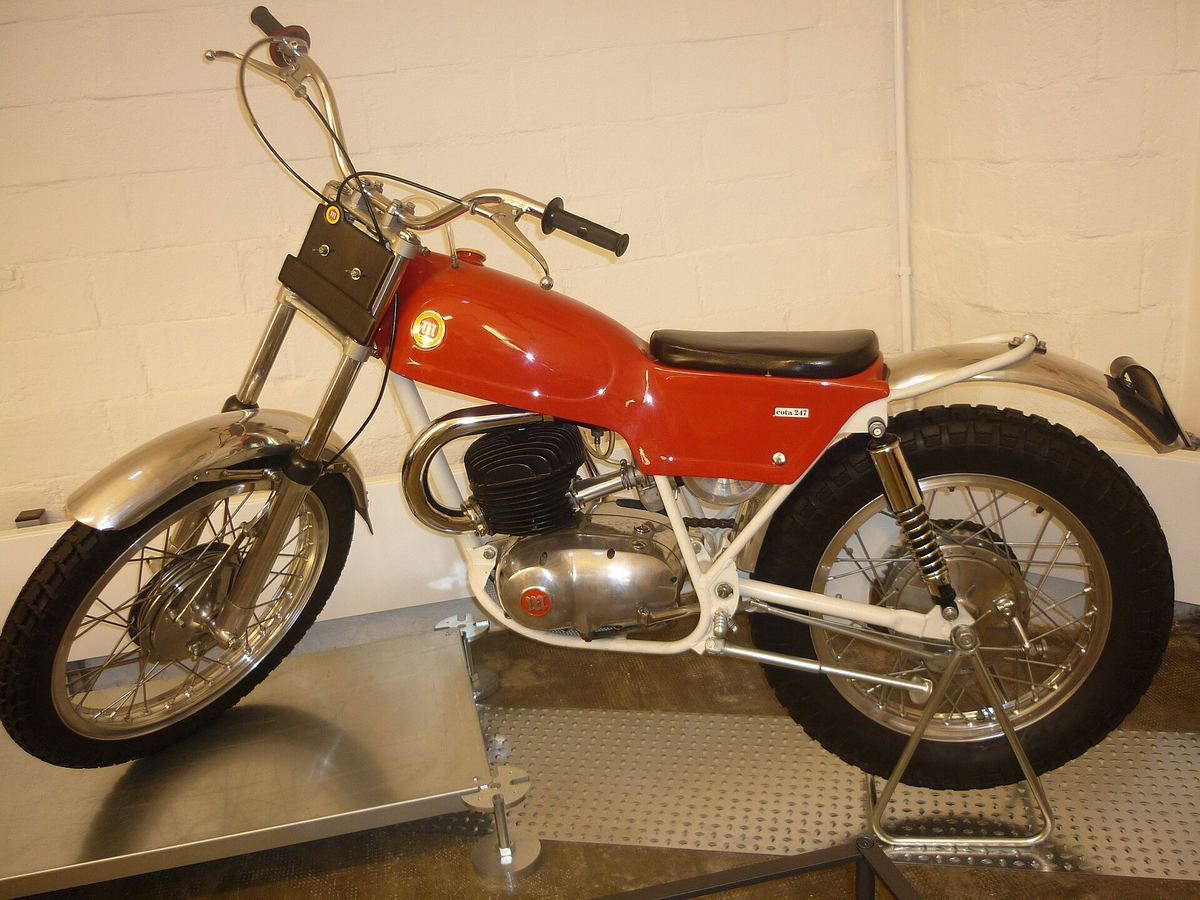
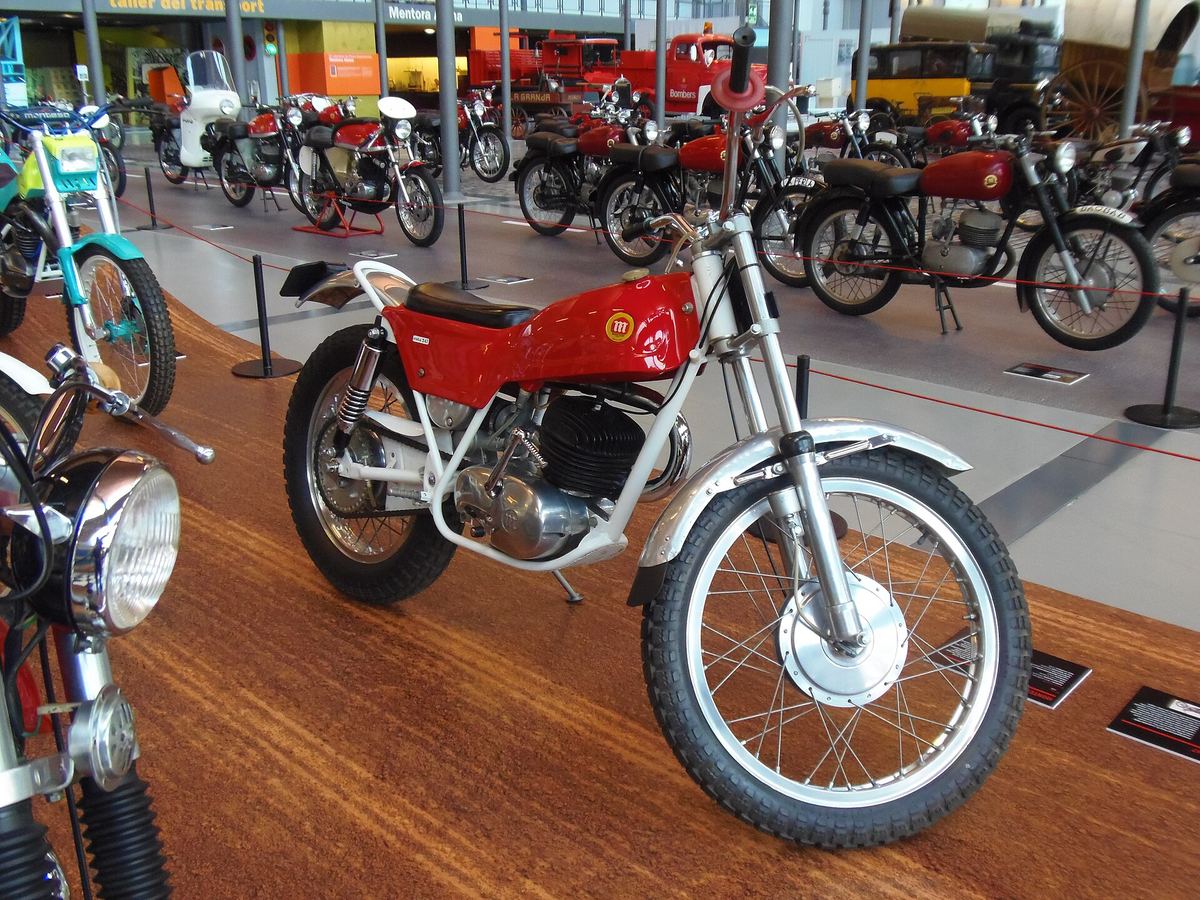
A first-version 1968 Montesa Cota 247 at the Museu de la Moto de Barcelona.. Photo: Peprovira / Wikimedia Commons (CC BY-SA 3.0)
On the Tuesday of the 1968 Scottish Six Days Trial, the route crossed the moor beyond Blackwater. It was so bad that 21 riders were stranded out there overnight. Sammy Miller and Don Smith came through with about 30 minutes in hand, Cycle World's Max King reported.
Miller was on a Bultaco. Smith was on something new: a pre-production Montesa Cota 247 from Barcelona. At the end of each day he cleaned and polished it, King wrote, "as if he had not ridden the same route as the rest of the field." He called the bike "magnificent."
Miller won. But Smith finished third overall, according to Montesa's own history, and the three other Cotas came home too. The Frenchman Christian Rayer took the best newcomer and best foreign rider awards, Classic Trial says. Pere Pi, the man who had developed the bike, was the last of the four home, with a first-class award. The Montesa Cota 247 had been in production for less than a month.
Montesa Cota 247: Barcelona's other trials bike
Montesa was founded in Barcelona in 1944 by Pedro Permanyer and Francisco Bultó. Bultó left in the late 1950s to start Bultaco, Classic Trial says. By the mid-1960s Bultaco had the Sherpa T, a light two-stroke trials bike developed with Sammy Miller.
Montesa had the engine to answer it. Its 175cc two-stroke powered the Impala road bike, and a 250cc version went into the Scorpion motocrosser, on which Pedro Pi won the 1965 Spanish championship. American importers later used a Scorpion as the model for the Yamaha DT-1.
Pi was Montesa's test rider and, by his own account, head of its development and competition department from 1964 to 1980. "I am not an engineer but my job was like an engineer," he told Classic Dirt Bike. He is Catalan, and uses the Catalan form of his name, Pere; under Franco, Catalans had to use the Spanish one, Pedro. He retired from motocross in 1966 and turned to a trials bike.
Building the Cota
In early 1967 Pi built two 250cc trials prototypes, and Rayer rode one in France. Both won national titles, Classic Trial says. The first production version, the 250 Trial, was shown at the Barcelona motorcycle show in April 1967, and only 44 were built, by hand. They sold quickly.
The bike that followed was designed by Pi, the technical director Leopoldo Milà and Jordi Ros. It had a five-speed gearbox in place of the old four, and a new fork built by Montesa itself. The steering geometry was changed 11 times during development, Cycle World reported. Its fuel tank and seat were a single fibreglass unit, light and narrow so the rider could move around the bike. That design won the 1968 Silver Delta award for industrial design from ADI-FAD.
Montesa called it Cota, a word for a height on a map: a cota 471 is a point 471 metres up a mountain, Pi explained. The first production Cota 247s rolled off the line on 30 April 1968.
In Britain, the importer built a team. Don Barrett, who ran its trials programme, wanted Gordon Farley first, but Farley was under contract to Greeves. Charlie Harris joined, and Don Smith signed in December 1967 as the second choice, Classic Trial says. Smith had won the first European trials title, the Challenge Henry Groutars, in 1964 on a Greeves.
In Spain, Pi rode a Cota to win the first Spanish trials championship in 1968. He won all three rounds, starting in Valencia on 11 February, and beat the Bultaco riders.
1969: Don Smith, European champion
Back in Britain, Smith won the Cota's first national trial, the Peak Trial, in November 1968. In March 1969 Cycle World's B. R. Nicholls wrote that there was "no doubt about Montesa's bid to topple rival Bultaco from the top in trials."
The 1969 European championship became a fight between Smith and Dennis Jones on a 128cc Suzuki. Jones won the first two rounds. Smith won the fourth, near Verviers in Belgium, and cut Jones's lead to a single point, Classic Trial says. In another round he beat Miller himself, 32 marks to 36, with his Montesa teammate Telling third, Nicholls reported. Nicholls thought mud would favour Smith's 250 and rocks the little Suzuki. Smith led after the British round, and the title went to the last round, in Sweden in August. Smith took the title on the Cota.
At the 1969 Scottish Six Days, Montesa ran two factory-supported teams. Smith nearly missed the start after oversleeping, then led after the first day on five marks lost, Classic Trial recalls. He did not win, but the Montesa team of Smith, Farley and Lawrence Telling took the team prize. Farley had joined Montesa by then, and in 1970 he ended Miller's run of 11 British championships on a Cota.
What it took to sell a trials bike
It took a bike that did one job. Cycle World tested a Cota for its January 1969 issue and called it "virtually the ultimate weapon in its field." There were no lights and nothing it did not need. The magazine's only real complaint was a front brake that could lock without warning on loose descents. At almost $900, it said, the price was fair "for that much experience."
It took riders, too. By 1971 Montesa had 21 works riders around the world and had sold 1,000 Cotas in Britain alone, Classic Trial says. By the end of 1972 worldwide sales had reached 27,000.
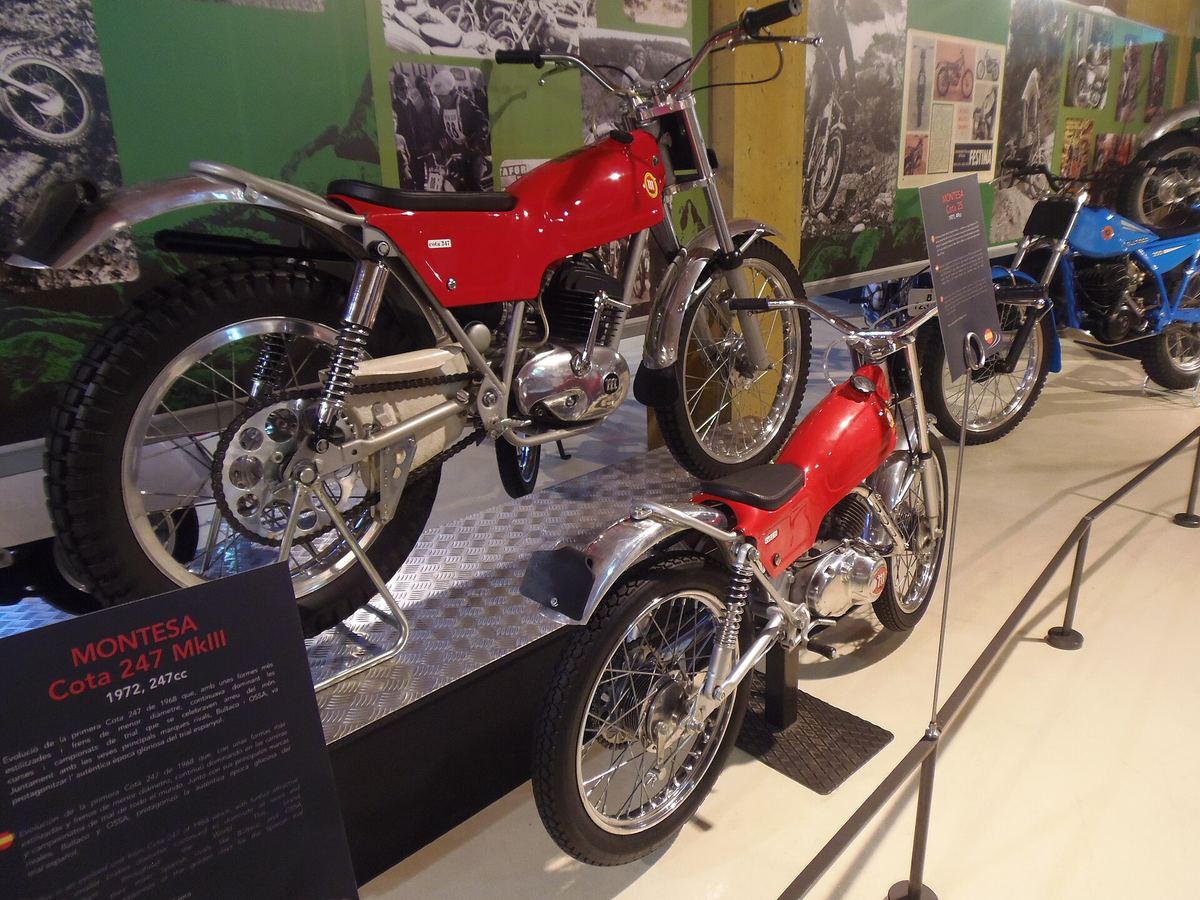
And it took a family. Montesa built a 49cc Cota 25 in the early 1970s, a small copy of the 247 for children. It sold 7,913, and riders including Jordi Tarrés and Àlex Crivillé started on one, according to Google Arts & Culture's record of the bike. The Cota 123 followed in 1972, and Pi won the first Three Days of Santigosa on it.
Why it still matters
The Cota spread fast. In 1970 riders won national titles on it in Sweden, with Benny Sellman, in France, with Rayer, and in Finland, where a very young Yrjö Vesterinen took the championship, Classic Trial says. Spain was harder: after Pi's 1968 title, Bultaco riders took the Spanish championship back and still held it in 1973, Classic Trial says.
Montesa kept refining it. For 1971 the 247 got flangeless Akront rims, Girling rear shocks and a smaller, slimmer tank and seat; in 1973 the frame and swinging arm turned black. The 247 stayed in production into the late 1970s, through several versions, including one named after the Swedish rider Ulf Karlsson, who joined the works team in 1974. Its successors went further: in 1980 a Cota 348 won the World Trials Championship, Rider says, with Karlsson riding.
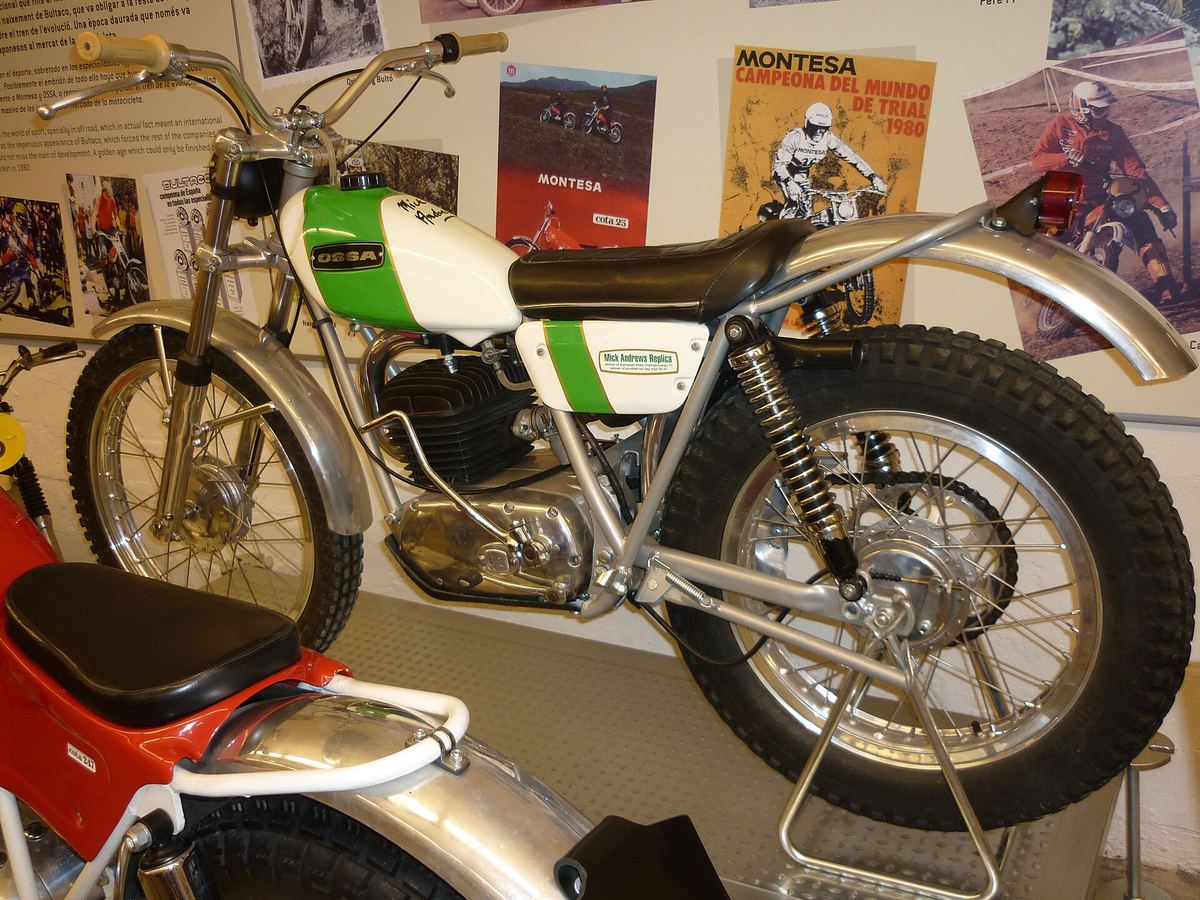
Pi himself went on to found Monty, which still makes trials bicycles, Classic Dirt Bike says. Bultaco and Ossa did not survive the 1980s; Montesa did, partly through Honda, which bought into the company in the early 1980s. The Ossa MAR and the Sherpa T are classic bikes now. The Cota is still a model name. Montesa Cotas are still built today, in Honda's factory, according to Mapfre and Motor1, and the trials bike named after the height of a mountain is still climbing.
Quick answers
When was the Montesa Cota 247 made?
The first production Montesa Cota 247s left the factory on 30 April 1968, after 44 hand-built 250 Trial models in 1967. Sources give the end of production as 1977 or 1978. It came in several versions, including the 1975 VUK, named after the Swedish rider Ulf Karlsson.
Who designed the Montesa Cota 247?
The Montesa Cota 247 was designed by Pere (Pedro) Pi, Montesa's test rider and head of development, with technical director Leopoldo Milà and Jordi Ros. Pi rode it to the first Spanish trials championship in 1968. Its one-piece tank and seat won a Silver Delta design award.
What does Cota mean on a Montesa?
Cota is the Spanish and Catalan word for a height on a map. Pere Pi explained that "cota 471" means a point 471 metres up a mountain, a fitting name for a trials bike built to climb. Montesa has used the name on its trials bikes ever since 1968.
What did the Montesa Cota 247 win?
Pere Pi won the first Spanish trials championship on a Cota in 1968, and Don Smith finished third at the 1968 Scottish Six Days on a pre-production bike. In 1969 Smith won the European Trials Championship on a Cota 247, and Montesa won the team prize at the Scottish Six Days.