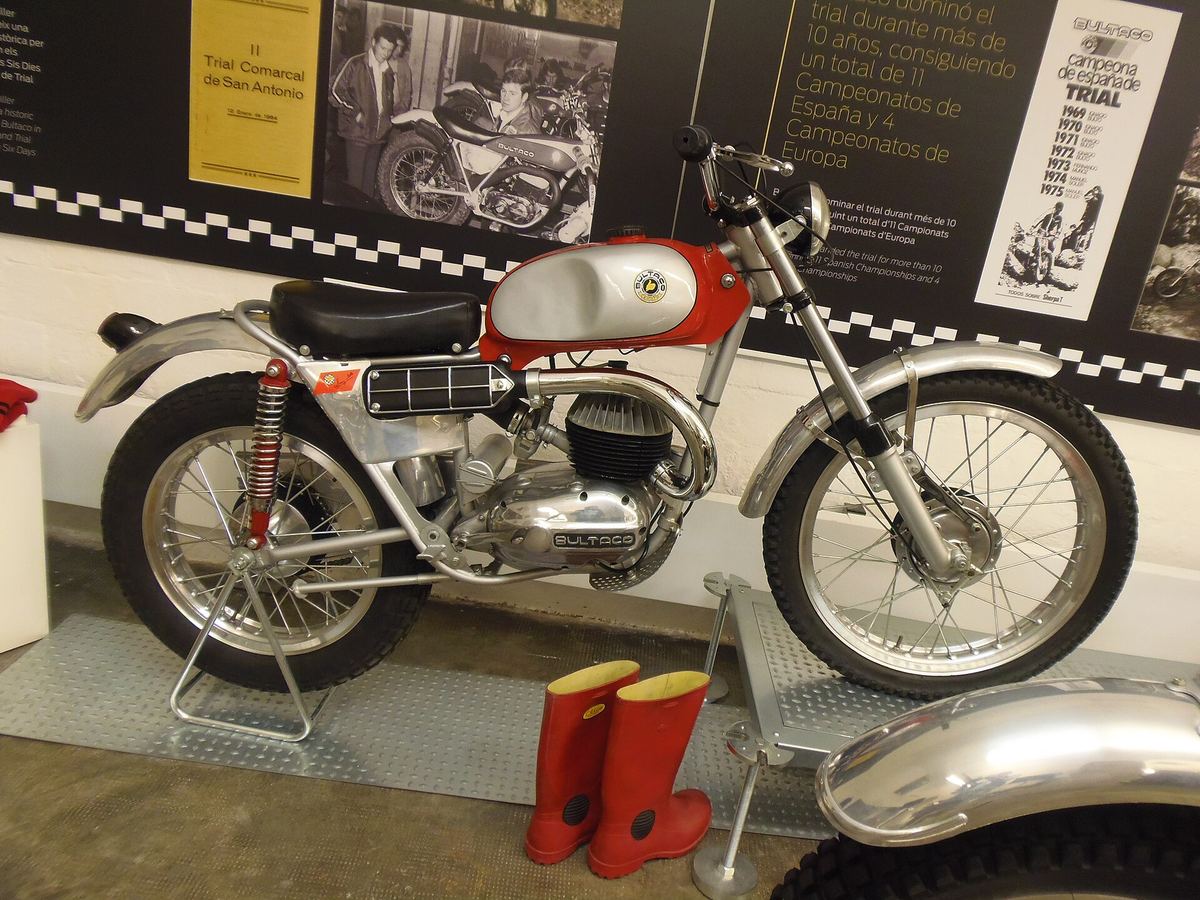
A 1965 Bultaco Sherpa T Model 10, the first production version.. Photo: Peprovira / Wikimedia Commons, CC BY-SA 4.0
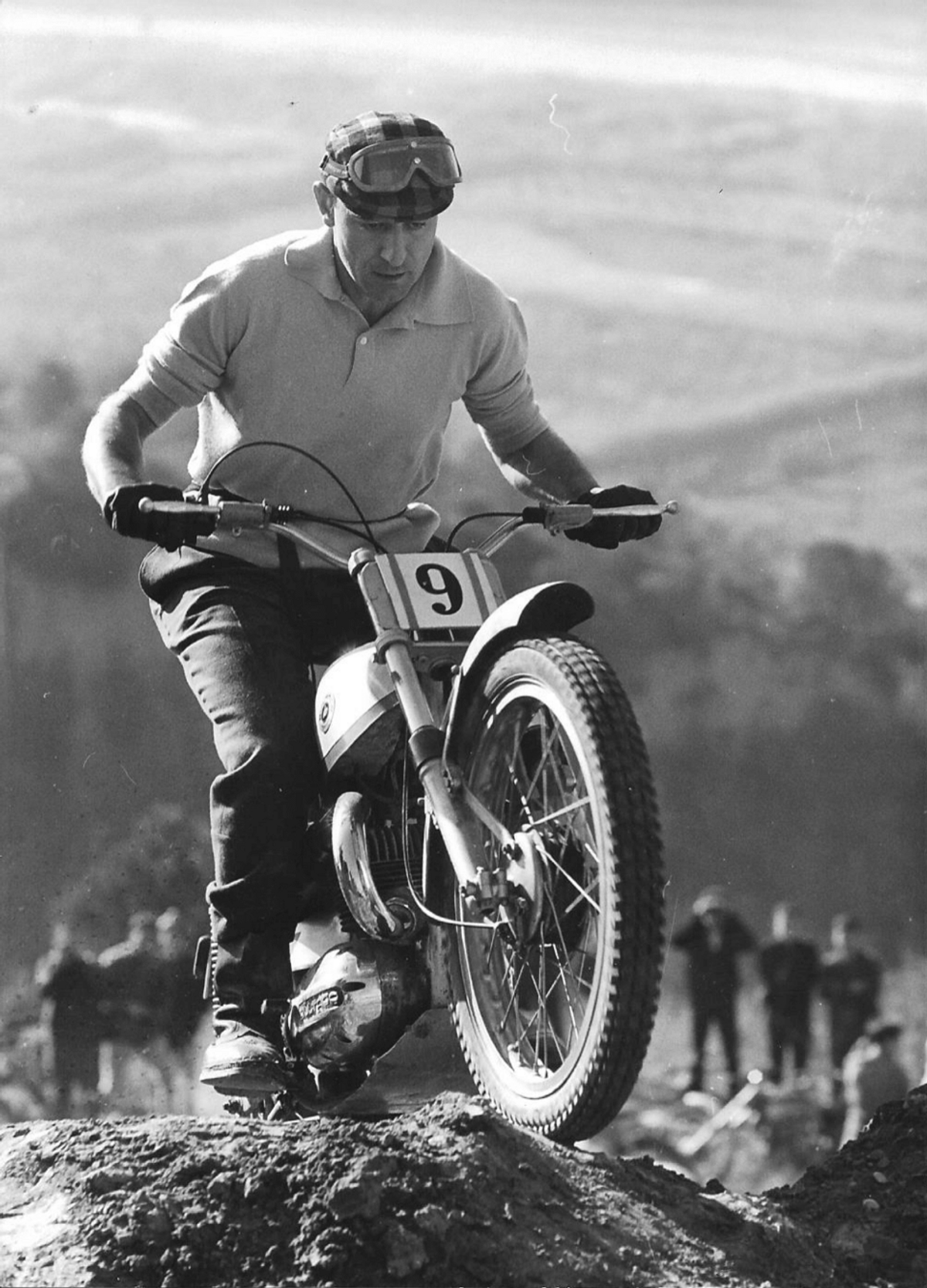
Scotland, May 1965. Sammy Miller rode a small Spanish two-stroke registered 669 NHO through six days of sections in the Scottish Highlands and won the Scottish Six Days Trial. The machine was the Bultaco Sherpa T, a 244cc trials bike he had helped build in Spain only months before. Arthur Lampkin finished second on a BSA, four marks behind.
The margin was small. What it meant was not. In the words of Cycle World's European correspondent at the time, it was the first win in the event by a two-stroke and the first by a machine that was not British. For decades, trials had belonged to heavy British four-strokes from makers such as Ariel and BSA. Within a few years the best riders in Europe were on lightweight two-strokes, most of them from Spanish factories.
That shift began with an Ulsterman, a Catalan industrialist and, according to Cycle World, 12 days of work.
Why the Bultaco Sherpa T was built
The Bultaco Sherpa T was built because its founder wanted to win in a sport still dominated by British riders and British factories. Francesc Xavier Bultó, known as Paco, had co-founded Montesa in 1944. He resigned in May 1958 when Montesa's board decided to withdraw from racing, and his racing team backed him in starting a new company. Its name joined his surname to his nickname: Bultó plus Paco gave Bultaco.
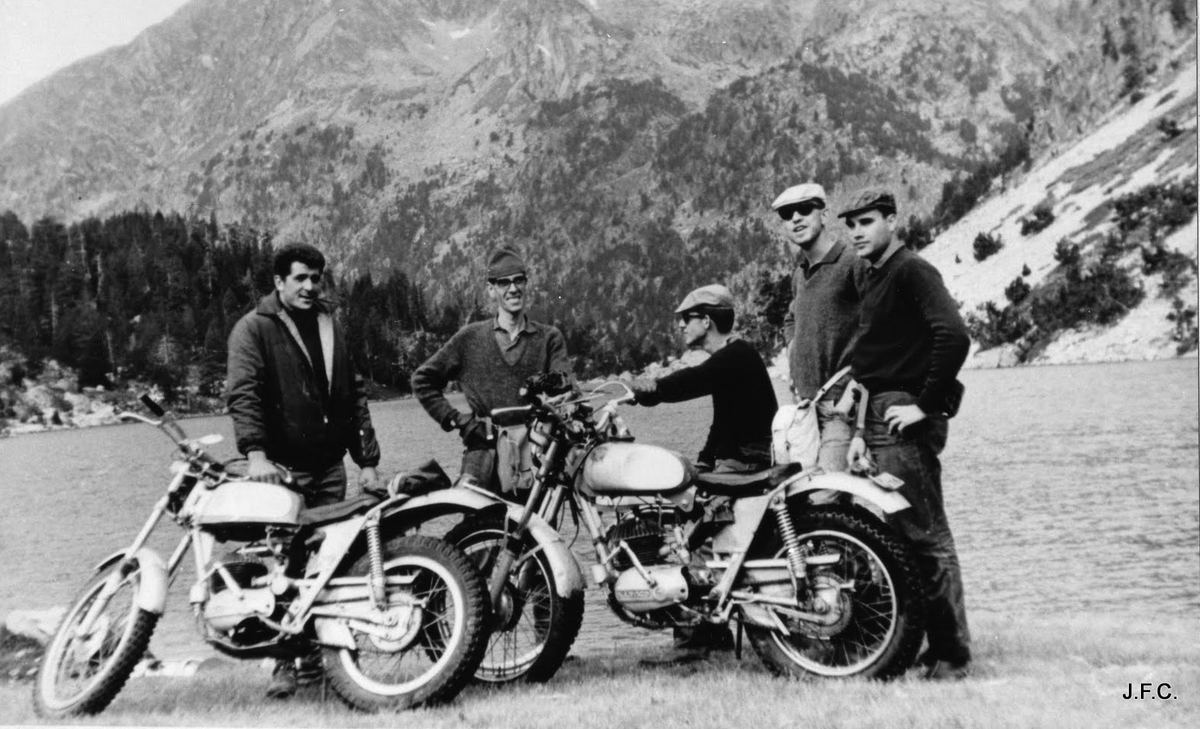
Bultaco already had a farm-and-mountain bike, the 200cc Sherpa N of 1960. Bultó's nephews took one to a trial in Paris in 1962 and, according to the Spanish magazine Trial, came home convinced of two things: the bike could compete, and Sammy Miller was the best rider in the sport.
Trial reports that Bultó ran his own event, the Trial de San Antonio, on the family farm at Cunit, south of Barcelona, and that his nephew Oriol Puig Bultó entered the 1963 Scottish Six Days on a prototype and retired.
Miller was a hard man to hire. Born in Belfast in 1933, he was the works Ariel rider, the man most associated with the 500cc Ariel HT5 registered GOV 132 and, according to his own museum, 11 times in succession British Trials Champion. He was loyal to Ariel and, according to Trial, turned down Bultó's first offer in 1964. When Ariel pulled out of competition at the end of that year, he went to Spain.
Accounts differ on exactly when he first rode a Bultaco. Motorcycle Classics writes that he was photographed testing one on Bultó's land before his contract with Ariel ran out, and before Bultaco hired him in October 1964. Cycle World, Miller's museum and historian Phillip Tooth agree on the result: a new bike, built around Miller, in 12 days.
What made the Sherpa T different
The Sherpa T was light, and lightness changed everything. The FIM puts the difference at about 20 kg less than the machines riders used before. In observed trials, riders score penalty marks every time a foot touches the ground, so a light bike is easier to balance, lift and turn at walking pace.
Cycle World's April 1967 road test called the 12-day project one of the shortest and most successful developments in motorcycling history. The magazine also revealed a surprise: the 250 engine was designed for the Sherpa T first, because Bultaco did not make a 250 at the time. Its cylinder head had radial fins, spreading out like the spokes of a wheel. That helped the engine stay cool at the very low speeds trials demand, when there is little air flowing past it.
The clever part was in the flywheels. A flywheel is a heavy disc that keeps the engine turning between power strokes. The Sherpa T carried lead-filled flywheels outside the crankcase, in the primary drive cover. They kept the engine pulling at the lowest revs, where a normal two-stroke would stall. Cycle World said the bike had the rider feeling he could not kill it.
The frame was a single-loop, all-welded design with gussets at the joints, which Cycle World found sturdy and free of flex.
Everything else served the same purpose. There was a tiny IRZ carburettor, a wide-ratio gearbox with a very low first gear, footrests set high and well back for standing, and roughly 170 degrees of steering lock. The seat was little more than a pad. "The seat is just as uncomfortable as it looks," Cycle World noted, before explaining that a trials rider hardly sits down.
The Sherpa T in competition
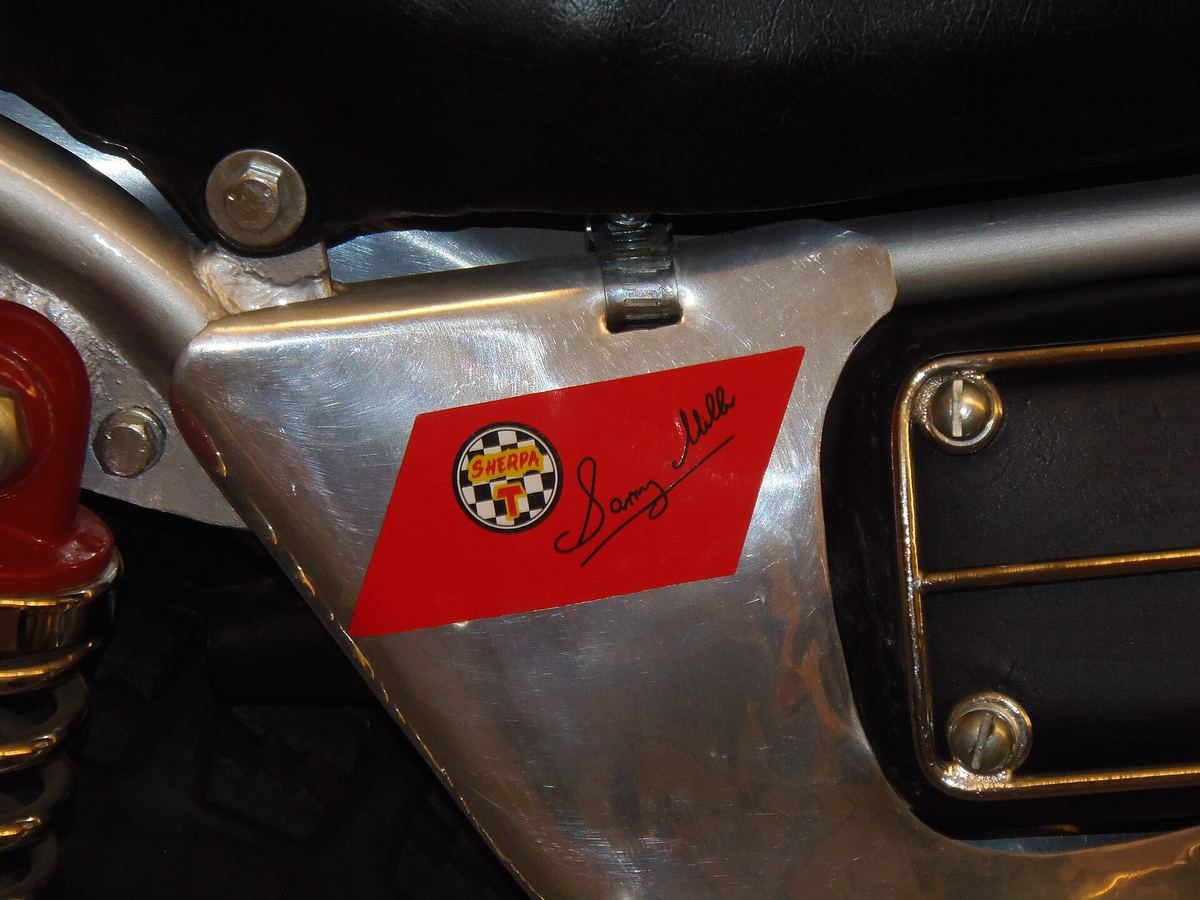
The Bultaco Sherpa T won almost as soon as it existed. Bultaco's final version was published in the British weekly Motor Cycling in January 1965, according to the Spanish magazine Trial, and in May it won the Scottish Six Days. Even then luck played a part: Scott Ellis, leading on a BSA, retired on the third day with a seized engine, Cycle World reported. Trials Guru, a specialist site, reports a clause in Miller's contract: if he did not win more than half the events he entered, Bultó did not have to pay him. He kept winning.
Miller won the Scottish again in 1967 and 1968 on Sherpa Ts, according to Motorcycle Classics. When the FIM created a European trials championship, he took the 1967–68 title, winning every round, and won it again in 1969–70.
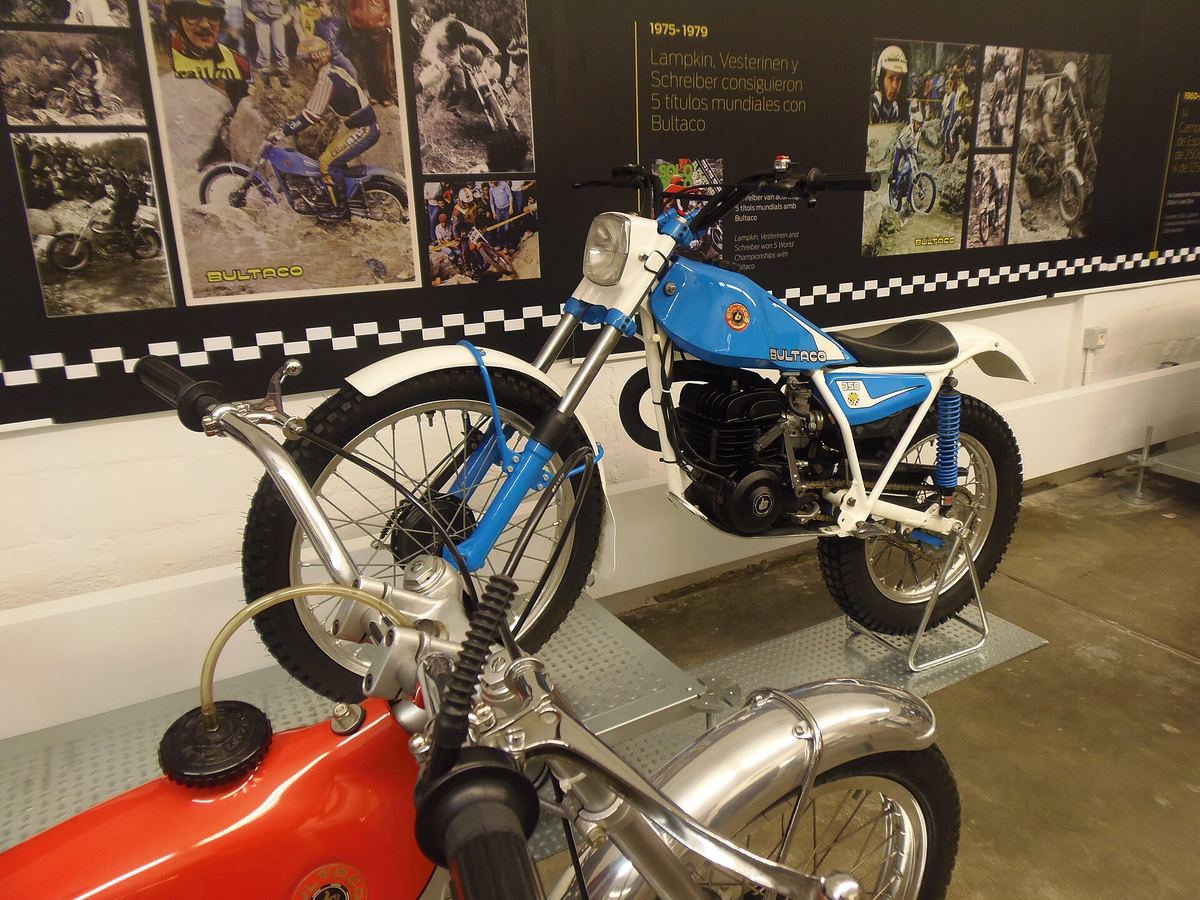
Rival riders noticed, and several leading British riders moved to Bultaco. Malcolm Rathmell won the 1974 European series on one, and in 1975, when the series became a World Championship, the first world champion was Martin Lampkin on a Bultaco, a single point ahead of Yrjö Vesterinen. The FIM's history gives the 1979 title to the American Bernie Schreiber, also on a Bultaco. Trials Guru adds that Vesterinen's three titles in between, from 1976 to 1978, were won for Bultaco too, which would make five world titles in a row.
The bike kept evolving with its riders. The 1967 Model 27 brought a five-speed gearbox and alloy wheels, and the Model 92 of 1972 grew to 350cc. By then, according to the Spanish magazine Trial, the Sherpa T had won more than 500 events and 30 championships.
The Bultaco Sherpa T today
The Bultaco Sherpa T outlived its own factory's good health. By the late 1960s it made up more than 90% of Bultaco's production, according to the Spanish magazine Trial. Bultaco's factory shut in 1979, reopened in 1980 with government help, and finally closed on 6 February 1987, according to motorcycle historian Phillip Tooth. The final evolution, the Model 198B/199B of 1981, had a six-speed gearbox and a white frame based on a prototype developed by Vesterinen, according to Trial.
Collectors value the first bikes most. Trial estimates that about 2,000 four-speed Model 10s were built in 1965 and 1966, and that perhaps 100 or fewer well-restored examples survive. Motorcycle Classics reports that only 700 of the first five-speed Model 27 were made, and in December 2025 valued a 1967 Sherpa T at $6,000 to $9,000.
The machine that started it all, 669 NHO, still exists: its owner, Jon Mathews, told the site RetroTrials he bought it around 1990 in a job lot for £400.
Few machines of the 1960s changed a whole sport so quickly. In July 2015 Bultaco riders gathered at the Circuit de Barcelona to mark the Sherpa T's 50th anniversary, according to Trials Guru.
Miller later joined Honda to develop its first trials bike, the TL250. His collection became the Sammy Miller Motorcycle Museum in Hampshire, home to more than 450 motorcycles.
Twelve days to build it, six days to prove it. Trials riders have been standing on two-strokes ever since.
Quick answers
Who designed the Bultaco Sherpa T?
Sammy Miller developed the Bultaco Sherpa T with Paco Bultó's factory in Spain in 1964. Cycle World reported in 1967 that the project took just 12 days. Miller, then Britain's leading trials rider, won the 1965 Scottish Six Days Trial on it.
Was the Bultaco Sherpa T the first two-stroke to win the Scottish Six Days Trial?
Yes. Sammy Miller's win on a Bultaco Sherpa T in May 1965 was the first Scottish Six Days Trial victory for a two-stroke and for a non-British motorcycle, as Cycle World reported that year. Arthur Lampkin finished second on a BSA.
What engine does the Bultaco Sherpa T have?
The first Bultaco Sherpa T had a 244cc air-cooled two-stroke single with a radially finned head and lead-filled external flywheels. The Model 10 of 1965 had a four-speed gearbox; the Model 27 of 1967 moved to five speeds. The Model 92 of 1972 grew to 350cc.
How many Bultaco Sherpa T Model 10 were made?
About 2,000 Bultaco Sherpa T Model 10s were built in 1965 and 1966, according to the Spanish magazine Trial: around 500 in the first series and 1,500 in the second. The magazine estimates that 100 or fewer well-restored examples survive.