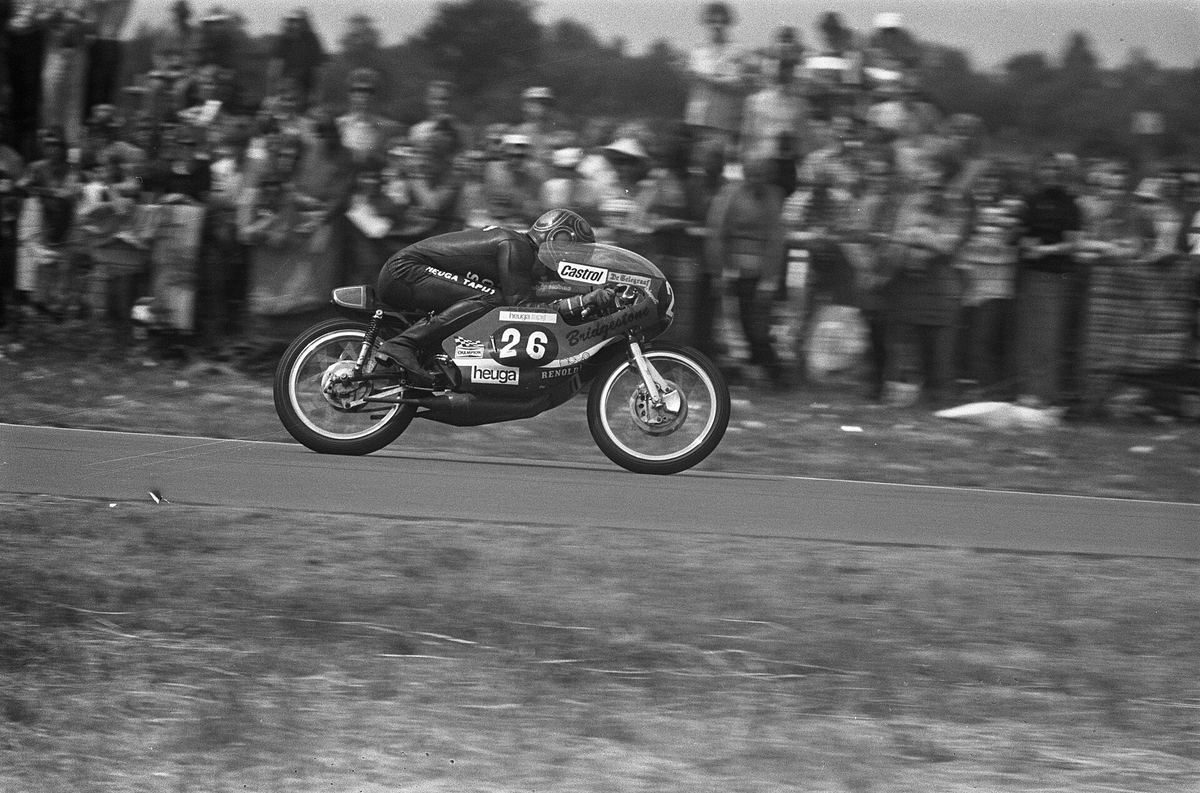
Jos Schurgers on his home-built Bridgestone in the 125cc race at Assen, 1973.. Photo: Anefo / Nationaal Archief, CC0
On 1 July 1973, on the old 14 km Spa-Francorchamps road circuit, the Dutch national anthem was played for the winner of the 125cc Belgian Grand Prix. With the championship leader absent through injury, Jos Schurgers had beaten Ángel Nieto's works Morbidelli by 23 seconds, and Chas Mortimer's Yamaha by just over a minute.
His machine carried a name better known on tyres. It was a Bridgestone, or at least it was called one. The Japanese company had stopped building motorcycles three years earlier, and Schurgers had built this one himself, in the Netherlands, from a road-bike engine that he and the German tuner Jörg Möller had rebuilt until little of the original was left.
It was the eighth of 12 rounds, the only Grand Prix Schurgers ever won, and the only one ever won by a motorcycle named Bridgestone. He was 26, and he had built the frame, fairing and tank with his own hands.
A tyre company's engine and a rider too big for 50s
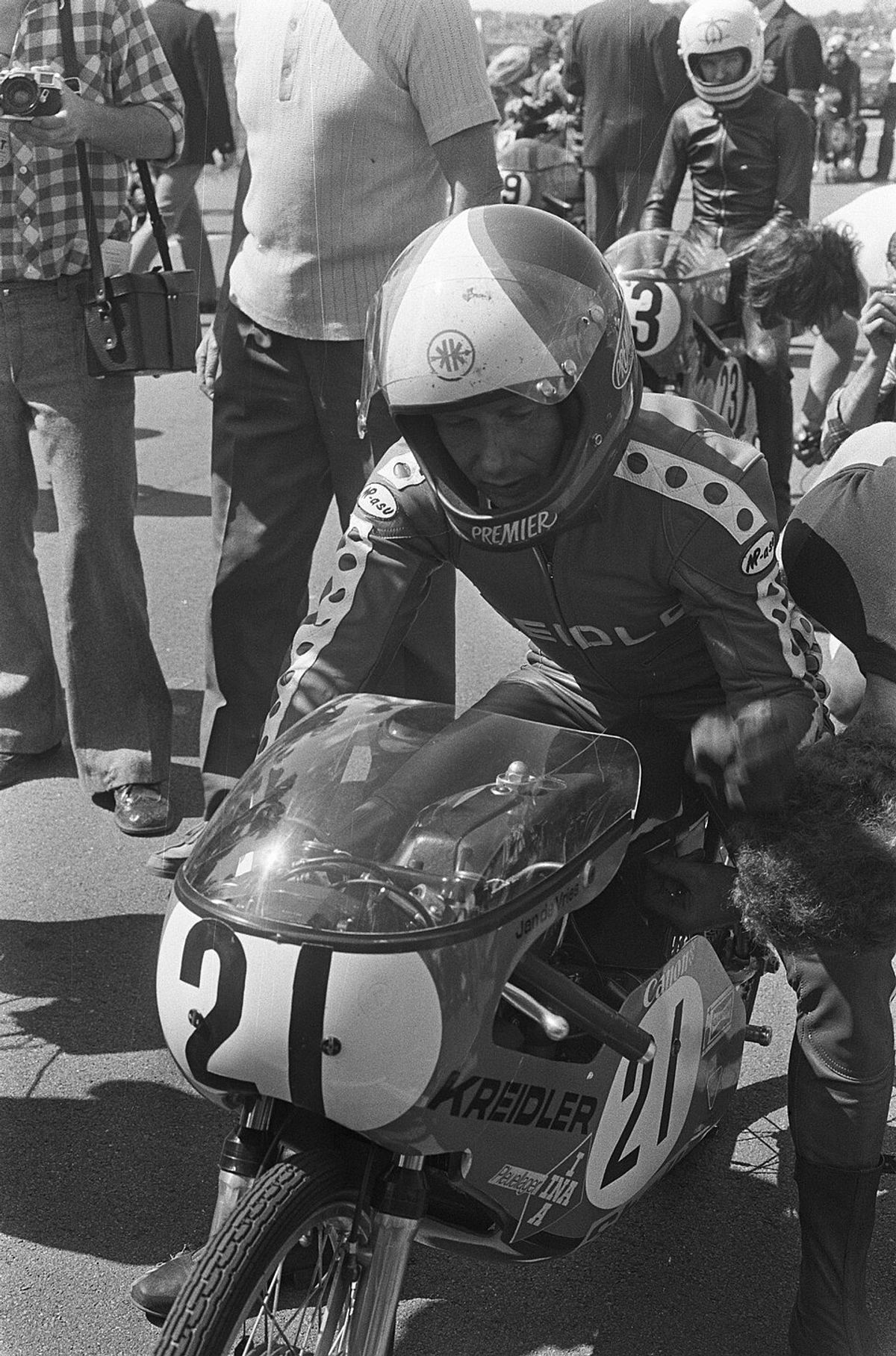
Jos Schurgers was born in Haarlem on 18 February 1947. He made his world championship debut at the 1968 Dutch TT, finishing fifth in the 50cc race on a Kreidler, and in 1971 he finished third in the 50cc championship behind his team-mate Jan de Vries and Nieto. He was more than a rider in that team: he designed and built the bodywork for de Vries's title-winning Van Veen Kreidler.
He told Speedweek that he felt slightly too big for the 50s, and Van Veen, which ran Kreidler's racing team, no longer wanted him. He needed a 125cc machine and had no factory to give him one.
Bridgestone, the tyre maker founded in Japan in 1931, had built motorcycles from 1960, starting with 50cc two-stroke mopeds and adding 175cc, 250cc and 350cc models. It stopped in 1970. Schurgers had been impressed by its 175cc twin, an engine with rotary valves: discs on the crankshaft that open and close the intake ports, which let a two-stroke breathe more precisely than conventional piston ports.
With Möller, the Van Veen engineer who had developed de Vries's Kreidlers, he cut the engine down to 125cc. By the end, according to the Classic GP Assen organisers, only the engine cases were original. The cylinders were water-cooled, hard-chromed Kreidler parts, with German Mahle pistons on a custom crankshaft and connecting rods. The engine made around 35 hp.
Schurgers built a compact frame along the lines of the Kreidler Grand Prix racers, with detachable lower rails, and designed his own fairing and polyester tank, barely wider than a 50cc racer's. The bike reached 220 km/h (137 mph). He wrote to Bridgestone in Japan twice asking for support. He never received a reply.
From Assen to Spa: the 1973 season
In 1972 the Bridgestone had problems. Schurgers finished ninth in the 125cc championship, with a best result of fourth at Assen, while Nieto's Derbi won five races and the title ahead of the Yamaha-supported Kent Andersson and Mortimer. "We still had some technical problems in 1972, but 1973 went much better," he told Speedweek.
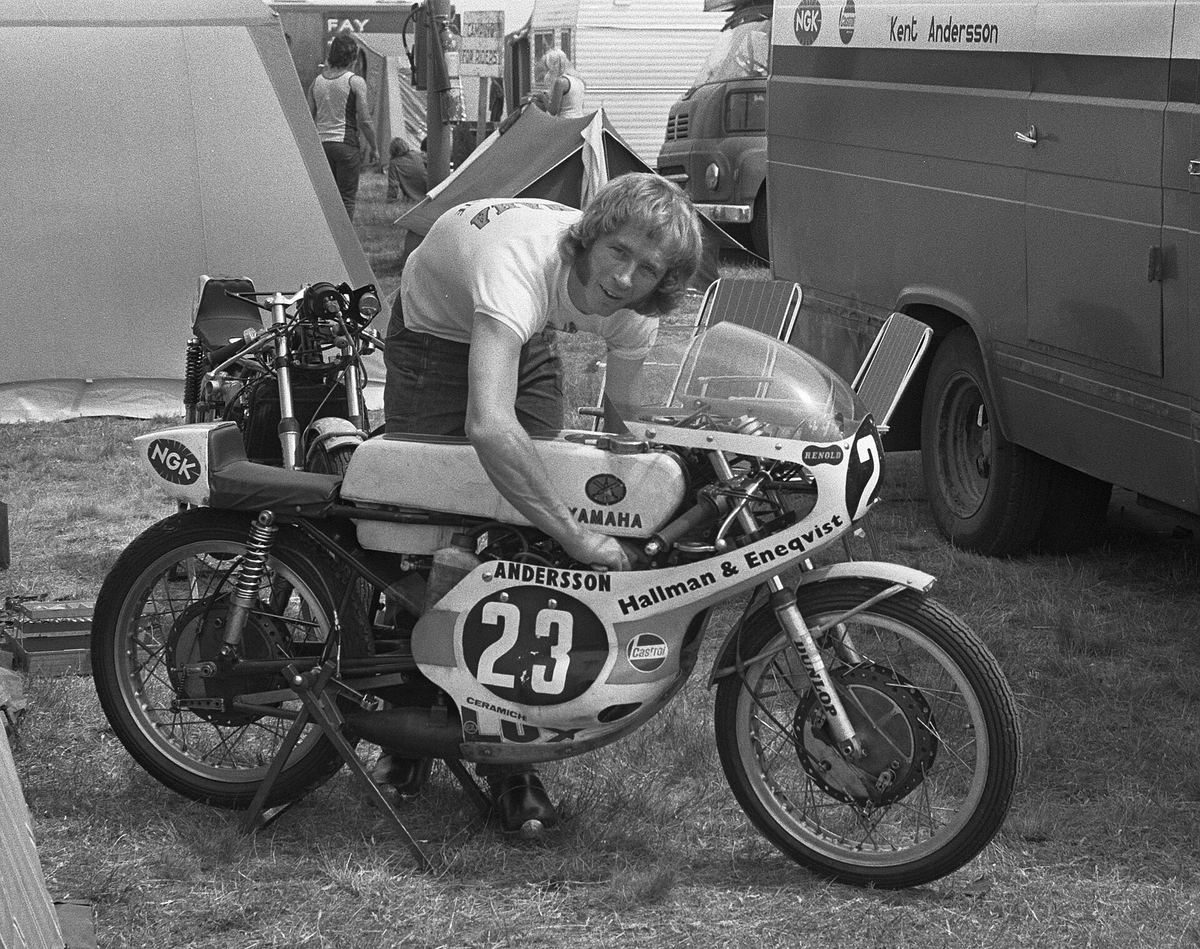
It did. Derbi had withdrawn, and Nieto moved to Morbidelli. Andersson, on a production-based Yamaha TA125, won five of the first six rounds of 1973; only Tommy Robb's win at the Isle of Man TT interrupted him. Schurgers was the most consistent of the rest. He was third at Hockenheim, second at Monza, where he finished 19.8 seconds behind Andersson over 16 laps of the fast Italian circuit, and third at Opatija in Yugoslavia.
His home race went wrong for nearly everyone. At Assen on 23 June, Schurgers did not finish. Andersson stopped to change spark plugs, crashed while trying to make up ground, and broke his leg, which put him out of racing for several weeks. Otello Buscherini crashed out, Nieto's Morbidelli stopped with engine trouble, and Eugenio Lazzarini won on a Piovaticci, ahead of Rolf Minhoff's Maico and Mortimer.
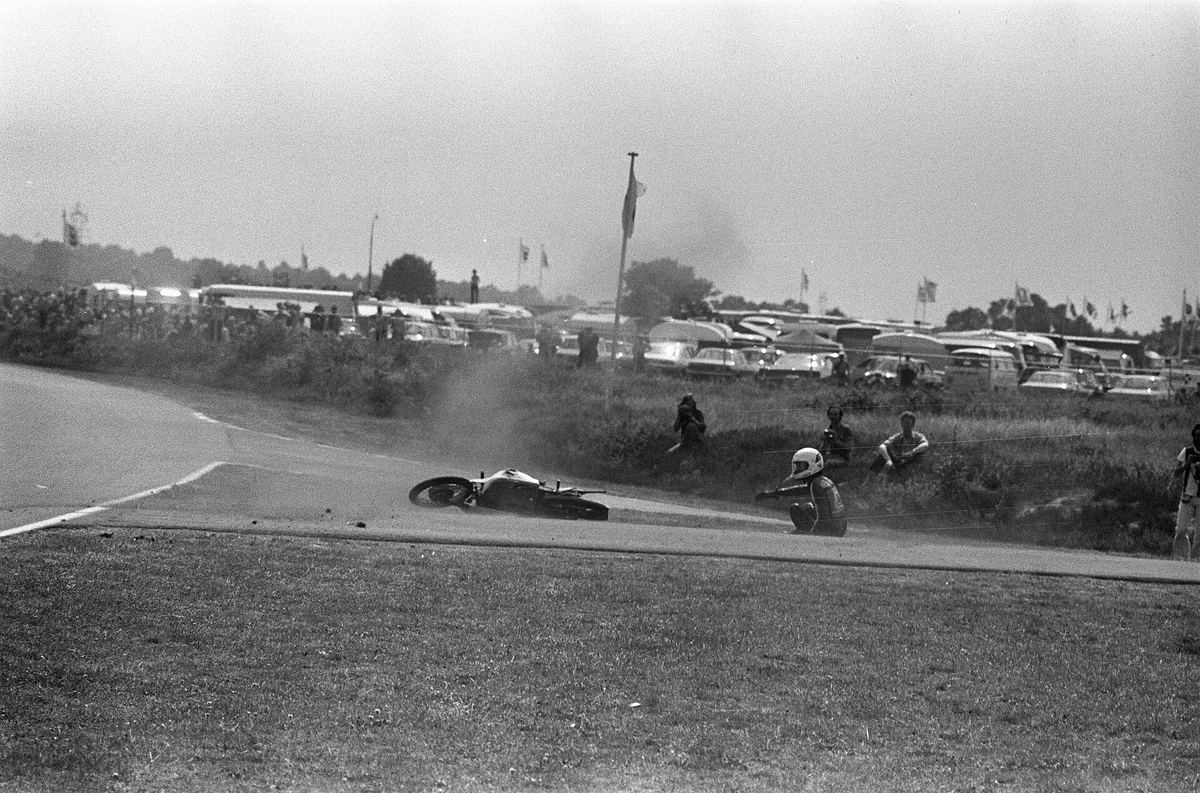
A week later, at Spa, the champion-elect was missing. Spa in 1973 was still the full 14 km circuit through the Ardennes, a road course of long, fast straights on public roads. Four years later Barry Sheene won the 500cc race there at an average of 135 mph, the fastest motorcycle Grand Prix ever run. On a circuit like that, the Bridgestone's 220 km/h top speed counted for a great deal. Schurgers covered the race distance in 32 minutes 58.7 seconds. Nieto, the man who would go on to win 90 Grands Prix, finished second on the factory Morbidelli, 23.5 seconds behind, with Mortimer third.
After the flag
Buscherini won at Brno and Imatra, Börje Jansson won at Anderstorp on a Maico, and Mortimer won the final round at Jarama. Andersson came back to take the title with 99 points. Mortimer was second on 75 and Schurgers third with 70, from 72 scored, because only the best seven results counted. "Normally I would have been world championship runner-up," he told Speedweek.
For 1974 he sold the Bridgestone to Henk van Kessel, that year's 50cc world champion, who finished fifth in the 125cc championship with it and later used it as the basis for his Condor. Schurgers raced a copy on and off, finishing fifth at Assen in 1974 and 1975, and then stopped. His career totals were 25 starts, one win and 11 podiums.
He went back to design. He styled the Van Veen OCR 1000, the company's rotary-engined road bike, and in 1978 started his own business making motorcycle fairings.
In the 1980s he bought the original Bridgestone back. It ran again at the Centennial Classic at Assen in 1997, and he has since built two replicas for classic events while keeping the original at home. At the Classic GP Assen he has lined up with the Bridgestone in the Legends class, wearing number 1.
Why it still matters
Schurgers' win belongs with Jamathi's in 1968 and de Vries's titles: the Dutch small-capacity school of the period, where riders, engineers and bodywork builders were often the same handful of people. He rode a machine he had designed, framed and clothed himself, around an engine its maker no longer supported.
It also says something about how open the smaller classes still were in 1973. That season a 125cc Grand Prix could be won by a production-based Yamaha, a German Maico, an Italian Malanca, or a one-off built in a Dutch workshop from a road engine, and the champion's bike was one any privateer could buy.
Bridgestone did come back to Grand Prix racing, on the other side of the business: from 2009 to 2015 it was the sole tyre supplier to MotoGP, which meant every bike on the grid ran on its name.
In 1973 Bridgestone never answered his letters. Its name is still on one Grand Prix win, and Jos Schurgers, who turned 75 in 2022 and still brings Bridgestones to classic meetings, put it there.
Quick answers
Has a Bridgestone motorcycle ever won a Grand Prix?
Yes, once. Jos Schurgers won the 125cc Belgian Grand Prix at Spa-Francorchamps on 1 July 1973 on a home-built Bridgestone, beating Ángel Nieto's Morbidelli by 23.5 seconds. It was the only Grand Prix ever won by a motorcycle named Bridgestone.
What engine did Jos Schurgers' Bridgestone 125 use?
Schurgers started from Bridgestone's 175cc rotary-valve two-stroke twin and, with tuner Jörg Möller, cut it to 125cc. Only the engine cases stayed original: it used Kreidler water-cooled cylinders, Mahle pistons and a custom crankshaft, and made around 35 hp, enough for 220 km/h.
When did Bridgestone stop making motorcycles?
Bridgestone, the Japanese tyre maker founded in 1931, built motorcycles from 1960, beginning with 50cc two-stroke mopeds and adding 175cc, 250cc and 350cc models. It stopped motorcycle production in 1970, three years before Jos Schurgers won a Grand Prix with a machine carrying its name.
Who won the 1973 125cc world championship?
Kent Andersson of Sweden won the 1973 125cc world championship on a Yamaha with 99 points. Chas Mortimer was second with 75, and Jos Schurgers third on his Bridgestone with 70 counted points, despite winning only once, at Spa.