Geoff Duke, 1955 Dutch TT: the riders' strike that cost a champion his crown
At the 1955 Dutch TT, privateers struck over start money and world champion Geoff Duke backed them. He won the race, and the FIM banned him for six months.
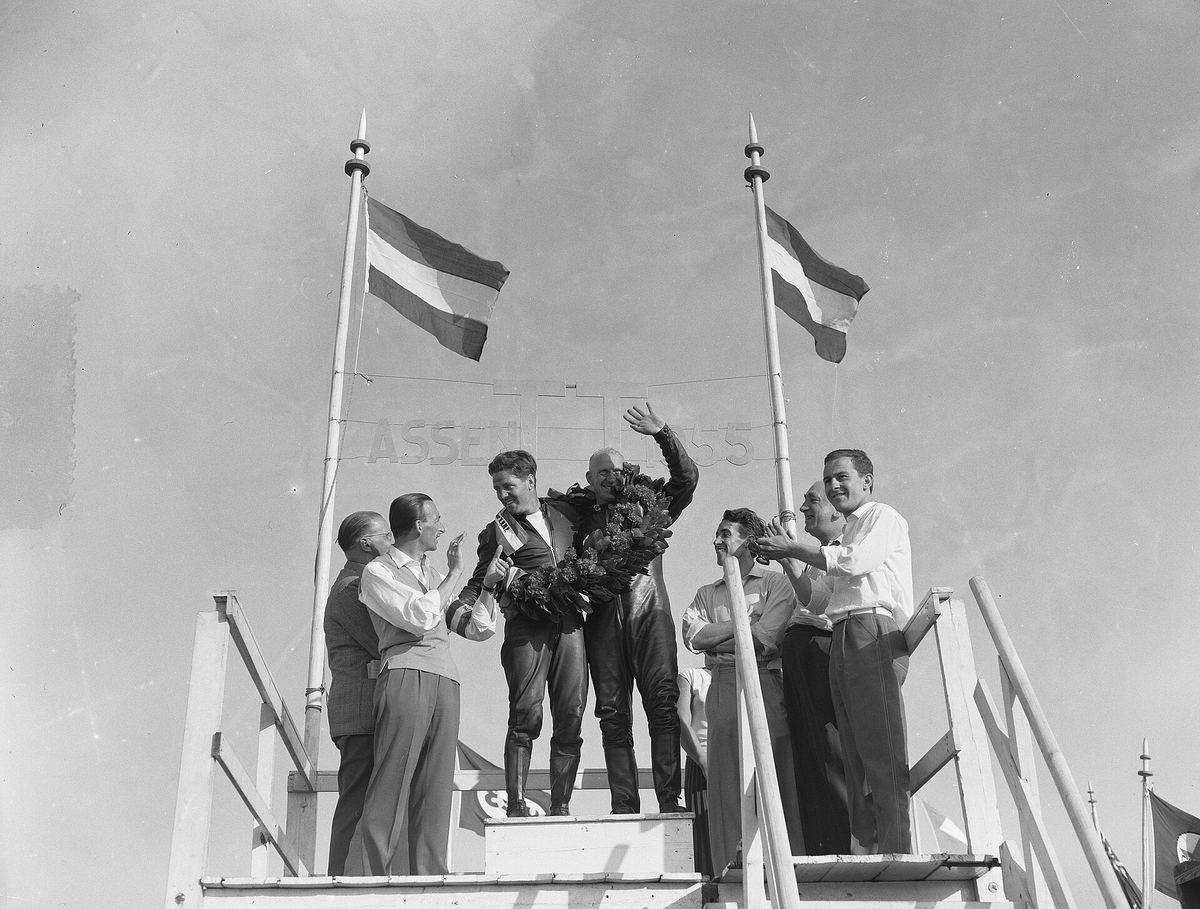
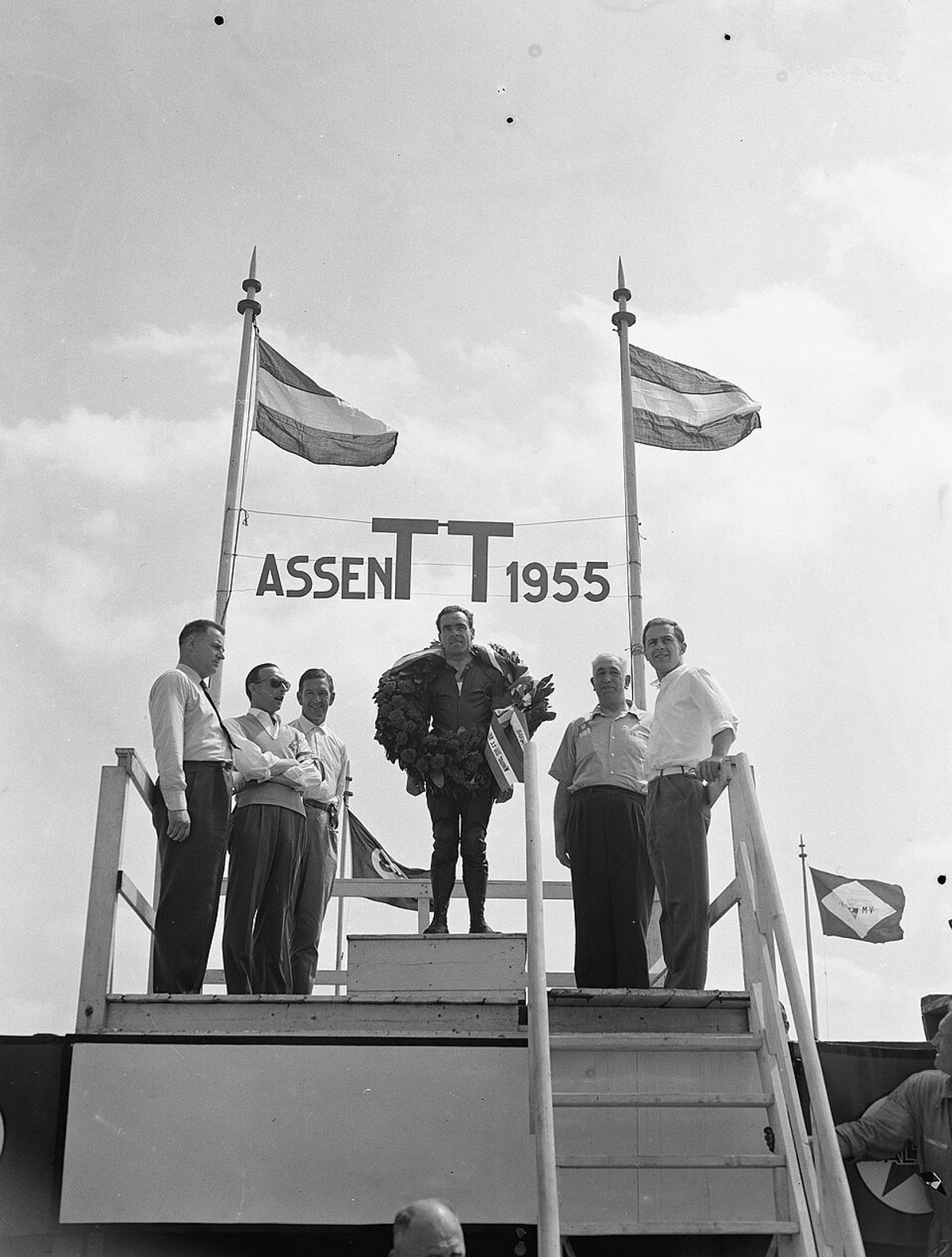
Geoff Duke, winner of the 500cc race at Assen, 16 July 1955.. Photo: Anefo / Nationaal Archief, CC0
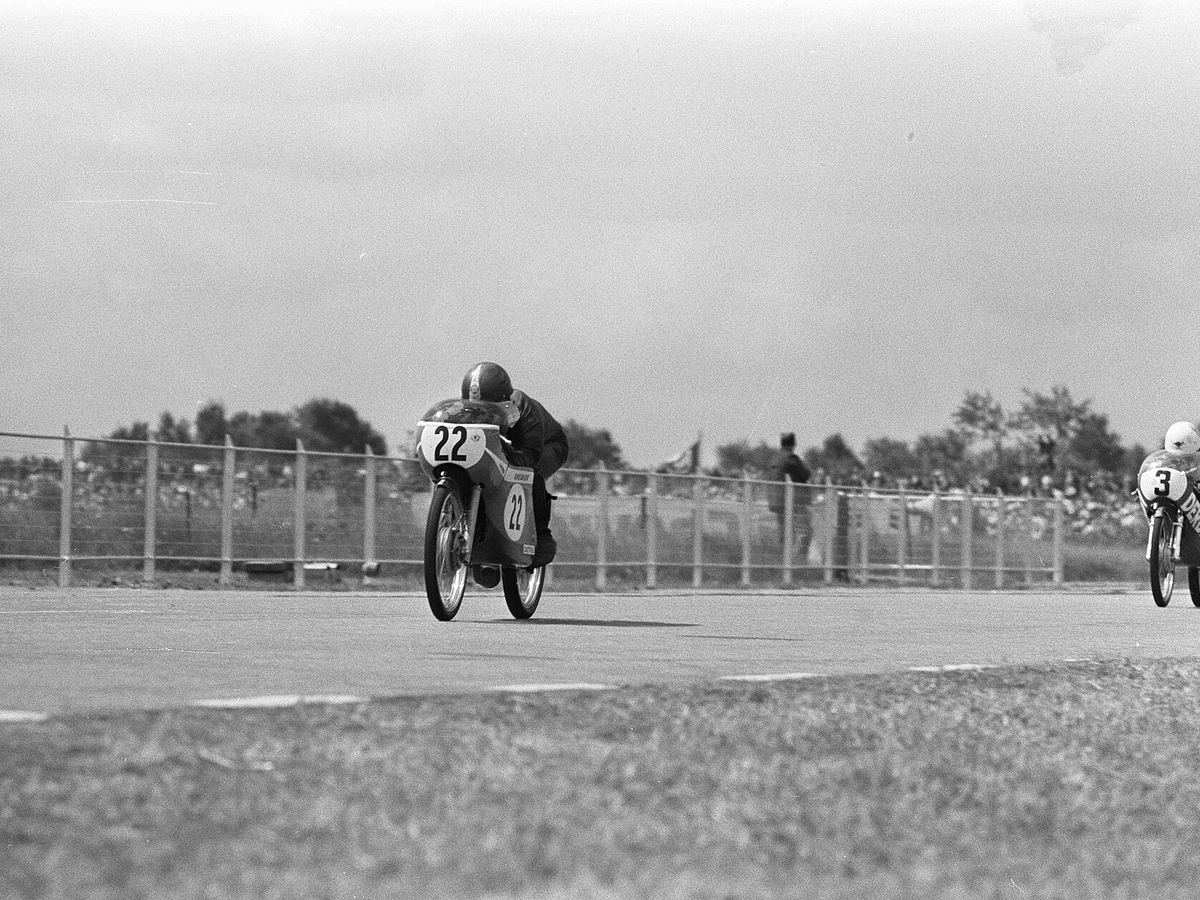
The 350cc race at the 1955 Dutch TT started as normal on Saturday 16 July. One lap later, 13 riders pulled into the pits and switched off. They were privateers, mostly from Australia and New Zealand, and by starting they had already qualified for their start money. They were not going to race any further for it.
The race went on without them. The works Moto Guzzis of Ken Kavanagh, Bill Lomas and Dickie Dale crossed the line in formation, half a second apart. Old Bike Australasia, whose account is the most detailed, calls it a mock race.
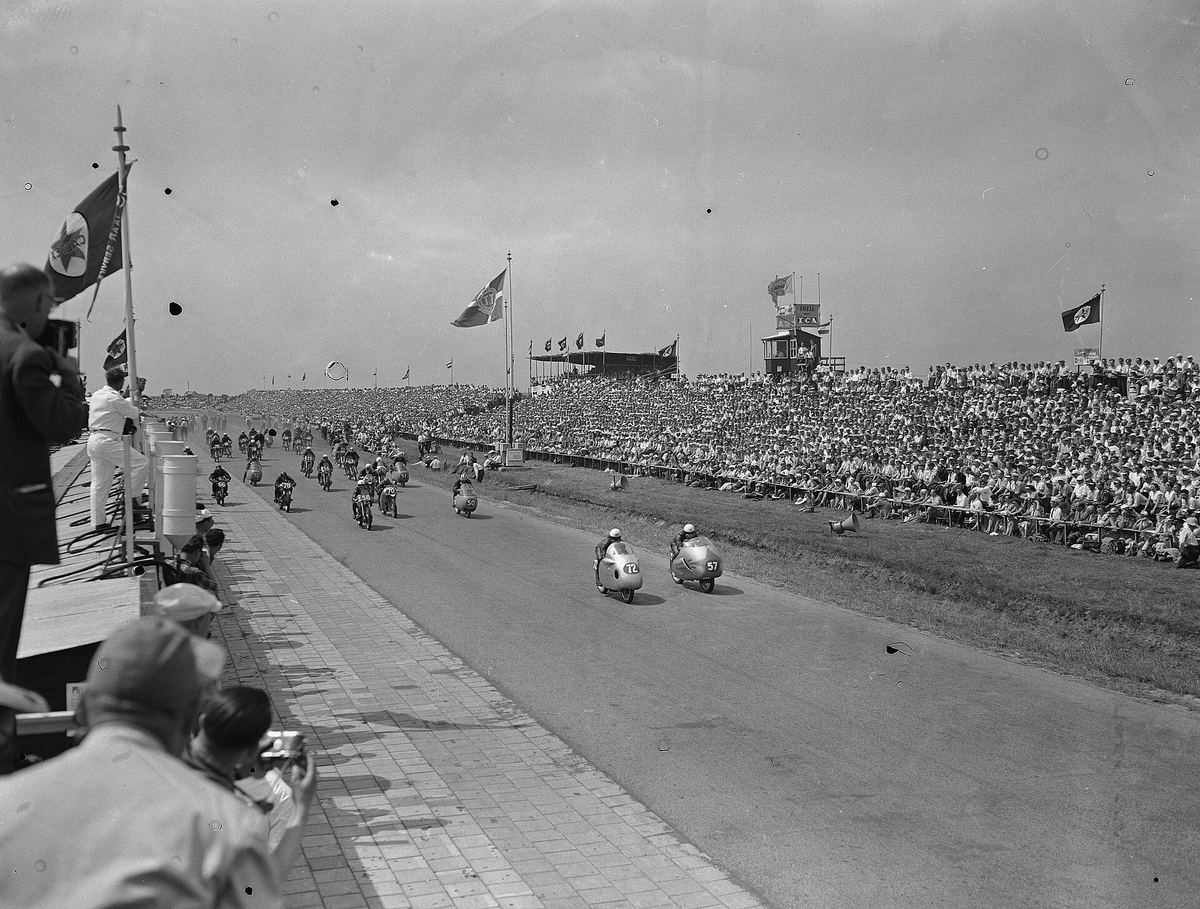
Then the strike spread. Before the 500cc race, the reigning champion, Geoff Duke, walked to the timekeepers' house with four other factory riders and said they would stop after one lap too unless the promoters paid up. The promoters gave way minutes before the start. Duke won the race. Four months later, the FIM suspended him for six months.
Geoff Duke and the price of a start
In 1955 a privateer's season ran on start money: a fee each organiser paid a rider for turning up and taking the start. Few private riders had any real hope of finishing in the prize money, so the start fee was the income. Duke later estimated the average start money for a private rider at the Dutch TT at about £20, and that had to cover travel to the Netherlands, vehicles, fuel and living. Many of them lived in tents or vans.
Assen had just been rebuilt. The old road circuit of more than 22 km had been replaced by a purpose-built 7.7 km track, and the Dutch federation, the KNMV, cited the cost of building it when it refused to raise start money above the 1954 level.
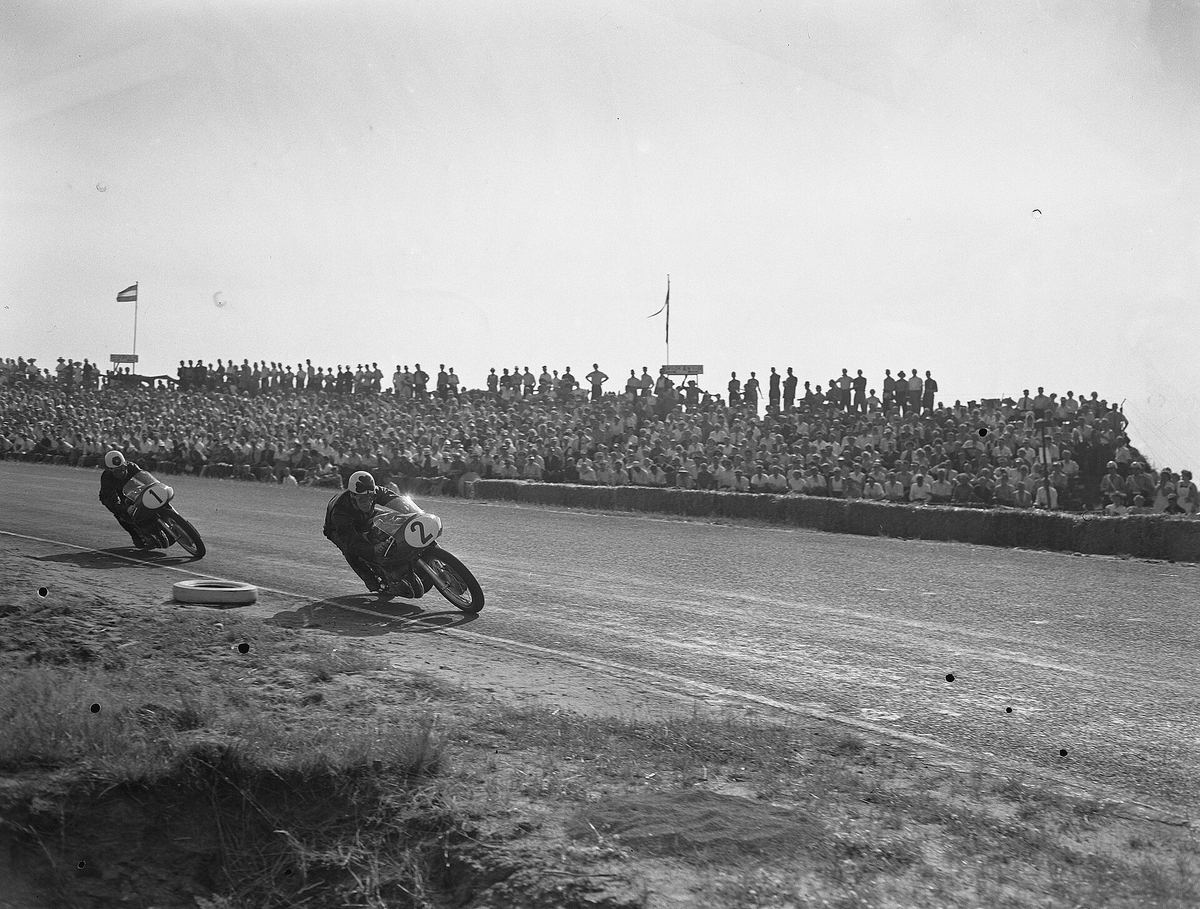
Duke had little personal stake in the argument. Born in St Helens in 1923, he had ridden with the Royal Signals display team, the White Helmets, before turning professional, and had moved from Norton to Gilera in 1953. He had won the 350cc and 500cc world titles in 1951, the 350cc again in 1952, and the 500cc title for Gilera in 1953, 1954 and 1955. By 1955, Classic Racer reports, he was the best-paid rider in the world. That June he had been declared the first rider to lap the Isle of Man TT course at 100 mph, a figure later corrected to 99.97 mph. He was also, by Old Bike Australasia's account, one of the most approachable people in the paddock.
Saturday at Assen: two strikes in one afternoon
The protest began with a petition in the paddock, started by local Dutch riders who had failed to qualify and so would get no start money at all. It grew to include privateers who thought their fees were too low to be worth racing for. Old Bike Australasia names among the 350cc strikers the Australians Jack Ahearn, Keith Campbell, Tony McAlpine and Bob Brown, and the New Zealanders John Hempleman, Barry Stormont and Peter Murphy. MotoGP.com's history puts the number at 12 rather than 13. The KNMV's general secretary, Burik, later claimed McAlpine had threatened to "sweep them off the course" if Dutch riders refused to join; McAlpine strongly denied it.
After the 350cc race a hasty meeting followed. The riders demanded an extra £20 per start, including the race they had just abandoned. The promoters offered a flat £15 extra for the whole meeting. The riders said no.
Duke spoke to Gilera's team manager. Then, according to the report Burik sent to the FIM, Duke came to the timekeepers' house with his Gilera team-mates Reg Armstrong and Alfredo Milani and the MV Agusta riders Nello Colnago and Umberto Masetti. He told Burik: "We works riders will start in the 500cc race and stop after the first lap unless the Promoters agree in raising the starting money with £20 per start." Duke argued that the riders' costs for machines, parts and living were rising, and, in Burik's English, that "it were not the drivers who had asked for the new circuit."
The promoters agreed minutes before the 500cc race. Burik later insisted the extra £20 had been "per driver, not per start." The full field took the start, and nobody stopped.
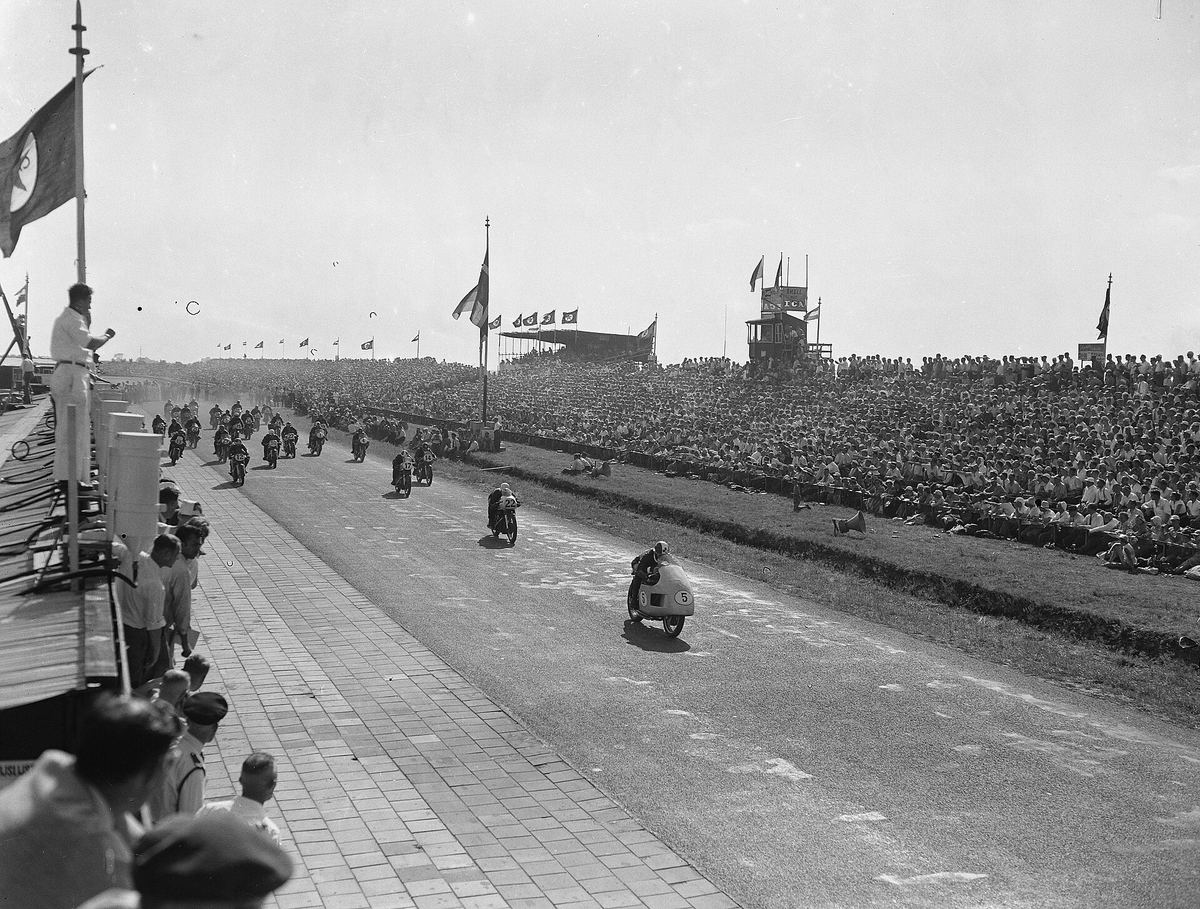
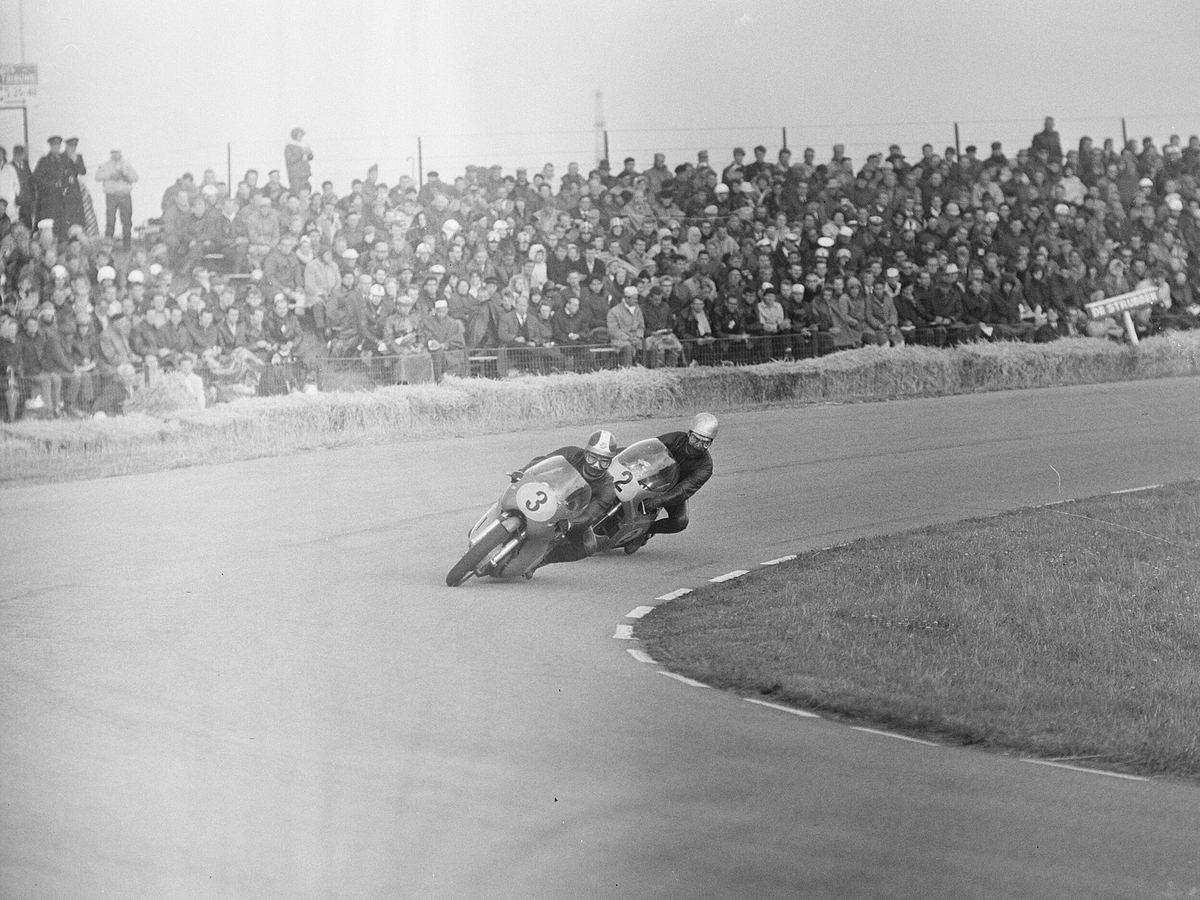
Duke won the 27-lap race in 1 hour 37 minutes 3.9 seconds, 35.3 seconds ahead of Armstrong, with Masetti third. The Dutch rider Drikus Veer was fourth on another Gilera, and Bob Brown, one of the 350cc strikers, took fifth on a Matchless G45 twin, the best result that model ever achieved.
After the flag
The KNMV complained to the FIM. An extraordinary meeting of the FIM's sporting commission was held in London on 24 November 1955. Only Armstrong, Duke, McAlpine and the British privateer Phil Heath attended, and the riders' apology was rejected; MotoGP.com describes Duke's as tongue-in-cheek. By seven votes to one, with only the Irish federation against, the delegates suspended the privateers, Duke and Armstrong for six months, and the Italian riders for four, from 1 January 1956. The bans covered every Grand Prix and international meeting in the first half of the year, the Isle of Man TT included.
Duke missed the opening rounds of 1956, crashed at the Ulster Grand Prix and won the final round at Monza. It was his last race as a works rider, and he never won another world title. McAlpine went home to Australia at the end of 1955 and did not come back. Keith Campbell did return, and in 1957 became Australia's first world champion, in the 350cc class.
There was one change for the better. Duke wrote in his autobiography that the Assen affair led to a draft regulation on agreed start money, deferred to the FIM's spring congress in Oslo. It later became mandatory.
Why it still matters
The 1955 Dutch TT put the reigning world champion on the riders' side of a pay dispute, and the governing body made an example of him. Duke's own verdict, in his autobiography, was that "the Assen promoters were notoriously tight-fisted at that time." The pattern would return. Giacomo Agostini later led the boycott of the Isle of Man TT over safety, and in 1979 Kenny Roberts tried to take the 500cc riders out of the world championship altogether.
Cycle World, writing about that failed revolt in 1992, pointed out that Roberts fared better than Duke, and that the FIM would have struggled in 1980 to enforce the kind of ban it gave Duke 25 years earlier. MotoGP.com puts it more simply: despite his fame and fortune, Duke was prepared to stand up for what he believed.
Duke won at Assen that afternoon, and the privateers got their money. The FIM made him pay for both with the first half of 1956.
Quick answers
What happened at the 1955 Dutch TT?
At the 1955 Dutch TT at Assen, 13 privateers retired after one lap of the 350cc race in protest at low start money. Before the 500cc race, world champion Geoff Duke and four other works riders threatened to do the same, and the promoters gave way. Duke then won the 500cc race.
Why was Geoff Duke suspended in 1956?
Geoff Duke was suspended for six months from 1 January 1956 for supporting the privateers' strike over start money at the 1955 Dutch TT. The FIM's sporting commission voted seven to one for the bans, which also hit Reg Armstrong, the privateers and, for four months, the Italian works riders.
What was start money in motorcycle racing?
Start money was a fee an organiser paid a rider for taking the start of a race. In the 1950s privateers depended on it, because few could finish in the prize money. Geoff Duke estimated the average start money at the 1955 Dutch TT at about £20, covering travel, fuel and living.
Who won the 500cc race at the 1955 Dutch TT?
Geoff Duke won the 500cc race at the 1955 Dutch TT on 16 July on a Gilera, covering 27 laps of the new 7.7 km Assen circuit in 1 hour 37 minutes 3.9 seconds. Team-mate Reg Armstrong finished 35.3 seconds behind, with Umberto Masetti third on an MV Agusta.