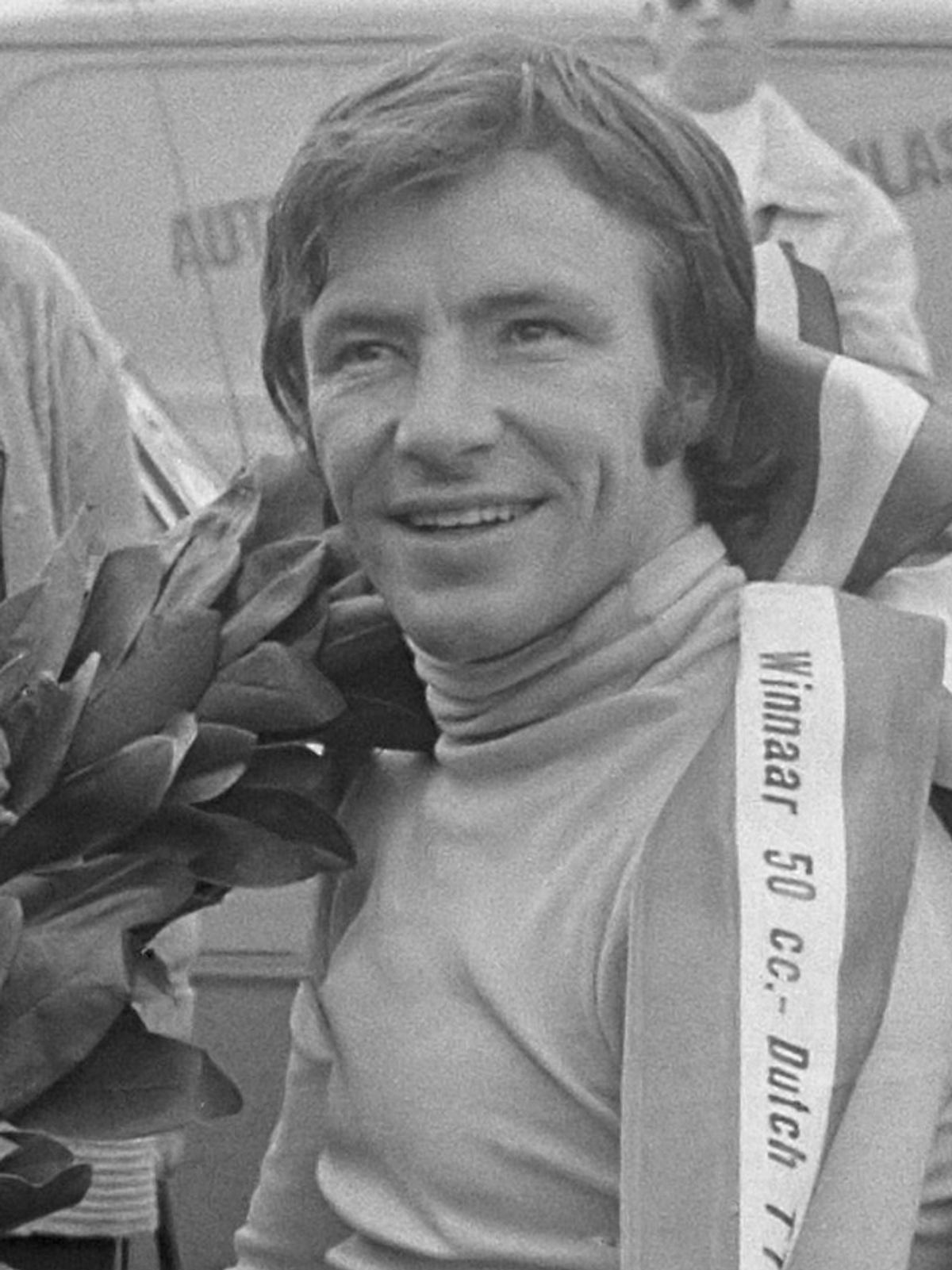
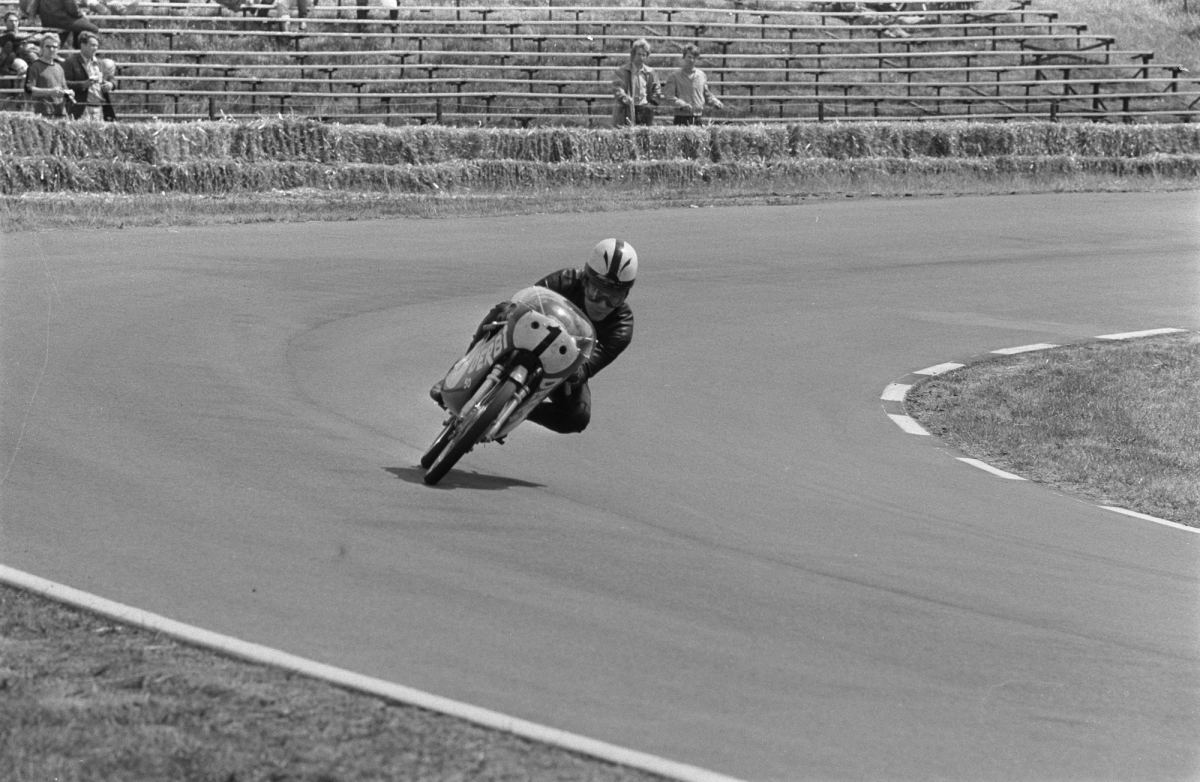
Ángel Nieto and the 50cc Derbi at Assen, 24 June 1972, the year he won both the 50cc and 125cc world titles.. Photo: Hans Peters / Anefo, Nationaal Archief
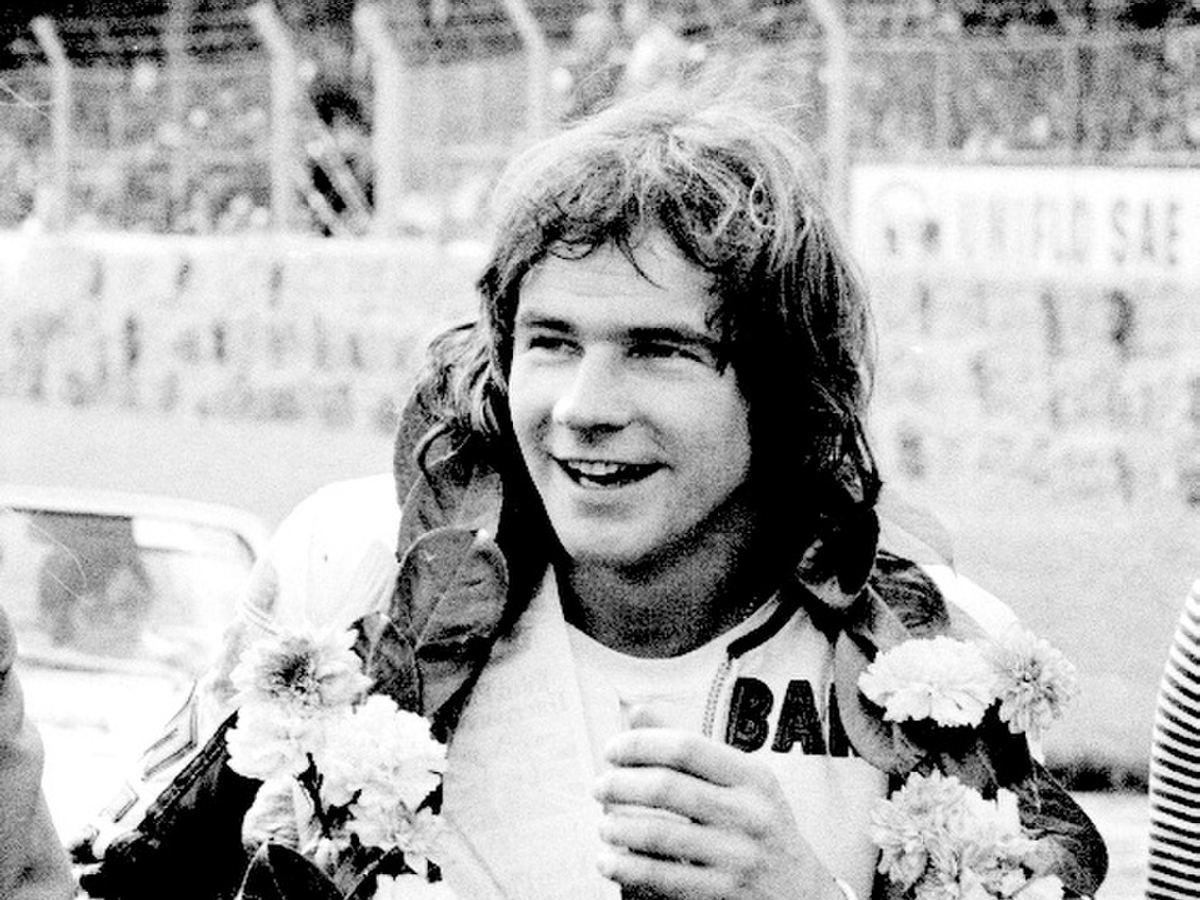
Jarama, 1971, the last round of the world championship. Ángel Nieto, 24, has two titles to fight for in front of a home crowd outside Madrid: the 50cc against Jan de Vries and his Kreidler, and the 125cc against Barry Sheene and his Suzuki. In the 50cc race his Derbi goes down, the crowd spills onto the track and the 50cc title is gone.
Nieto is carried off to have his leg stitched, without anaesthetic, as the story is told in Spain. About an hour later he lines up for the 125cc race. He wins it, and the world title with it. The crowd invades the track a second time.
It was his third world title and the day Spain fell for motorcycle racing. Ángel Nieto would win 13 in all, though he never once called it that.
Who Ángel Nieto was
Ángel Nieto Roldán was born in Zamora on 25 January 1947 into a poor family that moved to Vallecas, a working-class district of Madrid, when he was a year old. He always called Vallecas his neighbourhood, and his first racing nickname was the Vallecas Kid.
As a teenager he went to Barcelona, the heart of Spain's motorcycle industry, hoping to get into one of the factories. He started at the very bottom: an unpaid helper for Bultaco's road racer José Medrano, then a spell with Ducati, then Derbi, whose workshop in Mollet del Vallès built small two-strokes.
Derbi signed him as a rider in 1964. At 17 he finished fifth in the 50cc Spanish Grand Prix at Montjuïc, scoring world championship points on his debut. Progress after that was slow, because Derbi's bikes could not match the Japanese factories. His first world championship podium came only in 1967: second in the 50cc Dutch TT at Assen.
Derbi, 1969: how Ángel Nieto became Spain's first world champion
Ángel Nieto became Spain's first motorcycle world champion in 1969, helped by a rule change. For that season the FIM limited 50cc racers to one cylinder and six gears. The Japanese factories, whose multi-cylinder 50s had used as many as 12 gears, left the small classes, and the field opened up for European makers.
Derbi built new rotary-valve singles, engines in which a spinning disc, rather than the piston, controls when fuel and air enter the cylinder. In July 1969 Nieto won his first Grand Prix on the old Sachsenring street circuit in East Germany. By the end of the season he was 50cc world champion, one point ahead of the Dutchman Aalt Toersen.
He kept the 50cc title in 1970 and finished second in the 125cc class to Dieter Braun. In 1971 Repsol's logo appeared on the Derbis for the first time, and in Spain the little red racers became known as the "balas rojas", the red bullets.
Ángel Nieto vs Jan de Vries: the closest title in racing
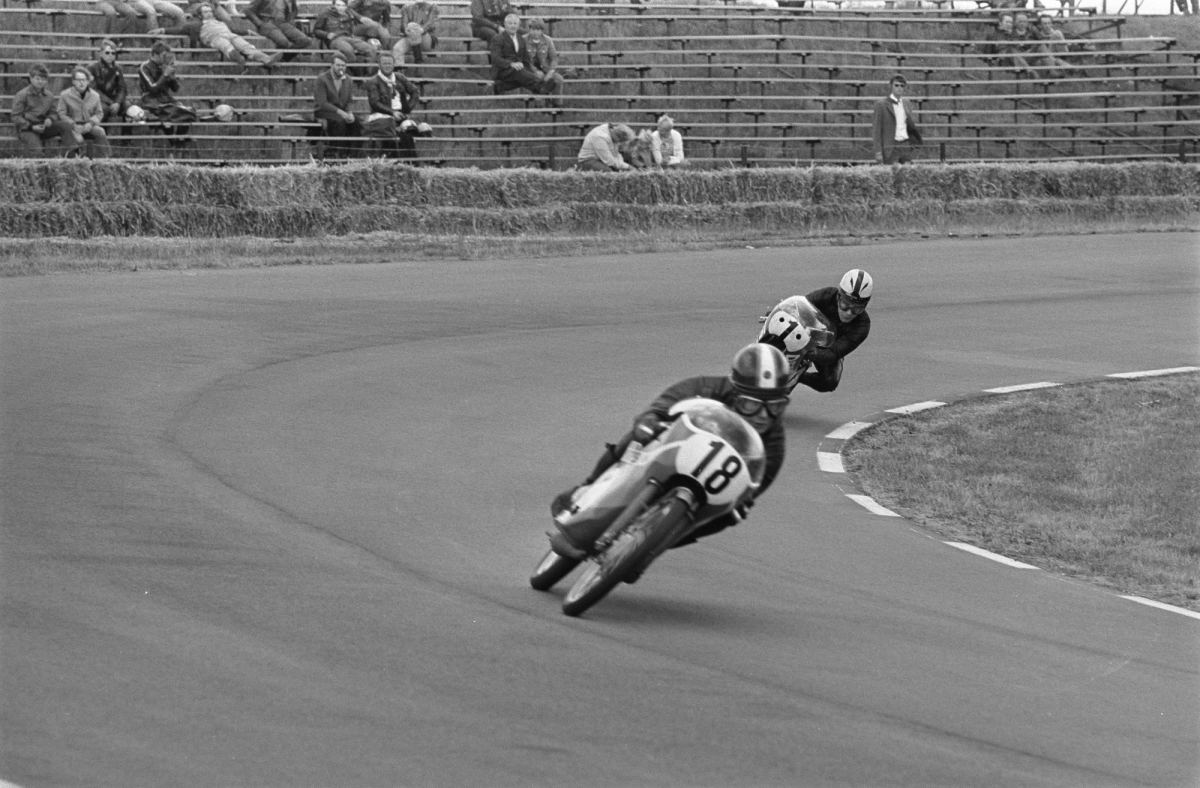
Ángel Nieto's great 50cc rival was Jan de Vries, a Dutchman on a Van Veen Kreidler. In 1971 de Vries won five Grands Prix and the 50cc title, ending Nieto's run. Accounts of the decisive Jarama crash differ. Autoclub, the magazine of the Real Automóvil Club de España, says Nieto fell entering the finish straight on the first lap. Repsol's own history says he crashed at the last corner of the final lap, just after passing de Vries. Either way, de Vries won the race and the crown.
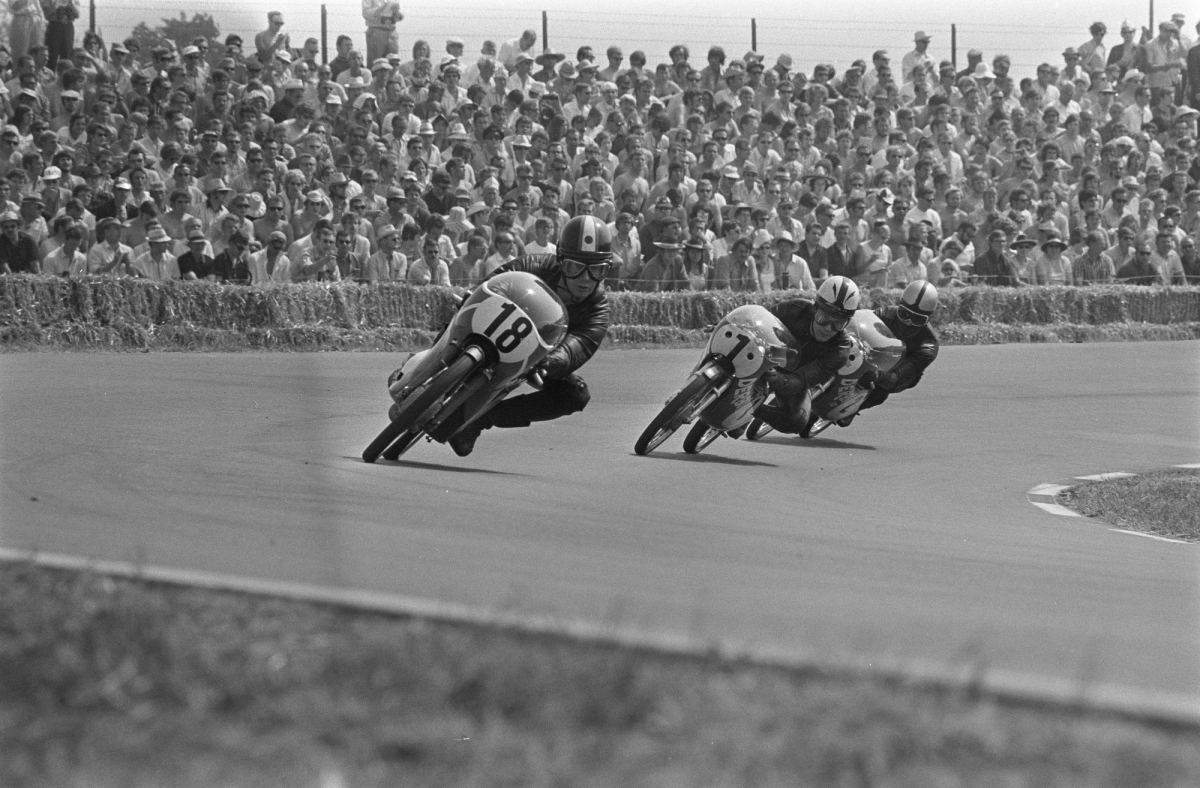
The 1972 season was closer still. Nieto and de Vries finished level on 69 points, with three wins and three second places each. The FIM separated them on aggregate race times, and Nieto took the title by a matter of seconds.
He won the 125cc title for Derbi that year too, a double. Then Derbi pulled out of Grand Prix racing, and Nieto's years of moving from factory to factory began.
Five makes, 13 titles: Ángel Nieto's long years in 125cc
Ángel Nieto spent the rest of his career going wherever the fastest small bike was. After a 1973 season on a Morbidelli and one more year with Derbi in 1974, he won the 50cc title on a Van Veen Kreidler in 1975 and on Bultacos in 1976 and 1977. Then he concentrated on the 125s.
On Minarellis he took the 125cc title in 1979 and 1981. On Garellis, which from 1982 carried on the Minarelli design under a new name, he won it in 1982, 1983 and 1984. That made five different makes of world championship bike, a record. Assen was his favourite hunting ground: he won the Dutch TT 15 times, more than anyone else. [⚠ VERIFY: Dutch TT record of 15 wins against a second source]
His final Grand Prix win came on an 80cc Derbi at Le Mans in 1985. He retired in 1986, aged 39, with 90 wins and 139 podiums from 186 starts.
Through all of it, Nieto never said the number 13. He called his tally "12+1" and signed autographs "Ángel Nieto, 12+1". According to Repsol, he avoided even pronouncing the number in case it brought bad luck. A superstition, triskaidekaphobia, became his brand.
What Ángel Nieto left behind
Ángel Nieto opened the door that every Spanish rider since has walked through. After retiring he ran teams and commentated on Grands Prix for Spanish television. His greatest success as a team boss came in 1999, when Emilio Alzamora won the 125cc world title. His sons Ángel Jr, known as Gelete, and Pablo, and his nephew Fonsi all raced in Grands Prix.
At Le Mans in May 2008, when Valentino Rossi equalled his 90 wins, Nieto rode Rossi's Yamaha on the lap of honour with Rossi sitting behind him.
Nieto died in Ibiza on 3 August 2017, aged 70, a week after a car hit the quad bike he was riding. The following year the Circuito de Jerez was renamed Circuito de Jerez – Ángel Nieto, and a memorial at Jarama's Farina curve remembers his days of glory there.
In March 2025 Marc Márquez matched Nieto's 90 wins in Argentina and celebrated with a laurel wreath and a banner that read "12+1 = 90. Gracias, Ángel". Márquez passed him a few weeks later. Nieto is often still listed third on the all-time wins list, but he is now fourth, behind Giacomo Agostini, Rossi and Márquez. His son Pablo said his father had always liked being matched.
Fourth on the list, then. But every Spanish champion who came after him started exactly where he did: chasing Ángel Nieto.
Quick answers
Why did Ángel Nieto say 12+1 instead of 13?
Ángel Nieto was deeply superstitious and believed 13 was an unlucky number, so he always called his 13 world titles "12+1". He even signed autographs "Ángel Nieto, 12+1", and according to Repsol he avoided saying the number at all.
How many world titles and Grand Prix wins did Ángel Nieto have?
Ángel Nieto won 13 world titles, six in 50cc and seven in 125cc, between 1969 and 1984. He also won 90 Grands Prix and scored 139 podiums from 186 starts, riding for five different makes, including Derbi, Bultaco and Garelli.
Who was Spain's first motorcycle world champion?
Ángel Nieto became Spain's first motorcycle world champion in 1969, winning the 50cc title for Derbi by one point from Aalt Toersen. His first Grand Prix win came that July at the Sachsenring in East Germany.
Who has more Grand Prix wins, Ángel Nieto or Marc Márquez?
Marc Márquez. He matched Ángel Nieto's 90 Grand Prix wins in Argentina in March 2025 and passed him weeks later. That moved Nieto from third to fourth on the all-time list, behind Giacomo Agostini, Valentino Rossi and Márquez.