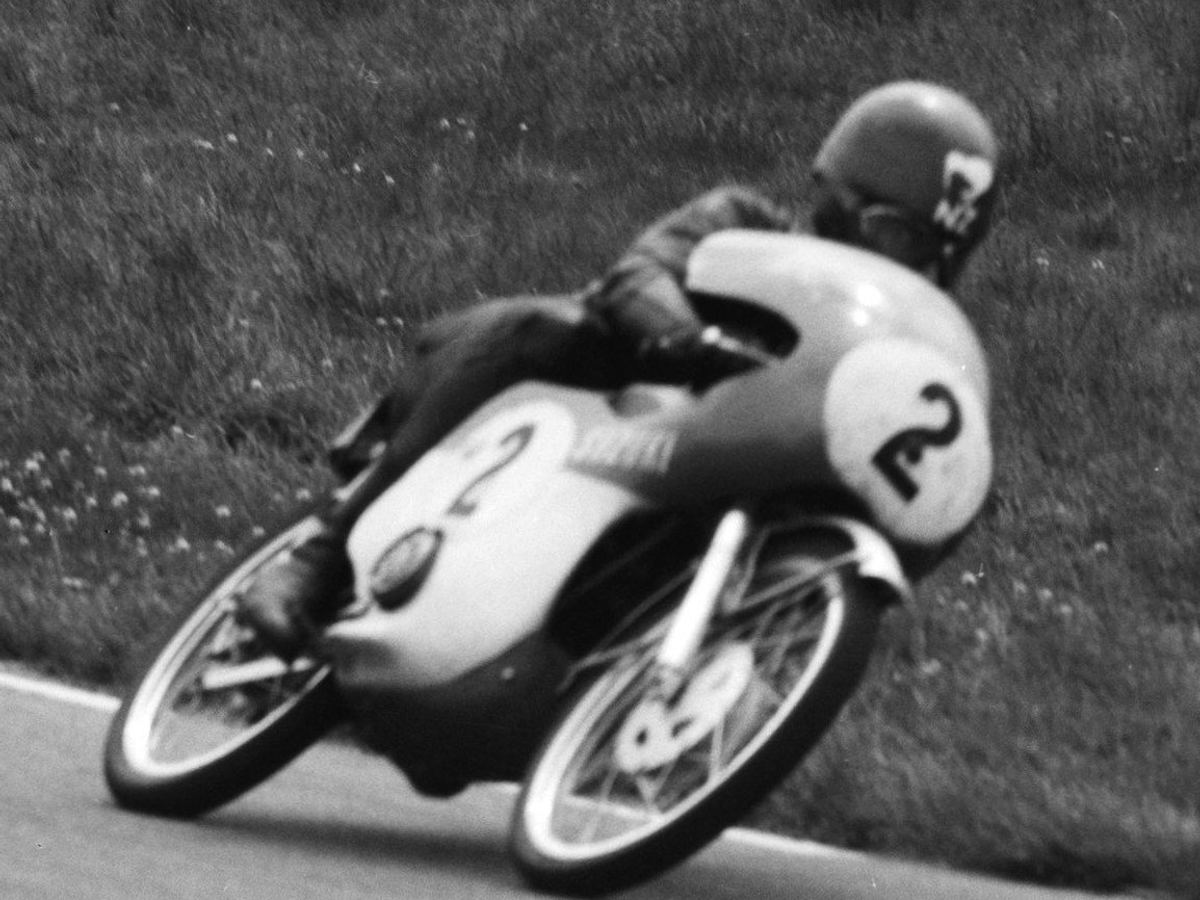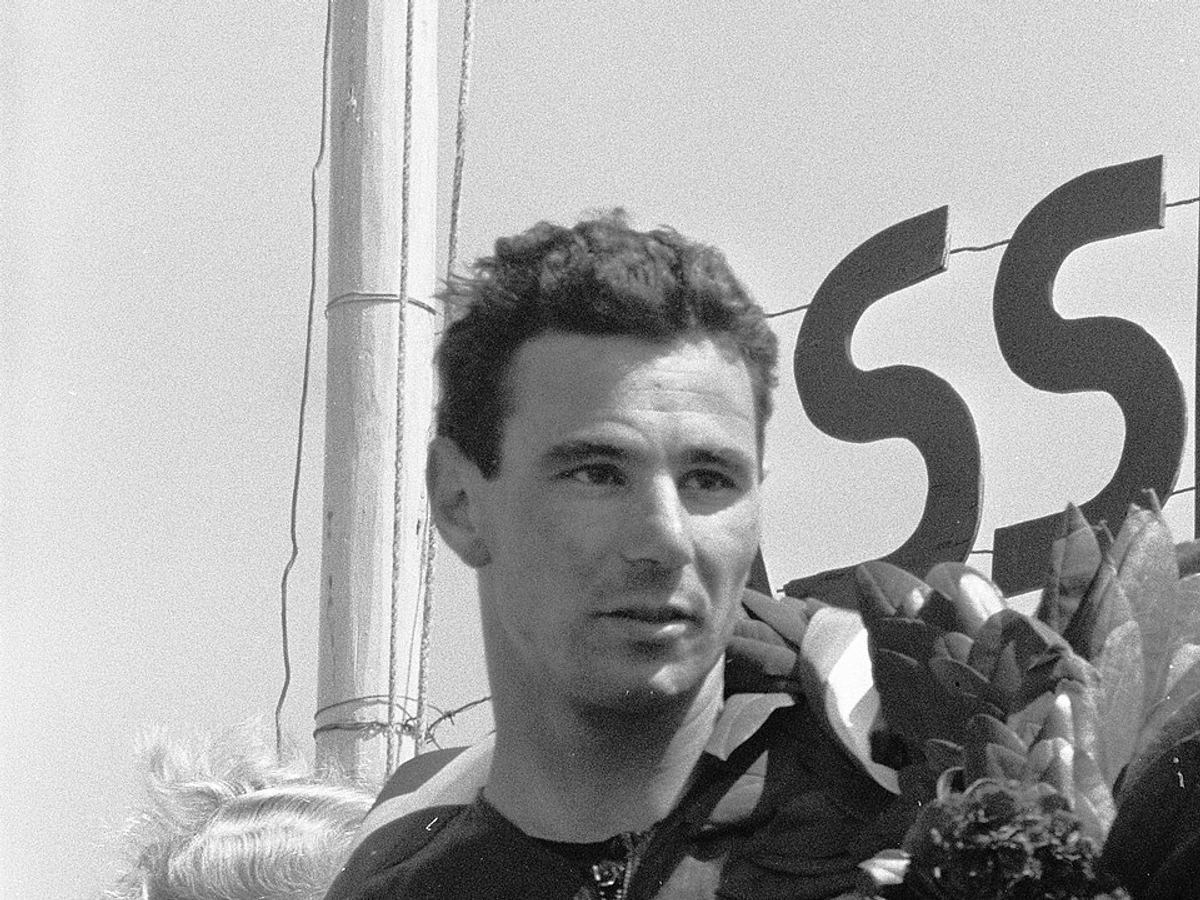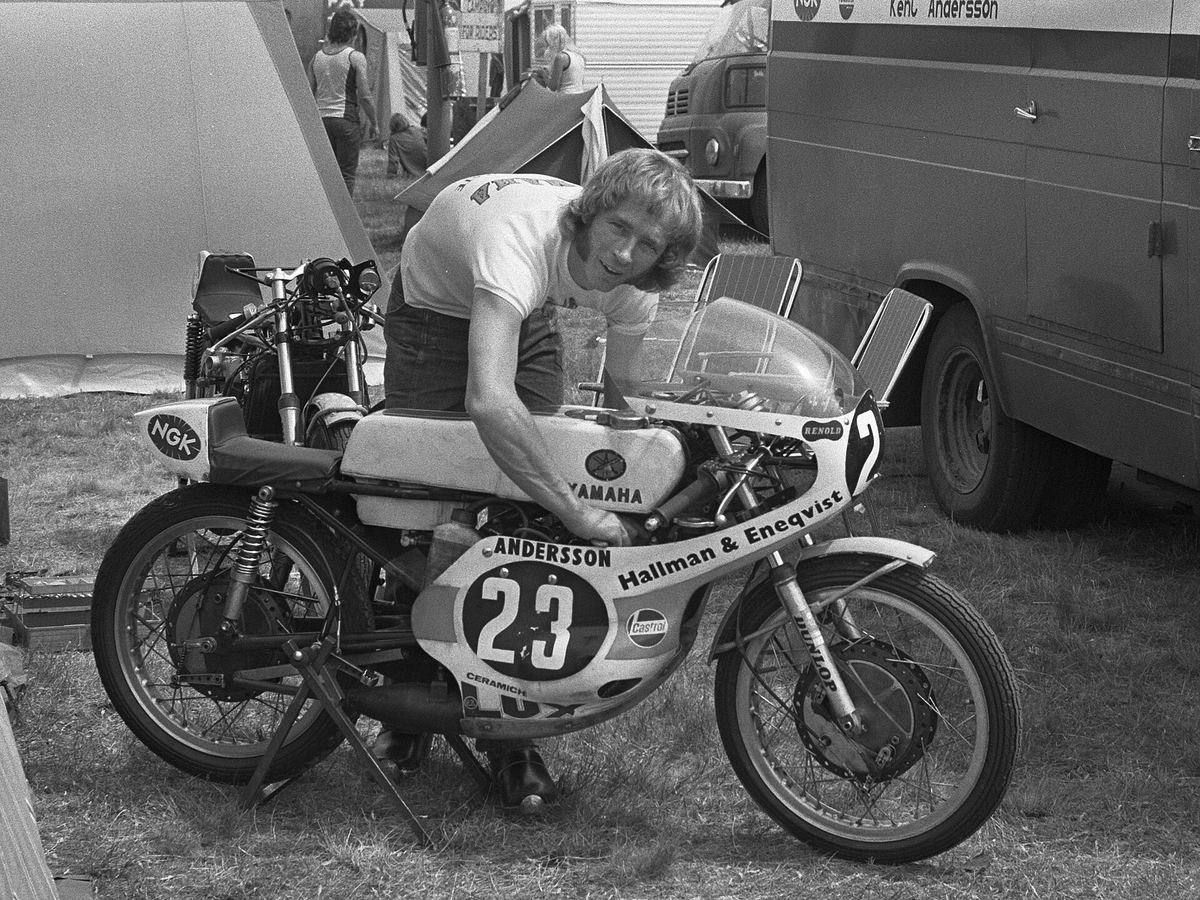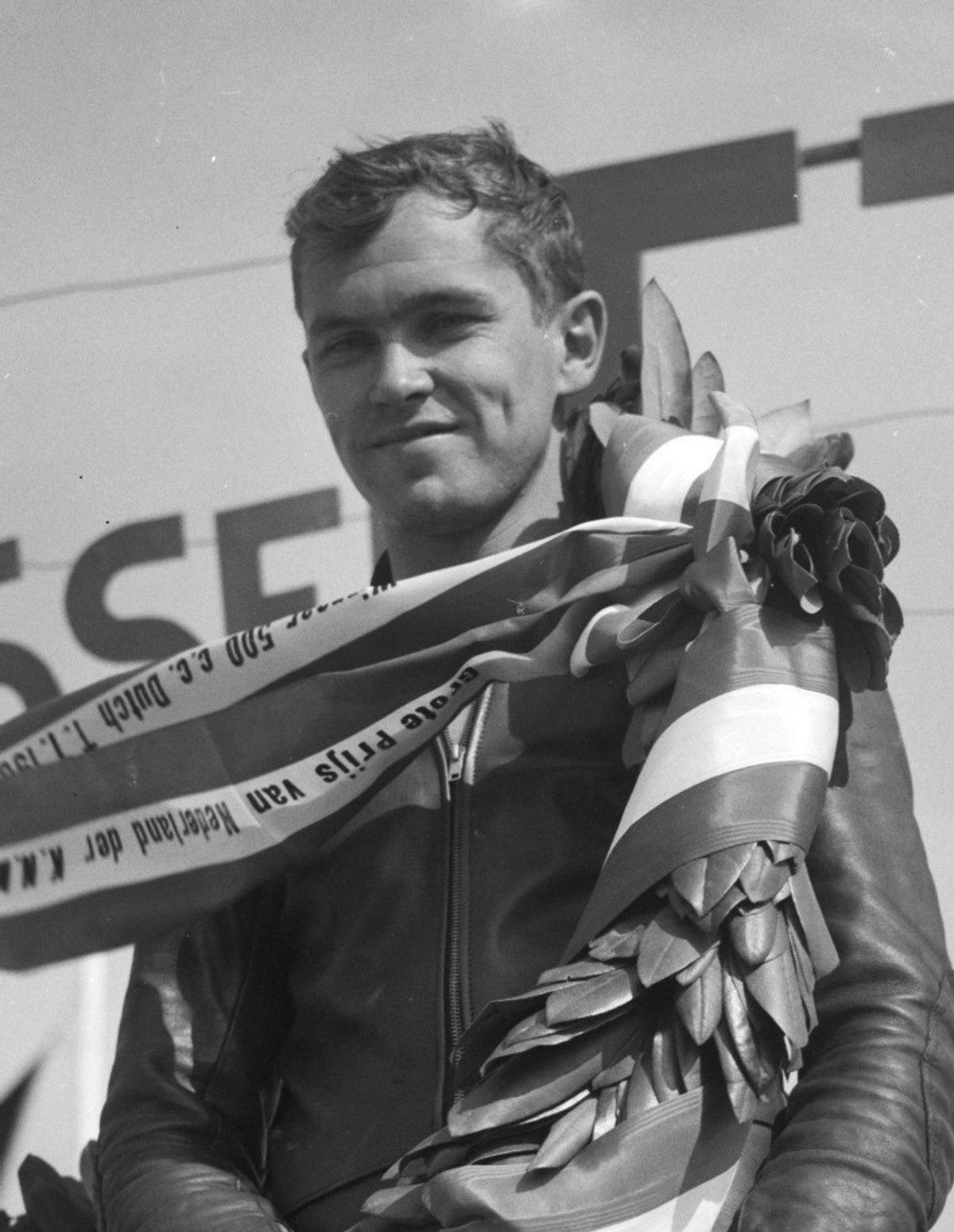
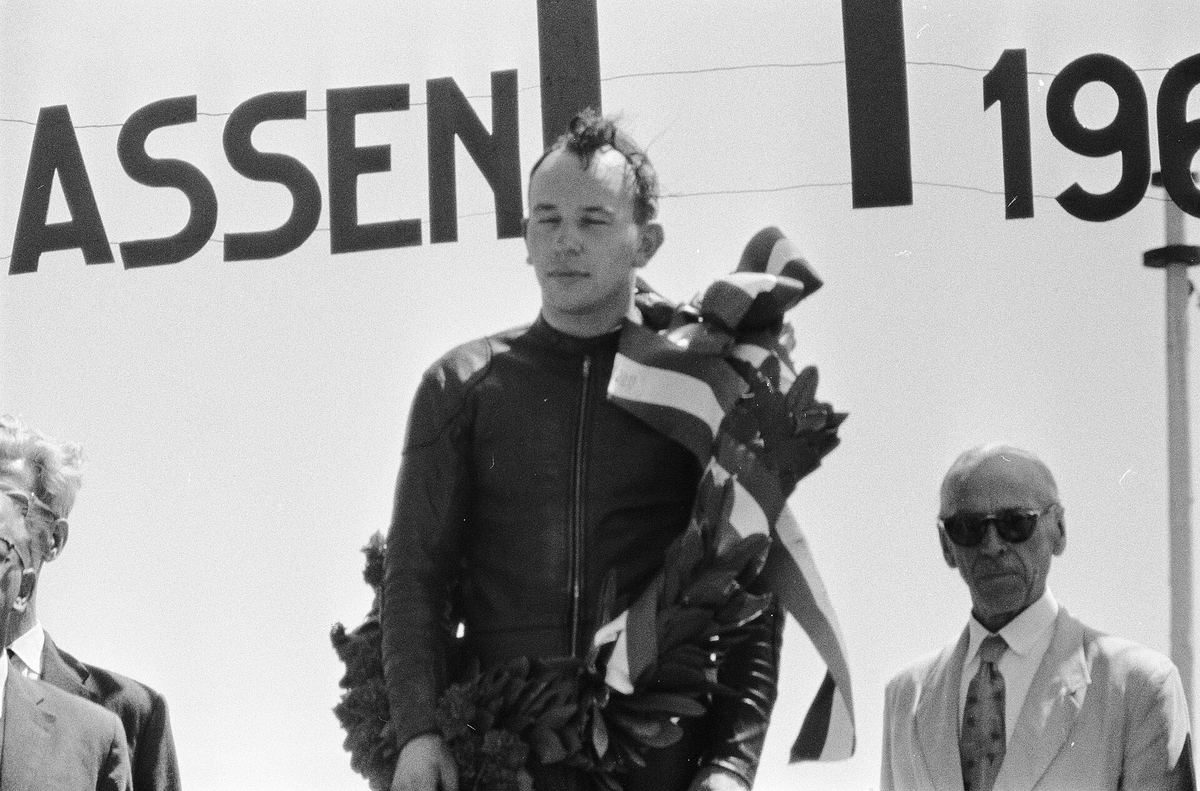
Gary Hocking at Assen in June 1961, after winning the 350cc and 500cc races on his way to both world titles.. Photo: Joop van Bilsen / Anefo / Nationaal Archief, CC0
Gary Hocking won the 1962 Senior TT on 8 June by almost ten minutes. His MV Agusta covered the six laps of the Isle of Man Mountain Course in 2 hours 11 minutes 13.4 seconds, an average of 103.51 mph, and Ellis Boyce's Norton was the next machine home.
It should have been a day of celebration. Hocking was the reigning 350cc and 500cc world champion, he was 24, and he had just won the most famous race in motorcycling. But two days earlier, in the Junior TT, his close friend Tom Phillis had crashed at Laurel Bank on the second lap and been killed. Soon afterwards Hocking flew to Italy to tell Count Domenico Agusta that he was finished with motorcycle racing.
Six months later he was dead too, killed in practice for a car race in South Africa. He had turned to cars because he believed they were safer.
Gary Hocking, from Bulawayo to Assen
Hocking was born in Caerleon, just north of Newport in South Wales, on 30 September 1937, and grew up in Bulawayo in Southern Rhodesia, now Zimbabwe. Like many young Rhodesians he started on grass tracks before moving to tarmac circuits. Jim Redman, another Rhodesian who would become a world champion, left for Britain first and handed his motorcycle repair business to Hocking. Redman later described him as a deliberate racer who would not start his first race until he and his Triumph were completely ready. "A thinker," Redman called him.
Hocking arrived in England in 1958, Motor Sport's Paul Fearnley wrote, with £200 and a suitcase that rattled. He had no motorcycles. What he did have, according to a Cycle World profile in 1962, was "a good line in salesmanship". The Manchester tuner Reg Dearden lent him 350cc and 500cc Manx Nortons, and that winter he lived with the Costain family in Castletown on the Isle of Man, learning the Mountain Course with George "Sparrow" Costain, a former Manx Grand Prix winner. In his first Junior TT, in 1959, he started 22nd and finished 12th.
He made his world championship debut at the 1958 Dutch TT, finishing sixth, and in his second race he was third at the Nürburgring, behind the works MV Agustas. In 1959 the East German MZ factory gave him its 250cc two-stroke, alongside riders such as Ernst Degner. Hocking won first time out on it, at Kristianstad in Sweden, won again at the Ulster Grand Prix and finished second in the 250cc championship.
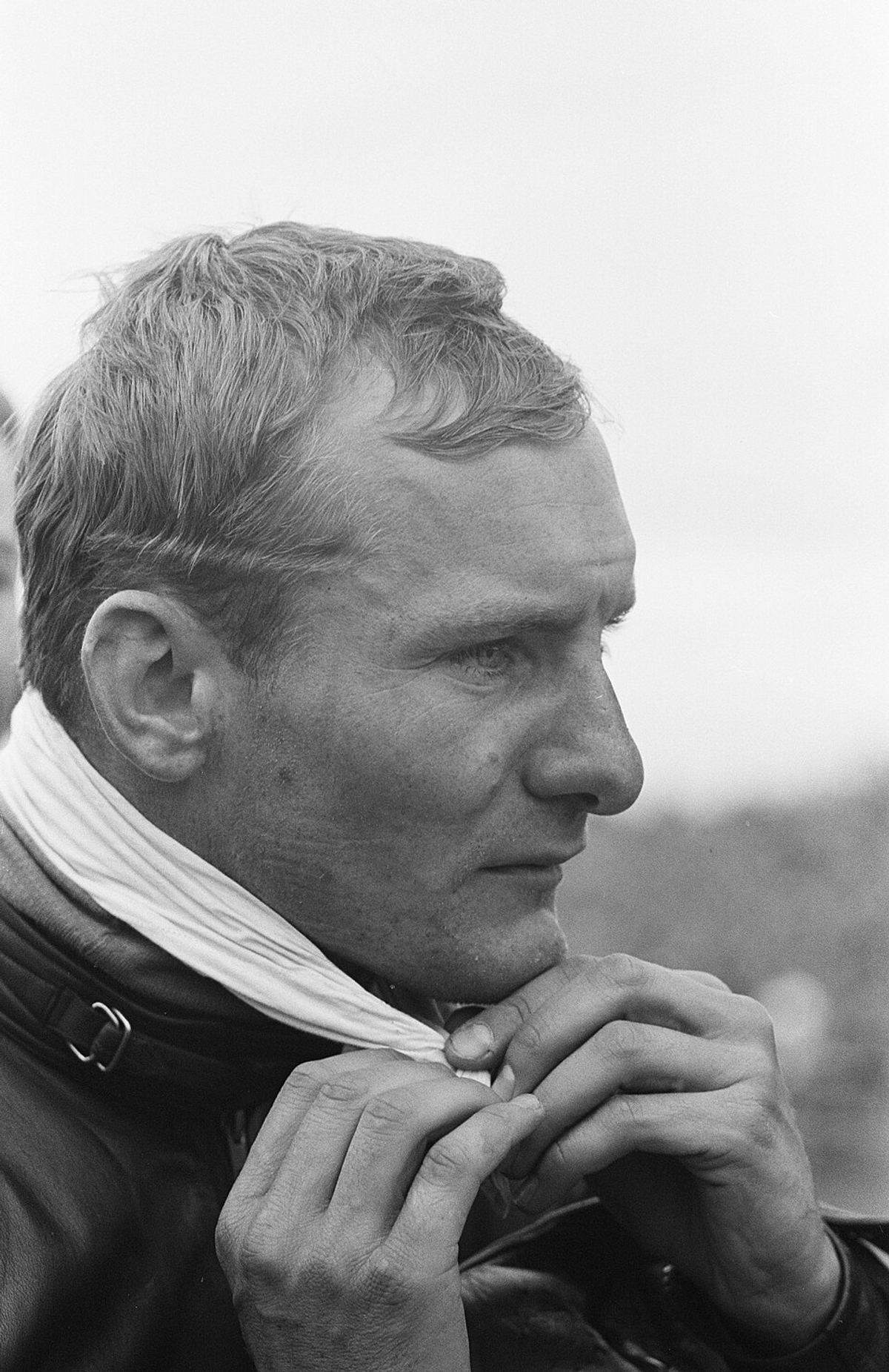
MV Agusta signed him for 1960. In his first season with the Italian team he finished second in three world championships: to Carlo Ubbiali in the 125cc and 250cc classes, and to John Surtees in the 350s. He also won the 250cc TT, beating Ubbiali on the Mountain Course.
MV Agusta's number one
At the end of 1960 Surtees, seven times a world champion with MV, left for car racing, and Ubbiali retired. Count Agusta also withdrew from the small classes. That left Hocking as the team's leading rider in the 350cc and 500cc championships, on MV's four-cylinder machines.
The opposition was thin. Gilera and Moto Guzzi had withdrawn from Grand Prix racing at the end of 1957, and since then, as The Classic Motorcycle put it, MVs were simply dominant in the bigger classes. The real threat came from privateers on British singles, and above all from Mike Hailwood, who started 1961 on Nortons.
1961: two titles in one summer
Hocking won the first 500cc round, at Hockenheim on 14 May, and the second, at Charade in France a week later. At the Isle of Man he finished second in the Junior to Phil Read's Norton and retired from the Senior, which Hailwood won on a Norton.
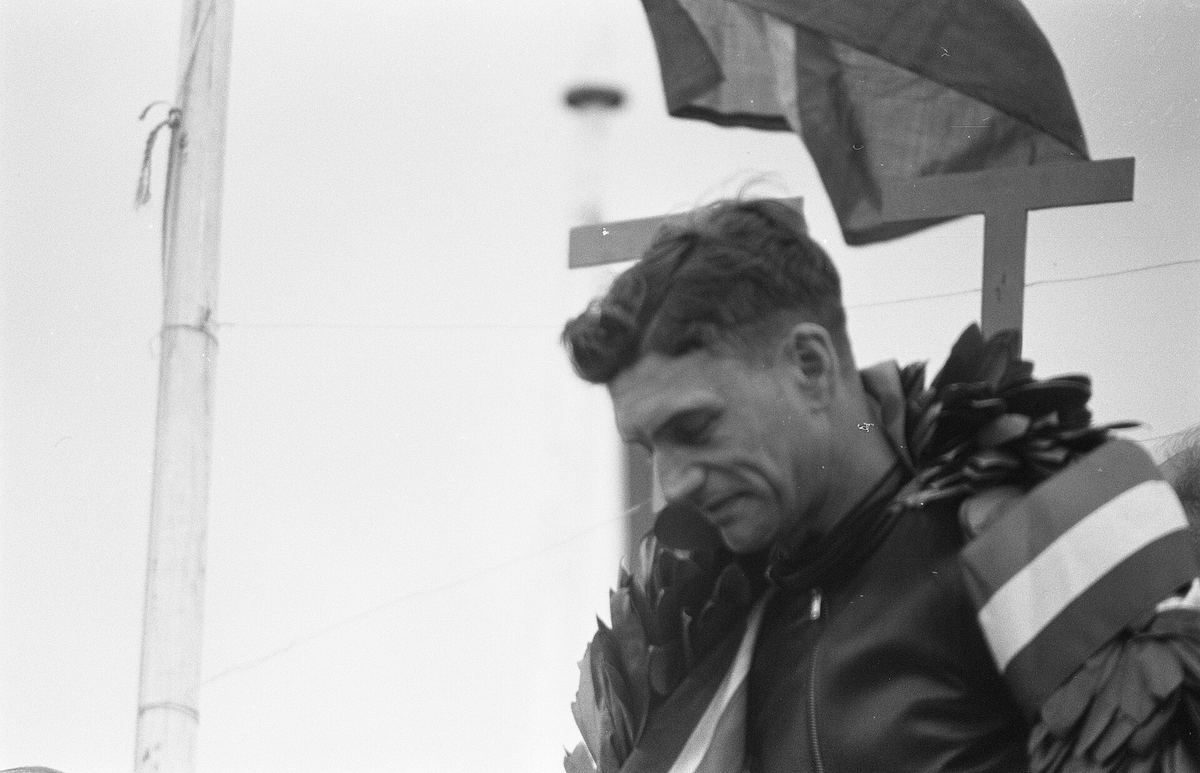
At Assen on 24 June he won both the 350cc and 500cc races. He won the 500cc race at Spa, then both classes at the Sachsenring in East Germany on 30 July and at the Ulster Grand Prix on 12 August. Hailwood had been the outstanding Norton rider of the year, and late in the season MV signed him. At Monza in September Hocking won the 350cc race, but in the 500s it was Hailwood, now on an MV, who won, while Hocking retired. Hocking won again in the 500cc race in Sweden.
He finished the year with 12 Grand Prix wins. In the 500cc class he won seven of the nine races he started and took the title with 48 points counted to Hailwood's 40. In the 350s he won four races and beat the Czech rider František Šťastný, on a Jawa, by six points. He was the first Rhodesian to win a world title in the premier class, and remains the only one. In 1962 he was appointed MBE for services to Rhodesia.
Surtees, his team-mate in 1960, summed him up for Motor Sport: "Gary was a very serious competitor." Cycle World noted another quality: he "seldom fell off".
After the flag
The 1962 season opened with the TT, and Hocking arrived as one of the favourites, with Hailwood now his team-mate. Phillis, his friend, was an Australian who had won the 125cc world title for Honda the year before. In the Junior TT, riders started at intervals and raced against the clock. Hocking led on elapsed time and on the road at the end of the first lap, 20 seconds up on Phillis's Honda and 10 on Hailwood. On the second lap, Phillis crashed at Laurel Bank and was killed. Hocking finished second, less than six seconds behind Hailwood after more than two hours of racing.
Redman told Motor Sport that Hocking felt he had effectively lured Phillis to his death, and that the Junior was the end of his motorcycle career. Hocking was a religious man who prayed every day, Redman said. He rode the Senior two days later, won it by almost ten minutes, and then stopped. "He was his own man," was Redman's explanation.
Hailwood took over as MV's leading rider and won his first 500cc world title that year. The danger Hocking had walked away from did not go away: Bob McIntyre, another of the leading riders, was killed at Oulton Park later that season. Hocking turned to cars. Tim Parnell, son of the former Grand Prix driver Reg Parnell, offered him his Lotus 18/21. At Mallory Park in August, in his first car race, Hocking took pole position and led until his engine failed. He finished fourth in the non-championship Danish Grand Prix at Roskilde, and at the Oulton Park Gold Cup he qualified fastest of the four-cylinder cars and led that class before an oil pipe broke. Bruce McLaren called him a "coming man".
Back in southern Africa he won the Rand Spring Trophy at Kyalami from pole position, the Total Cup at Zwartkops and the Rhodesian Grand Prix at Kumalo. Rob Walker agreed to give him a Lotus 24 for the bigger South African races, and Hocking finished fourth in the Rand Grand Prix at Kyalami.
In practice for the Natal Grand Prix at the Westmead circuit, near Durban, just before Christmas 1962, the Lotus left the road at more than 100 mph at the end of a long right-hand corner, dug in and somersaulted. Hocking died of his injuries in hospital in Durban a few hours later. He was 25.
The cause was never settled. Redman believed Hocking, who avoided drinking before races, had become dehydrated and passed out; there were no skid marks. The inspection found that the steering might have been incorrectly reassembled, possibly on a part Hocking had asked to have changed, and a suspension failure was not ruled out. Motor Sport noted that the run-off area at Westmead was full of builders' rubble, boulders and freshly cut tree stumps.
Why it still matters
A Cycle World profile written in 1962, before his retirement, already ranked him among the all-time greats of the sport. Hocking's Grand Prix career lasted five seasons. In that time he went from a privateer with borrowed Nortons to a double world champion, and he left the sport at the top, of his own accord, after a friend's death. Few riders of the period had the chance to make that choice.
He remains the only Rhodesian to have won the premier class, and Jim Redman, who outlived him by decades, went on to win six world titles for Honda. Between them, the two Rhodesians showed how much talent the grass tracks of Southern Rhodesia had produced.
He gave up motorcycles because he believed cars were safer. Six months later, at Westmead, a car killed him.
Quick answers
Who was Gary Hocking?
Gary Hocking was a Welsh-born Rhodesian motorcycle racer who won the 1961 350cc and 500cc world championships for MV Agusta. He raced in Grands Prix from 1958 to 1962, won the 1962 Senior TT, then retired and switched to car racing. He died in December 1962, aged 25.
Why did Gary Hocking retire from motorcycle racing?
Hocking retired in June 1962 after his close friend Tom Phillis was killed in the Junior TT on the Isle of Man. According to Jim Redman, Hocking felt responsible for Phillis's death. He won the Senior TT two days later, then told Count Agusta he was stopping.
How many races did Gary Hocking win in 1961?
Hocking won 12 Grands Prix in 1961 on MV Agusta machines: seven of the nine 500cc races he started and four in the 350cc class, plus other wins. He took the 500cc title with 48 points to Mike Hailwood's 40 and the 350cc title ahead of František Šťastný.
How did Gary Hocking die?
Hocking was killed in practice for the 1962 Natal Grand Prix at Westmead, near Durban, driving a Rob Walker Lotus 24. The car left the road at over 100 mph and somersaulted. The cause, possibly dehydration or a steering or suspension fault, was never settled.