ISDT 1964: Steve McQueen's American team led the Silver Vase in East Germany, then came day three
At the ISDT 1964 in Erfurt, four Californians on Triumphs, Steve McQueen among them, led the Silver Vase for two days behind the Iron Curtain. A ditch and a broken ankle ended it on day three.
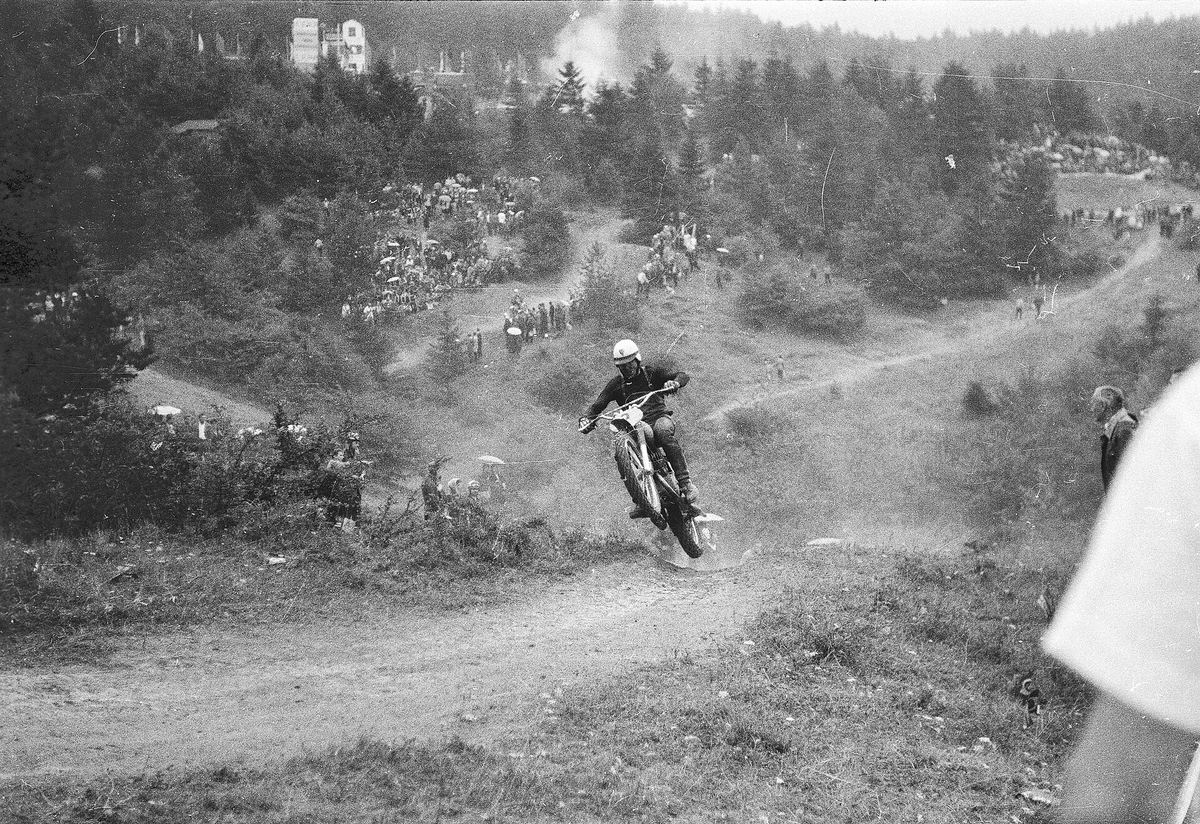
A rider climbs through the Thuringian forest at the 1964 International Six Days Trial.. Photo: Leo.lichtfangerarchiv / Wikimedia Commons (CC BY-SA 4.0)
By the end of the third day of the ISDT 1964, on Wednesday 9 September, Steve McQueen was the last rider left on the road. He had already crashed once and fixed a broken chain on his Triumph, and he was pushing to make up time on the forest tracks south of Erfurt, in what was then East Germany.
Then, according to the report Cycle World ran that November, a local motorcyclist who thought all the riders had passed pulled out in front of him. McQueen swerved into a ditch. He walked away with a scraped face, but the Triumph's fork was bent back under the frame, and his Six Days was over.
That same day, Bud Ekins, the team's leader, hit a wall, a bridge parapet in some accounts, and broke his ankle. He finished the day on time and didn't start the next morning. In a few hours, the American team that had led the Silver Vase for two days had lost two of its four riders, and with them any chance of the prize.
ISDT 1964: what the Six Days was
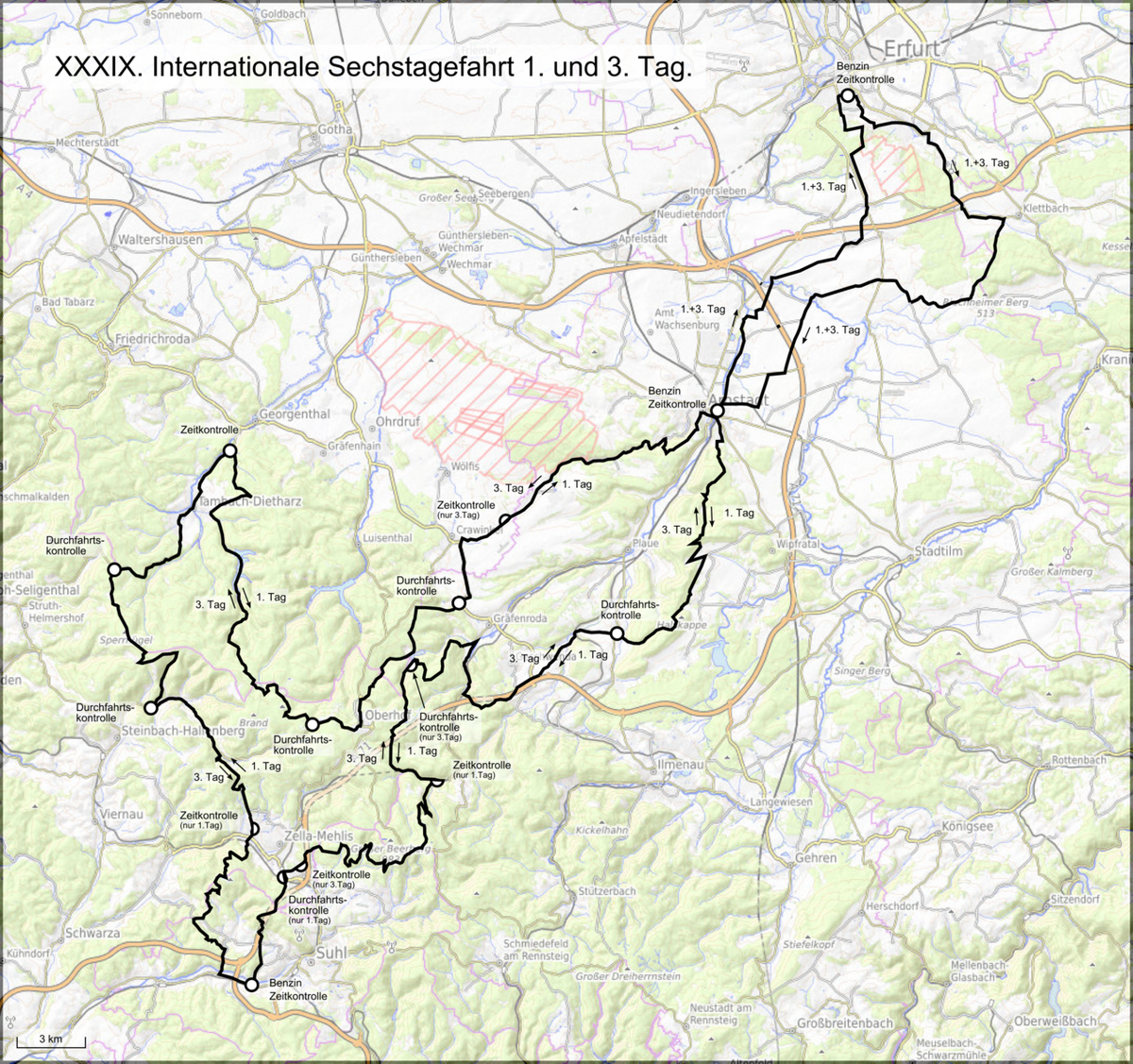
The International Six Days Trial, known in German as the Sechstagefahrt and today as the ISDE, was the Olympics of off-road motorcycling. It ran from 7 to 12 September 1964, based in Erfurt, with three loops into the hills of the Thüringer Wald to the south. It was the 39th edition.
The format was a test of endurance more than speed. Every day, riders had to reach a chain of time checks on a fixed schedule; every minute late cost marks. Riders worked on their own machines with only the tools and spares they carried, and the bikes spent the night locked in a closed paddock, the parc fermé. Riders who finished inside the time limits won gold medals.
National teams chased two prizes. The International Trophy was for six-rider teams on machines made in their own country. The Silver Vase was for four-rider teams on any make. When teams tied on marks, bonus points from timed special tests, hill climbs, accelerations and a closing road race, decided the order.
There were 226 starters. Seven nations entered the Trophy, among them the hosts, Britain, the Soviet Union and Czechoslovakia.
Five Californians behind the Iron Curtain
Bud Ekins was a Triumph dealer in Sherman Oaks, near Hollywood, and the stuntman who had jumped the fence for McQueen in The Great Escape. He was also a desert racer who had already won gold at the Six Days. After the film wrapped, he talked McQueen into riding it.
McQueen trained by racing at weekends. During the week, according to Cycle World, he changed customers' tyres at Ekins's shop, because the rules gave riders only a few minutes to change a tyre unaided.
The rest of the team came from the Southern California desert scene: Dave Ekins, Bud's brother, Cliff Coleman, and John Steen as the reserve. Specially prepared 500cc and 650cc Triumphs were ordered from the factory and finished in England. The team then loaded a borrowed moving van and drove across Europe, through the Iron Curtain, to Erfurt. Their Bell helmets had been painted and pinstriped by the custom painter Von Dutch.
The first two days were wet, with rain both days and fog on the second morning in the high forest. The Americans rode them clean. According to Cycle World, they led the Silver Vase standings for two full days.
Day three in the Thüringer Wald
The third day used the same course as the first. Accounts of the weather differ: Cycle World's reporter wrote that it rained for the first three days, while the speedtracktales archive has the third day dry and sunny.
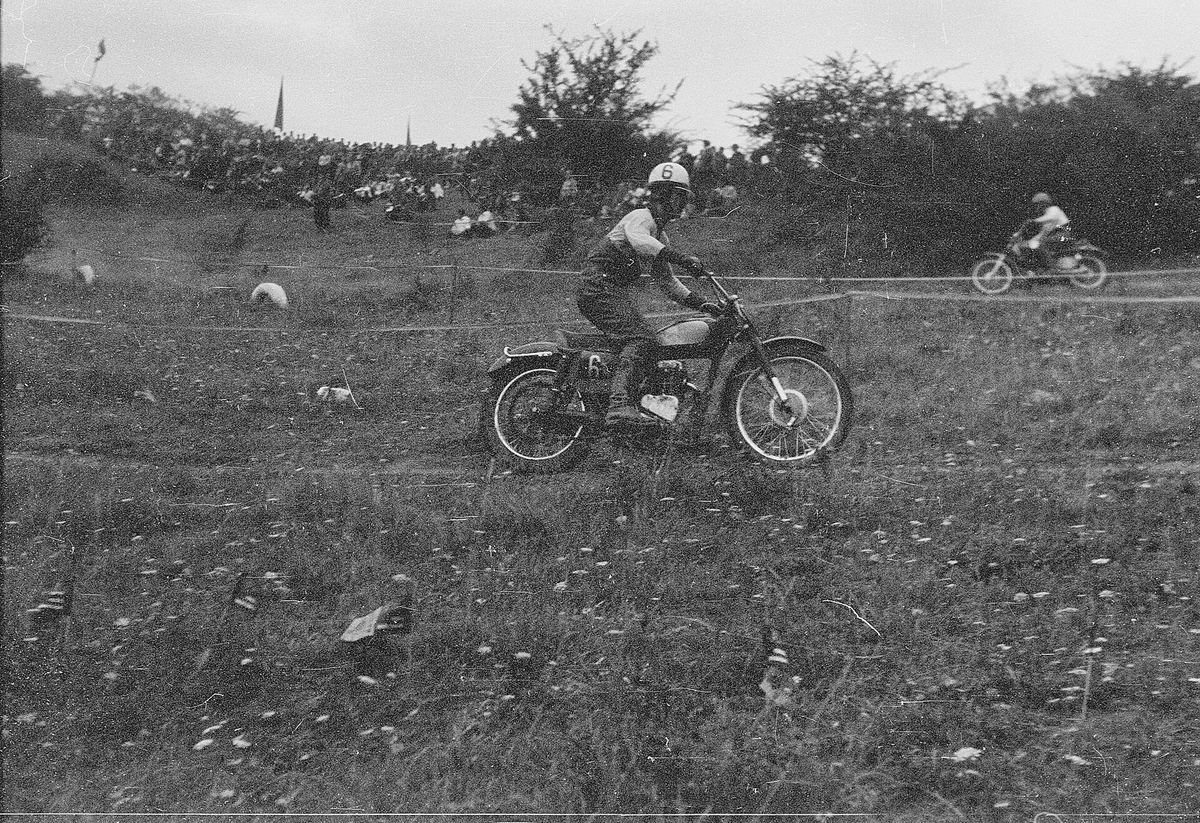
For Bud Ekins, the day ended against a wall. The impact broke his ankle, though accounts differ on the detail: the speedtracktales archive says a small wall and the left ankle; Cycle World's 2005 retelling says a bridge parapet; the 1964 report says simply a broken leg. He finished the day inside his time and did not start on Thursday.
McQueen, as Cycle World's period report has it, "after repairing a broken chain, was last man on the road at the end of the third day." The local rider who blocked his path finished the job. With two men out of a four-man team, the Silver Vase was gone.
Dave Ekins and Cliff Coleman carried on for themselves. Both rode the full six days without losing a mark on time and won gold medals. Steen, who lost 13 marks after getting lost on the first day, rode clean from then on and took silver.
What it took: big four-strokes against small two-strokes
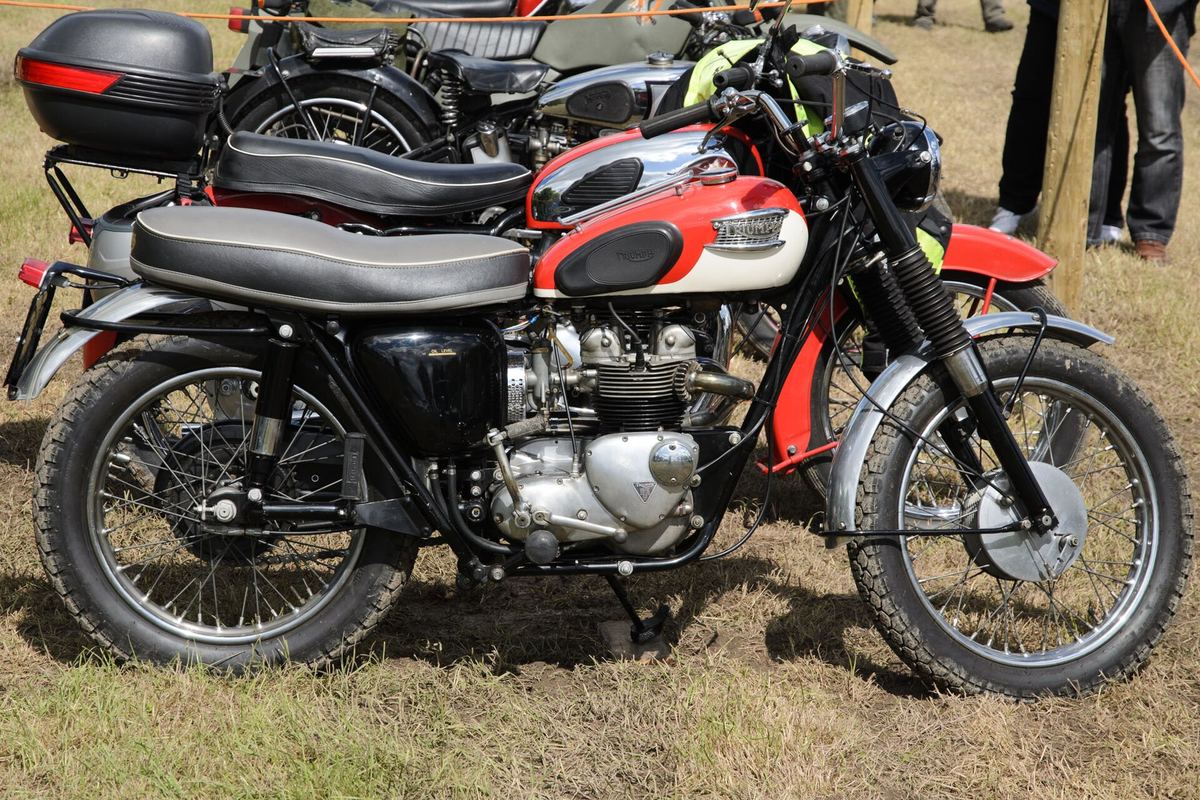
The Americans rode British twins. McQueen's was a 650cc Triumph TR6 Trophy, entered in the class up to 750cc, and the team mixed 650s with 500cc TR5s. Sources disagree on who rode which. Cycle World noted that the American-ridden bikes looked smoother than the factory Triumphs of the British riders Ken Heanes and John Giles. Giles was the best British rider of the week.
The bikes that won were different. The East German team rode MZ two-strokes, single-cylinder machines of 175cc to 350cc built at Zschopau in Saxony. A two-stroke fires on every turn of the crank, so it makes a lot of power for its weight. On the special tests, that counted.
Britain's Trophy team finished the week without losing a mark. So did East Germany's. The tie was broken on bonus points from the special tests, and the lighter MZs were faster there. Cycle World's Continental Report called the contest "big 'uns versus littl' 'uns". The littl' 'uns won.
The final day finished with a road race on the runways of Erfurt airport, ridden, as Cycle World noted, on the same trials bikes and knobbly tyres the riders had used all week. For the teams still clean, it was the last chance to win bonus points.
The Silver Vase also went to the hosts: East Germany's B team, riding 50cc and 75cc Simsons, won it from East Germany's own MZ-mounted A team. MZ took every class it entered except the 125cc, which went to a Czech CZ.
Why it still matters
The 1964 Six Days was the only one East Germany ever hosted, and it ended with the hosts winning both team prizes. It also showed where off-road racing was heading: light, fast two-strokes would dominate enduro for decades to come.
For the Americans, it was a beginning more than an ending. Dave Ekins and Cliff Coleman came home with gold medals. Bud Ekins rode the Six Days again, and over seven years in the 1960s won four gold medals and a silver.
McQueen went to Erfurt as a film star and left as one more rider who hadn't finished. The Six Days never cared who you were, only when you reached the next check.
Quick answers
Did Steve McQueen ride in the International Six Days Trial?
Yes. Steve McQueen rode the 1964 International Six Days Trial in Erfurt, East Germany, as part of the American Silver Vase team on a 650cc Triumph TR6. He retired on the third day after swerving into a ditch to avoid a local motorcyclist who had blocked the course, bending his front fork.
Who won the 1964 ISDT?
East Germany won both main prizes at the 1964 International Six Days Trial in Erfurt. Its MZ-mounted team won the International Trophy, tied with Britain on zero marks lost but ahead on special-test bonus points, and its B team on Simsons won the Silver Vase.
Who was on the 1964 American ISDT team?
The 1964 American Silver Vase team was Bud Ekins, Dave Ekins, Cliff Coleman and Steve McQueen, with John Steen as reserve, all on Triumphs. Bud Ekins broke his ankle and McQueen crashed out on day three; Dave Ekins and Cliff Coleman finished and won gold medals.
Where was the 1964 International Six Days Trial held?
The 1964 International Six Days Trial was held from 7 to 12 September in and around Erfurt, in East Germany, with daily loops through the Thüringer Wald (Thuringian Forest). It was the 39th edition and the only one East Germany ever hosted.