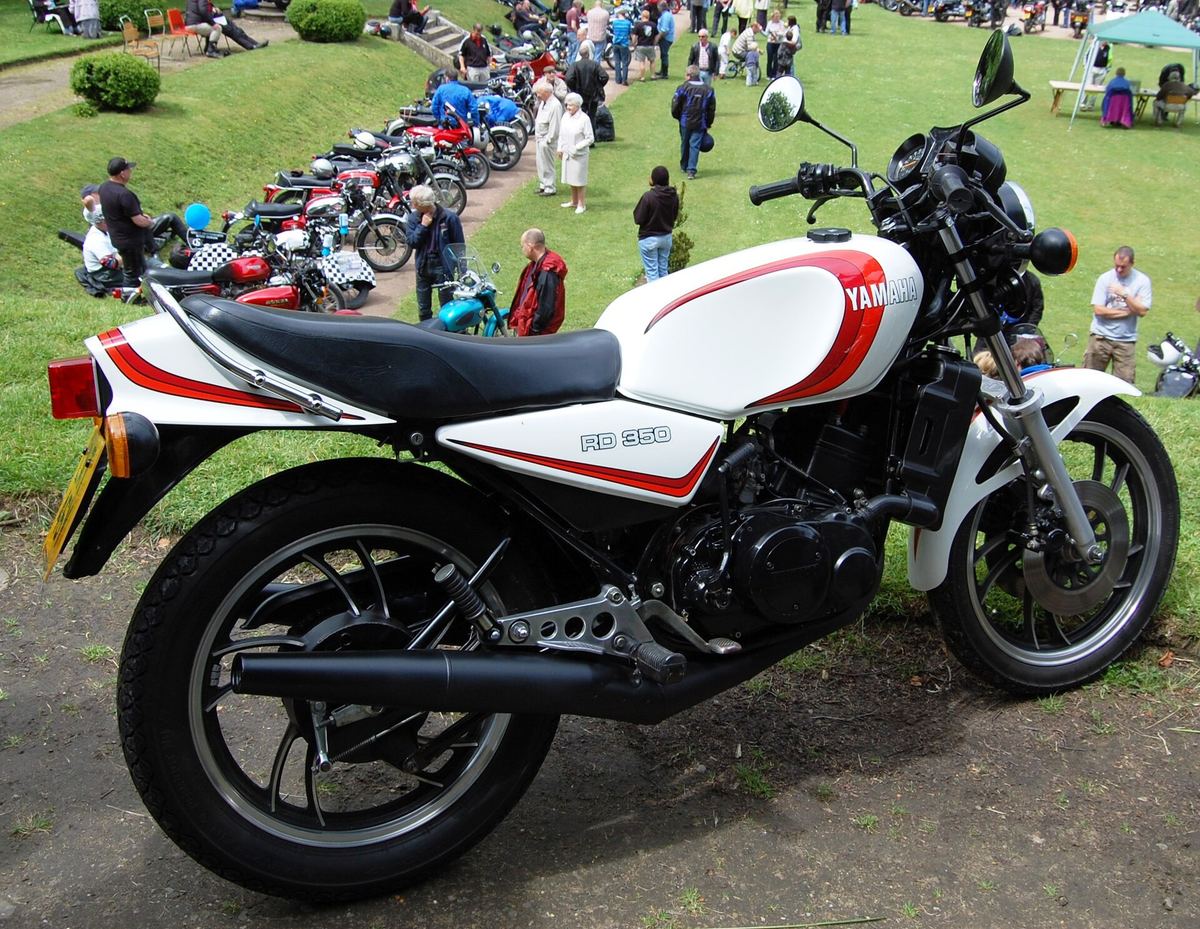
A Yamaha RD350LC, the liquid-cooled two-stroke that defined British biking in the early 1980s.. Photo: Ronald Saunders / Wikimedia Commons, CC BY-SA 2.0
Yamaha had a simple brief for its new middleweight: build a TZ for the street. The TZ was the company's production racer, the bike that filled Grand Prix grids in the 1970s. The road bike that came out of that brief, the Yamaha RD350LC, reached British dealers in June 1980 after months of delays.
By November, Motor Cycle News readers had voted it Machine of the Year. They did so again in 1981, MCN recalls.
The LC, for liquid-cooled, cost little, weighed little and went faster than it had any right to. It became the most tuned and most stolen bike in Britain, and it gave its name to a race series that turned amateurs into Grand Prix riders. For a generation of riders who started out in the 1980s, it was the bike that mattered.
Why Yamaha built the RD350LC
Yamaha had built fast two-stroke twins since the 347cc YR1 of 1967, Hagerty notes. Through the 1970s the RD350 and RD400 carried the line on, and the letters RD stood for Race Developed. But by the late 1970s the name had become a stretch. The air-cooled RDs had twin shocks and simple chassis, while the TZ racers had been liquid-cooled since the TZ350A of 1973 and had used monoshock rear suspension since the TZ250C of 1976.
In 1978 the American market was closing to performance two-strokes because of emissions rules, MCN explains. Yamaha decided to aim the replacement at Europe instead, where it could make the bike as sporty as it liked. Paul Butler, a Briton who was Yamaha Europe's product planning manager and later ran the Marlboro Yamaha Grand Prix team, gathered feedback from dealers and riders and proposed the new machine to Japan.
The styling also had British roots. Bob Trigg, who had worked on the Norton Commando, and designer Mike Ofield produced design studies. Yamaha disguised the job: it asked them for a "twin-cylinder, liquid-cooled 125cc boy racer". Trigg later said their drawings looked just like the LCs that came out, right down to the reverse-cone expansion chambers.
Long-time Yamaha test rider Dave Bean helped develop the prototype, and former MCN cartoonist John Mockett helped design its distinctive cast wheels.
What made the Yamaha RD350LC different
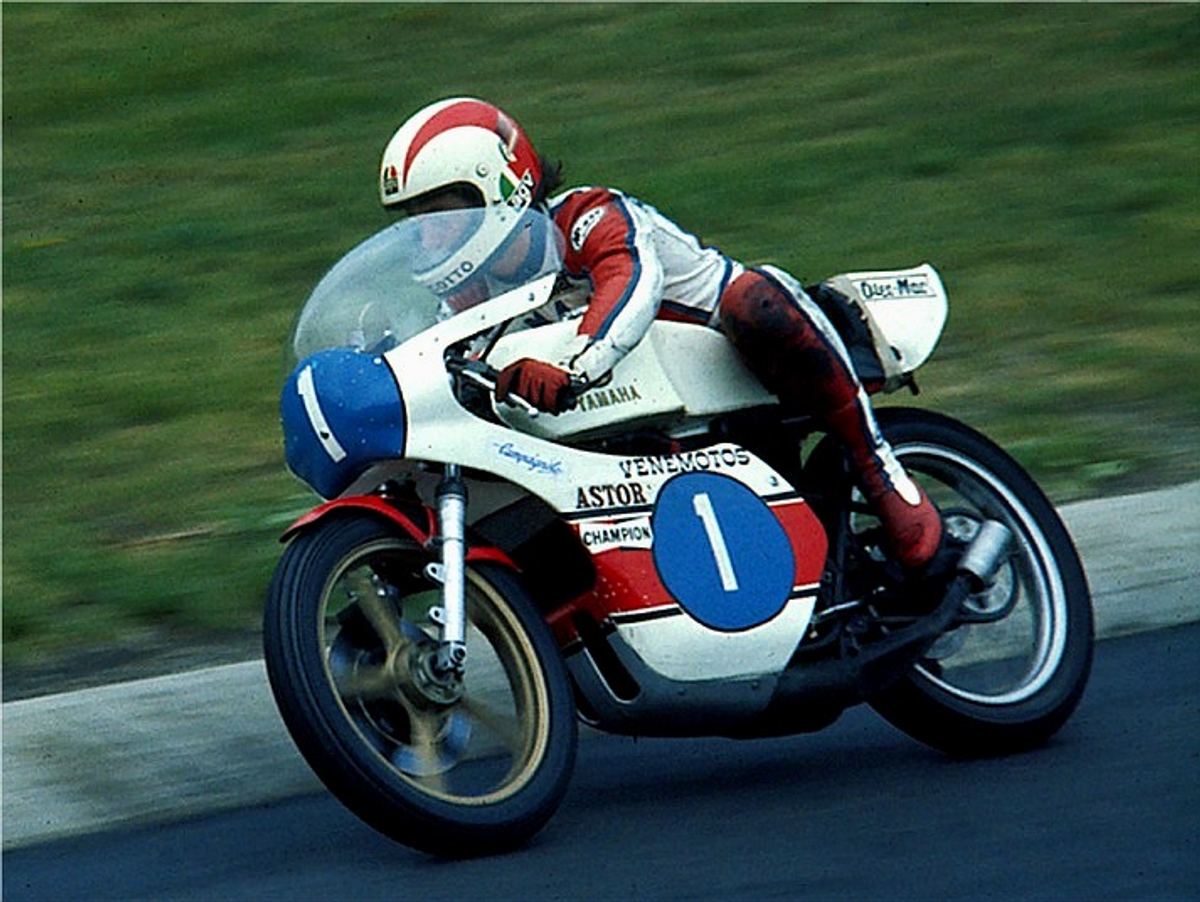
The Yamaha RD350LC looked like a racer, but its engine owed as much to the old road bikes as to the TZ. It kept the 64 x 54mm bore and stroke of the earlier RD350, and MCN notes that RD barrels would have fitted its horizontally split crankcases. Its separate cylinders had iron liners, and the porting was far milder than the racer's, Classic Bike says.
The big change was the water jacket. The LC was the first Yamaha two-stroke road bike with liquid cooling, Australia's BikeReview notes, and its reed-valve twin made 47bhp. That was more than the 44bhp of the RD400 it replaced, from 51cc less.
The chassis followed the TZ. A cantilever monoshock with five-way preload adjustment, a six-speed gearbox, twin front discs and 18in cast wheels completed the package. Hagerty gives the dry weight as 308lb. There was no electric starter.
The details were simple, light and robust. Two 26mm Mikuni carburettors fed the engine, Yamaha's own Autolube system pumped two-stroke oil from a separate tank, and a CDI unit handled the ignition. The non-adjustable 32mm forks gave 140mm of travel and the monoshock 95mm, according to the specification published with Cycle Guide's 1980 test.
Not everyone could buy one. The RD350LC was not sold through Yamaha dealers in the United States, Cycle Guide told its readers in 1980. Americans had to wait for the RZ350 of 1983. Britain and Europe also got a smaller RD250LC, with a single front disc.
On the road
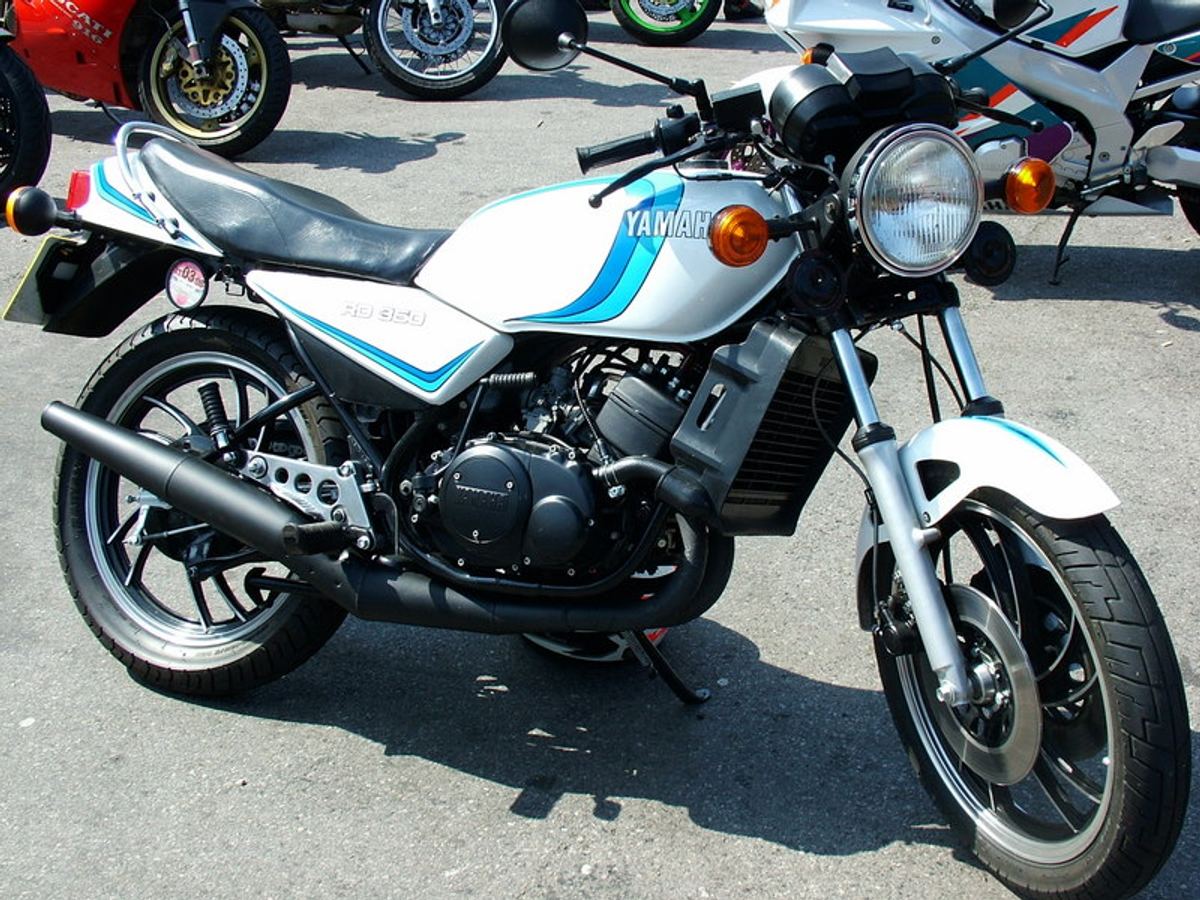
Below 6,000rpm, the Yamaha RD350LC did very little. Above it, the power arrived all at once. MCN describes a sharp, on-off delivery once the engine reached its powerband, and Hagerty says the bike became known for its wheelie-popping acceleration.
Cycle Guide's testers took one to a racetrack in 1980. They found it running "straight and true at 110 mph" and praised a chassis whose every move was "crisp, sure and confidence-inspiring". But they warned that it was simply too much like a race bike to please many people as everyday transport.
British riders disagreed. In town the LC was docile and comfortable, Hagerty's tester found, and on open roads its light weight gave very flickable handling. The realistic cruising speed was about 85mph, against a top speed of about 110mph. On a long motorway trip in 1982, he recalls, it cruised at an indicated 80mph-plus.
Alan Carter, who raced LCs in the Pro-Am and rode one on the road, put it simply in Classic Racer: "The RD350LC moved the game on massively when it came out in 1980."
The engine's mild tune left plenty to find. Tuners such as Stan Stephens and Terry Beckett, and accessory firms such as Allspeed and Micron, built businesses around it, MCN notes. Yamaha even sold replica Pro-Am fairings, the first accessory fairings offered by a mainstream manufacturer. Hagerty's buying advice reflects the result: most LCs have been ridden hard, so buy carefully.
In competition: the Pro-Am
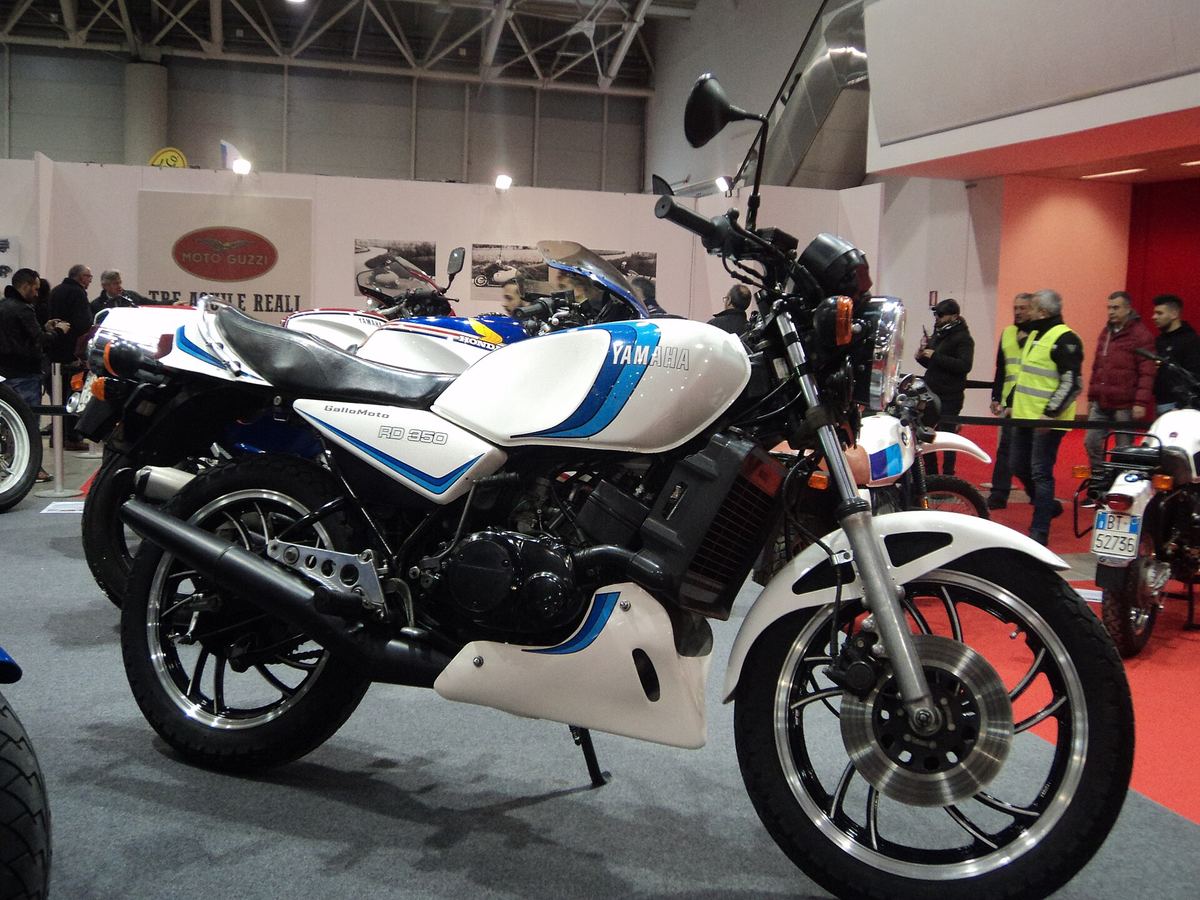
The Yamaha Pro-Am series ran on British circuits from 1981 to 1984. It put professional riders against amateurs on identical Yamaha RD350LCs, all provided free by Yamaha, which also paid the crash damage bill, according to MCN. Riders were given their bikes by drawing keys from a hat, Hagerty says, and the 1982 champion took home £15,000.
The racing was close and very physical. MCN later called it the maddest one-make championship ever held, with riders flicking each other's kill switches and hanging on to rivals' grab rails. It was shown on ITV's World of Sport, and LC mania followed.
Several careers started there. Niall Mackenzie had a one-off ride in 1981 at Knockhill, where he started at the back and finished fifth. He finished fifth overall in 1982 and second in 1983, Australian Motorcycle News reports, and that earned him his first Grand Prix in 1984. He went on to spend ten years in Grand Prix racing. Alan Carter, Kenny Irons and Rob McElnea also made their names in the series, and Lin Jarvis, later Yamaha's MotoGP team boss, started behind the scenes.
The idea spread. Yamaha ran LC cups across Europe, and in France and Germany in 1983 the winner earned a place in the European 250cc championship on a TZ250. In Australia, a 19-year-old Kevin Magee won the first RD250LC series in 1981 and the 350 series in 1982, before going on to Grand Prix racing.
The Yamaha RD350LC today
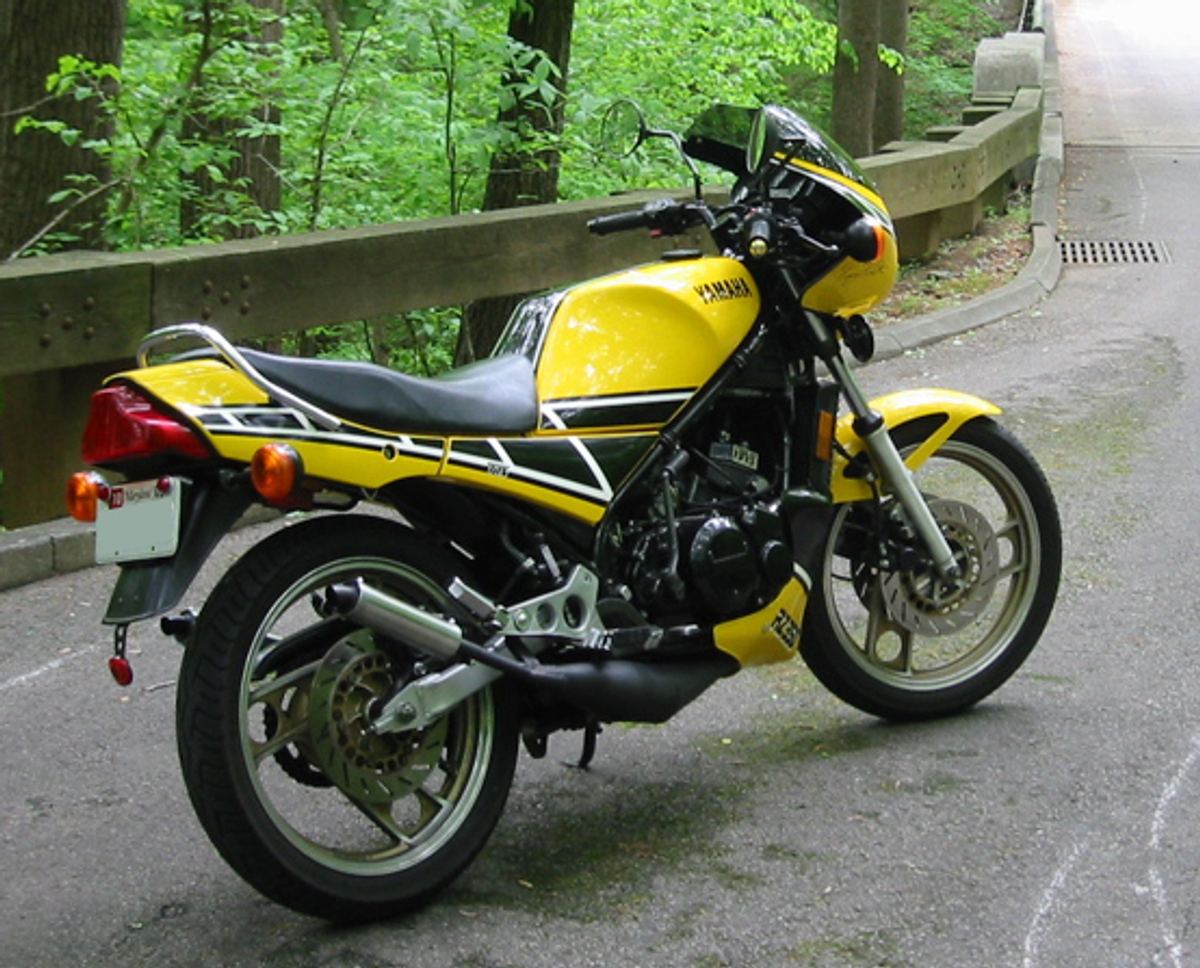
The LC did not stay at the top for long. Honda's liquid-cooled V4s and new rivals from Suzuki and Kawasaki soon made it look dated, MCN says. Yamaha replaced it with the RD350 YPVS, which added an exhaust power valve, a small fairing and, according to MCN, 59bhp. Many purists still prefer the original. A fully faired version later built in South America kept the twin alive until the mid-1990s, Hagerty notes.
The legend has lasted. In 2015, 31 years after the last Pro-Am race, the series returned as a support race at the British Grand Prix at Silverstone, Bikesport News reported, and Mackenzie won. Revival races on restored LCs have continued since, with some of the original stars back in their leathers.
Prices have risen with the nostalgia. In March 2026 H&H Classics sold a 1981 RD350LC for £6,612, including premium, at the National Motorcycle Museum in Solihull, against a pre-sale estimate of £3,500 to £4,500. MCN reported in 2020 that good original LCs were fetching £8,000 or more. In the United States, where the LC was never officially sold, Hagerty values a 1981 model at $3,500 as a project, $5,500 as a nice rider and $8,000 for a show bike.
Quick answers
What does LC stand for on the Yamaha RD350LC?
LC stands for liquid-cooled. The RD350LC of 1980 was the first Yamaha two-stroke road bike with liquid cooling, an idea taken from the company's TZ racers. RD stood for Race Developed.
How fast is a Yamaha RD350LC?
The Yamaha RD350LC made 47bhp from its 347cc two-stroke twin and had a top speed of about 110mph. Hagerty puts its realistic cruising speed at about 85mph.
What was the Yamaha Pro-Am series?
The Yamaha Pro-Am was a British one-make race series, held from 1981 to 1984, that put professional and amateur riders on identical RD350LCs supplied by Yamaha. It launched the careers of riders including Niall Mackenzie, Alan Carter and Kenny Irons.
Was the Yamaha RD350LC sold in America?
No. The RD350LC was not sold through Yamaha dealers in the United States, Cycle Guide reported in 1980. American riders got its successor, the power-valve RZ350, from 1983.