BSA Gold Star: the Brooklands badge that became Britain's greatest pushrod single
The BSA Gold Star took its name from a pin awarded for a 100mph lap at Brooklands in 1937. It went on to win so many Clubmans TTs that the races were dropped.
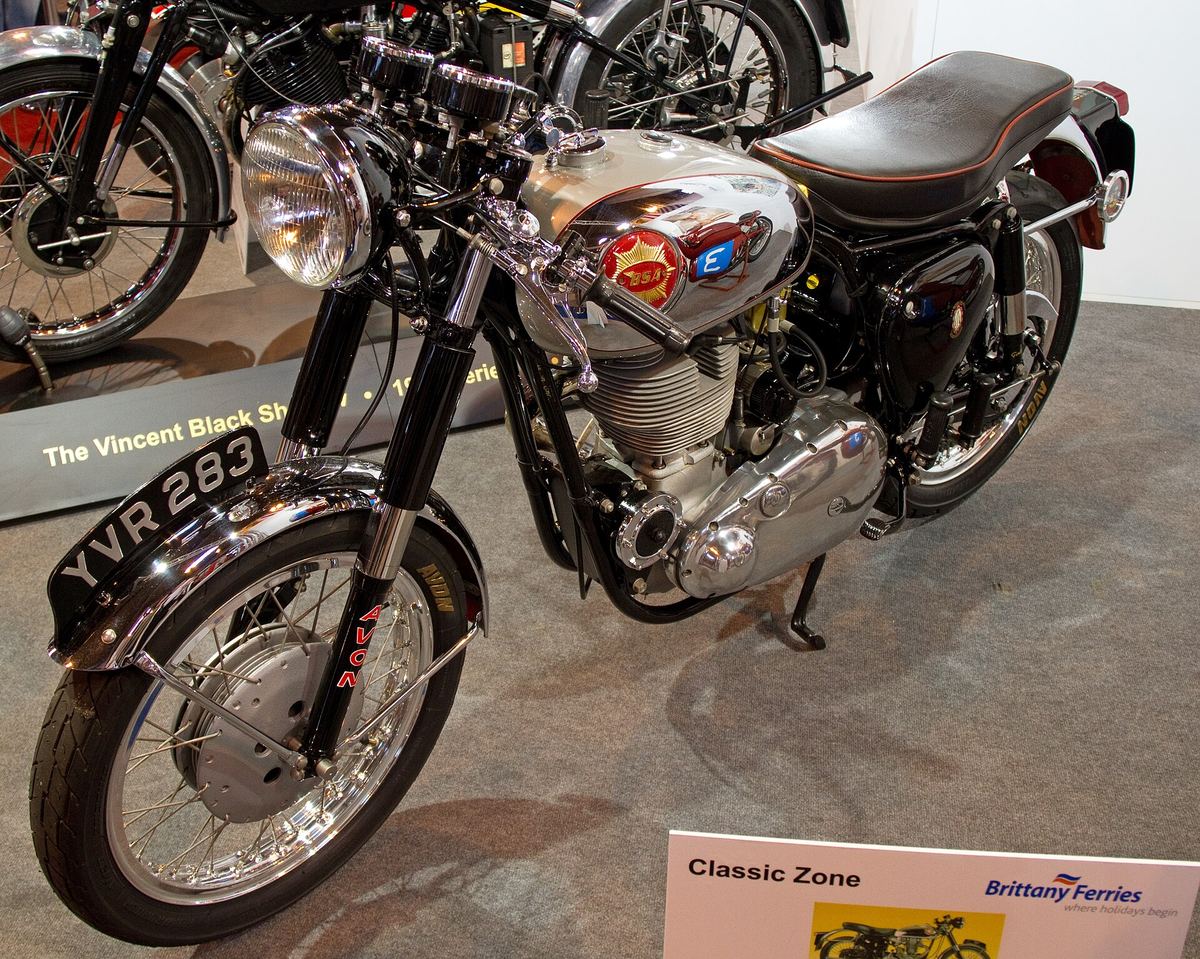
A 1961 BSA Gold Star 500 Clubmans, the version most associated with café racers, at Motorcycle Live in Birmingham.. Photo: Tony Hisgett / Wikimedia Commons, CC BY 2.0
Wal Handley had retired from racing when BSA asked him to ride at Brooklands on 30 June 1937. The Birmingham company had prepared an Empire Star single to run on alcohol, and Handley started a three-lap handicap race nine seconds behind. He won at an average of 102.27mph, with a fastest lap of 107.57mph, Cycle World recorded.
Any lap above 100mph at Brooklands earned a small enamel pin, the Brooklands Gold Star. BSA named its next sports model after it. The BSA Gold Star stayed in production, with a gap for the war, until 1963.
In that time the pushrod single won Clubmans TTs, trials, scrambles and American flat-track races. For a generation of young British road racers, it was the bike to have.
Why BSA built the Gold Star
BSA had avoided racing since 1921, when its whole team of new overhead-valve singles retired from the TT within three laps, according to Kevin Cameron in Cycle World. Sixteen years later, competitions manager Bert Perrigo decided to try again. The Empire Star prepared for Handley ran on alcohol at a compression ratio of 13:1 and made 34bhp, Cameron writes.
The result was immediate. By the autumn of 1937 BSA had announced the M24 Gold Star for 1938. Its engine was new, with an alloy cylinder and head in place of iron, a 7.5:1 compression ratio and 30hp at about 5,500rpm. Cycle World's 1967 history of the model gives a top speed of 90 to 95mph in road trim.
BSA's idea was simple, and it explains the bike's whole career. The Gold Star used pushrods, not the overhead camshafts of pure racers like the Manx Norton, so it was cheaper to build and easier to maintain. It came in road, trials and track versions, and a change of tyres, cams and compression ratio was enough to move from one sport to another.
Only a few were built before the Second World War. BSA spent the war building 126,000 side-valve M20s for the army, Cameron notes. The Gold Star did not return until 1949, when a new 350cc model appeared, followed by a 500cc in 1950.
What made the BSA Gold Star different
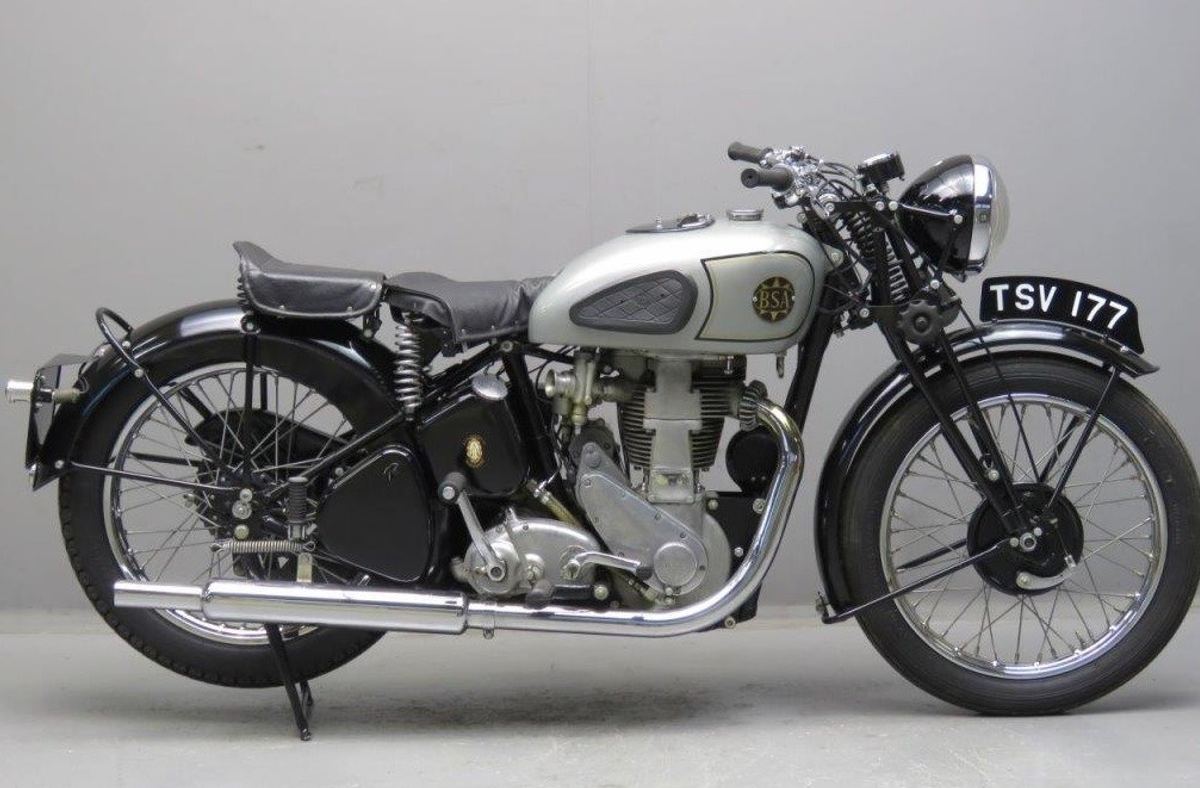
The BSA Gold Star kept getting better. The post-war engines had shallower, faster-burning combustion chambers, plunger rear suspension and a telescopic fork. A swinging-arm frame followed in 1953, after the competition department tried one at the 1952 International Six Days Trial.
Power rose with every revision. Cycle World lists the first post-war 350 at 24hp at 7,000rpm and the 500 at 33hp at 6,500rpm, good for about 105mph with a silencer. In late 1951 the 500 gained a new barrel and a cylinder head designed by Bert Hopwood, with a separate rocker box, according to Wikipedia.
In 1954 BSA redesigned the engine again. Cycle World called it "the finest, most powerful pushrod single ever offered for sale". It had a massively finned cylinder and head cast by an aircraft supplier, a shorter connecting rod, eccentric rocker spindles to set the valve clearances and a Nimonic exhaust valve.
The best-known version was the DBD34, introduced in 1956. In Clubman trim it had clip-on handlebars, a swept-back exhaust and a large Amal GP carburettor with a bell-mouth intake. Hagerty puts its output at about 42bhp and its top speed at about 110mph. Later models had the ultra-close-ratio RRT2 gearbox, with a first gear so tall that the bike reached about 60mph before the change to second.
An optional 190mm full-width front brake gave more lining area than the standard 8in single-sided drum. Cycle World adds that the 500 in road-racing trim, with a 1½in carburettor and a 9:1 compression ratio, made 45hp at 7,200rpm and could reach 120 to 125mph with a megaphone.
In competition
The first proof came before the war. In 1938 E. R. Evans rode a Gold Star to fifth place in the Ulster Grand Prix, reaching about 110mph on the Clady Straight. Many experts had doubted that a pushrod single would last the distance, Cycle World noted.
After the war, the Clubmans TT, run on the Isle of Man for amateur riders on road-going machines, became the Gold Star's home. Harold Clark won the 1949 Junior Clubmans at 75.18mph on a 350, Cycle World recorded, and the Gold Star won the Junior again in 1950, 1951, 1952 and 1953.
By the mid-1950s, nearly everyone rode one. Hagerty says 33 of the 37 riders in the 1955 Junior Clubmans were on Gold Stars. In 1954 Alistair King won the Senior Clubmans at 85.76mph, and in 1956 Bernard Codd won both the Senior and the Junior. The races were then dropped. Kevin Cameron compares the Gold Star to Yamaha's TZ750, another machine criticised for being too good.
Off-road, it was just as strong. John Draper won the 1951 Scottish Six Days Trial, Bill Nicholson took the British trials championship in 1952 and 1953, and Jeff Smith won the Scottish Six Days in 1955. That same year, Draper won the European motocross championship, the forerunner of the world title.
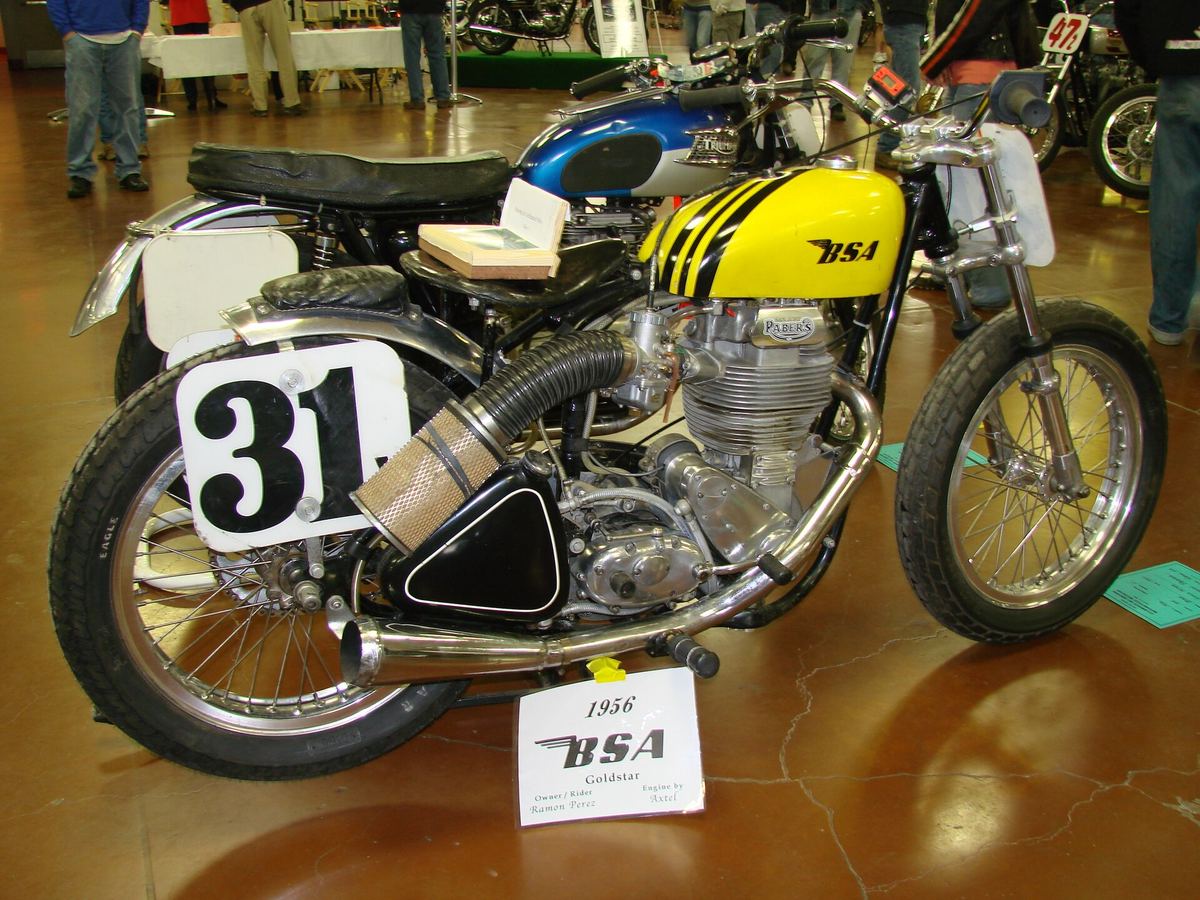
In America, the Gold Star won the Big Bear Run, the Catalina Grand Prix and countless flat-track races. BSA named its scrambler the Catalina in honour of that record. At Daytona in 1954, BSAs took the first five places, with Tommy McDermott third on a Gold Star. In 1963, the year production ended, Jody Nicholas won the Laconia 100 on one.
On the road
The BSA Gold Star was sold as a road bike, and plenty were used as one. Cycle World described it as the ideal machine for the sportsman who could afford only one motorcycle but wanted to race as well as ride every day. Hagerty's Martin Squires notes that the Clubmans TT and events such as the Thruxton 500 drew young road racers to it, while its accessible 100mph-plus top speed won over riders who never raced at all.
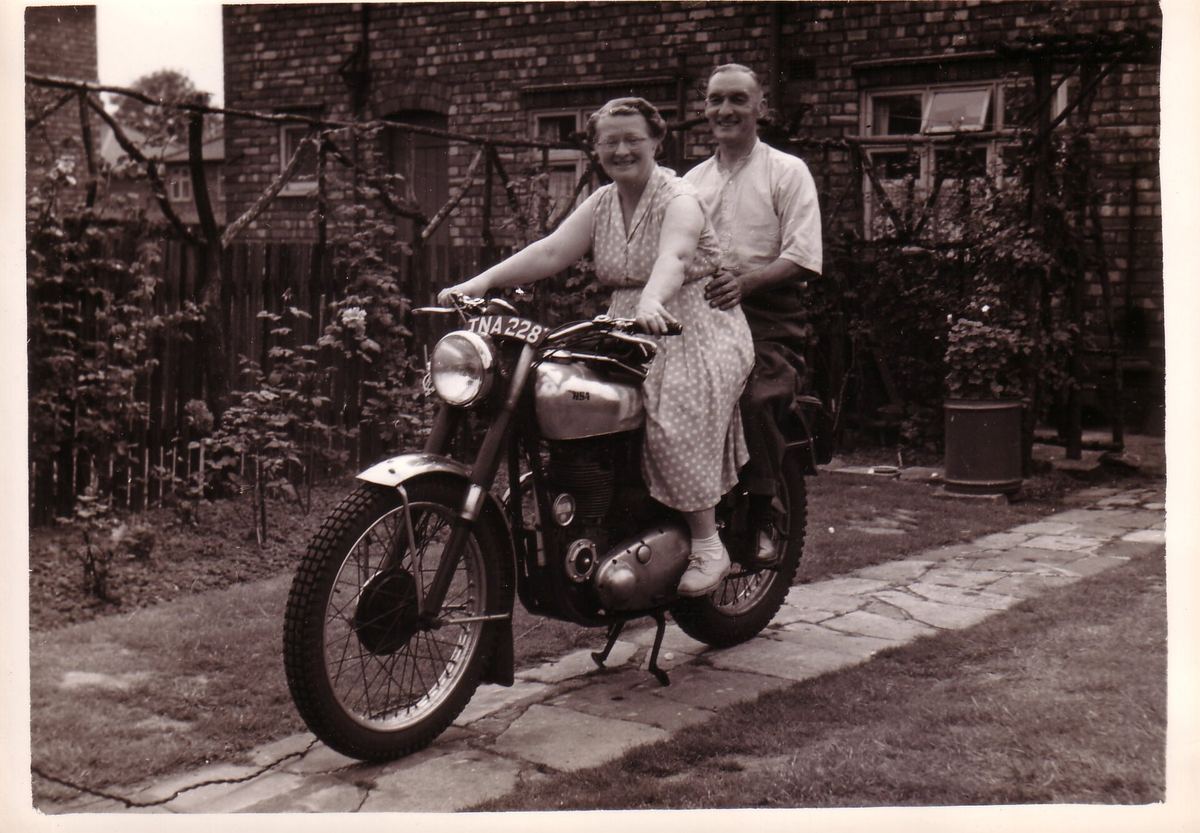
Cycle World counted "many millions of miles all over the world" covered by road-going Gold Stars in the hands of their owners.
It was not a comfortable companion. Hagerty's tester found the DBD34 lumpy below 3,000rpm and the tall first gear hard to find. The forks dived under hard braking. But he also loved its relaxed feel and its rumbling, twittering exhaust, and within half a mile, he wrote, he was in love with it. He called it raw, rapid and uncompromising, and on the right road fantastic fun.
The numbers explain the appeal. Using all the revs, Hagerty found, first gear runs to about 60mph and second to about 90mph, and the top speed of about 110mph comes with the rider's chin on the steering damper knob. It usually starts on a firm kick, but only if the owner follows the starting routine exactly.
The BSA Gold Star today
The end came from outside the engineering department. BSA's management had long seen big pushrod singles as old-fashioned, Cameron writes, and by 1962 Lucas was discontinuing the single-cylinder magneto the Gold Star used. The last Gold Stars left the factory in November 1963, Cycle World reported. BSA did not move the design to unit construction and developed its smaller C15 into the B40 and later the B50 instead.
BSA also used the name on the Rocket Gold Star, a 650cc twin of the early 1960s that H&H Classics describes as rare and among the most sought-after BSAs.
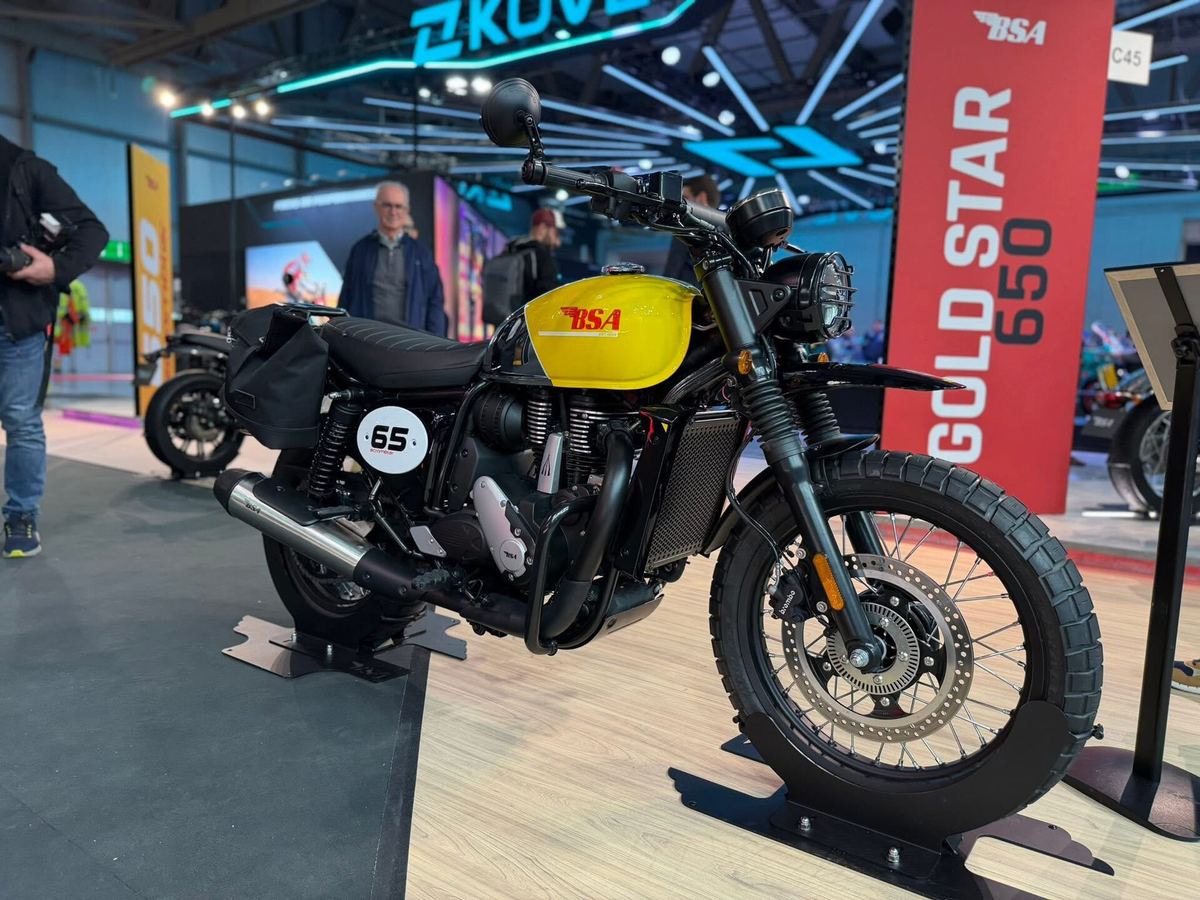
Nearly six decades later, the name returned. When BSA was revived under Mahindra ownership, its first new model was a 652cc single-cylinder Gold Star roadster, Hagerty notes.
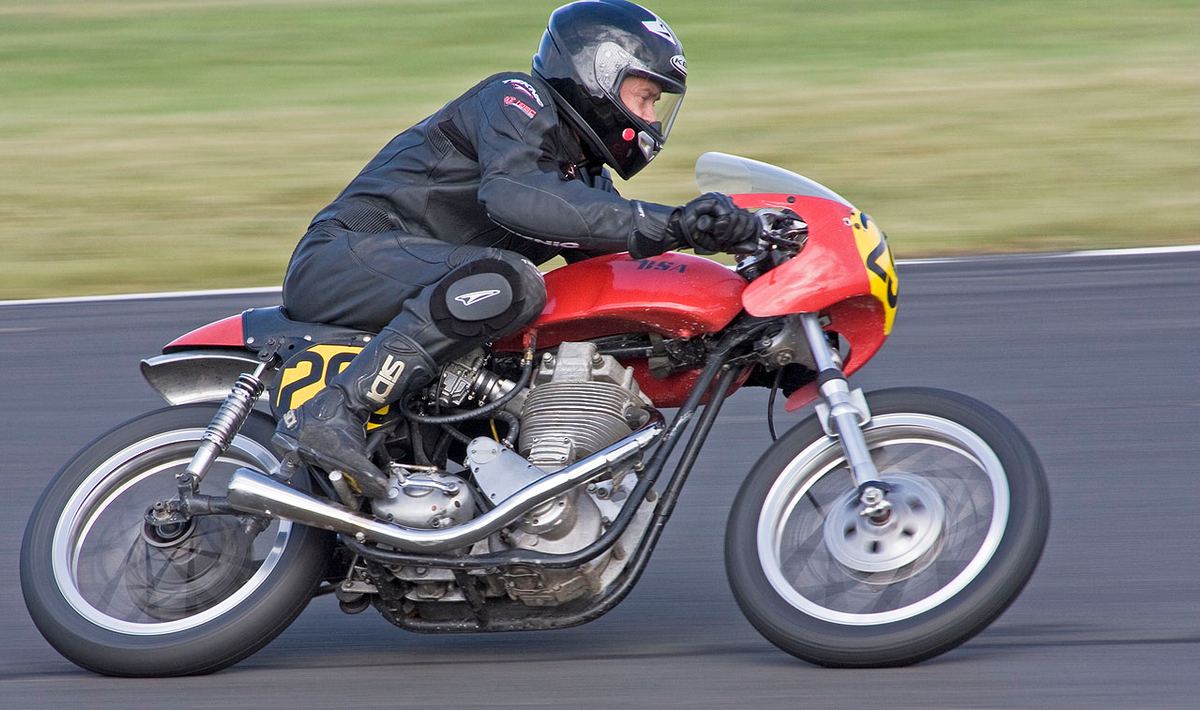
The originals are still raced in classic events from Britain to Australia. In March 2026 H&H Classics sold a restored 1961 DBD34 Clubman Gold Star for £9,890, including premium, at the National Motorcycle Museum in Solihull. Hagerty's US valuation puts an average DBD34 in good condition at $13,800.
Quick answers
Why is it called the BSA Gold Star?
The name comes from the Brooklands Gold Star, a pin awarded for lapping the Brooklands circuit at over 100mph. Wal Handley earned one for BSA on 30 June 1937 with a lap of 107.57mph on an Empire Star, and BSA named its next sports model the Gold Star.
How fast is a BSA Gold Star DBD34?
A DBD34 Gold Star in Clubman trim made about 42bhp and could reach about 110mph. Its close-ratio gearbox had a first gear tall enough for about 60mph, according to Hagerty.
When was the BSA Gold Star made?
The first Gold Star, the M24, was announced in 1937 for the 1938 season. Production stopped for the Second World War and resumed in 1949. The last Gold Stars were built in November 1963.
Why did BSA stop making the Gold Star?
BSA's management saw the pushrod single as outdated, and by 1962 Lucas was discontinuing the single-cylinder magneto it used. BSA chose not to redesign the Gold Star and ended production in 1963.