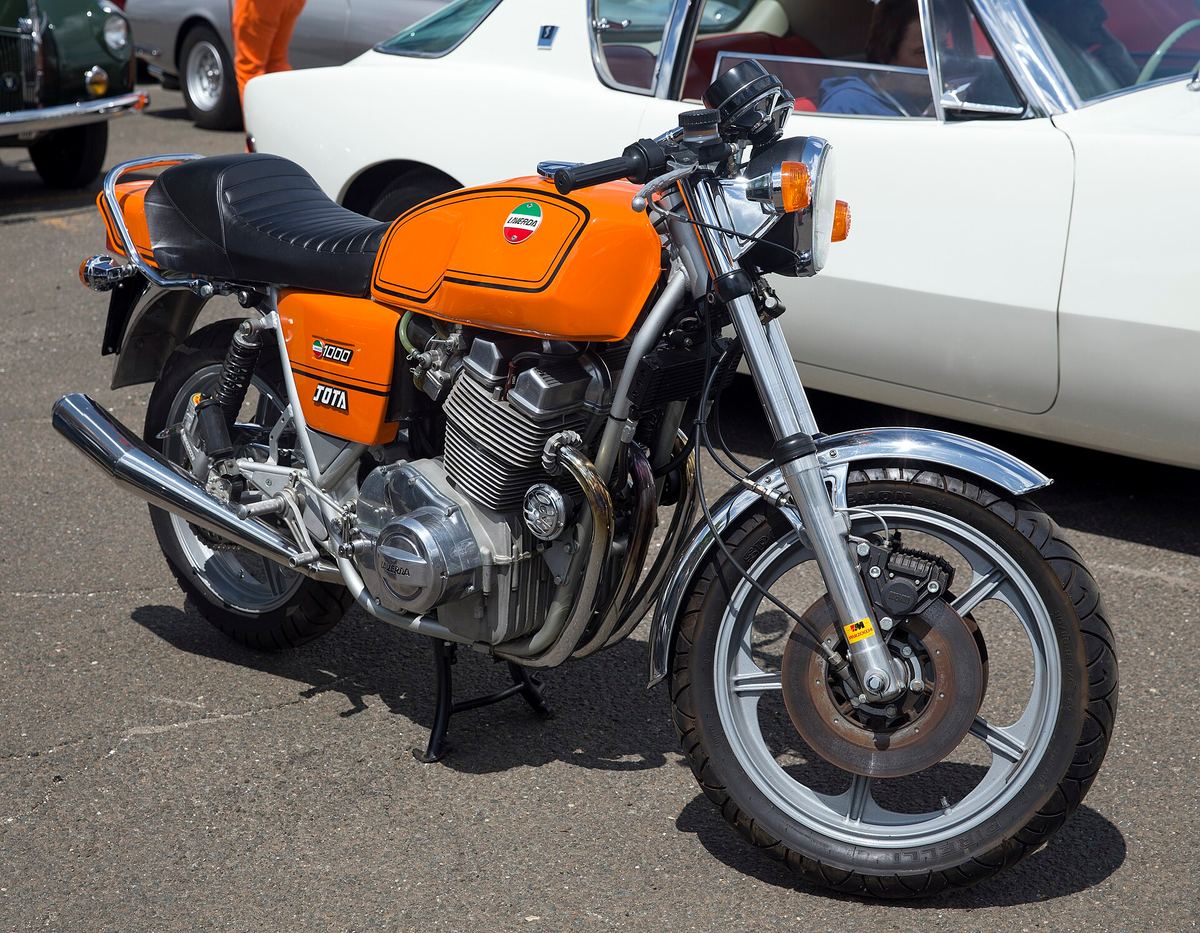
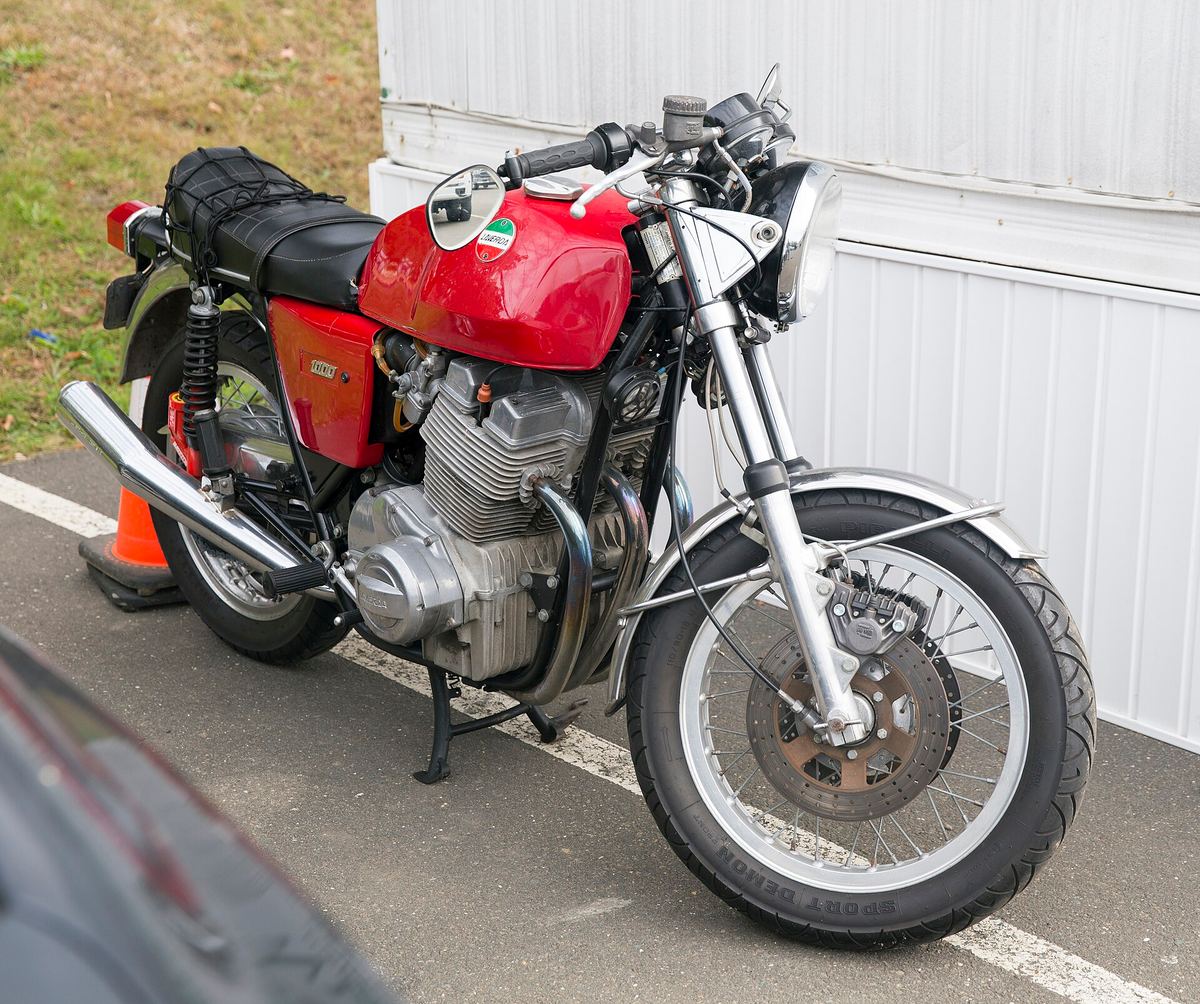
A 1976 Laverda Jota, the first year of the model, at the Greenwich Concours d'Elegance in 2023.. Photo: Mr.choppers / Wikimedia Commons, CC BY-SA 3.0
Bob Currie sat in the timing hut at MIRA, the British motor industry's test ground, in August 1976. On the straight outside, a Laverda Jota prepared by the importers Slater Brothers went through the beam at 140.04mph. According to the Motor Cycle tester who reported the session, that made it the first road bike on sale to be recorded above 140mph under test conditions.
The Laverda Jota was an Italian motorcycle, built at Breganze near Vicenza. But it was conceived in Herefordshire, by two brothers who thought the factory's 1,000cc triple had more to give. They added racing parts, gave it a name and sent it out to win production races.
For a couple of years in the late 1970s nothing on sale was faster. It was loud, heavy and hard work, and for many owners that was the appeal.
Why the Laverda Jota was built
Laverda was a farm machinery company first, founded by Pietro Laverda in Breganze in 1873. Francesco Laverda started the motorcycle division in 1949, and his son Massimo came back from the United States convinced that the market wanted big bikes. With designer Luciano Zen, he built a 650cc twin in 1968 and enlarged it to 750cc. Then the Honda CB750 arrived and made it look old, Motorcycle Classics notes.
Laverda bet that 1,000cc would become the new benchmark. A triple was shown in prototype form in 1969, and testing exposed a serious flaw: crankshafts and frames cracked, a failure blamed on the rocking vibration of a 120-degree crank. Laverda changed to a 180-degree crank, and production of the Laverda 1000 began in late 1972.
Roger Slater was building Vincent specials in Egli frames when he visited Breganze in 1970 to ask Laverda to make engines for him. Massimo Laverda said no, but showed him the triple. Roger and his brother Richard formed Slater Brothers in Collington, near Bromyard, and by 1972 importing Laverdas was their main business.
The standard bike was quick but not the quickest. When Motor Cycle tested a 3C at MIRA in April 1974, it averaged 128.46mph, while Kawasaki's Z900 managed 131mph.
The Slaters wanted to win the Avon Roadrunner production race series. They fitted the factory's racing cams, 10:1 pistons, fork yokes from the SFC750 endurance racer and a freer exhaust, and sold the result as the 3CE, E for England. Roger Slater said the exhaust alone lifted power at the rear wheel from 68 to 75bhp. In 1976 Massimo Laverda agreed to build the bikes at the factory for the UK, and they took the name Jota.
What made the Laverda Jota different
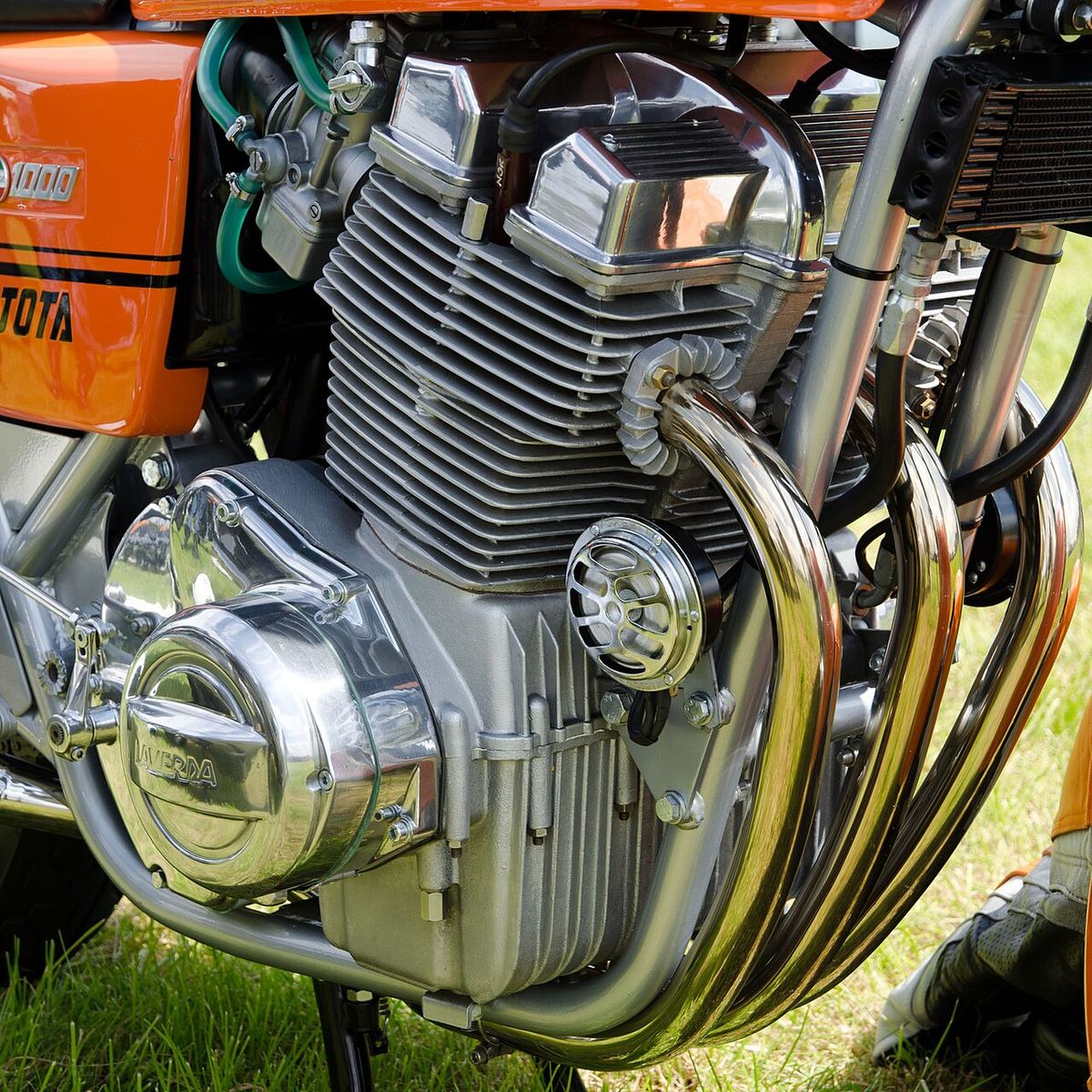
The engine was the reason. The Laverda Jota used a 981cc air-cooled triple with twin overhead camshafts and a bore and stroke of 75 x 74mm. Its 180-degree crank set the two outer pistons rising and falling together while the middle one went the other way. The firing was uneven, and Motorcycle Classics describes the exhaust note as 1-2-3-miss. A single cam chain ran between the second and third cylinders, according to Classic Bike Guide.
The Slaters built the Jota on the 3CL, the 1976 update of the 3C, which had five-spoke cast wheels, three disc brakes and a glassfibre tailpiece, according to Motor Sport. To that they added performance exhausts, rear-set footrests, freer air filters and a close-ratio gearbox. The result made 90bhp at 7,600rpm, measured at the crank, and Roger Slater said the engine was safe to 8,500rpm.
The name was part of the package. A jota is a folk dance from Spain in triple time, Motorcycle Classics and Hagerty both note, a reference to the three cylinders. Some British sources have called it an Italian dance.
It was not cheap. Motor Sport puts the 1976 price at around £2,000, at least twice the price of a Japanese superbike. It was not light either: Hagerty gives the weight as 522lb with fluids.
The chassis was conventional but strong, with a duplex cradle frame, Ceriani forks and Koni rear shocks. As for the look, Motor Sport considers Laverda racing orange, with a silver frame and humped seat, the genuine Jota finish.
On the road
The MIRA figures tell the story. The bike timed that day was Pete Davies' works production racer, with every factory option, and it managed a best one-way run of 140.04mph and a mean top speed of 137.76mph, according to the Motor Cycle tester. It covered the standing quarter mile in 13.05 seconds at more than 110mph. After three sprints, the clutch gave up.
The tester had ridden the 3CE the year before and had not forgotten it. Above 130mph, he wrote, the chassis could get flighty, and riding it felt "like riding a raging bull along a tightrope".
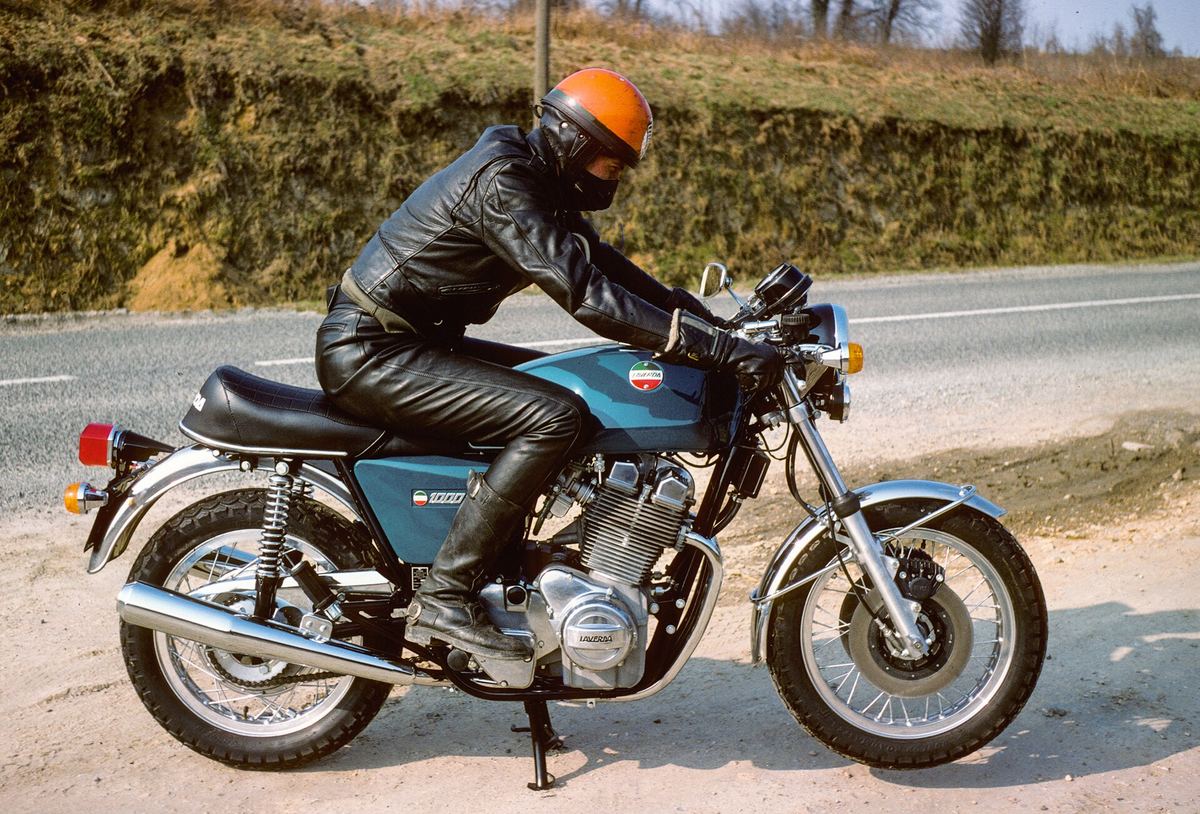
The production Jota was still a big, physical machine. Ride magazine noted that road testers thought it the fastest production bike of its day, but that it was tall and heavy and the clutch was a handful. Motorcycle Sport opened its July 1977 road test with the words "perfection, sheer perfection", Bonhams recorded in a later sale catalogue.
Riding a Jota more recently, Hagerty's tester found it magical in a straight line but complained of hand-numbing vibration through the low clip-on bars. He praised the triple Brembo brakes and found it a handful on country lanes, despite its steering damper.
Motor Sport is gentler: once the engine is on the cam, it says, the power is smooth and the handling nimble. Traffic is another matter, with a heavy clutch, a rough idle and high gearing.
In competition
The Laverda Jota was built for production racing. In 1976 Pete Davies won the Avon Roadrunner series on the Slaters' Jota, a bike Motor Sport describes as virtually street-legal.
How many titles followed depends on the source. The Slater Brothers entry on Wikipedia, citing the historian Robert Smith, lists UK production championships in 1976 and 1978. Hagerty credits Peter "PK" Davies with three national production titles in the late 1970s. Motorcycle Monthly says he won the championship four times between 1976 and 1980.
All agree on one thing: in British production racing of the late 1970s, the Jota was the bike to beat. Footman James says it dominated the class from 1976 to 1980. The tyres of the time were said to struggle with its weight and power, but the wins kept coming.
The factory had bigger ideas too. In 1977 Laverda built a single V6 endurance racer, which ran in the 1978 Bol d'Or. The International Laverda Owners Club says it was timed at 176mph on the Mistral Straight.
Laverda's racing success went beyond the triple. Its 500cc twin, in Formula 500 racing form, won the Montjuïc 24 Hours in Barcelona in 1978, and in 1979 Slater Brothers sold a road version named the Montjuic.
The Laverda Jota today
The Laverda Jota sold well in Britain despite its price, Hagerty says, and Laverda built a similar model for other markets, including the United States. After the triple was enlarged to 1,200cc in 1977, the Slaters' tuning parts became the basis of the Laverda Mirage. In 1980 Massimo Laverda asked Roger Slater to run Laverda in North America, and he moved to California. By 1985 Laverda was struggling in the US, and Slater Brothers Inc closed.
In 1982 Laverda changed the crank to 120 degrees, creating the smoother Jota 120. Among collectors, the original 180-degree engine is the favourite, Motor Sport says. The triple carried on in the RGS and its successors until 1988. Laverda later struggled, was taken over by Aprilia and its brand now belongs to Piaggio, which has not revived it. Slater Laverda, the parts business Richard Slater ran in the UK, closed in 2021.
Jotas remain affordable for what they are. In April 2026 a 1977 Jota 1000 with 32,000 miles sold for £7,475 at Bonhams' Spring Stafford Sale, according to Classic.com. Motor Sport reported in 2021 that the best examples can reach around £20,000.
Quick answers
Who created the Laverda Jota?
The Laverda Jota was developed by Roger and Richard Slater of Slater Brothers, Laverda's UK importers in Herefordshire. They tuned the factory's 981cc triple with racing parts, and from 1976 Laverda built the bike in Breganze, Italy.
How fast is a Laverda Jota?
A Slater Brothers Jota recorded a best one-way speed of 140.04mph at MIRA in August 1976, with a mean top speed of 137.76mph. It was widely described as the fastest production motorcycle of its day.
What does Jota mean?
A jota is a Spanish folk dance in triple time. The name was chosen as a reference to the bike's three-cylinder engine, according to Motorcycle Classics and Hagerty.
What is the difference between the Jota 180 and Jota 120?
The original Jota used a 180-degree crank, with the outer pistons moving together, which gave an uneven beat and strong vibration. From 1982 Laverda used a 120-degree crank in the Jota 120, which was smoother. Collectors generally prefer the 180.