Vespa 98: the helicopter engineer who disliked motorcycles and built Italy a scooter
In 1946 an aircraft designer who did not like motorcycles drew the Vespa 98 for a bombed-out Piaggio. Eighty years and nearly 20 million scooters later, his idea is still on the road.
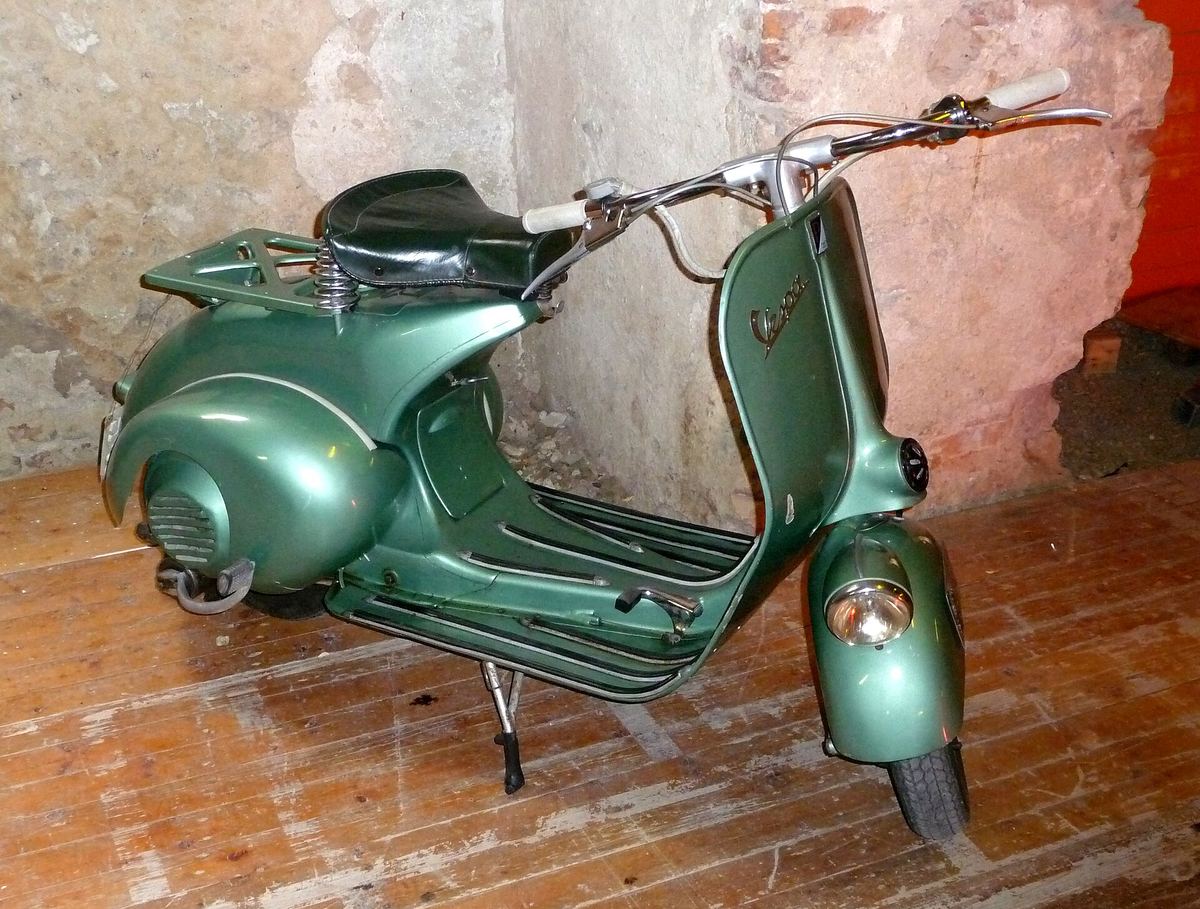
An early Vespa with the low, mudguard-mounted headlight of the first models.. Photo: Lucarelli / Wikimedia Commons, CC BY-SA 3.0
Rome, April 1946. On the lawns of the Rome Golf Club, Piaggio showed the public a machine nobody quite knew how to describe: the Vespa 98, a 98cc scooter with a steel body, a step-through floor and no visible engine. According to the Museo Piaggio, the first 50 had just been built at the Pontedera factory, and the crowd met them with a mix of curiosity, surprise and some scepticism. By the end of the decade, Il Post reports, more than 60,000 had been built.
On 23 April 1946, Piaggio filed the patent in Florence. It described a "motorcycle with a rational complex of organs and elements", which was a dry way of saying that this was not really a motorcycle at all.
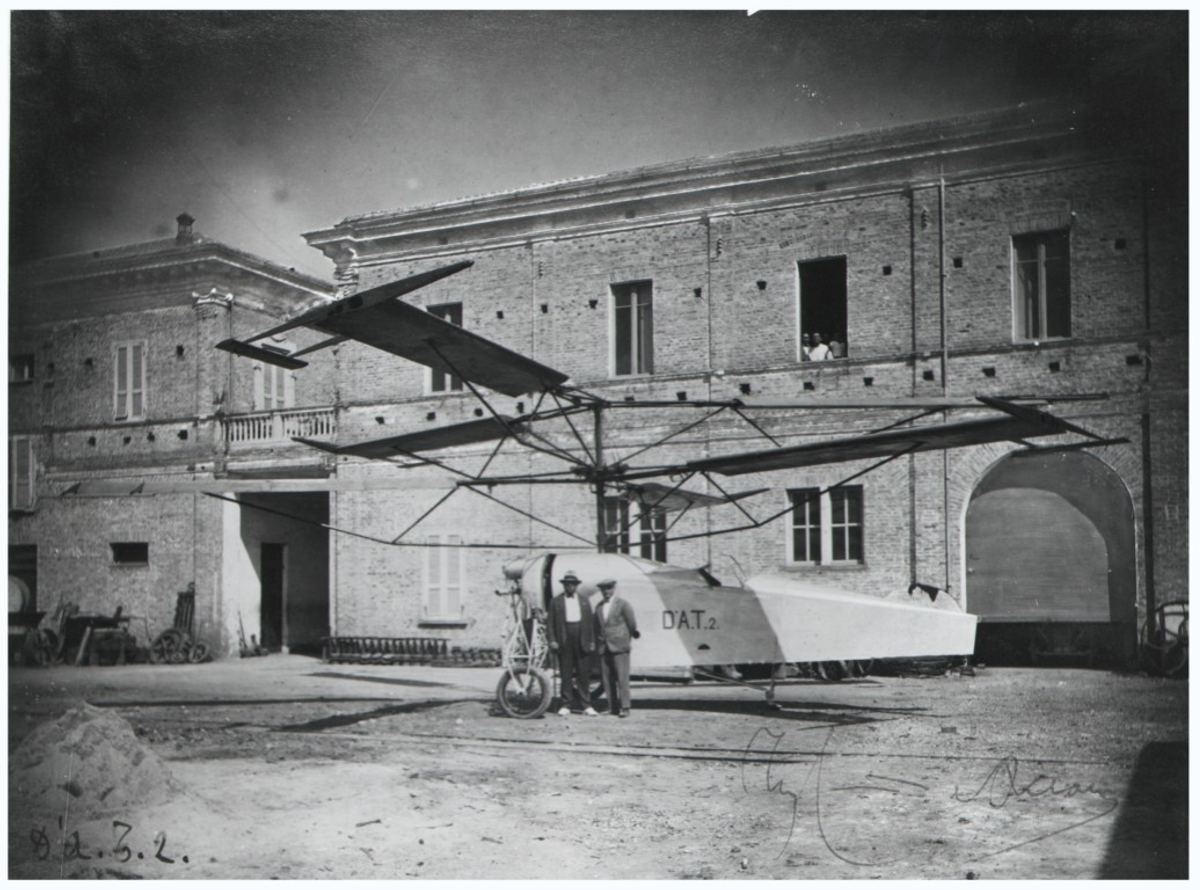
The man behind it was Corradino D'Ascanio, an aircraft engineer who had built record-setting helicopters and who, by most accounts, did not much like motorcycles. That dislike is the reason the Vespa looks the way it does.
Why the Vespa 98 was built
The Vespa 98 was built because Piaggio needed something to make after the war, and Italy needed cheap transport. Piaggio had been an aircraft company. Allied bombing had destroyed its factories at Genoa, Finale Ligure and Pontedera, according to Ultimate Motorcycling, and there was no market for warplanes.
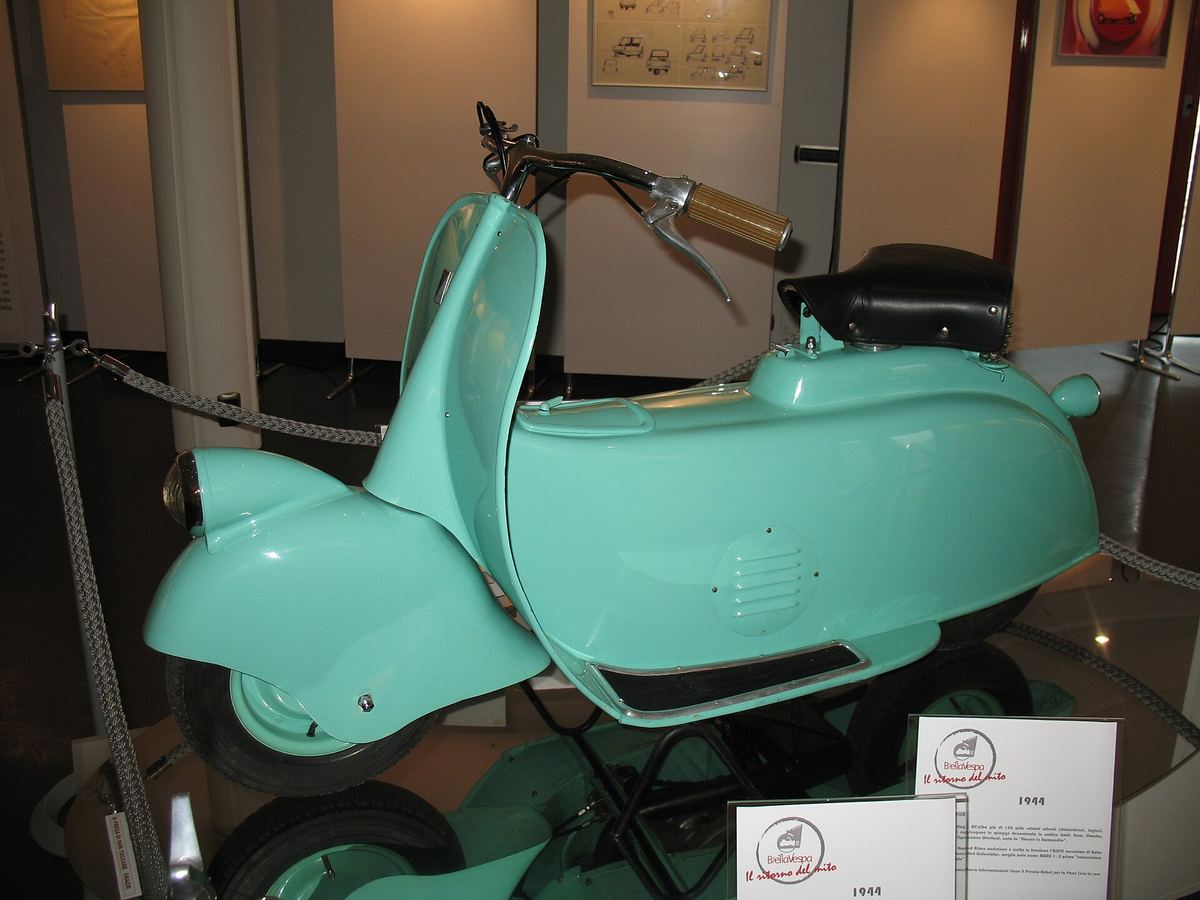
Enrico Piaggio, who ran the company, wanted what the online Motorweb Museum describes as "a practical and low-priced two-wheeled vehicle for the Italian market". His engineers' first attempt came from the Biella factory in 1945: the MP5, designed by Renzo Spolti. Workers nicknamed it "Paperino", Donald Duck, a name Il Post links to Fiat's small car, the Topolino, or Mickey Mouse. According to the Museo Piaggio, Enrico Piaggio did not like it, and handed the project to D'Ascanio to do something better.
D'Ascanio was already on Piaggio's payroll. The Motorweb Museum says the company hired him partly for his variable-pitch propeller, and that during the war he worked at Pontedera on bombers and helicopter projects that never left the drawing board.
He was an odd choice for a scooter and, probably, a deliberate one. Born in Popoli, in Abruzzo, in 1891, he trained as an engineer in Turin and had spent his career on aircraft and helicopters, including a spell with the Pomilio brothers in Indianapolis in 1918–19. On 8 June 1930 his D'AT3 helicopter flew for 8 minutes 45 seconds at Ciampino, covering 1,078.6 metres and reaching 18 metres in height, records reported by the Italian magazine Focus. Italian newspaper Il Post writes that he reportedly disliked motorcycles, and that Enrico Piaggio chose him partly for that reason.
D'Ascanio did not modify the Paperino. He started again from a blank sheet.
What made the Vespa different
The Vespa had no frame in the usual sense. Its pressed-steel body carried the loads itself, like the fuselage of an aircraft, so there was no tubular skeleton underneath. The patent's own wording describes the frame as combined with the rest of the machine.
Everything else answered a complaint about motorcycles. D'Ascanio wanted a machine that anyone could ride in ordinary clothes. Focus quotes him wanting a shape that "women and priests" could sit on easily, with the engine placed "far away and covered" so it could not dirty the rider.
So the engine went to the back, under a cover, and drove the rear wheel directly, with no oily chain, according to Ultimate Motorcycling. The 98cc two-stroke single had a horizontal cast-iron cylinder, according to the Museo Piaggio, which also lists an export version with a larger bore, giving 125cc and 70 km/h. A two-stroke makes power on every turn of the crank and needs no valves, which kept it simple and cheap.
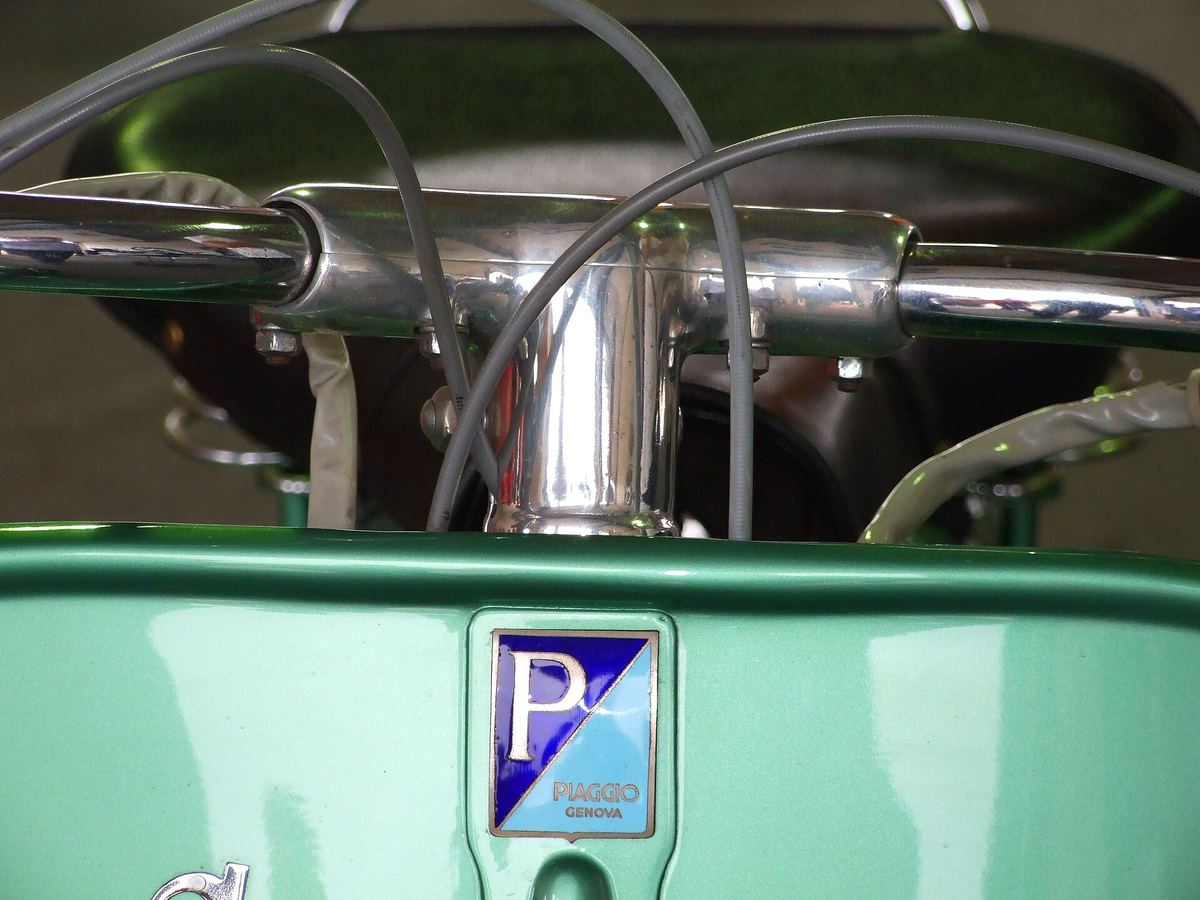
The badge changed too. The leg shield carried a new Piaggio logo in place of the company's old aeronautical emblem, the museum notes.
The front end came straight from aviation. Instead of a fork, the front wheel hung from a single arm on one side, modelled on aircraft landing gear. That made a puncture far easier to deal with. The three-speed gearbox was changed from the handlebar, so a rider never had to learn a foot lever.
Even the name has more than one origin story. Ultimate Motorcycling says Enrico Piaggio looked at the narrow-waisted prototype and said it looked like a wasp. Il Post says it was the buzz of the engine. Focus has him asking how that wasp waist would ever carry two people. All three agree on the word: vespa is Italian for wasp.
On the road: how Italy took to the Vespa
The Vespa 98 was not an instant hit. The magazine La Moto put it on its cover, and Motor had already shown it on 24 March 1946, according to Ultimate Motorcycling. But for the first few months, says the Museo Piaggio, Piaggio sold it through Lancia car dealers because it had no dealer network of its own.
Production numbers tell the story of how quickly that changed. The Museo Piaggio counts 2,484 Vespas built in 1946. Accounts of 1947 differ: Ultimate Motorcycling gives 10,535 sales, while serial numbers cited by Il Sole 24 Ore run to 18,079 by the end of that year. Either way, the second year dwarfed the first.
The Vespa answered a real need. It was cheap to buy and run, easy to learn and clean to ride in work clothes. A 1948 photograph in D'Ascanio's own archive shows a woman riding one with a windscreen and a rain cover, and the archive's caption describes it as economical, easy to handle and suited to anyone who wanted to move quickly.
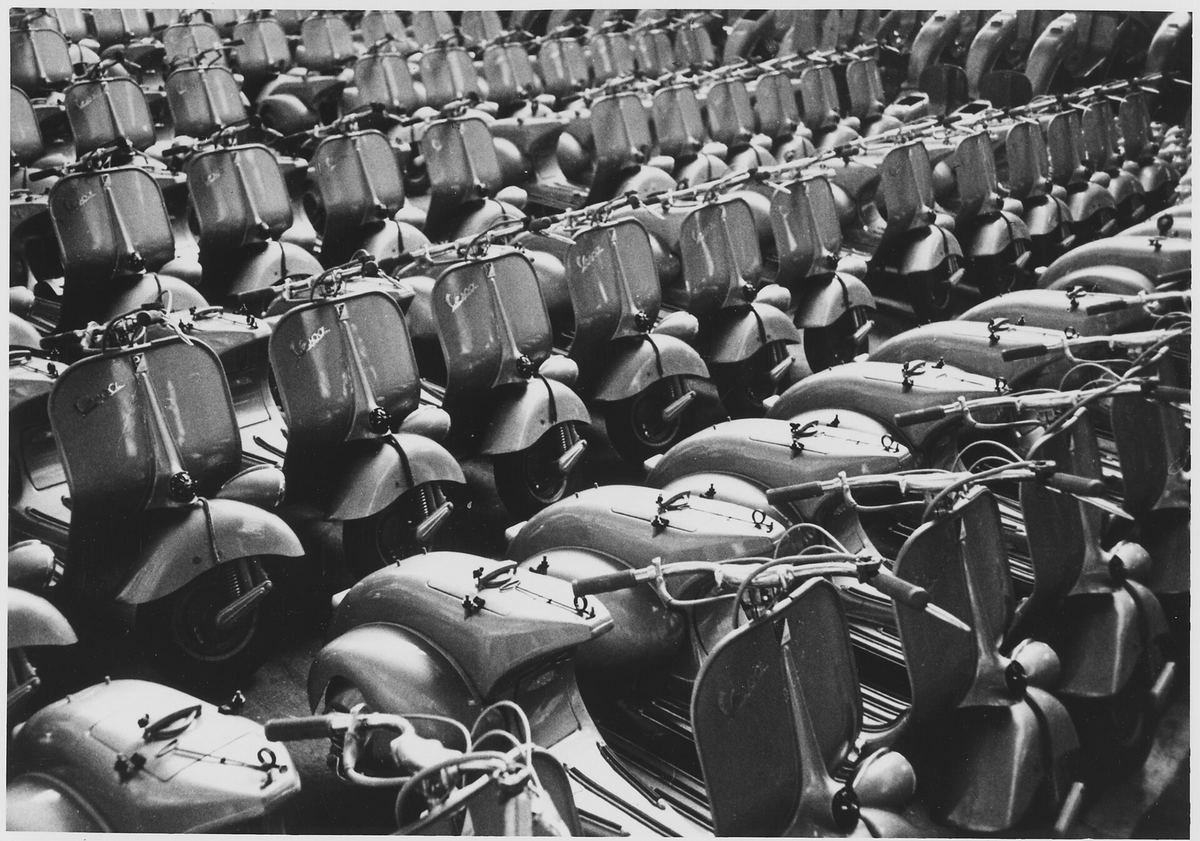
Money from the United States helped too. A photograph in the US National Archives, taken at Pontedera between about 1948 and 1955, shows rows of new scooters, and its official caption notes that Marshall Plan funds helped them roll out of the factory.
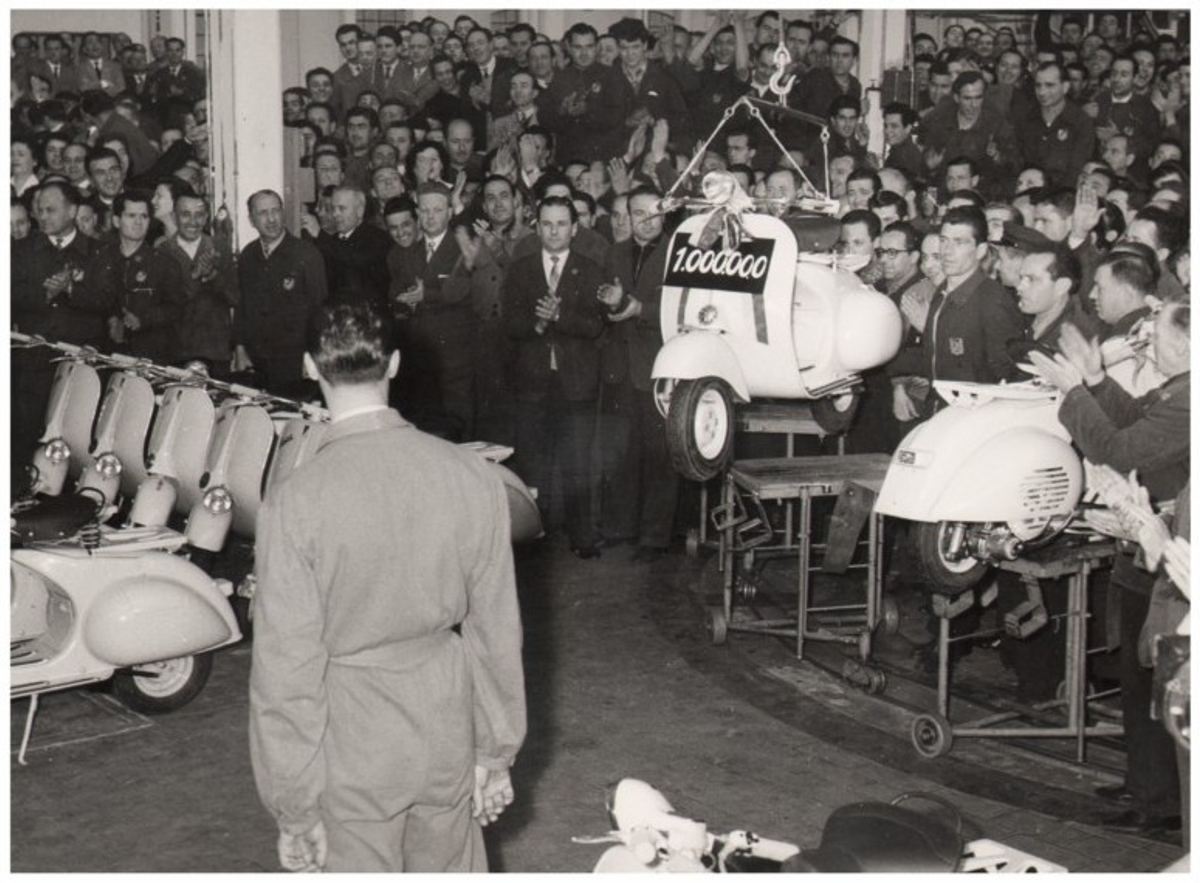
Then came the cinema. In 1953, Audrey Hepburn and Gregory Peck rode a Vespa through Rome in Roman Holiday. Ultimate Motorcycling says production reached half a million that November, and a million by April 1956. D'Ascanio's archive holds photos of the celebrations at Pontedera on 28 April 1956, and notes that the Vespa was by then exported to about 60 countries.
The Vespa today
The Vespa 98 stayed in production for only two years, according to Il Sole 24 Ore, but the layout D'Ascanio drew in the 1940s never really changed. Nearly 20 million Vespas have been built since 1946, according to Ultimate Motorcycling, which counts two million by 1960, four million by 1970 and ten million by 1988. In June 2026, Piaggio celebrated the 80th anniversary with a four-day gathering in Rome, opened by the city's mayor at a Vespa Village in the Foro Italico. There was also a commemorative coin and a limited Vespa Edizione Ottantesimo of 1,946 numbered units, in honour of the year the Vespa was born.
Collectors chase the very first bikes. In April 2026 the Italian site QuiFinanza reported that a pre-series Vespa 98, one of the first 60 hand-built "Serie 0" machines, had sold on Catawiki for €182,000.
D'Ascanio himself never loved his most famous design. Focus reports that when he was asked why he was not prouder of it, he said: "A me la Vespa mi ha punto", "The Vespa stung me". He regretted that its success may have led Piaggio to drop his helicopter work. In 1964 he left Piaggio for Agusta to go back to helicopters, according to the Motorweb Museum, and he died in Pisa in 1981.
He spent his life trying to lift people off the ground. His best-known machine kept them on it, in clean trousers.
Quick answers
Who invented the Vespa?
Corradino D'Ascanio, an Italian aeronautical engineer and helicopter pioneer, designed the Vespa for Piaggio. He rejected the earlier MP5 "Paperino" prototype and started again, applying aircraft ideas such as a load-bearing body and a single-sided front arm. Piaggio filed the patent on 23 April 1946.
When was the first Vespa made?
The first Vespa, the Vespa 98, was presented at the Rome Golf Club in April 1946, when the first 50 had been built at Piaggio's Pontedera factory. Piaggio filed the patent on 23 April 1946, and 2,484 were built that year, according to the Museo Piaggio.
How fast was the original Vespa 98?
The original 1946 Vespa 98 had a top speed of 60 km/h (37 mph), according to the Museo Piaggio. Its 98cc two-stroke single produced 3.2 hp at 4,500 rpm and drove the rear wheel through a three-speed gearbox changed from the handlebar.
Why is the Vespa called Vespa?
Vespa is Italian for wasp. The story goes that Enrico Piaggio named it after seeing the prototype's narrow waist or hearing its buzzing engine. Sources disagree on which, but all credit Piaggio with the name, chosen in 1946.