Roger De Coster: the Belgian they called The Man, and his five 500cc motocross world titles
Roger De Coster won five 500cc motocross world titles for Suzuki between 1971 and 1976, then taught the Americans how to beat Europe. He never liked his nickname. Everyone else used it anyway.
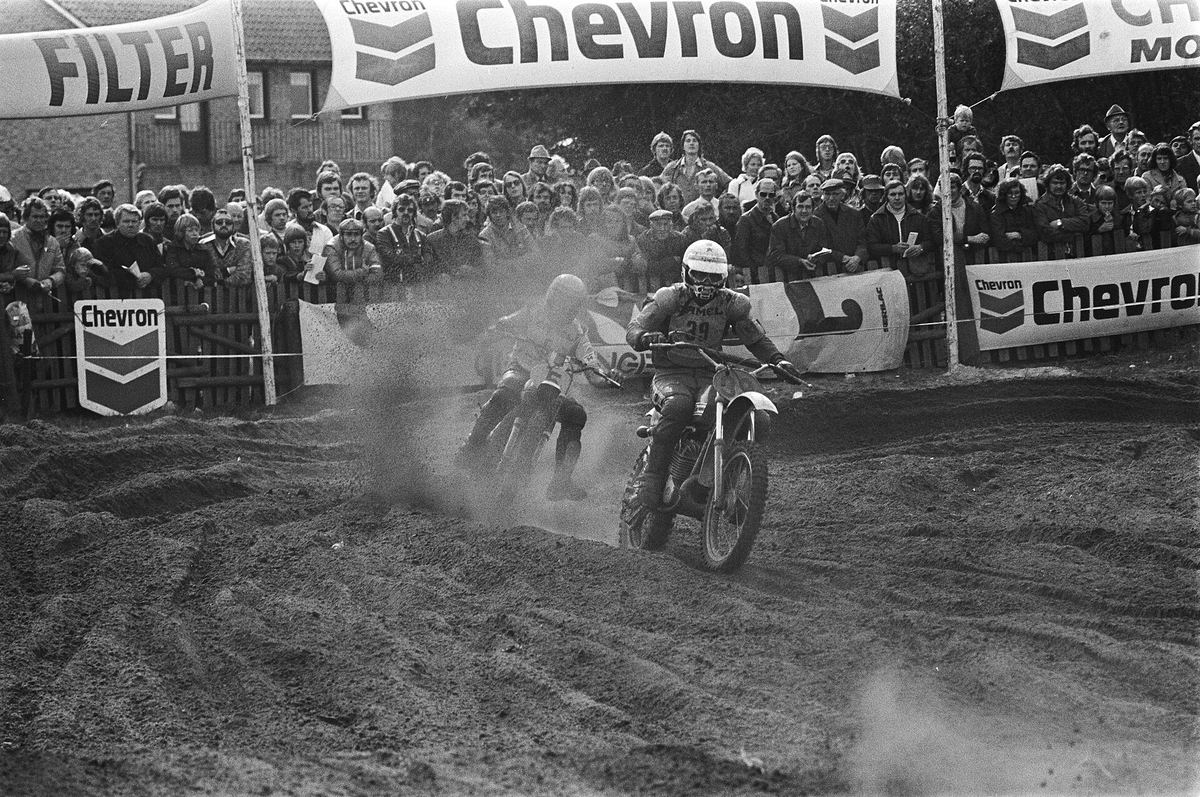
Moiseev of the Soviet Union leads Roger De Coster at Sint Anthonis in the Netherlands on 11 September 1976, the year of De Coster's fifth world title.. Photo: Hans Peters / Anefo, Nationaal Archief (CC0)
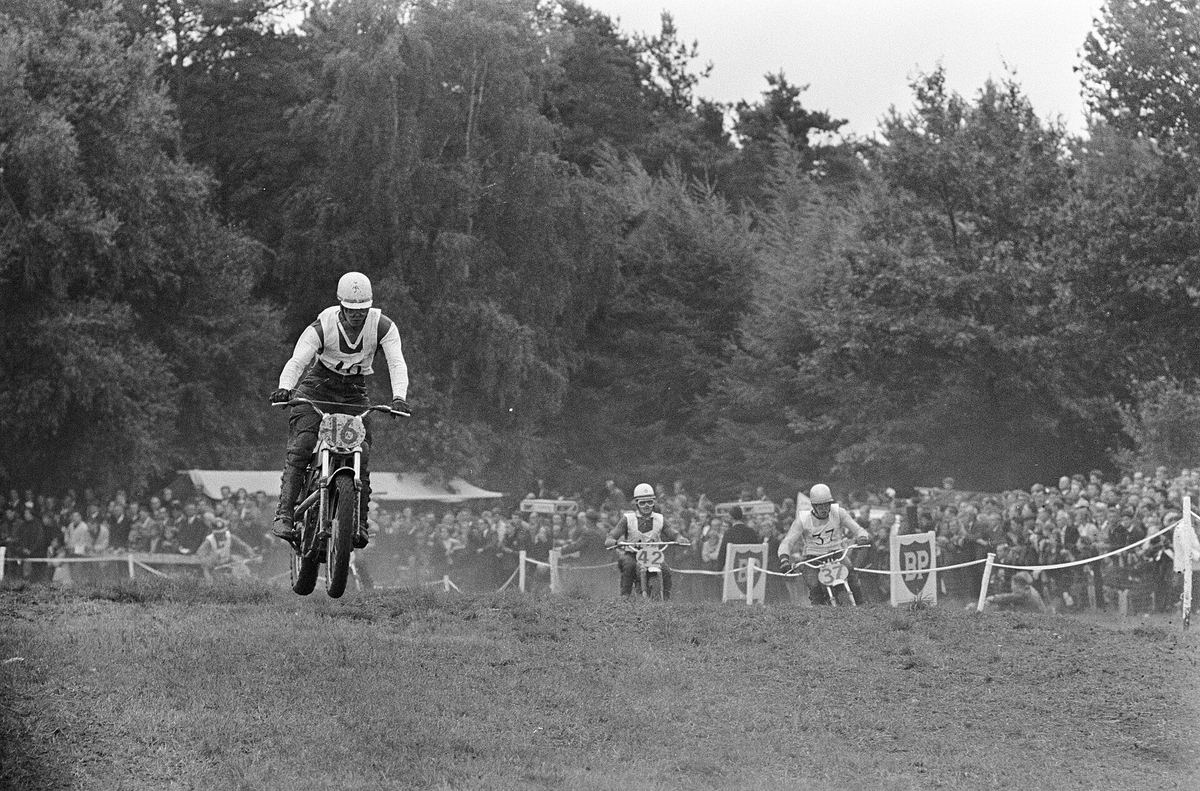
The 1971 500cc motocross world championship came down to the last round, at Sint Anthonis in the Netherlands. About 40,000 people came, many of them Belgian, Cycle World's B. R. Nicholls reported. Before the start, an official warned the crowd that the meeting would be stopped if they got in the way of the racing.
Åke Jonsson of Sweden led the Belgian Roger De Coster by a single point. In the first race, the reserve spark plug "unscrewed itself and fell out of Jonsson's Maico," Nicholls wrote. Jonsson lost a lap fixing it and recovered to tenth. De Coster won.
In the second race Jonsson rode "like a man possessed" for the lead. De Coster held second, and that was enough. At 27, Roger De Coster was the first Belgian 500cc world champion since René Baeten in 1958. Jonsson had lost the title in the final round for the second year running.
It was also the first 500cc world title for a Japanese manufacturer, Ultimate Motorcycling says. De Coster won four more. By the end of the decade Americans simply called him The Man.
Roger De Coster: from Brussels to the Citadel
De Coster was born on 28 August 1944 in Uccle, Brussels. At 13 he rode his bicycle about 45 miles to Namur to watch the Belgian Grand Prix at the Citadel. "My parents didn't know I did that," he told MX Large. "I didn't know where the racetrack was, went by the sound, the guys were practicing. Also, the smell, everyone used Castrol oil and I can still imagine that feeling today."
His first motorcycle was a Triumph 650 that he bought with a friend, putting in 500 francs; "My parents didn't get word of the scheme," he told Cycle News in 1977. He won his first competition on 25 March 1962, on an Itom 50 he had pieced together himself, according to a 1977 Cycle News profile. He also rode trials, and Cycle News traced his distinctive style back to his "body-english" trials days. In 1964, at 19, he won the Belgian junior 500cc motocross title and a Belgian trials title, and took a gold medal at the International Six Days Trial in East Germany, according to the Motorsports Hall of Fame of America.
He won the senior Belgian 500cc title in 1966 on a CZ and started riding the full Grand Prix series in 1967. In the late 1960s he also went to America for Edison Dye's Inter-Am races, part of the effort that introduced European motocross to the United States, Ultimate Motorcycling says.
1971–1973: three in a row for Suzuki
In 1969 he won the Belgian Grand Prix at Namur, coming back to win the second race. "I came from last and won the Grand Prix," he told MX Large, and he named it his greatest race. In 1971 he left CZ for Suzuki, which Ultimate Motorcycling calls a fledgling team next to Husqvarna, Bultaco, CZ and Maico.
His countryman Joël Robert, already at Suzuki in the 250cc class, raced some 500cc rounds in 1971 to help him, according to the Namur circuit's history. De Coster became the first rider to win the Belgian Grand Prix three years in a row. Then came Sint Anthonis.
In 1972 he won again. The works Suzukis were very light: Motocross Action says the 500s weighed 202lb. The European makers complained, and just before the 1973 season the FIM brought in a minimum weight of 209lb. Suzuki had no time to build new bikes, so De Coster's RN73 had lead poured into the front downtube and crankcases, and steel fittings replaced titanium, Kiwi Rider says. Classic Dirt Bike says De Coster developed the bike himself for much of 1973, because the factory was angry about the rule.
He still won the title. Willy Bauer of Germany, on a Maico, lost it by two points after a mechanical failure in the final Grand Prix. It was De Coster's third in a row.
1974–1976: Mikkola, and two more titles
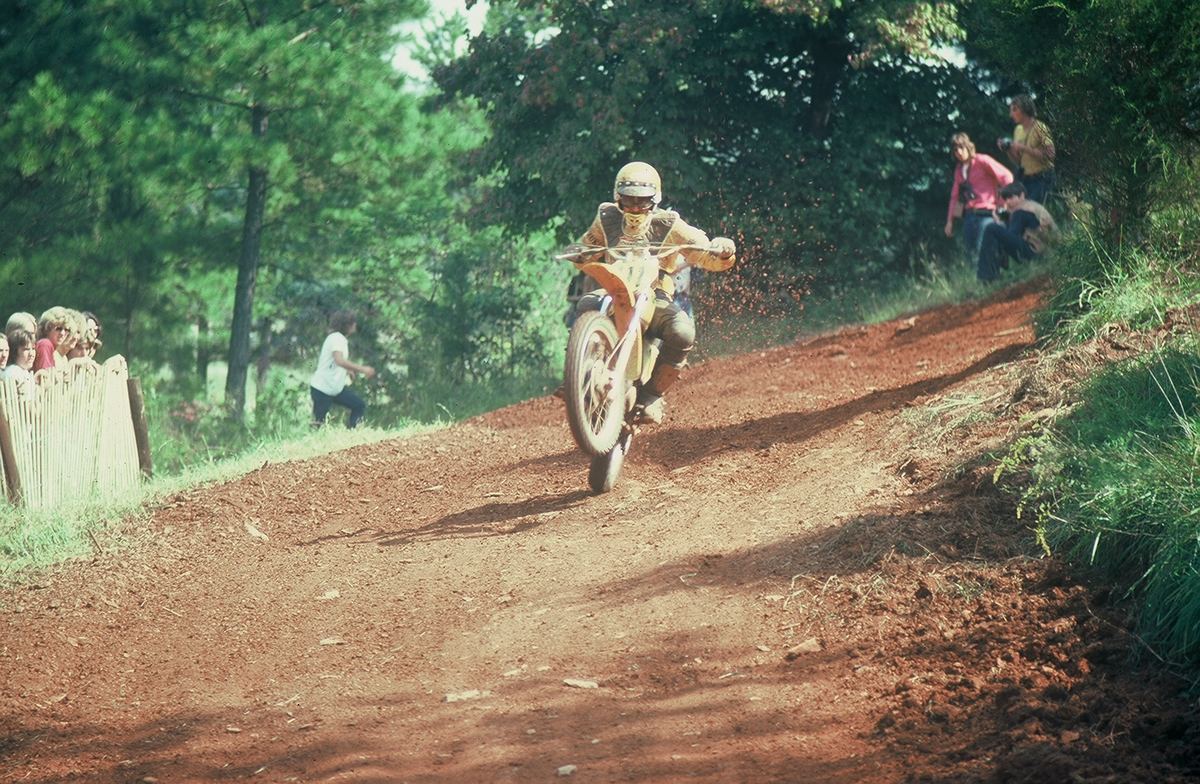
In 1974 Heikki Mikkola of Finland, on a Husqvarna 360, beat him. Mikkola's bike did not stop once in 20 heats, Cycle World's Terry Pratt wrote; De Coster's Suzuki quit five times. At Namur it lost power, and after an engine change for the second heat he said "there was just no punch in the engine." He still won that heat by about 30 seconds. With two rounds left, and only the best 12 heat results counting, Mikkola led 166 points to 156.
The title was settled in Luxembourg. De Coster led the first heat by about 15 seconds on lap eight when his connecting rod snapped, and Mikkola went through to clinch it. Afterwards De Coster shared champagne with Mikkola's family in the Husqvarna caravan.
He came back in 1975. That summer a drought turned the Namur track to dust, and the start was delayed two hours while fire brigade tankers watered it. De Coster won anyway, and took his fourth world title, then a record. In 1976 Husqvarna moved Mikkola to the 250cc class. De Coster crashed in the second race at Namur, still won there for the seventh time, and took his fifth and last world title.
What it took to be The Man
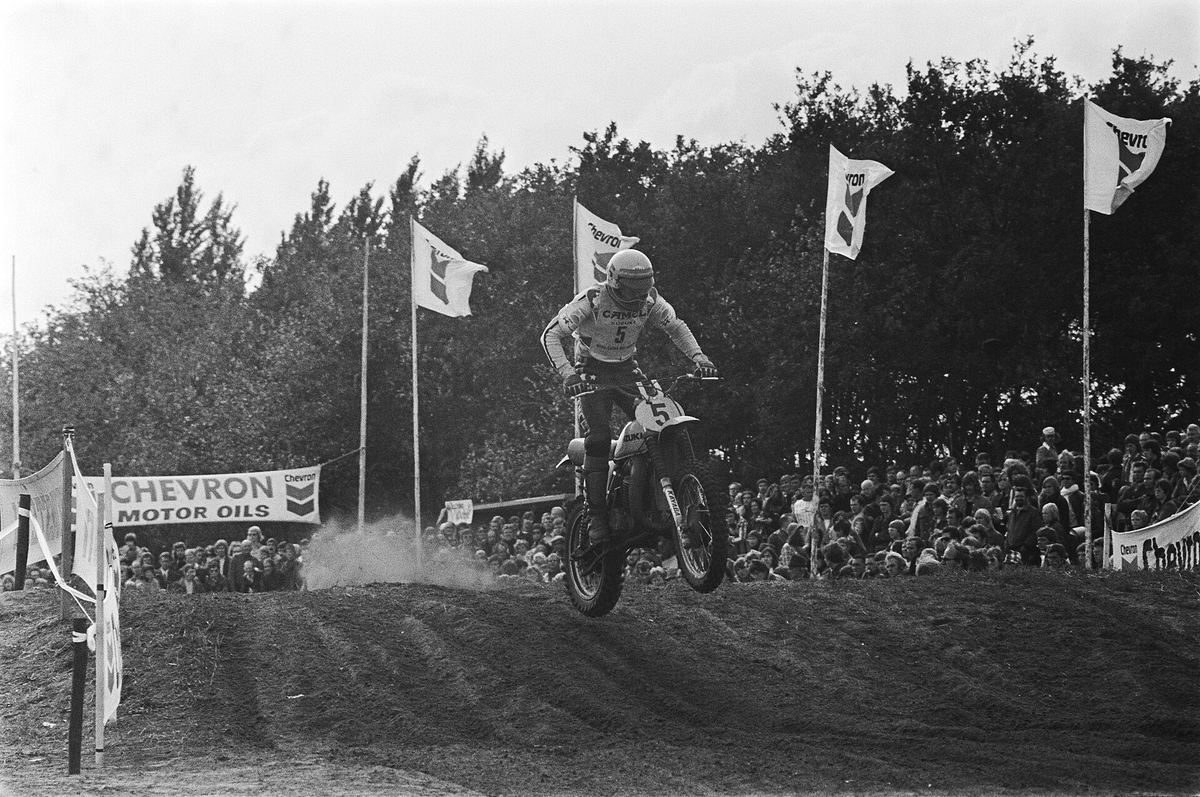
It took crowds. "The more people the more energy," he told MX Large, and he thought very few modern riders understood how to use a crowd that way. It took preparation, too. "If you set-up your bike correctly that could make all the difference," he said of Namur, his favourite track.
And it took manners. Ultimate Motorcycling says his speed, technique and "gentlemanly manners" earned him the nickname. He never liked it. "It is still feeling weird, I always felt weird about it, it's a strange thing," he told MX Large. Asked whether he ever thought of himself that way, he insisted he did not. Cycle News's Len Weed remembered one season when he chose the racing number 111, which prompted another rider to say: "Roger's so baaad he gets three ones." In America he raced the Trans-AMA series and won it four years running, from 1974 to 1977.
Why it still matters
De Coster joined Honda in 1979 to develop its single-shock motocrossers, and ended his racing career in 1980 by winning both races at the Luxembourg Grand Prix, Ultimate Motorcycling says. He also helped Belgium win the Motocross des Nations six times.
Then he crossed sides. As Honda's American team manager, he pushed for an American team at the des Nations, and in 1981 Team USA won it for the first time. Under his management it won the next nine as well, the Motorsports Hall of Fame of America says. Honda's riders under him, from Donnie Hansen and Johnny O'Mara to Jeff Stanton, won 22 American national titles by 1989. When the United States Grand Prix looked in doubt in 1990, he promoted it himself for three years. He later managed Suzuki's American team, and in 2011 he moved to KTM. Cycle News named him its Motocrosser of the Century.
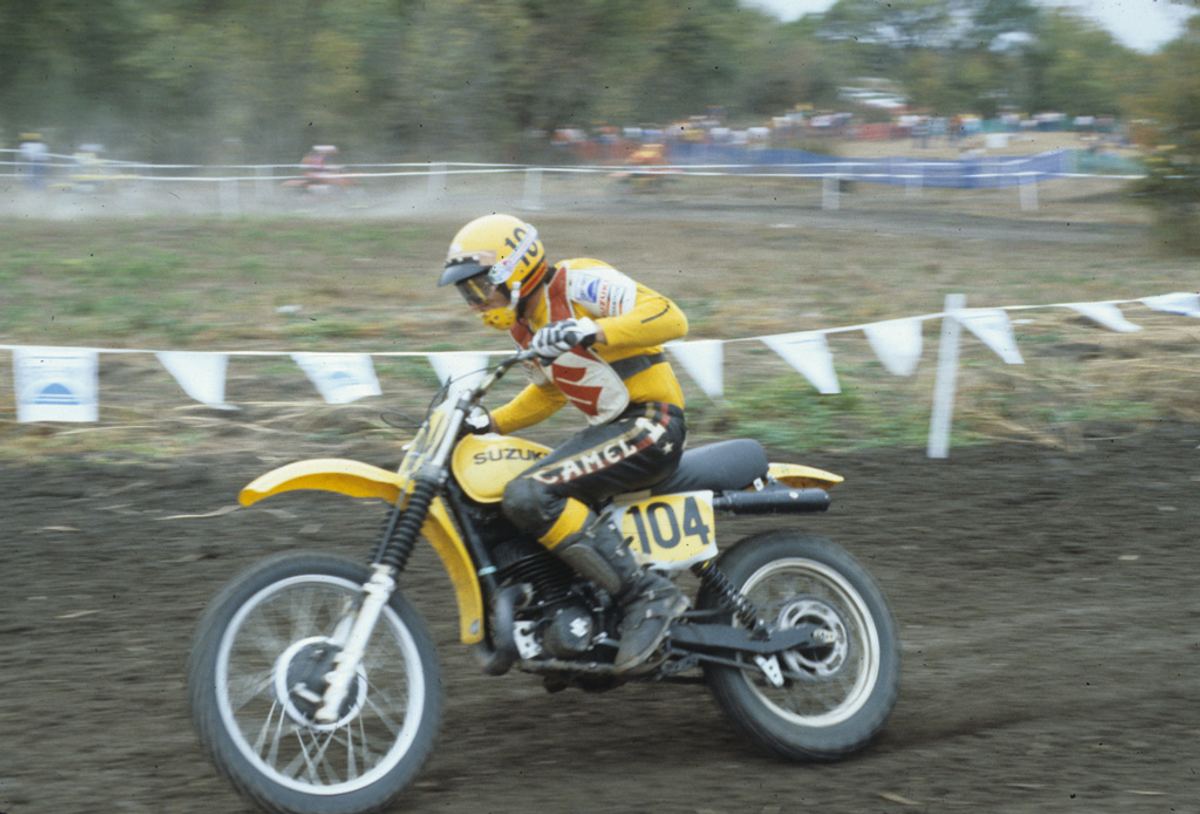
At 13 he cycled 45 miles to watch the Grand Prix at Namur. He went on to win it seven times, and then taught the Americans how to beat the Europeans at their own race.
Quick answers
How many world titles did Roger De Coster win?
Roger De Coster won five 500cc motocross world championships, all for Suzuki: 1971, 1972, 1973, 1975 and 1976. He also won the American Trans-AMA series four times, from 1974 to 1977, and helped Belgium win the Motocross des Nations six times.
Why is Roger De Coster called The Man?
Roger De Coster's speed, technique and gentlemanly manners earned him the nickname The Man, according to Ultimate Motorcycling, and magazines spread it. He has said it always felt strange to him, and he told MX Large that he does not think of himself that way.
What bike did Roger De Coster win his first world title on?
Roger De Coster won the 1971 500cc title on a works Suzuki RN71, a 367cc air-cooled two-stroke single making about 39hp and weighing 90kg dry. It was Suzuki's first 500cc world title. The FIM later introduced a 209lb minimum weight, partly because the Suzukis were so light.
What did Roger De Coster do after racing?
After retiring in 1980, Roger De Coster managed Honda's American motocross team and Team USA, which won the Motocross des Nations for the first time in 1981 and kept winning for years. He later managed Suzuki's American team and moved to KTM in 2011.