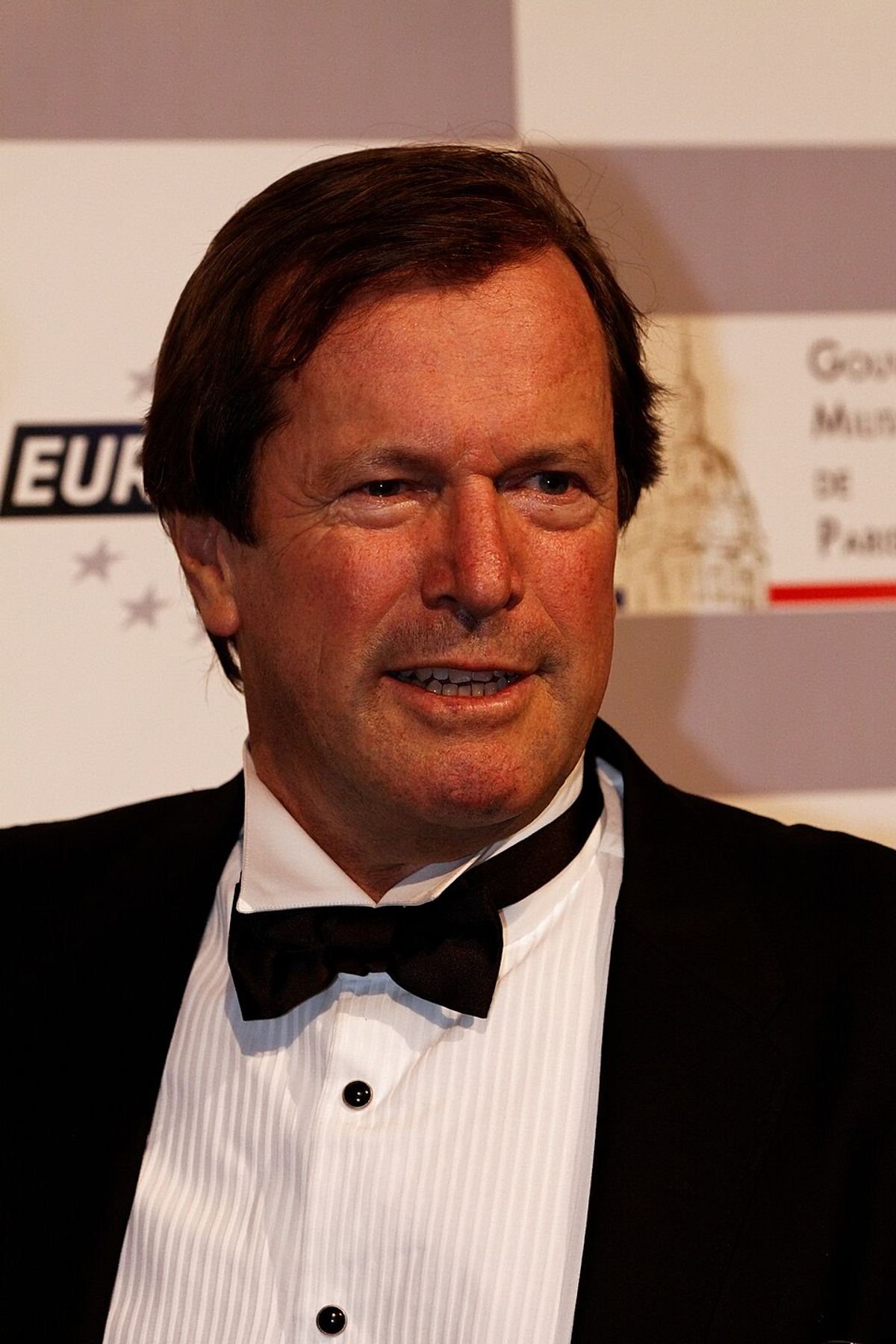
Hubert Auriol in Paris in 2012, three decades after his first Dakar win.. Photo: Thesupermat / Wikimedia Commons (CC BY-SA 3.0)
Senegal, January 1987. Hubert Auriol has led the Paris–Dakar on his Cagiva for most of the rally. He has won four stages and built a gap on his great rival, Cyril Neveu, on the factory Honda. Two days from the beach at Dakar, the first Italian win in the race's history is within reach.
On the penultimate stage he crashes hard. Both ankles are broken. Auriol gets back on the bike and rides to the end of the stage anyway. Then he stops, in tears, and the rally is over for him. Neveu wins.
Carlo Pernat, then Cagiva's team manager, later said Auriol kept repeating one sentence through the tears, a message for the company's owner, Claudio Castiglioni.
Who Hubert Auriol was
Hubert Auriol was born on 7 June 1952 in Addis Ababa, Ethiopia, which earned him his nickname in the Dakar paddock: L'Africain, the African. He grew up to race enduro and motocross in France before an idea from a man called Thierry Sabine changed his life.
Sabine's Paris–Dakar ran for the first time in the winter of 1978–79: thousands of kilometres from Paris across the Sahara to the Senegalese capital, with bikes, cars and trucks in one race. Auriol was on the start line in 1979, but he did not finish. Neveu won on a Yamaha XT500.
Auriol came back the next year with BMW France, on a heavily modified version of the company's new R80 G/S, the first big trail bike. He won his first stages in 1980. He would race the Dakar every year until 1994.
Hubert Auriol and the BMW R80 G/S
Hubert Auriol won the 1981 Paris–Dakar on a BMW R80 G/S prepared by the German firm HPN. It was the first Dakar win for a big four-stroke twin, and it changed BMW. The company built a road-going R80 G/S Paris–Dakar replica with a huge fuel tank, and the bike that started the adventure-touring market became famous.
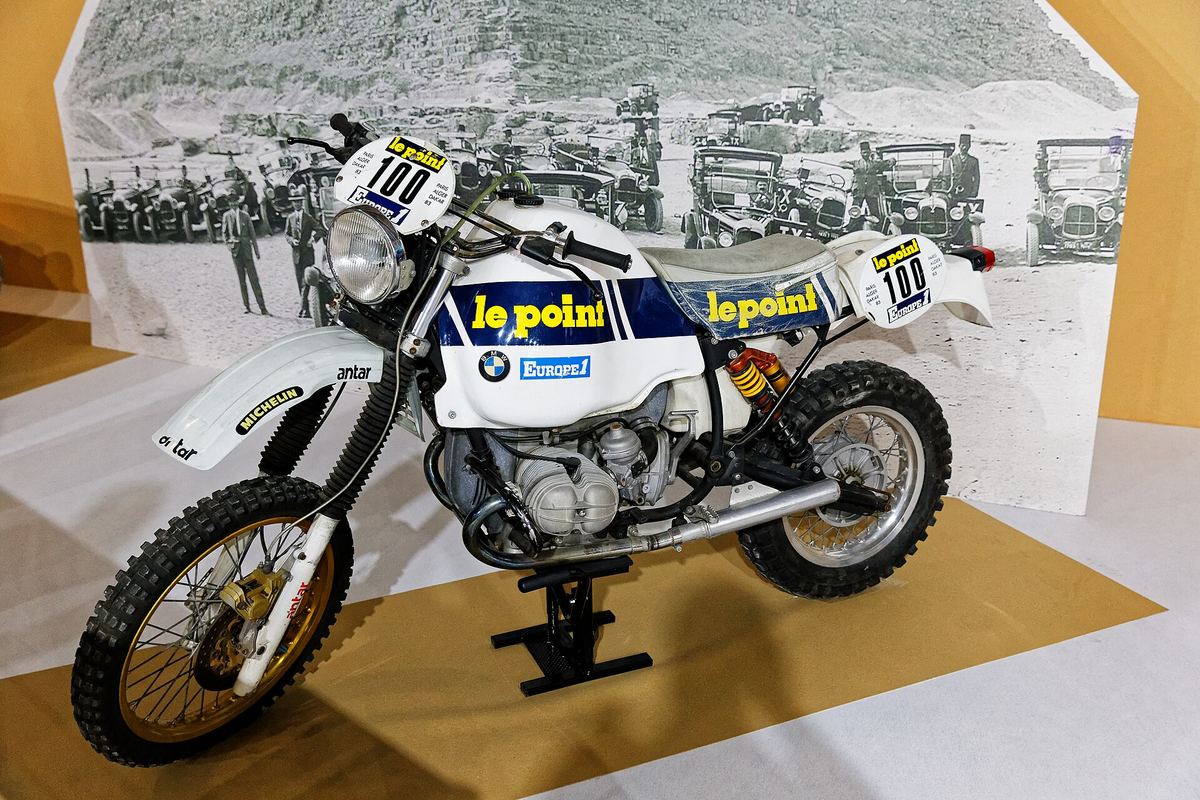
Neveu won again in 1982. Auriol won back the title in 1983 on an 870cc version of the BMW. He was big, fast on open desert tracks and at home in Africa. According to Pernat, when asked how he found his way across featureless sand, he said he followed the tracks of the animals.
In 1984 BMW brought in a new teammate, the Belgian motocross champion Gaston Rahier. Rahier won, and Auriol finished second.
Dakar 1987: Hubert Auriol, Cagiva and the penultimate stage
For 1985 Hubert Auriol left BMW for Cagiva, the ambitious Italian company that had just bought Ducati. Cagiva wanted to win the Dakar with a Ducati V-twin in a desert chassis, the Elefant.
By 1987 the bike was ready. Auriol rode the Elefant 850 in Lucky Explorer colours against Neveu's works Honda, and the two Frenchmen fought for the whole rally. Auriol led until the penultimate stage, when the crash broke both his ankles. Sources differ on what happened next. The Dakar's own account says he reached the end of the stage and then withdrew. A few British accounts say he made it to the finish in second place.
Either way, the footage of a crying Auriol, still in his Cagiva gear, became one of the most famous images in the race's history.
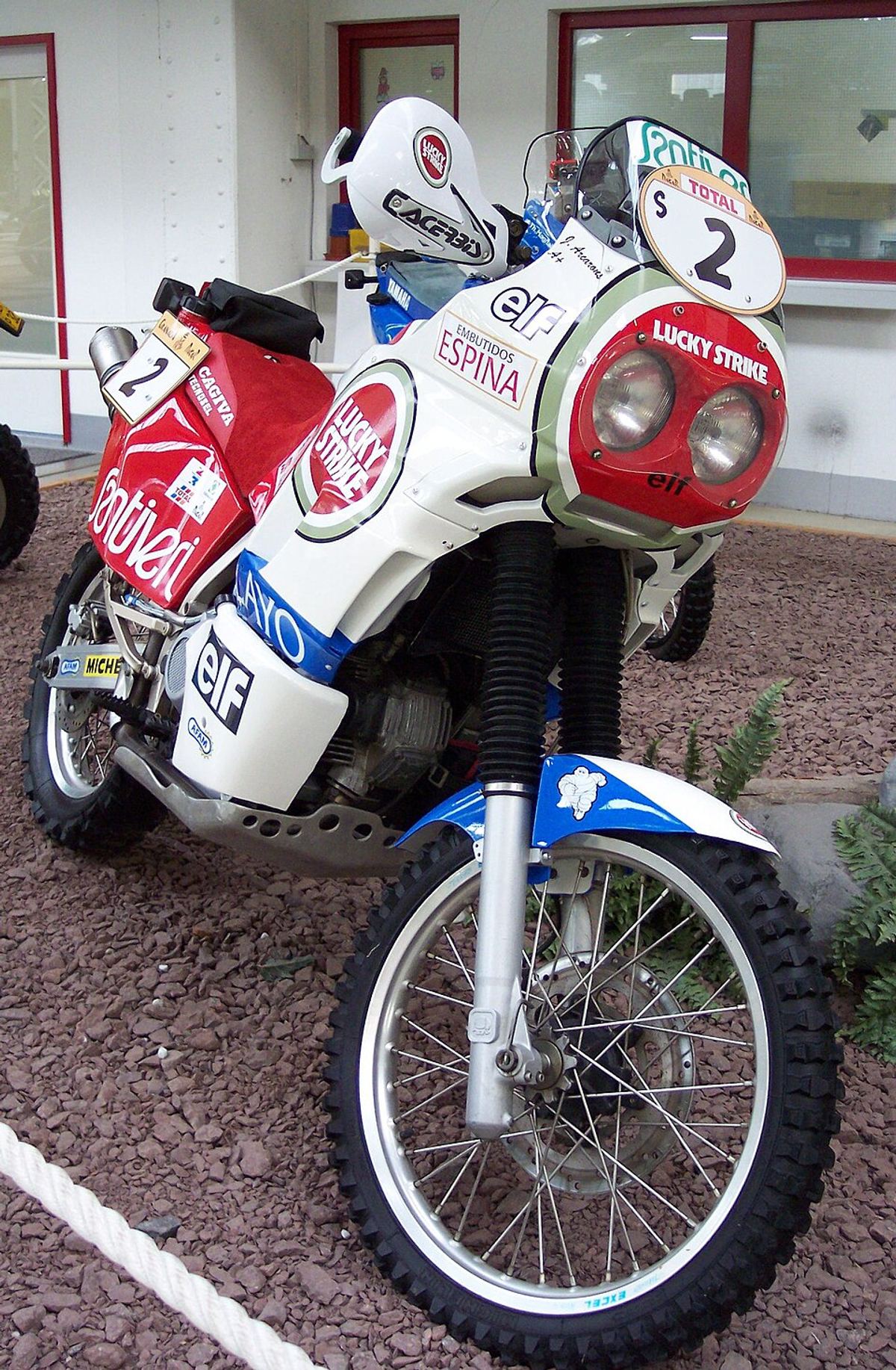
Cagiva had to wait three more years for its first Dakar win, with Edi Orioli in 1990.
From two wheels to four
Hubert Auriol never raced the Dakar on a bike again. That same year, 1987, he and Henri Pescarolo flew around the world in a propeller plane in just over 88 hours, a record. In 1988 he moved to the car category with a factory Mitsubishi Pajero.
In 1992 the rally ran from Paris all the way to Cape Town. Auriol won it, beating his Mitsubishi teammate Erwin Weber by less than five minutes after three weeks of racing. He became the first competitor to win the Dakar on both two wheels and four. He finished third for Citroën in 1993 and second in 1994, his last Dakar as a driver.
What Hubert Auriol left behind
Hubert Auriol joined the Dakar's organiser, ASO, and ran the rally as race director from 1995. Many credit him with rebuilding the event in the late 1990s, after years of controversy and the death of its founder, Thierry Sabine, in 1986.
He died on 10 January 2021, aged 68, from heart disease after contracting Covid-19. The news reached the Dakar bivouac in Saudi Arabia during stage 7. Stéphane Peterhansel, who has won the rally more times than anyone, said that he only raced the Dakar because of what he had seen Auriol do.
Three Dakar wins, the first on bikes and cars, and the race people remember most is the one he didn't finish.
Quick answers
How many times did Hubert Auriol win the Dakar Rally?
Hubert Auriol won the Dakar Rally three times: on motorcycles in 1981 and 1983, both with BMW, and in the car category in 1992 with Mitsubishi. He was the first competitor to win the Dakar on both two and four wheels.
What happened to Hubert Auriol at the 1987 Paris–Dakar?
Hubert Auriol was leading the 1987 Paris–Dakar on a Cagiva when he crashed on the penultimate stage and broke both ankles. He rode to the end of the stage in great pain, and Cyril Neveu won the rally on a Honda.
Why was Hubert Auriol called L'Africain?
Hubert Auriol was nicknamed L'Africain, the African, because he was born in Addis Ababa, Ethiopia, in 1952. The name stuck as he became one of the most successful riders in the early years of the Paris–Dakar.
What bike did Hubert Auriol win the Paris–Dakar on?
Hubert Auriol won the 1981 and 1983 Paris–Dakar on the BMW R80 G/S boxer twin, entered by BMW France. His 1981 bike was prepared by the German specialist HPN, and his 1983 winner used an 870cc version of the engine.