Norton Commando: the eleven-week rescue bike that rubber-mounted a vibrating British twin
The Norton Commando was designed in eleven weeks to save a company that was about to go bust. Its rubber-mounted engine made an old, vibrating 750 twin smooth, and it kept Norton alive for a decade.
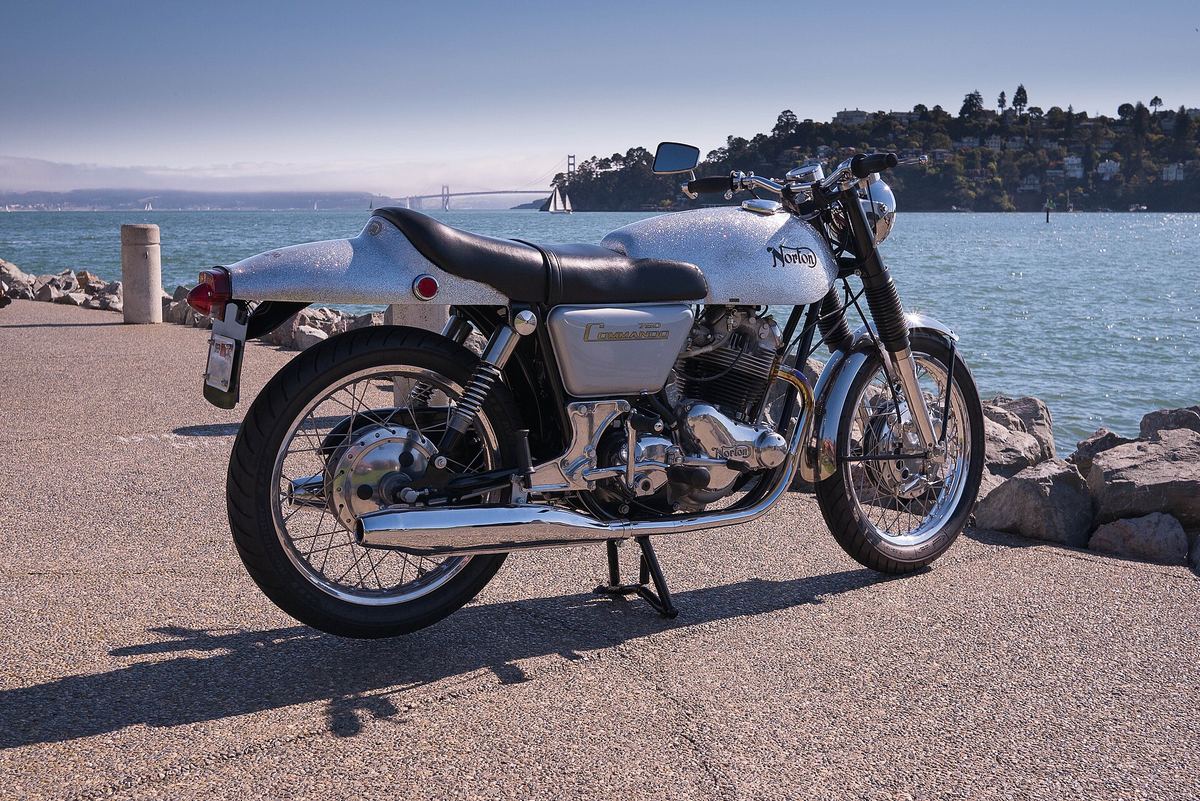
A 1969 Commando 750 Fastback in Fireflake Silver, UK specification.. Photo: Jamescowdery / Wikimedia Commons, CC BY-SA 4.0
Bob Trigg remembered the warning. Early in 1967, Norton-Villiers' chairman Dennis Poore called him and fellow engineer Bernard Hooper to a board meeting in London. "We were told that if we didn't have a new bike at Earls Court that year, the company would go bust," Trigg later recalled, in an account by Peter Henshaw for The Vintagent.
They had about eleven weeks, and little money. They had to use Norton's existing 750cc Atlas engine, a parallel twin known for shaking itself and its rider to pieces. The answer was the Norton Commando, which hung that engine in a new frame on rubber mountings.
When Cycle World tested the first Commando to reach America in September 1968, its headline asked: "Is this the instant classic?" Readers of Britain's Motor Cycle News voted it their Machine of the Year five years running. It became one of the defining British bikes of the late 1960s, and it kept Norton going for most of the next decade.
Why Norton built the Commando
Norton was in trouble. Its parent group, Associated Motorcycles, went bust in the summer of 1966, and Poore, the owner of Manganese Bronze Holdings, bought it cheaply, Henshaw writes. Poore needed a new flagship, but the bike he had, the Atlas, vibrated badly above 5,000rpm.
A new engine, known as the P10, was under development, but it was not reliable. Test rider John Wolverson said that after road tests "it looked as if someone had poured a gallon of oil all over it". By summer it was clear the P10 would not be ready for the Earls Court Show in September 1967.
Poore had already brought in Dr Stefan Bauer, a former Rolls-Royce engineer, as director of engineering on 1 January 1967, according to Old Bike Mart. Bauer was 58 and, according to Classic Bike Guide, looked more like a bank manager than an engineer. He also had little motorcycle experience. He thought the classic Norton Featherbed frame broke basic engineering rules and called it "a Christmas tree", Henshaw reports.
So the team kept the Atlas engine and changed everything around it. Hooper proposed bolting the engine, gearbox and swinging arm together as one unit and mounting the whole assembly in rubber. Because the rear wheel moved with the engine, the chain stayed in tension and the wheels stayed in line. The Norton Owners Club credits the idea to Hooper, with Hooper and Trigg then finishing the design together. Bauer insisted on a new frame built around a single large top tube.
What made the Norton Commando different
The Norton Commando's rubber mounts took some tuning. The first prototype only smoothed out above 6,500rpm, Henshaw writes. Bauer told the engineers to slice the rubber mountings in half, which brought the smooth point down to 4,000rpm, and then to slice them in half again. "It was like being in an aeroplane," Trigg said, "bumping along at low revs and then at 2300rpm it would smooth out."
Cycle World explained the result in 1968. The engine, gearbox and swinging arm pivot sat in large rubber bushes at the front of the crankcase, behind the gearbox and at the cylinder head, so vibration from the crankshaft was "absorbed before it can affect rider or machine". The magazine compared it to the rubber mountings Detroit used for the smooth ride of a Lincoln or a Cadillac. Norton called the system Isolastic.
The frame was new too. Its backbone was a 2.25in tube running from the steering head to the rear suspension mounts, braced by two struts. Few of the other tubes carried any load, so the whole frame weighed 24lb; Norton said it was about 30 percent lighter and stronger than anything it had made before.
The engine had changes of its own. Compression rose to 8.9:1, a triplex chain replaced the single-row primary chain, and a Laycock de Normanville diaphragm clutch needed only two fingers to work it. Poore wanted radical styling, so the design firm Wolff Olins drew the Fastback, with a one-piece seat and tail unit that flowed from the tank, Henshaw writes.
On the road
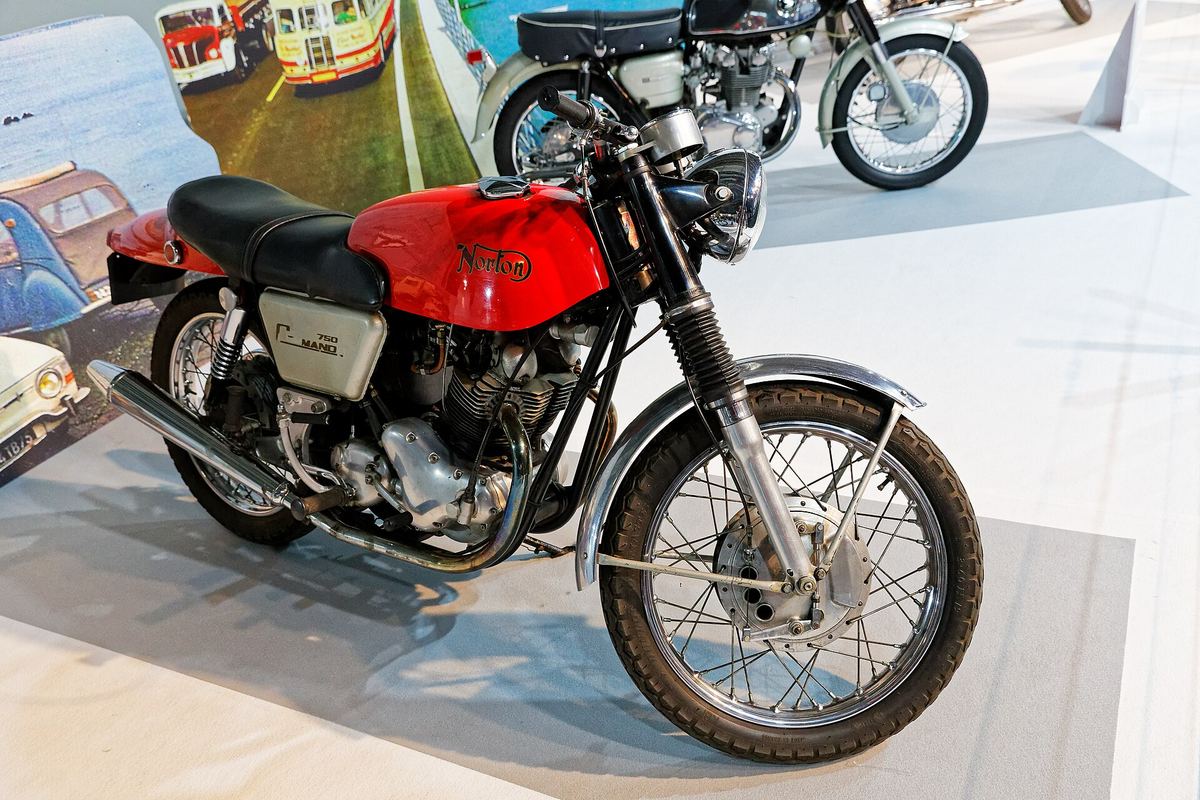
Cycle World found the Commando vibrated at idle, with the front wheel jogging and the tank juddering. Above 1,800rpm the roughness disappeared, leaving "an uncanny smoothness" all the way to 7,000rpm. Hard acceleration, the testers wrote, felt "akin to turning up the rheostat on a giant electric motor". Its best quarter-mile on test was 13.47sec, and only a Dunstall Norton had gone quicker in the magazine's tests.
They praised the handling as "superbly stable" and the twin-leading-shoe front brake as quiet and powerful. Their one serious complaint was the stands. The side and centre stands sat so low that they scraped on almost every corner, and with a passenger the magazine called fast cornering "downright dangerous". In a few early road races, the same bike won its production heats in standard trim.
There were bigger problems early on. The first production bikes reached customers in 1968, and in 1969 the American importer, Berliner Motor Corporation, reported five deaths from frame failures, according to Wikipedia's account of the model. A modified frame designed by Ken Sprayson of Reynolds solved the problem.
The Commando improved quickly. By 1971 Cycle World was calling it "the best of the British big twins", and the Roadster, with upswept silencers, arrived in 1970, the Norton Owners Club says. Wikipedia calls it the most popular version.
In competition: the Yellow Peril
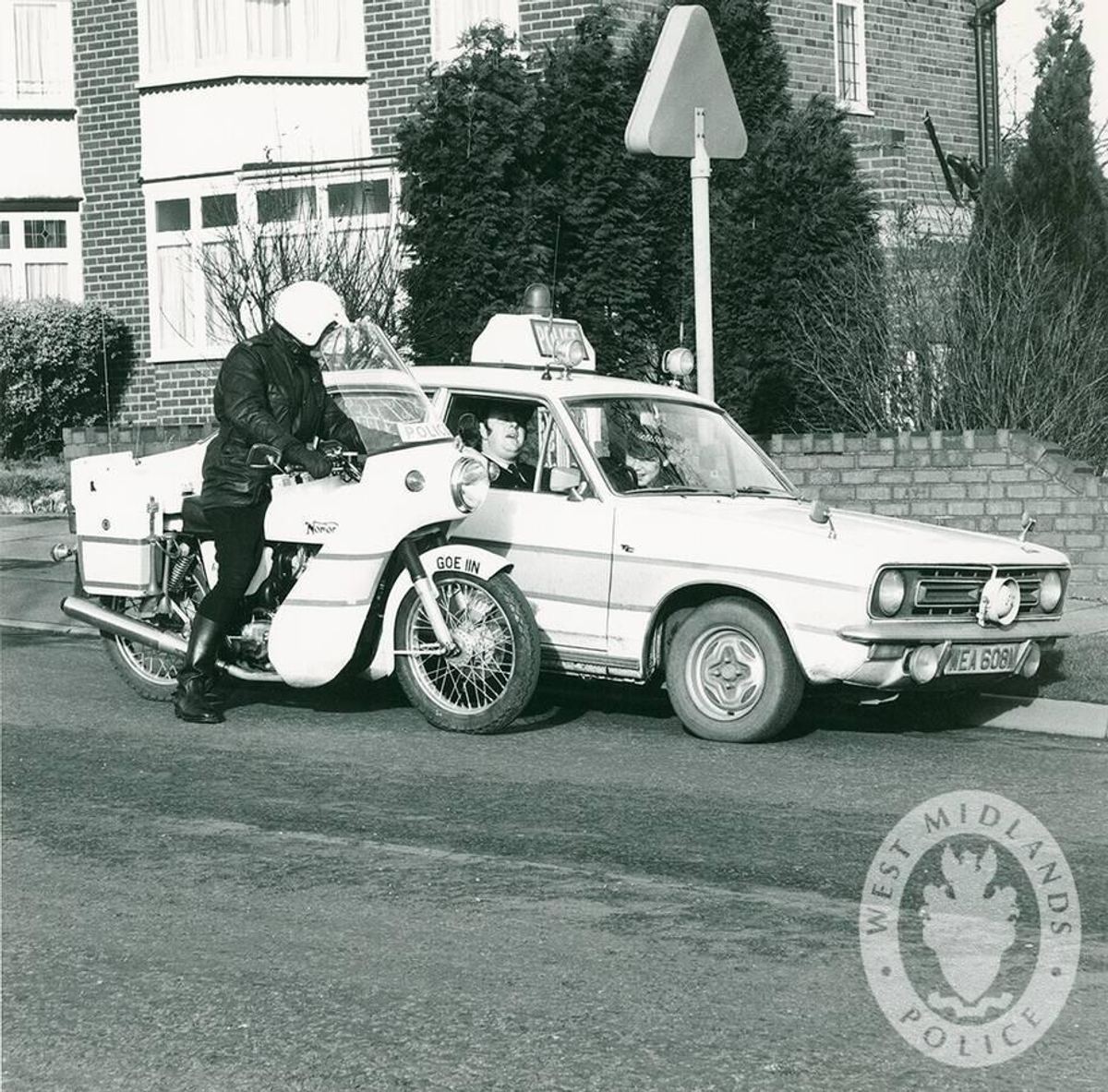
Racing helped sell it. In 1969 Paul Smart finished second in the Isle of Man Production TT on a Commando, and Mick Andrews won the production race at the Hutchinson 100 on a Commando entered by the London dealer Gus Kuhn. In 1970 Charlie Sanby and Peter Williams won the Thruxton 500, Wikipedia records. At the TT, Williams led the 1970 750 Production race until he ran out of fuel close to the finish, and in 1971 he set a lap record above 101mph before retiring. The factory's yellow Production Racer, nicknamed the Yellow Peril, went on sale in 1970, according to the Norton Owners Club.
Cycle World tested one in December 1969. At Riverside it reached 131.02mph, making it "the fastest 'production' machine ever tested by Cycle World". The engine had higher compression, bigger valves and a sports cam, but it kept its standard silencers and lights. Its standard-type front drum brake grabbed and then faded on the track.
The greatest result came later. In 1973 Williams won the Formula 750 TT on the monocoque John Player Norton, which used a Commando engine, with Mick Grant second. The monocoque bikes won 14 international races that year, according to Wikipedia.
The Norton Commando today
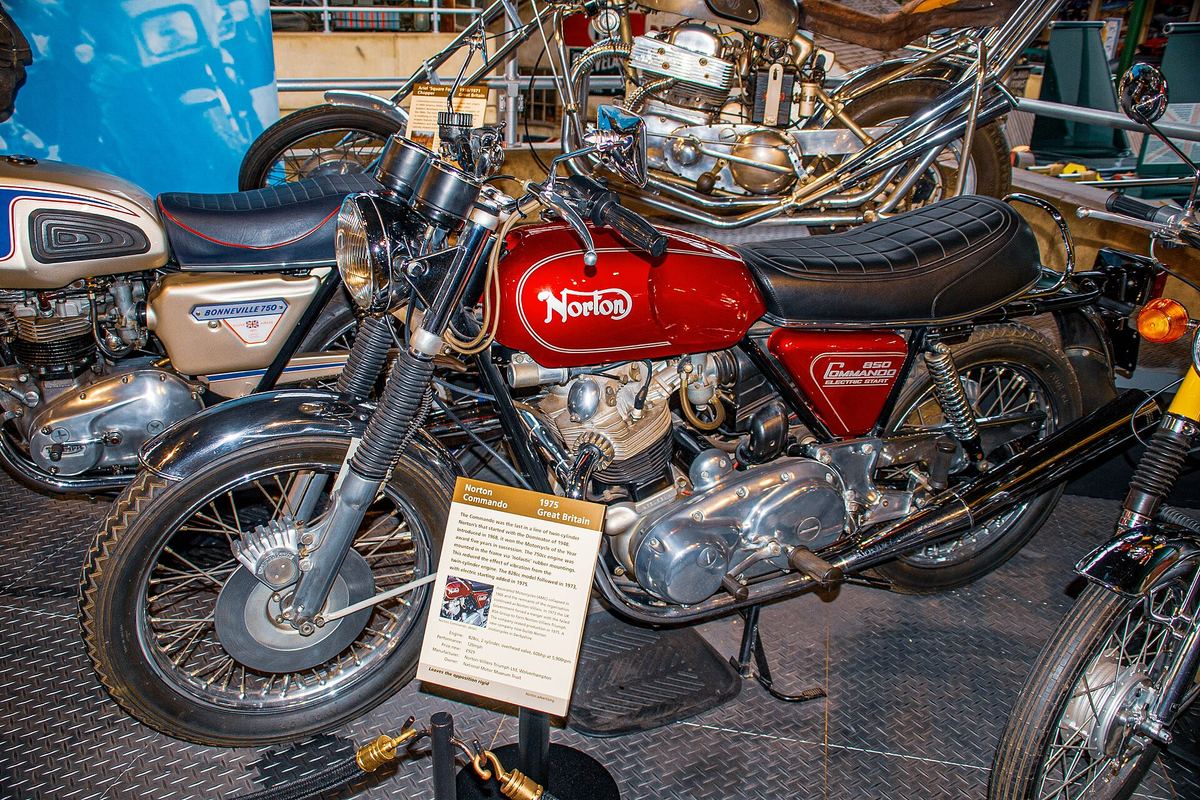
The Norton Commando was built until 1977. Not every change worked: the 65bhp Combat engine of 1972 suffered main bearing failures until Norton fitted stronger Superblend bearings, the Norton Owners Club says. The 850, actually 828cc, replaced the 750 in 1973, and the 1975 Mk III added an electric starter, a left-foot gear change and a rear disc brake. In 1974 Norton also sold a road-going replica of the John Player racer. Wikipedia, citing Henshaw's buyer's guide, puts total production at about 60,000.
Prices have stayed within reach. In January 2026, Mecum sold a 1968 Commando 750 Fastback for $8,250 at its Las Vegas auction. In July 2025, H&H sold a 1971 Commando 750 for £5,750.
Trigg never forgot the eleven weeks. "I worked all the hours God sent and lost over a stone in weight," he said, "but we did it."
Quick answers
What is the Norton Commando?
The Norton Commando is a British parallel-twin motorcycle built by Norton-Villiers from 1968 to 1977. Launched at the 1967 Earls Court Show, it used Norton's 745cc Atlas engine in a new frame with rubber Isolastic mountings to cut vibration. About 60,000 were made.
Who designed the Norton Commando?
Bernard Hooper and Bob Trigg designed the Commando under engineering director Dr Stefan Bauer, a former Rolls-Royce engineer. They had about eleven weeks in 1967 to have it ready for the Earls Court Show. Hooper is credited with the Isolastic idea.
What is the Norton Isolastic system?
Isolastic is Norton's name for rubber-mounting the engine, gearbox and swinging arm as one unit inside the frame. Vibration from the parallel twin is absorbed by rubber bushes before it reaches the rider. On the first Commando it smoothed out above about 1,800rpm, Cycle World found.
When was the Norton Commando 850 introduced?
Norton replaced the 750 with the 850, actually 828cc with a 77mm bore, in 1973. The 850 Mk III of 1975 added an electric starter, a left-foot gear change and a rear disc brake. Production of the Commando ended in 1977.