Husqvarna 400 Cross: the Swedish two-stroke that won two 500cc titles and starred in On Any Sunday
The Husqvarna 400 Cross took on the big four-strokes of the 500cc class with a light two-stroke single. It won two world titles with Bengt Åberg, then became famous in America as Steve McQueen's bike.
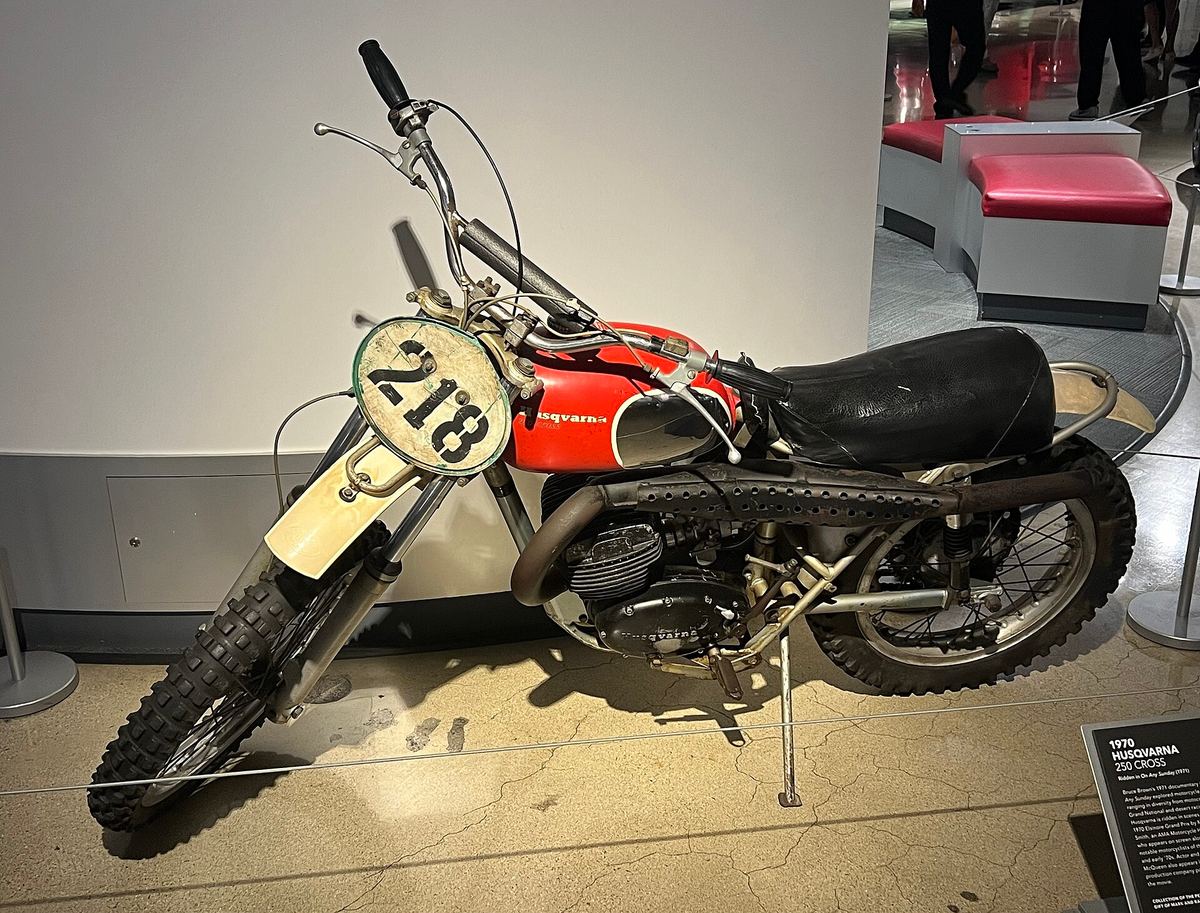
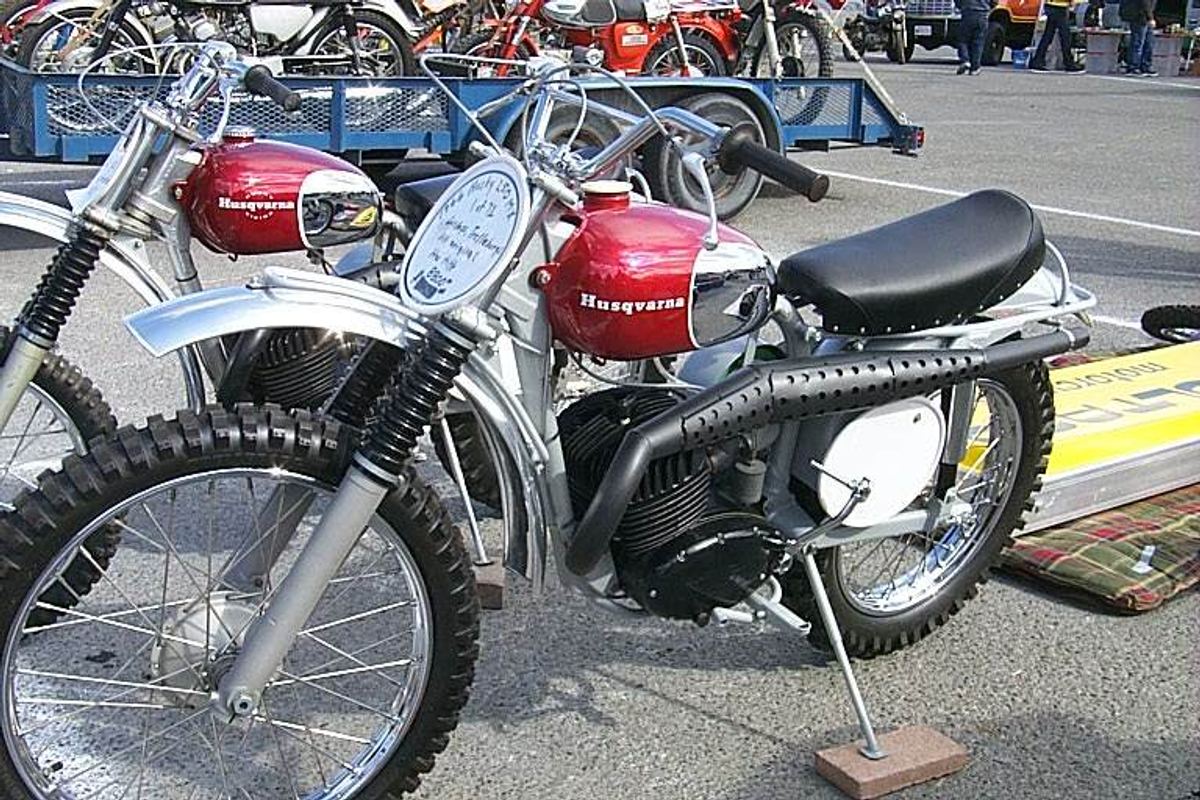
Bruce Brown's 1970 Husqvarna 250 Cross from On Any Sunday, the smaller sister of the 400, at the Petersen Automotive Museum.. Photo: TaurusEmerald / Wikimedia Commons, CC BY-SA 4.0
Bengt Åberg and Arne Kring did not leave much for anyone else in 1970. In that year's ten-race 500cc Motocross World Championship, the two Swedes won 18 of the 20 motos on their Husqvarna 400 Cross machines, Motorcycle Classics reports. Åberg took his second world title in a row; the first had come in 1969, the model's debut season.
The bike they rode was a production racer that anyone could buy. When Cycle World tested one in May 1969, the headline said it "must rate as one of the best weapons ever". It was light, it had a broad spread of power, and it was a two-stroke in a class that had belonged to big four-strokes.
Then Hollywood found it. In Bruce Brown's 1971 documentary On Any Sunday, Steve McQueen and Malcolm Smith rode Husqvarnas through the desert and along a beach. The red Swedish two-stroke became the bike every American off-road rider of the early 1970s wanted, and Husqvarna's American importer could hardly have bought better publicity.
Why Husqvarna built the 400 Cross
Husqvarna was an old company with a racing habit. It was founded around 1700 to make firearms and began building motorcycles early in the 20th century, Cycle World noted in 1966. By the late 1960s it was one of the leading names in European motocross, thanks partly to Torsten Hallman's 250cc world titles.
The 500cc class was changing. Cycle World explained in 1969 that riders had noticed the two-stroke 250s were going nearly as fast as the 500s, which were mostly heavy four-strokes. The big four-strokes had more power, but their riders tired, and the bikes were less agile. Lightness, a low centre of gravity and a lower price made a big two-stroke attractive.
Husqvarna's first answer was a 360cc two-stroke. Going bigger was hard. "Making a machine larger in displacement isn't a simple matter of scaling up a smaller machine," Cycle World wrote; prototypes overheated, holed pistons and broke gearboxes before they worked. The 400 Cross went further. According to Gunnar Lindstrom, a Husqvarna development rider who later wrote the book Husqvarna Success, the 400 was a development of the 360. Husqvarna's racing prototypes were 420cc and ran in the American Inter-Am series in the winter of 1968, Cycle World reported.
America mattered. Edison Dye had taken the Husqvarna distribution rights in the United States and brought Hallman over to race, Rider magazine says. In 1968 McQueen bought a Husqvarna 360 Viking from Åberg himself after watching him win a race in Santa Cruz, according to Pipeburn, and he kept it for years. The same year Åberg was part of the Swedish factory team that won the Trophée des Nations, Silodrome says.
What made the Husqvarna 400 Cross different
The Husqvarna 400 Cross was built on the 360's crankcases, and that set its size. Cycle World explained that only so much cylinder would fit into the 360's crankcase mouth. At 420cc there was not enough metal left for intake and transfer ports of the right shape, so the factory cut the bore back. The production engine made 5bhp more at peak revs than the 420 prototype.
The engine had seven ports, counting the exhaust, a new cylinder with a cast-iron liner and a new head with unusual finning to keep heat from the barrel out of the head. A new crankshaft lengthened the stroke, and compression was 10.5:1. The gearbox was strengthened with a larger mainshaft, and the countershaft sprocket sat on a taper, so riders could change gearing quickly with a puller supplied with the bike.
The chassis was simple. A single large downtube split into two cradle tubes under the engine, and the fork had a claimed 8in of travel. The rear brake drum was anchored to the frame rather than the swinging arm, which kept braking even over bumps. Motorcycle Classics lists a chrome-molybdenum frame, aluminium mudguards and Akront alloy rims.
Starting needed a determined kick, because of the high compression and a short kickstarter, but Cycle World found the engine fired within one or two tries and rarely kicked back. The testers liked the power most. They found "solid, low-rpm torque" and a smooth power band that ran to 9,000–9,500rpm, with no sudden surge to lift the front wheel. The steering was quick and needed concentration, they wrote, but it made the bike "one of the best handling motocross machines available".
The American Motorcyclist Association later described the 400 as a "light, sharp-handling performer, known for excellent power and decent factory suspension". Buyers also got a reminder of who had won with it: the airbox cover carried a world championship wreath with Åberg's signature printed on it, Ultimate Motorcycling recalls, and the whole bike cost about $1,000.
In competition: world titles and the Baja
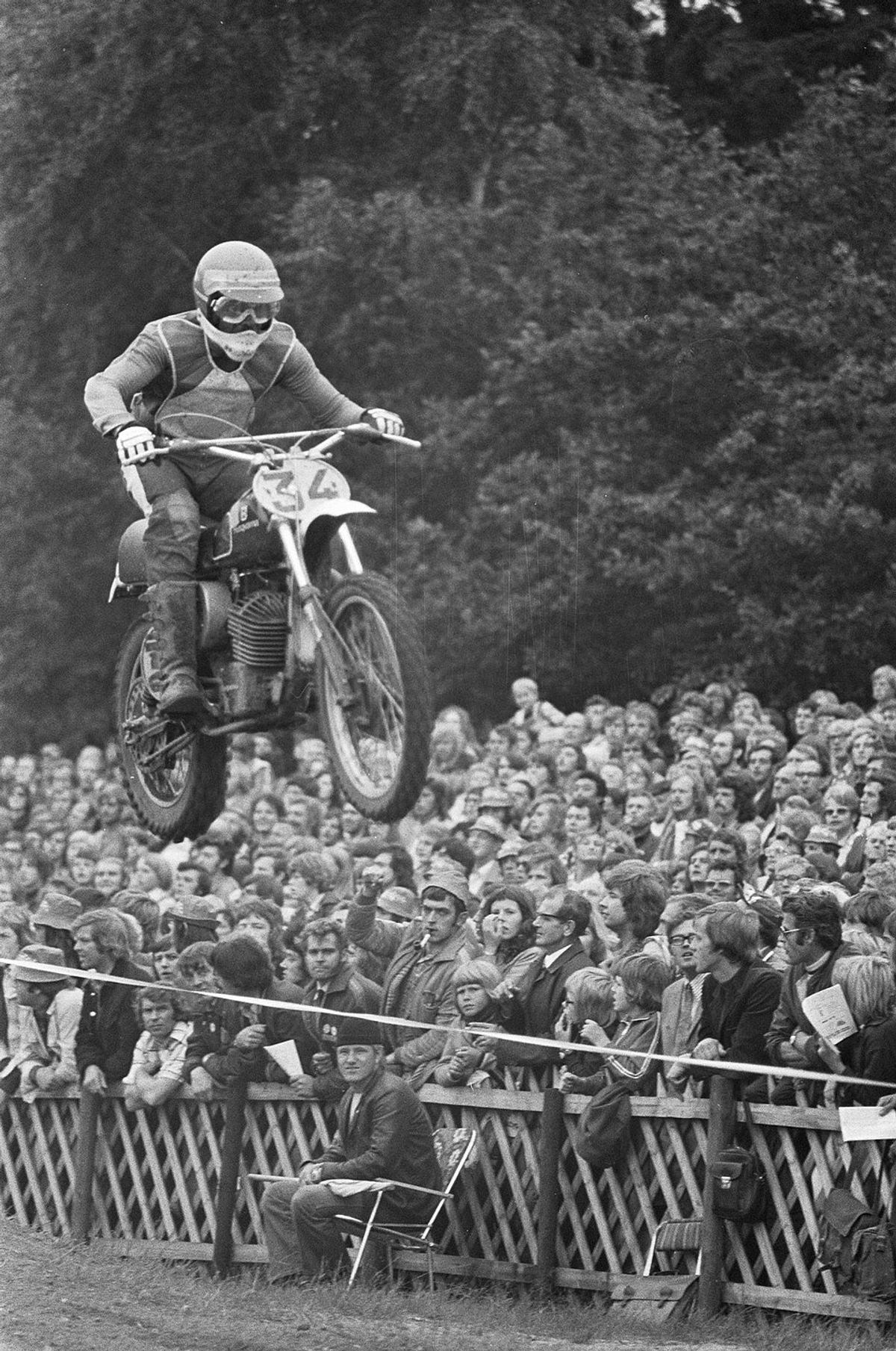
The Husqvarna 400 Cross won from the start. Åberg took the 500cc Motocross World Championship in 1969 and again in 1970. In 1970 he and Kring won 18 of the 20 motos between them. That year Åberg was also part of the Swedish team that won the Motocross des Nations, the first of three Nations wins in his career, Silodrome says.
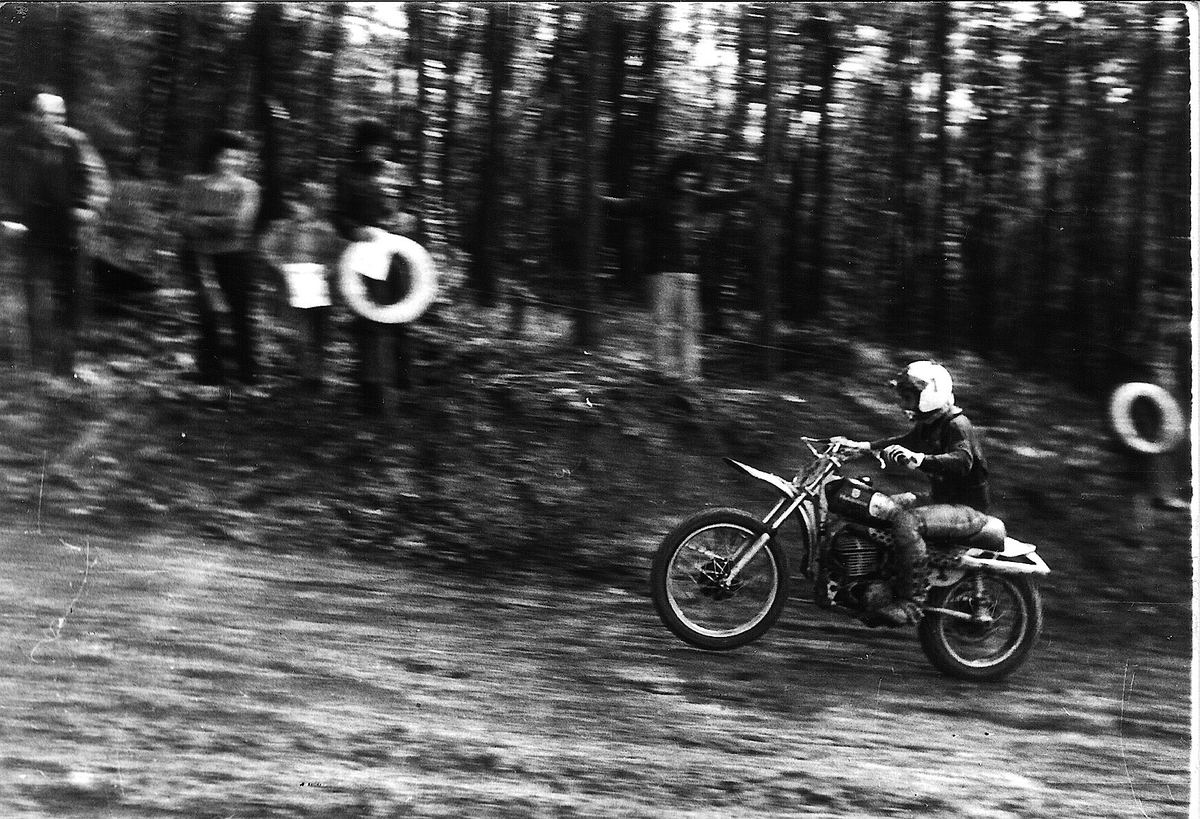
It won in America too. Malcolm Smith, whose dealership in Riverside, California, was a base for Dye's Husqvarna push, won the 1970 Elsinore Grand Prix, according to Motorcycle Classics. In 1971 Smith and Gunnar Nilsson shared a specially prepared 400 Cross to win the Baja 1000. Smith, who began racing Husqvarnas in 1966, told Rider: "I won many races on it and kept on racing Husqvarnas until they were sold to the Italians." The same year Mark Blackwell rode one to become America's first official Open-class motocross national champion, beating Brad Lackey by a single point.
McQueen raced one too. Under the name "Harvey Mushman", which he used to hide his racing from film studio executives, he finished in the top ten at Elsinore on a Husqvarna, Motorcycle Classics reports. When On Any Sunday came out in July 1971, the closing scene of McQueen, Smith and Mert Lawwill riding together is credited with a sales spike for Husqvarna, the American Motorcyclist Association says. Rider magazine wrote that the film "exposed and validated the bikes to more people" than advertising probably could.
The 400 Cross today
The Husqvarna 400 Cross kept evolving. Cycle World still called the 1972 version "for experts only". Its testers wrote that earlier big Huskies had a strong tendency to swap ends or wheelie, and that Husqvarna had calmed the new one by changing the steering geometry and moving the engine forward. By 1972 the 400 CR had five speeds, an orange tank instead of the traditional red and a claimed 41bhp from its 36mm Bing carburettor, Cycle World reported. Husqvarna won the 500cc title again in 1974, when Heikki Mikkola beat Suzuki's Roger De Coster, according to Cycle News. Its testers found that year's 400 lighter than before, with a broader powerband and excellent brakes, and a little more forgiving of ordinary riders.
The bikes linked to McQueen now sell for many times the price of an ordinary one. Silodrome reports that McQueen's own 400 Cross sold in 2011 for $144,500, and Motorcycle Classics says the bike he rode in the film, frame number MH1341, sold at a Barber Museum auction for $230,500. The Petersen Automotive Museum in Los Angeles holds a chromed 1971 400 Cross that McQueen gave to his friend James Coburn.
Ordinary bikes are still affordable. Classic.com lists 1970 400 Cross sales of $4,750, $6,000 and $9,000 between September and November 2025.
Åberg's 400 Cross proved a two-stroke could win the biggest class. McQueen's made a Swedish motocross bike a Hollywood star.
Quick answers
What is the Husqvarna 400 Cross?
The Husqvarna 400 Cross is a 396cc two-stroke single-cylinder motocross bike built in Sweden from 1969. Developed from Husqvarna's 360, it won the 500cc Motocross World Championship with Bengt Åberg in 1969 and 1970 and was sold as a production racer.
Which Husqvarna did Steve McQueen ride in On Any Sunday?
Steve McQueen rode a Husqvarna 400 Cross in Bruce Brown's 1971 documentary On Any Sunday, alongside Malcolm Smith. He also raced one at the Elsinore Grand Prix under the name Harvey Mushman.
How powerful is the Husqvarna 400 Cross?
The 400 Cross made about 40bhp from its 396cc two-stroke single. Cycle World's 1972 test of the later 400 CR quoted a claimed 41bhp. Its 1969 test praised the engine's broad power band, which ran to 9,000–9,500rpm.
What did Husqvarna 400 Cross win?
Bengt Åberg won the 500cc Motocross World Championship on it in 1969 and 1970. In 1971 Malcolm Smith and Gunnar Nilsson won the Baja 1000 on a 400 Cross, and Mark Blackwell became America's first Open-class motocross national champion.