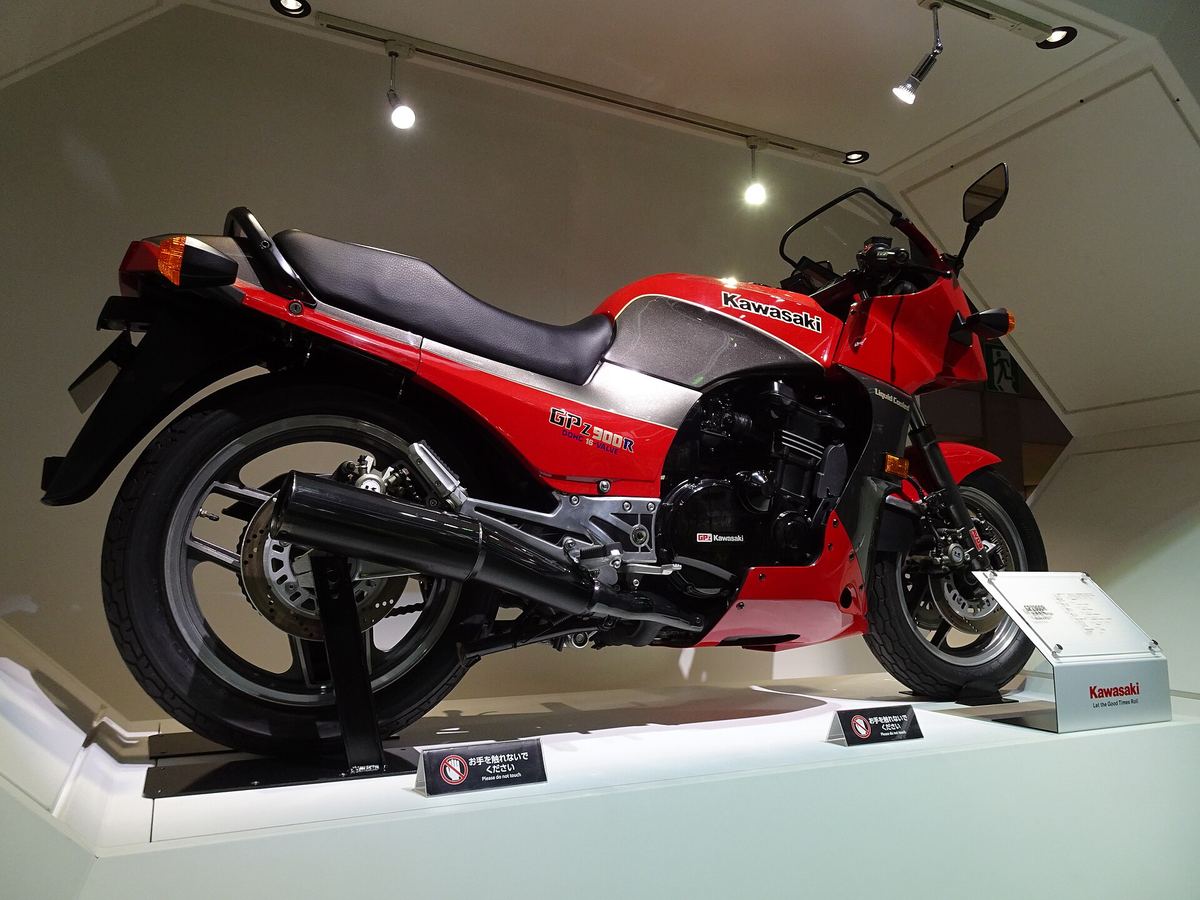
A 1984 GPZ900R on Kawasaki's stand at the Japan Mobility Show, 2023.. Photo: RuinDig / Yuki Uchida / Wikimedia Commons, CC BY 4.0
Laguna Seca, December 1983. Kawasaki invited the world's motorcycle press to the California circuit to ride its new sports bike, the Kawasaki GPZ900R, sold in America as the Ninja 900. Next to it in the pit lane, for comparison, Kawasaki parked its own Turbo and GPz1100. Cycle World came away saying the 900 felt lower, lighter and easier to turn than both, and had more cornering clearance than anything it had tested in its class.
Back home, the magazine put it on radar. The 908cc Kawasaki reached 145 mph (233 km/h) over a half-mile, a new record for a stock road bike tested by Cycle World, and faster than the bigger 1100s from Kawasaki and Suzuki.
The goal, Kawasaki's engineers told the magazine, was a motorcycle with the physical size of a 750 and the performance of an 1100. Cycle News, whose David Dewhurst wrote the first riding impression, called it "a downsized rocket waiting to be launched". Kawasaki also gave it a name that its own parent company had not wanted to use.
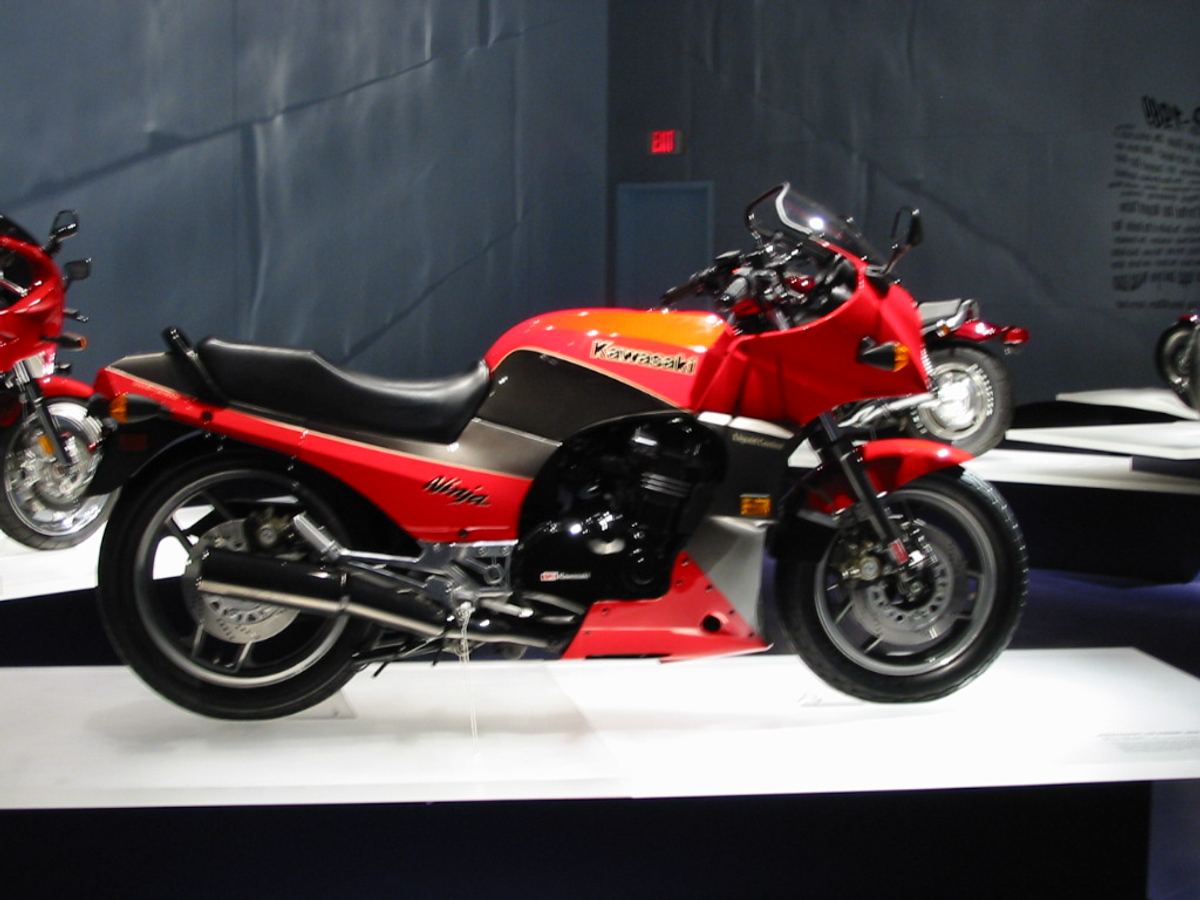
Why Kawasaki built the GPZ900R
The Kawasaki GPZ900R was built because the superbike race had run into a wall of size and weight. By the early 1980s, as Cycle World put it in May 1984, 900s and 1000s were turning into 1100s and 1150s, each generation longer and heavier than the last. Kawasaki's own GPz1100 weighed 578 lb with its fuel, according to the magazine's scales.
Development of the new flagship engine began early in the 1980s, about ten years after the 900cc Z1 of 1972, according to the Japanese motoring site Best Car Web. Kawasaki tried several answers before settling on one. According to Best Car Web, the first prototype engine was an air-cooled inline six, code-named 910, shelved because it felt too smooth. Cycle World reported that Kawasaki also tested V-fours and V-sixes before choosing an inline four, which its engineers said made as much power with less weight and fewer parts.
The engine was proven on track before it reached the showroom. American racer Wes Cooley tested it at Loudon and Sears Point in a special aluminium chassis, with standard 908cc engines and bigger 1023cc racing versions, and Wayne Rainey took laps at Pocono, Cycle World reported.
The name was a fight of its own. Mike Vaughan, Kawasaki USA's marketing director, told Motorcycle News he first suggested "Ninja" in 1979. Kawasaki in Japan objected that the ninja were outlaws, and an advertising agency proposed "Panther" instead. Only shortly before launch did the American team win the argument. In Britain, the bike stayed the GPZ900R, and no Kawasaki carried the Ninja badge there until the ZX-9R of 1994, according to Motorcycle News.
What made the GPZ900R different
The GPZ900R combined three ideas in one engine for the first time: water cooling, two overhead camshafts and four valves per cylinder in an inline four, according to Motorcycle Classics. Water cooling let Kawasaki put the cylinders closer together, because it no longer needed wide cooling fins and air gaps between them.
The cam chain was moved to the side. On most inline fours of the time it ran up the middle of the engine, between cylinders two and three. Kawasaki put it at the left end instead, Cycle World explained, which made the engine narrower, the crankshaft shorter and stiffer, and the ports straighter.
There were no frame tubes under the engine. The motor hung from a steel backbone and was itself part of the frame, carrying loads like a structural beam. Kawasaki's engineers estimated that losing the downtubes saved about 11 lb. The whole rear section of the frame was aluminium.
The carburettors were new as well. Kawasaki's 34mm Keihins used slides with flat side extensions, which made them lighter and 0.75 in shorter, leaving room for a bigger airbox. A balancer shaft tucked under the crankshaft made the engine, in Cycle World's words, as smooth as a bike with rubber engine mounts.
The chassis was built to lean. The GPZ900R had a 16-inch front wheel for quick steering and a 58.9-inch wheelbase, shorter than a typical 1100. The fork used Kawasaki's AVDS system, which stiffened the damping as the fork compressed faster, plus an anti-dive valve that slowed the fork's plunge under braking. Cycle World called it the most active anti-dive system it had seen on a road bike.
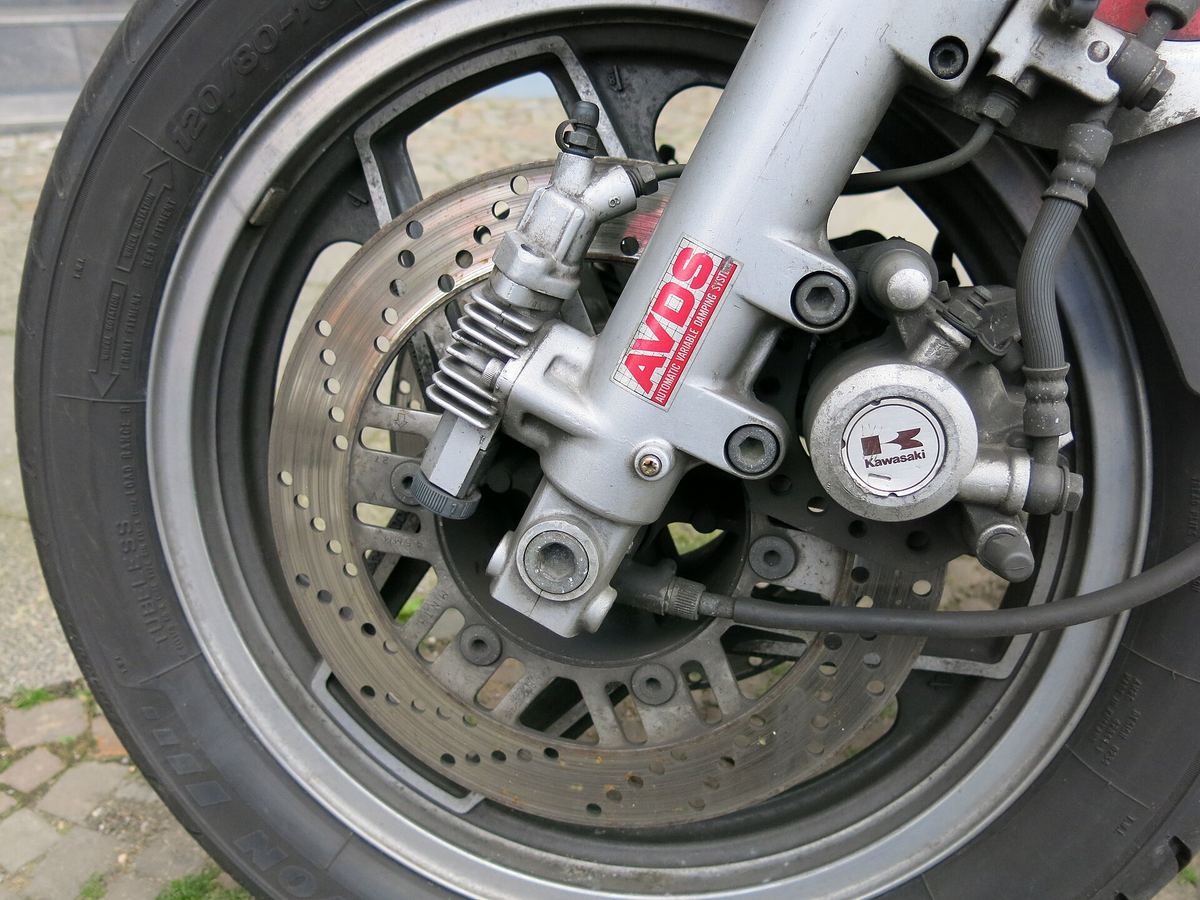
On the road: how the Ninja rode in 1984
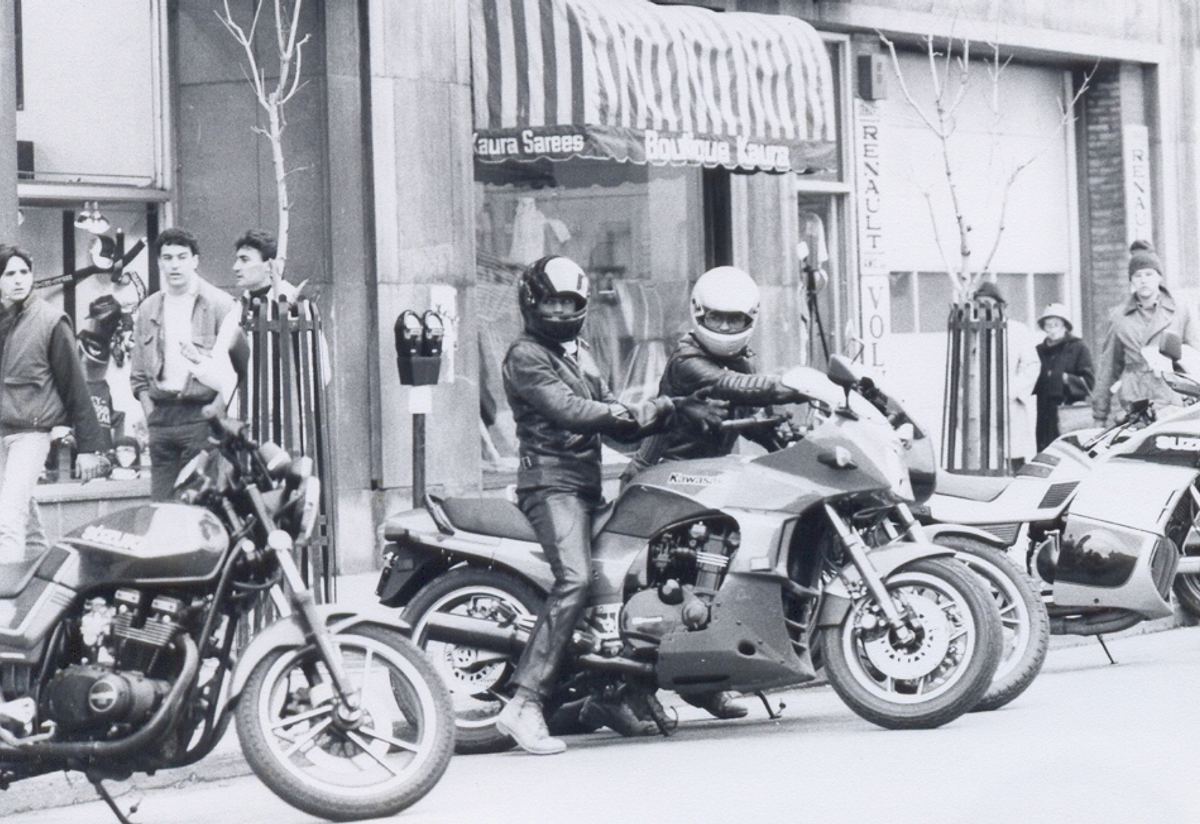
The Kawasaki GPZ900R was fast in corners as well as on the straights. Cycle World ran the standing quarter-mile in 11.18 seconds at 121.65 mph and stopped from 60 mph in 120 ft, shorter than any of its rivals. The bike pulled cleanly from 3,000 rpm in town and, in the magazine's words, "explodes above 6000" on the way to its 10,500 rpm redline.
The testers found faults too. The coolant gauge sat close to the red in traffic, the electric fan ran constantly, and the mirrors showed mostly the rider's own elbows. The suspension was firm and the throttle heavy enough that one rider's shoulder ached after a 400-mile day. Cycle, the rival magazine, went even quicker over the quarter-mile, with 11.08 seconds at 125.17 mph, according to Motorcycle Classics. Cycle World's testers still concluded that in any contest "more complicated than a drag race", the 900 beat the 1100s.
Europe agreed. Motorrad's first ride, published in January 1984, found the German version, restricted to 100 PS, very easy to steer and stable in corners, though it criticised a front brake that bit hard with little effort and small, awkward instruments.
The GPZ900R won its first big race at once. Geoff Johnson won the 1984 Isle of Man Production TT on one, the first major win for any Ninja, according to the official TT website.
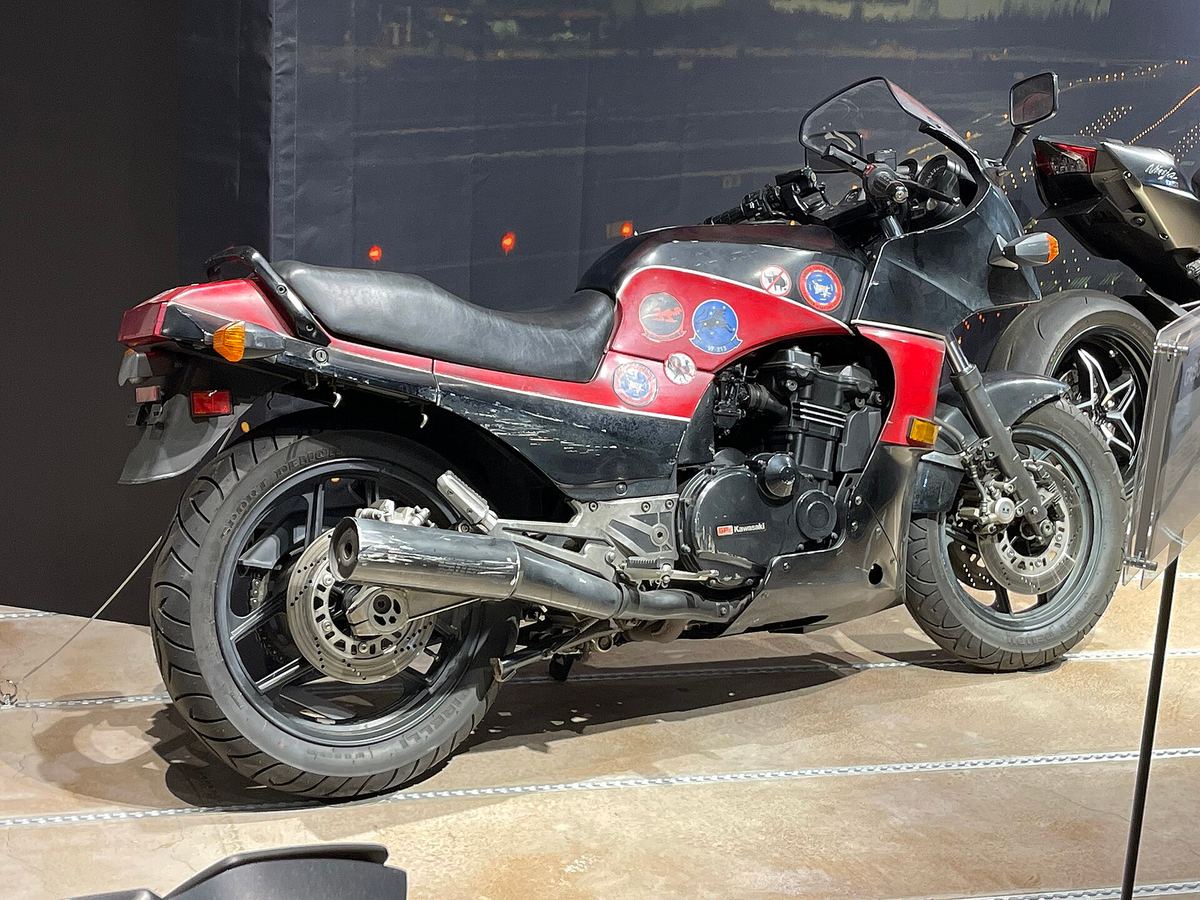
Then Hollywood called. For Top Gun (1986), Paramount needed a motorcycle for Tom Cruise's character, Pete "Maverick" Mitchell, and chose the Ninja. Motorcycle Classics reports that a San Diego dealer, Chris Dolan, delivered two identical bikes, and that all the Kawasaki decals came off in favour of Navy squadron stickers. In Japan, Best Car Web says, the film set off a Ninja boom.
The Kawasaki GPZ900R today
The Kawasaki GPZ900R lasted far longer than anyone planned. At home in Japan, Kawasaki sold a scaled-down GPZ750R version from 1984 to 1986, according to Best Car Web. Motorcycle News says Kawasaki built about 70,000 in its first 13 years, with the specification barely changed. Japanese sources put its total run at nearly 20 years, and its engine kept evolving into the ZRX1200 of the 2000s, according to Best Car Web.
Jim Freeman, chair of the British Motorcyclists Federation, summed it up for the federation's 2023 anniversary feature: "The 900 was such a good design that it outlived the bikes that were supposed to replace it."
The Ninja name outlived it too, becoming the badge on Kawasaki's sports bikes, and in 2024 the company marked 40 years of the Ninja line, as Cycle News noted. The film connection survived as well: in Top Gun: Maverick (2022), Cruise rode a GPZ900R again, alongside a modern Ninja H2, as Visordown reported from the trailer.
One detail from the launch shows how much was at stake. Wayne Rainey, the 1983 AMA Superbike champion, was at Laguna Seca for the press introduction. According to Roadracing World, he lost his Kawasaki ride two weeks later, when the company pulled out of American road racing.
Kawasaki named it after a band of hired assassins and its own head office called the idea shameful. Forty years on, it is the name Kawasaki puts on its sports bikes.
Quick answers
Was the Kawasaki GPZ900R the first Ninja?
Yes. The Kawasaki GPZ900R of 1984 was the first motorcycle to carry the Ninja name, sold in the United States as the Ninja 900. Kawasaki USA's marketing director, Mike Vaughan, proposed the name, and Kawasaki Japan agreed shortly before the launch.
How fast is a 1984 Kawasaki GPZ900R?
Cycle World's May 1984 test recorded 145 mph (233 km/h) over a half-mile by radar, a record for a stock road bike it had tested. It ran the quarter-mile in 11.18 seconds at 121.65 mph. Kawasaki claimed 113 bhp at 9,500 rpm.
What motorcycle did Tom Cruise ride in Top Gun?
Tom Cruise rode a Kawasaki GPZ900R Ninja as Maverick in Top Gun (1986). According to Motorcycle Classics, a San Diego dealer supplied two identical bikes, and their Kawasaki decals were replaced with Navy squadron stickers. A GPZ900R returned in Top Gun: Maverick (2022).
What was new about the Kawasaki GPZ900R engine?
The Kawasaki GPZ900R's 908cc engine combined liquid cooling, twin overhead camshafts and four valves per cylinder in an inline four. Its cam chain ran at the side instead of the centre, making the engine narrower, and the engine itself formed part of the frame.