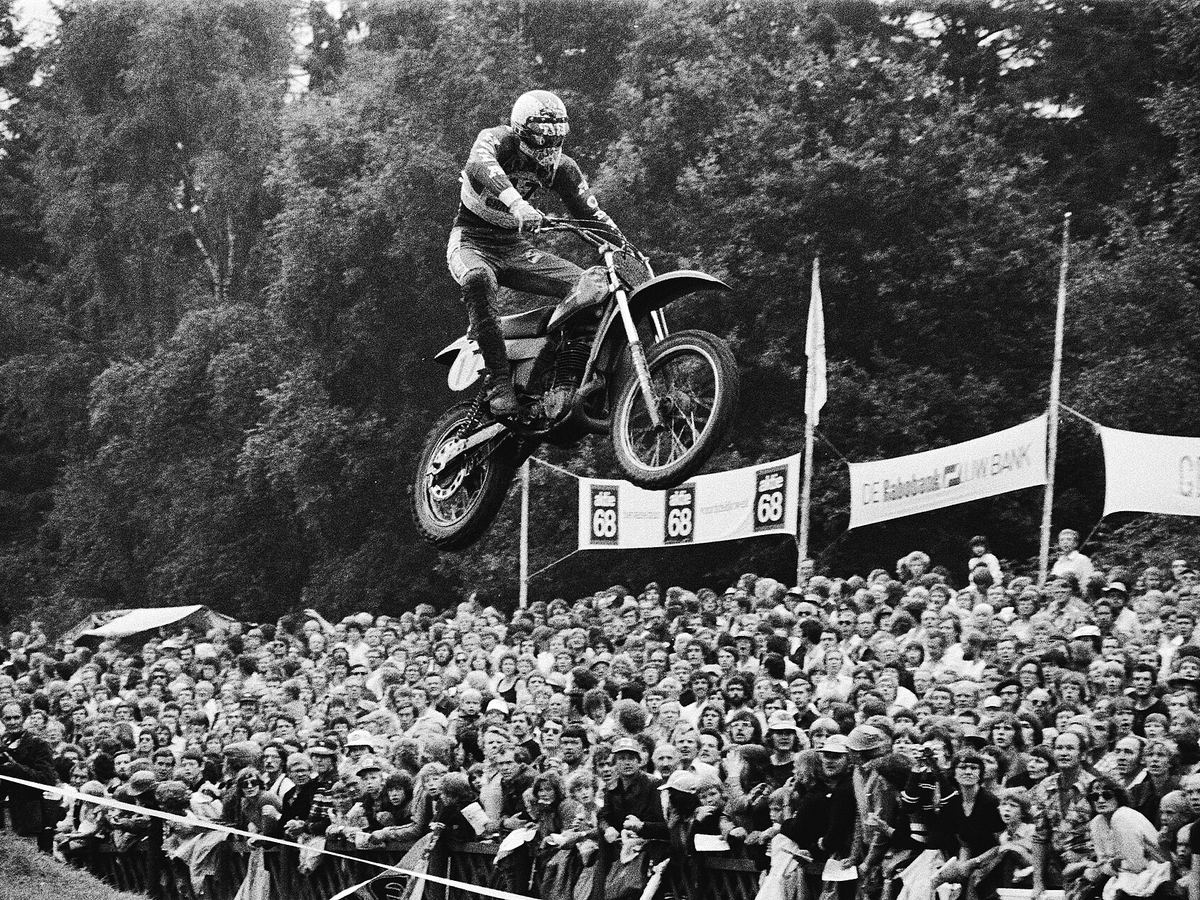
Jeff Smith: the BSA four-stroke rider who held off the two-strokes for two 500cc world titles
In 1964 and 1965 Jeff Smith won the 500cc motocross world title on a works BSA single, just as the two-strokes arrived. He died in March 2026, still the last world champion on a British bike.
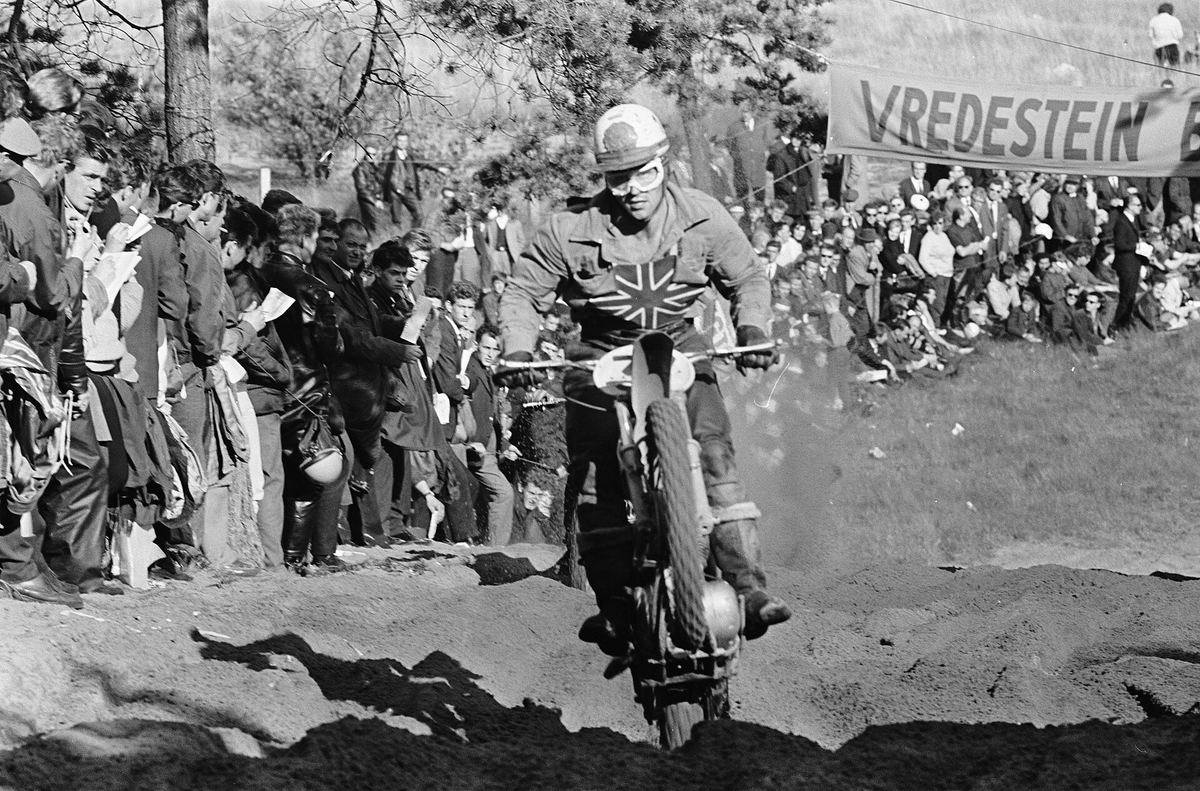
Jeff Smith at Bergharen in the Netherlands in July 1965, the year of his second 500cc world title. The archive records him as the 500cc winner that day.. Photo: Eric Koch / Anefo, Nationaal Archief (CC0)
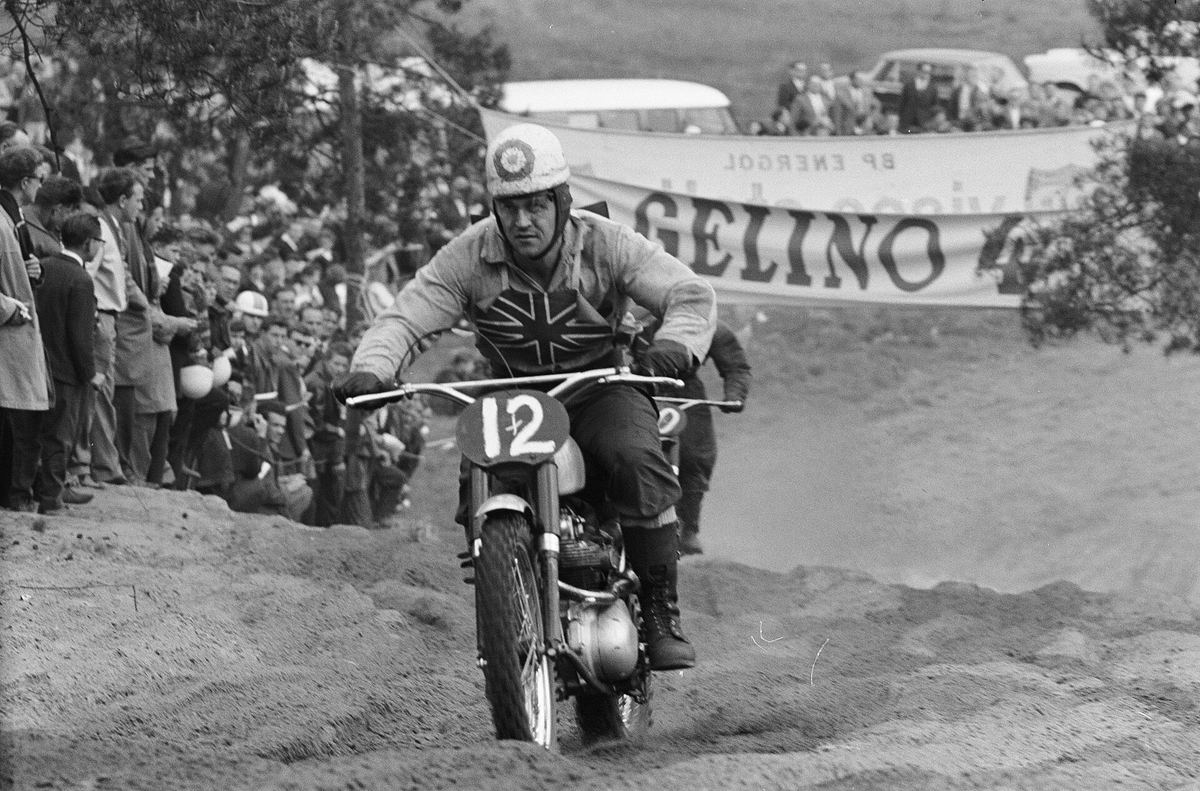
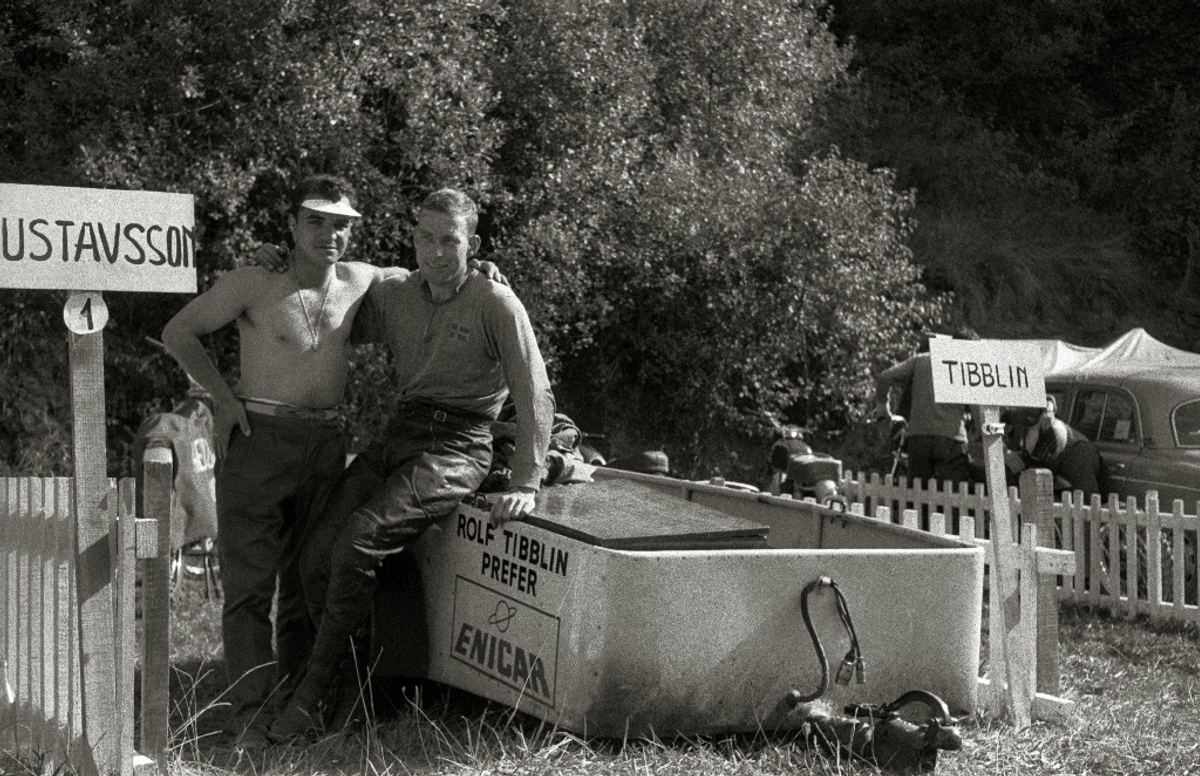
The last round of the 1964 500cc motocross world championship was in Spain, and it came down to two men. Rolf Tibblin, the Swede who held the title, had to win the meeting to keep it. A few laps into the first race, his front wheel collapsed.
That made Jeff Smith world champion, on a works BSA. In the second race the two of them fought hard anyway, Cycle World's correspondent B. R. Nicholls reported, until Smith chose not to pass and let Tibblin take the win.
Smith finished the season with seven wins, six seconds and a third, and only a rider's best seven results counted. He beat Tibblin by two points and was, the magazine said, the first Englishman to win the world motocross title. A year later he won it again.
Jeff Smith died in Wisconsin in March 2026, aged 91. Nobody has won a motocross world title on a British motorcycle since.
Jeff Smith: from trials to the 500cc class
Smith was born in Colne, Lancashire, in 1934. When he was nine his father brought home an old two-stroke Triumph. During the war, he told the AMA Motorcycle Hall of Fame, he got about a pint of petrol at a time and rode it round the field behind the house.
He started in trials. Norton made him a works rider in 1952, and he won the British Trials Championship in 1953 and 1954, the second time on a BSA. He won the Scottish Six Days Trial in 1955 on a 500cc Gold Star, according to Trials Guru. At the International Six Days Trial he won eight gold medals, the first of them at 16.
Motocross came almost by accident. In 1954 BSA needed a rider to fill its team at the Dutch Grand Prix. Smith went, and won.
Ten years later the 500cc class was a Swedish affair. In 1964, apart from Smith, every leading rider in the final standings was Swedish, Cycle World noted.
1964: Smith against Tibblin
The bike began with an argument. In 1959, Smith told Motocross Action, BSA manager Bert Perrigo assumed he must be very comfortable on the 500 Gold Star. Smith said no: the company needed a new, lighter motocross machine.
BSA started from its small C15 road single. When it first entered modified C15s in the British 250cc Grand Prix, Smith recalled, "We didn't expect any great results, because at this time the specialized two-stroke machines were flooding the class." He finished second.
In 1963 BSA built a 342cc version of the B40 engine for Smith's world championship campaign, according to Motocross Action, while it worked on a bigger one. Cycle World described his 1964 bike as a 420cc works BSA. Motocross Action says the new 441cc engine reached him with three rounds left, and Old Bike Australasia says Ken Sprayson, a Reynolds tubing specialist, built the frame of the 441 he rode that year.
Tibblin rode a machine designed by Nils Hedlund. He won the first two rounds, with Smith second both times. In Switzerland Smith won a shortened second race but had no time to overturn Tibblin's lead. In the next round the flag came out a lap early with Smith a second behind and closing, Cycle World reported. Nicholls put the pair in "the superman class" and predicted the hardest title fight yet.
Smith respected his rival. Tibblin "was the first person in motocross to take training seriously," he told MX Large.
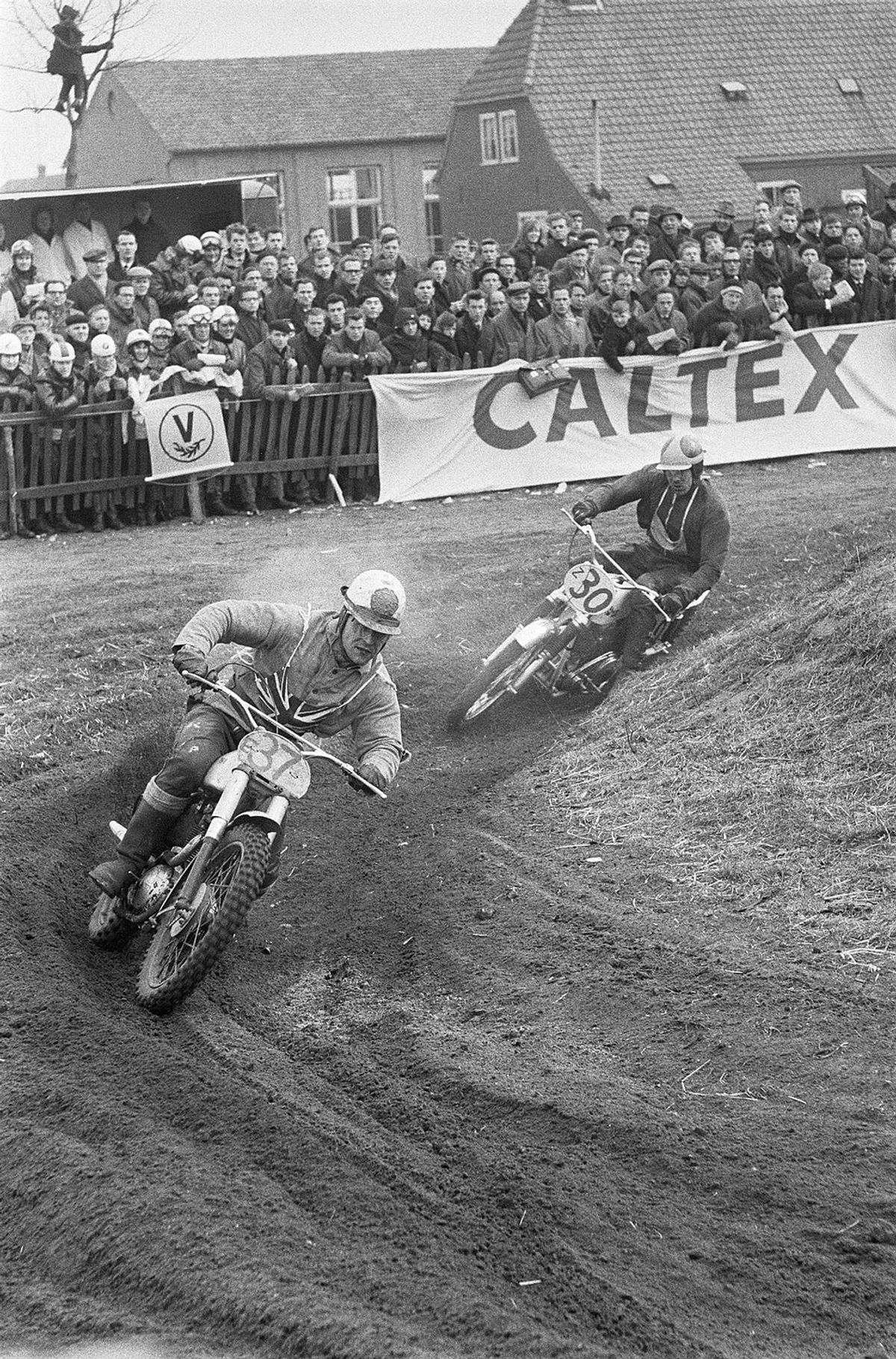
Over the summer Smith caught up. At the Citadel in Namur, on what the circuit's own history calls "tortuous and hilly" slopes, Smith beat Tibblin. By the final round in Spain the title was between the two of them.
Only the best seven results out of fourteen rounds counted. Smith's seven wins gave him the maximum score. Tibblin won six rounds but failed to score at five meetings, and that, in the end, was the two points.
1965: a second title, then a standard bike
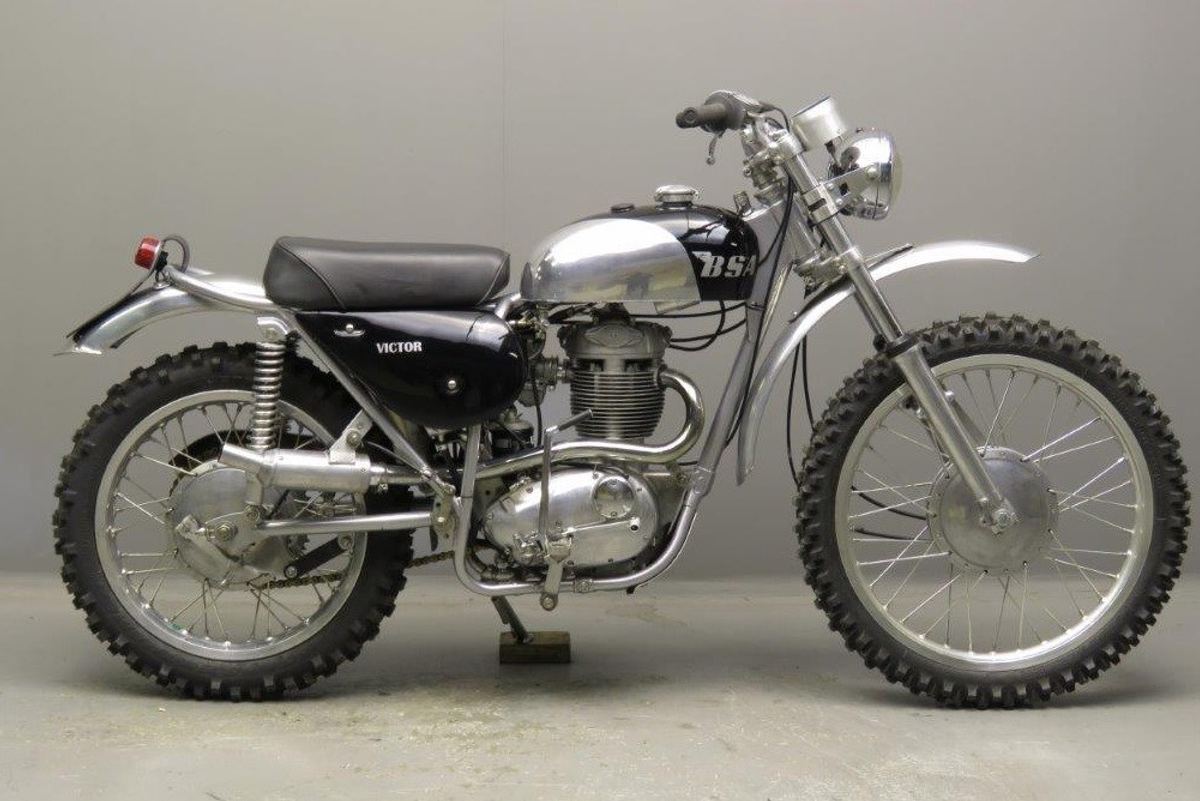
For 1965 the engine became the 441cc Victor, with a bore and stroke of 79mm by 90mm. Smith won six Grands Prix on it, according to Motocross Action, and had the title settled by mid-season, according to the AMA Motorcycle Hall of Fame. Paul Friedrichs, an East German on a CZ two-stroke, was second. Tibblin, now also on a CZ, was third, according to MX Large.
With the championship won, BSA asked Smith to try to win a Grand Prix on a standard bike. He rode one at the East German round and finished sixth, scoring a single point. "I have to admit I couldn't do it," he said later.
In August he led the British team at the Motocross des Nations at Namur. Belgium's Joël Robert won both races, but Britain won the team prize. At home, Smith was also British 500cc champion again, a title he won nine times between 1955 and 1967, according to the FIM.
The titles also helped BSA sell motorcycles. The 441cc Victor Scrambler and Victor Enduro went on sale for 1965, at first for export only, Old Bike Australasia says. A road-legal Victor GP followed for 1966 and sold fairly well in Europe, according to Motocross Action, though it was not a works bike. "The GP model wasn't as powerful, nor did it handle as well as our modified standard Victors," said Chuck Minert, a BSA factory rider in America.
What it took to win on a four-stroke
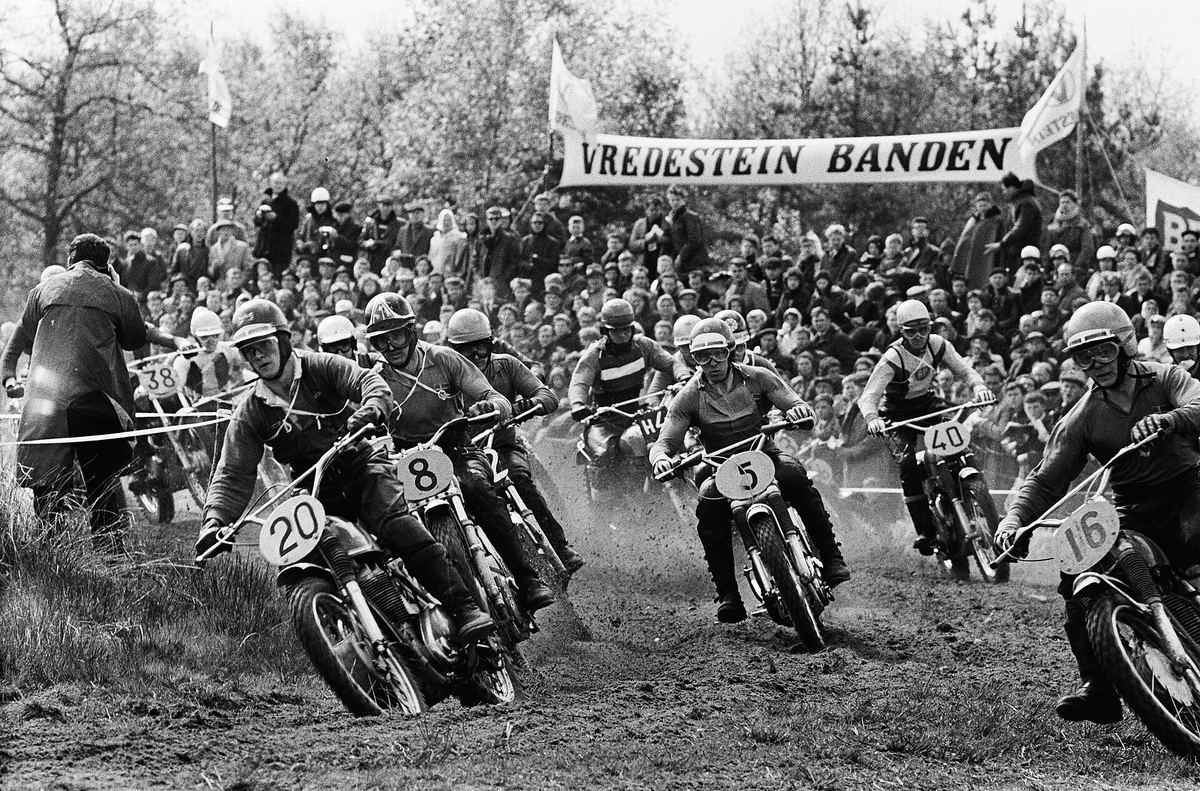
It took a rider who was also an engineer. BSA took Smith on as an apprentice in the early 1950s, and he helped develop the bikes he raced, Trials Guru says. It also took nerve in front of big crowds: more than 100,000 people in Leningrad around 1962 and over 90,000 in Prague in 1963, according to the AMA Motorcycle Hall of Fame. At home, BBC Grandstand and ITV's World of Sport made him a household name in televised scrambles, usually wearing number 4.
Then the four-stroke ran out of road. For 1966 BSA built him a titanium-framed bike that Cycle World said cost $15,000. Old Bike Australasia says the frame was 60 per cent lighter than steel but kept cracking and needed specialist welding. Smith retired from early rounds with mechanical problems, then broke his wrist and collarbone in a crash that killed his 27-year-old teammate Jerry Scott. "Too many cooks spoil the broth I'm afraid," he said of the project. Friedrichs won the first of three straight titles on a CZ, and Smith finished third.
Why it still matters
Smith was the last rider to win a motocross world title on a British motorcycle, and the last on a four-stroke until Jacky Martens in 1993, as Corse di Moto noted when he died. When Dave Nicoll won the 1969 Luxembourg Grand Prix on a BSA, the National Motor Museum says, it was the last four-stroke win in a world championship round until the 1990s.
He retired from racing in 1972, according to the ACU, and moved to Canada to work for Can-Am, then to the United States. Can-Am bikes he helped develop took the top three places in the 1974 AMA 250cc national championship. In the 1990s he ran the American Historic Racing Motorcycle Association, which grew from about 800 members to more than 5,000. Into his seventies he was still winning vintage races on 1960s machinery, including his BSA.
In 1959 he told BSA it needed a lighter bike. Nobody has won the world title on a British one since.
Quick answers
Who was Jeff Smith?
Jeff Smith (1934–2026) was a British motorcycle racer from Colne, Lancashire. He won the 500cc motocross world championship for BSA in 1964 and 1965, two British trials titles, the 1955 Scottish Six Days Trial and eight ISDT gold medals. He later worked for Can-Am and led AHRMA in the United States.
What bike did Jeff Smith win the world motocross title on?
Jeff Smith won both his world titles on works BSA four-stroke singles developed from the C15 road bike. Cycle World described his 1964 bike as a 420cc works BSA; for 1965 it became the 441cc Victor. Sources disagree on exactly when the 441cc engine first raced.
How did Jeff Smith win the 1964 500cc motocross world championship?
Jeff Smith beat Sweden's Rolf Tibblin by two points in 1964. The title went to the final round in Spain, where Tibblin needed to win but his front wheel collapsed in the first race. Smith scored seven wins, six seconds and a third, and only the best seven results counted.
When did Jeff Smith die?
Jeff Smith died in Wisconsin, United States, in March 2026, aged 91 according to the FIM and Trials Guru. He had lived in North America since the 1970s and was still the last rider to win a motocross world title on a British motorcycle.