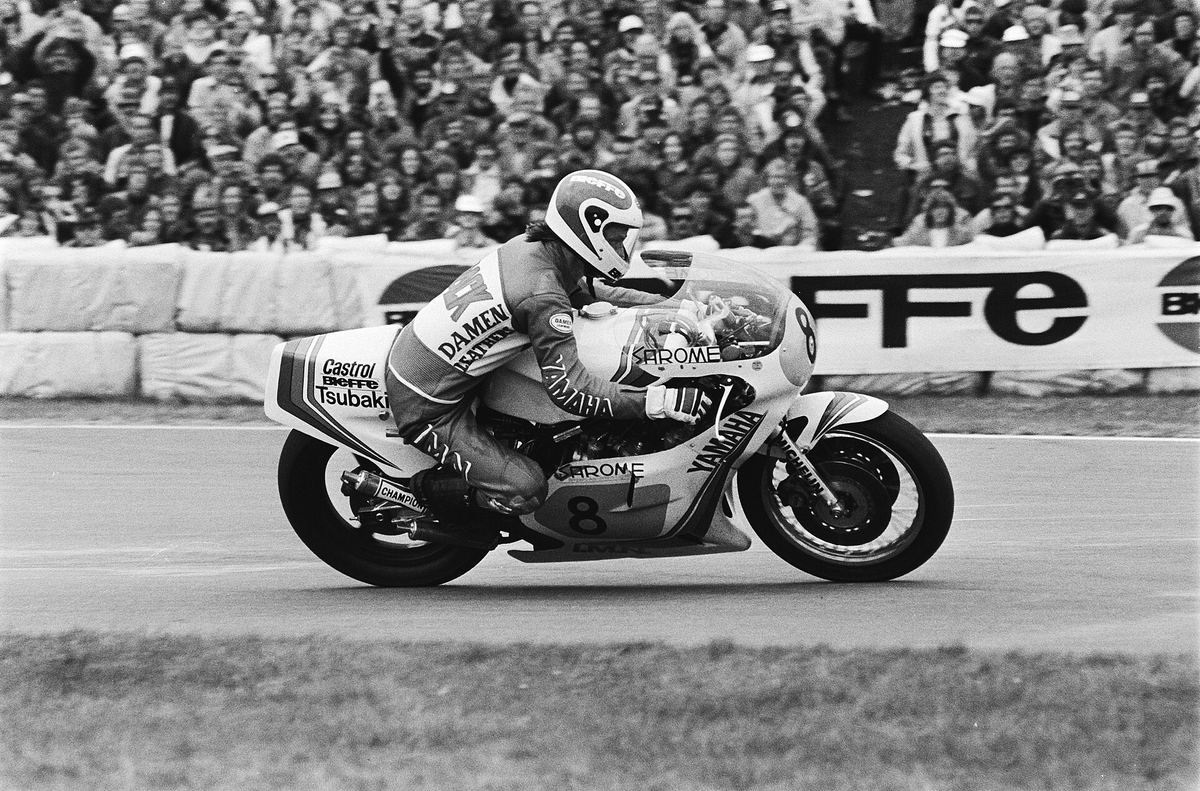
Jack Middelburg on his way to victory in the 500cc race at Assen, 28 June 1980.. Photo: Fernando Pereira / Anefo, Nationaal Archief, CC0
Jack Middelburg started the 500cc race at the 1980 Dutch TT from pole position, and within seconds he was nowhere. The 500s were still push-started then, as they would be until clutch starts arrived in 1987: riders ran beside their machines and bump-started them. An old leg injury, held together with screws and pins, slowed his run, and the 28-year-old Dutch privateer dropped around 20 places at the start at Assen, on 28 June.
He had taken a gamble on slick tyres on a track that was still wet in places. Within a lap he had caught the leading group: Kenny Roberts, Randy Mamola, Johnny Cecotto and Graziano Rossi. On the third lap he went past Roberts, the world champion, for the lead.
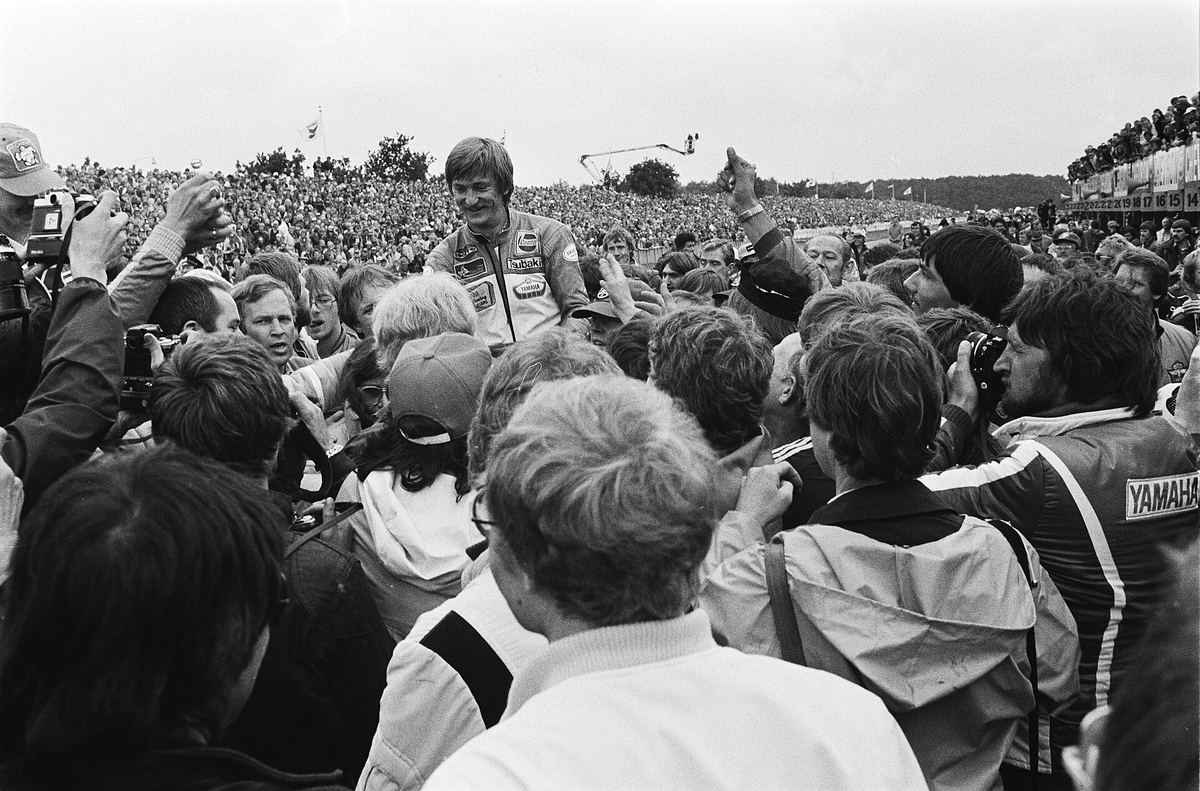
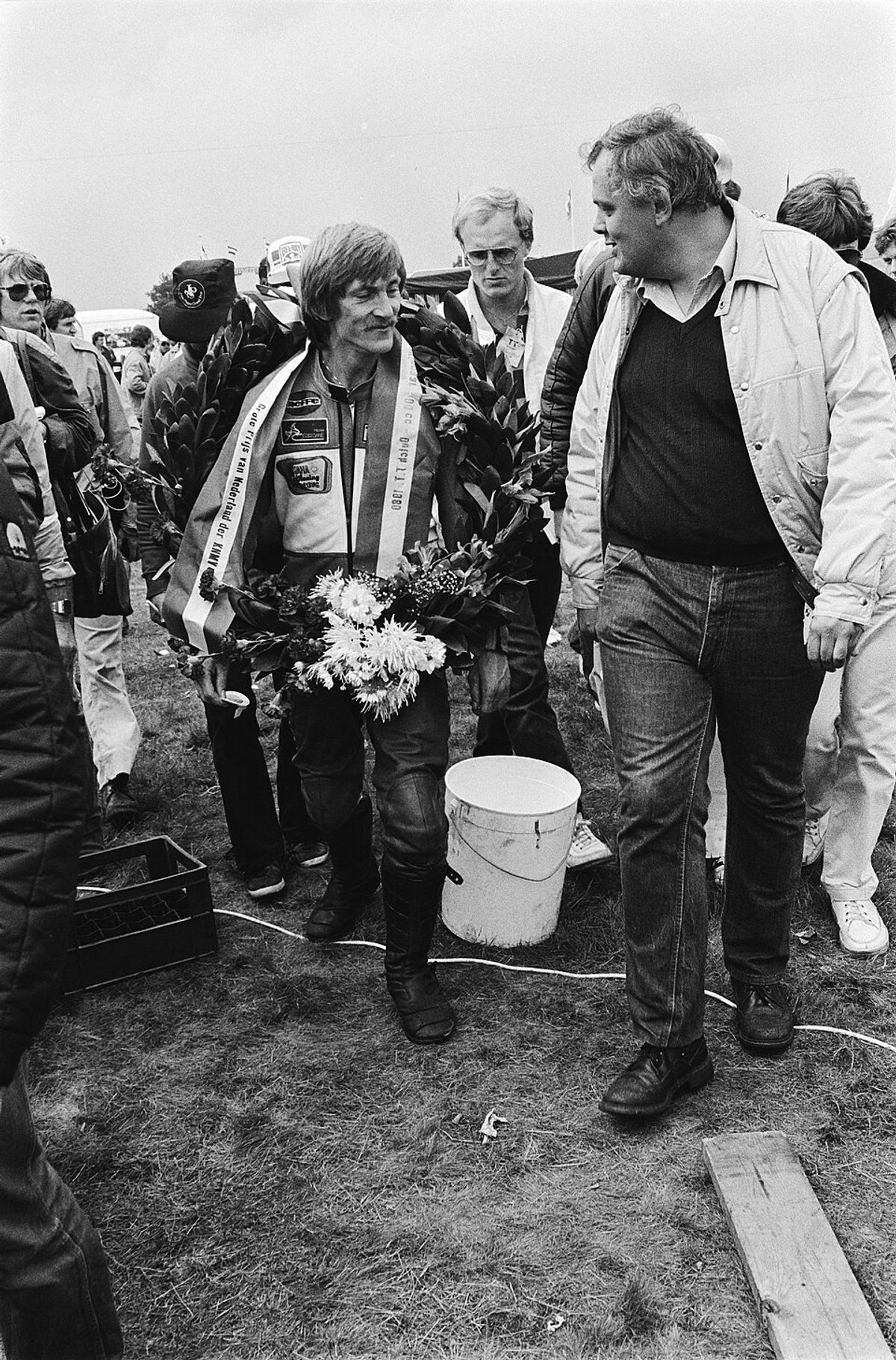
The crowd chanted "Jackie, Jackie!" Middelburg won by 14 seconds from Rossi, on a production Yamaha that anyone with the money could buy, and became the second Dutchman, after Wil Hartog, to win the premier class at his home Grand Prix.
Jack Middelburg and the bike that disappointed
Jack Middelburg was born in Naaldwijk, in the glasshouse country south-west of The Hague, on 30 April 1952. He made his Grand Prix debut at Assen in 1977 and finished 11th in his first 500cc race, on a Suzuki. With Hartog and Boet van Dulmen he formed a generation of Dutch riders who raced at the top level in the late 1970s. He never had a factory bike. His best result before 1980 was second place at the 1979 Swedish Grand Prix, on the way to seventh in that year's championship. The Dutch press called him "Jumping Jack".
For 1980 he moved from Suzuki to Yamaha, with a promise, according to Cycle News, of a machine identical to the one Roberts rode. It did not work out that way. What he got was the TZ500 G, Yamaha's production racer for privateers, derived from the factory bikes on which Roberts had won the 1978 and 1979 titles. It cost about $14,000 and made around 110 bhp at a dry weight of 135 kg (298 lb), according to the organisers of the Classic GP at Assen.
Van Dulmen, his team-mate that year, told Cycle News that the customer engine "was less than expected" in power, and that the handling was poor. The Dutch frame builder Nico Bakker built a new tubular steel chassis to fix it.
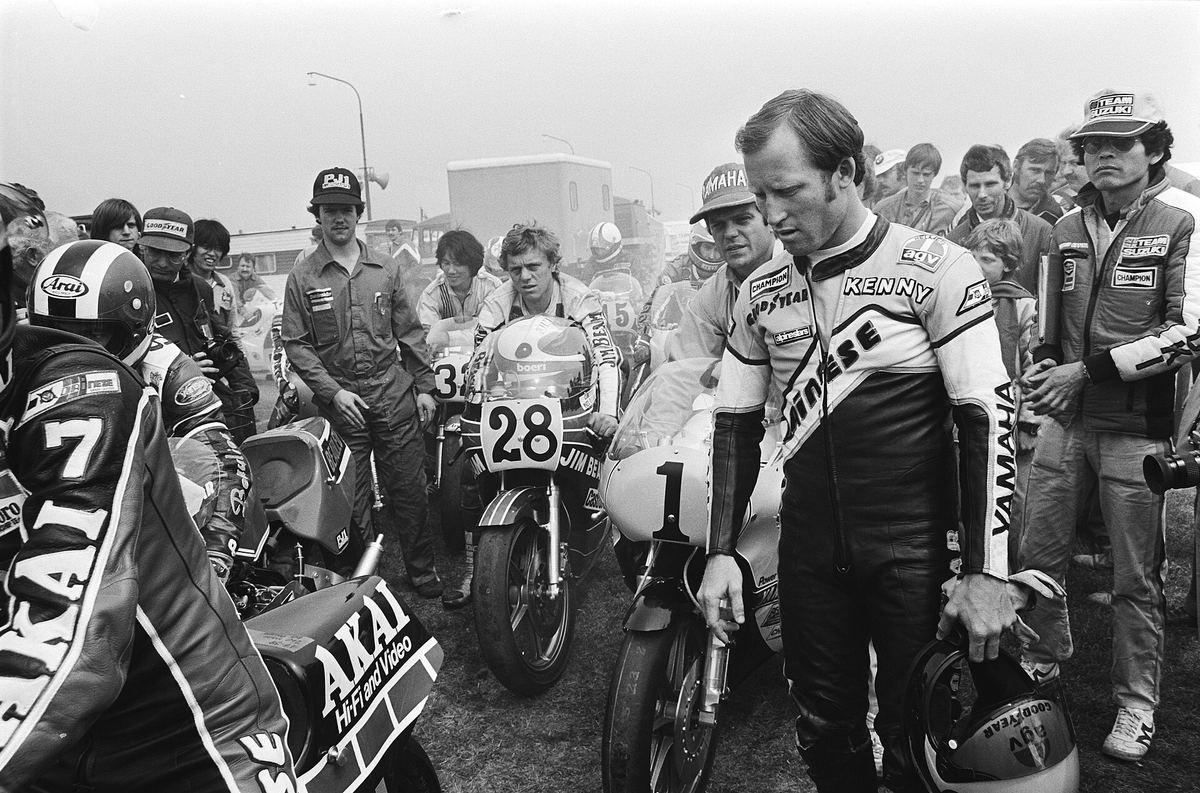
Roberts arrived at Assen having won every 500cc race of the season. Middelburg had not scored a point all year. He had not started at Misano, finished 15th in Spain and retired in France.
A wet track, a delay and a gamble
Middelburg put the Bakker Yamaha on pole with a lap of 2:55.8, ahead of Philippe Coulon and Mamola. Roberts, the man who had won every race, would start further back. Tsubaki, whose name was on the bike's seat, points out in its own history that pole meant less in 1980 than it does today, because of the push start. On race day the weather intervened. Rain had soaked the circuit, and just before the start Roberts's Yamaha developed brake problems. The start was delayed while his crew worked on it.
According to Van Dulmen, that delay helped Middelburg, because the track had time to dry from the full wet it would otherwise have been. Middelburg chose slicks, smooth racing tyres with no tread to clear water. On a drying track they give more grip than wet-weather tyres once a dry line appears, and almost none where water still lies.
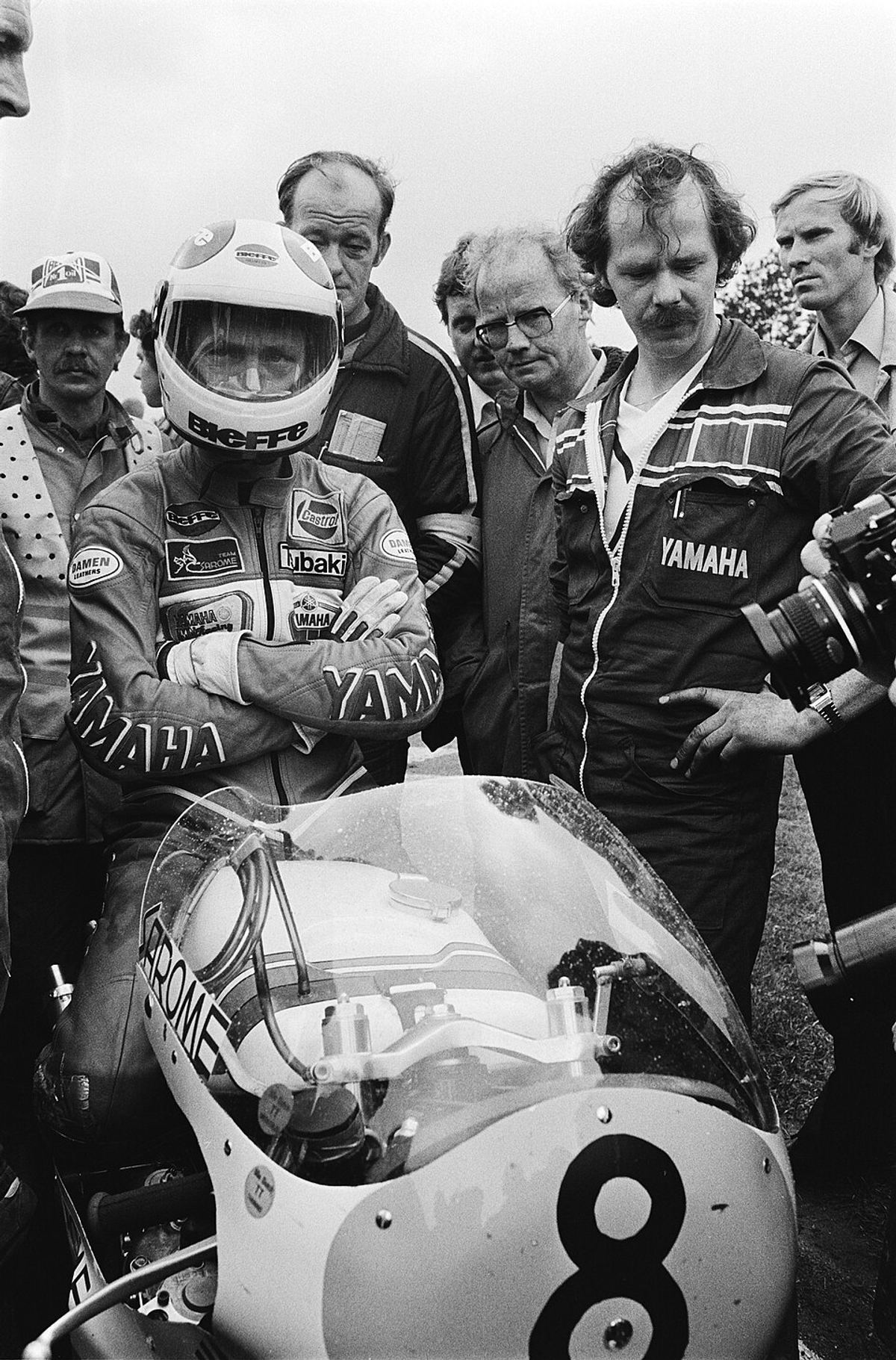
Then came the push start. The leg slowed him and he fell back through the field, around 20 places by the classic GP organisers' count. It took him one lap to reach the leaders. On lap three he passed Roberts and took the lead, and Roberts later retired with a mechanical failure. Rossi and Franco Uncini, both on Suzukis, completed the podium.
Roberts left Assen without a point and still won the 1980 title, his third in a row, with 87 points to Mamola's 72. But for one race at Assen the champion and the factories had been beaten by a customer engine in a Dutch frame, a pole lap and a decision about tyres taken on a wet grid.
Jaap Timmer, a long-time Assen race official and Middelburg's friend, remembered the day in pieces: "Those slicks on the still wet track … That bad start …. And when he came to ride in front: the roar of the crowd!" It remained the only 500cc Grand Prix win for Yamaha's TZ500.
After the flag
A year later Middelburg did it again, on a different bike and against the same man. At the British Grand Prix at Silverstone on 2 August 1981, riding a Suzuki RG500 for the Racing Westland team, he beat Roberts in a last-lap duel by 0.3 seconds. Mamola finished third. Timmer recalled that they drove him to the track that morning still in his pyjamas. It was the last time a privateer won a 500cc Grand Prix.
For 1982 and 1983 he raced a Honda RS500, the production version of Honda's three-cylinder. His best result of 1983 was sixth at Assen, and Van Dulmen finished the championship five points ahead of him.
He finished seventh in the 500cc championship in 1979 and 1981, his best seasons, with two wins and four podiums from 37 starts. Hartog, who raced him for years, told Cycle News: "I always saw him the fastest of the three of us."
Middelburg raced Grands Prix until 1983. On 2 April 1984, in a street race at Tolbert, in the province of Groningen, he lost control of his machine and was struck by a following rider. He died in hospital in Groningen the next day. He was 31. Tolbert was a Dutch national meeting on closed public streets, not a Grand Prix.
Why it still matters
The 1980s turned Grand Prix racing into a factory business, and Middelburg's two wins sit right at the point where that happened. At Silverstone in 1981 he closed the door on an era: no rider on a privately run machine has won in the premier class since.
Assen is the other half. Timmer remembered him as a very gentle man with a very dry sense of humour, quiet but with a lot of talent, and the crowd that chanted his name in 1980 never forgot the day. He remains the last Dutchman to win the premier class at his home Grand Prix, more than four decades on. In 2025, for the centenary of the Dutch TT, former 125cc rider Joey Litjens rode his race-winning Bakker Yamaha in the legends parade, past fans who had been there in 1980.
Middelburg started that race from pole, lost 20 places at the start, caught the leaders within a lap and won by 14 seconds. On a drying track and a customer bike, the right tyres beat the factories.
Quick answers
Who won the 500cc race at the 1980 Dutch TT?
Jack Middelburg won the 500cc race at the 1980 Dutch TT at Assen on 28 June, riding a privately entered Yamaha TZ500 in a Bakker frame. He started from pole, lost about 20 places at the push start, gambled on slick tyres and won by 14 seconds from Graziano Rossi.
Who was the last privateer to win a 500cc Grand Prix?
Jack Middelburg was the last privateer to win a 500cc Grand Prix. He won the 1981 British Grand Prix at Silverstone on a Suzuki RG500 for the Racing Westland team, beating world champion Kenny Roberts in a last-lap duel by 0.3 seconds.
Who is the last Dutch rider to win the premier class at Assen?
Jack Middelburg is the last Dutch rider to win the premier class at the Dutch TT, with his 500cc victory in 1980. He was the second Dutchman to do it, after Wil Hartog in 1977, and no Dutch rider has won the top class at Assen since.
How did Jack Middelburg die?
Jack Middelburg crashed in a Dutch national street race at Tolbert, in the province of Groningen, on 2 April 1984. He lost control of his motorcycle and was struck by a following rider. He died in hospital in Groningen the next day, aged 31.