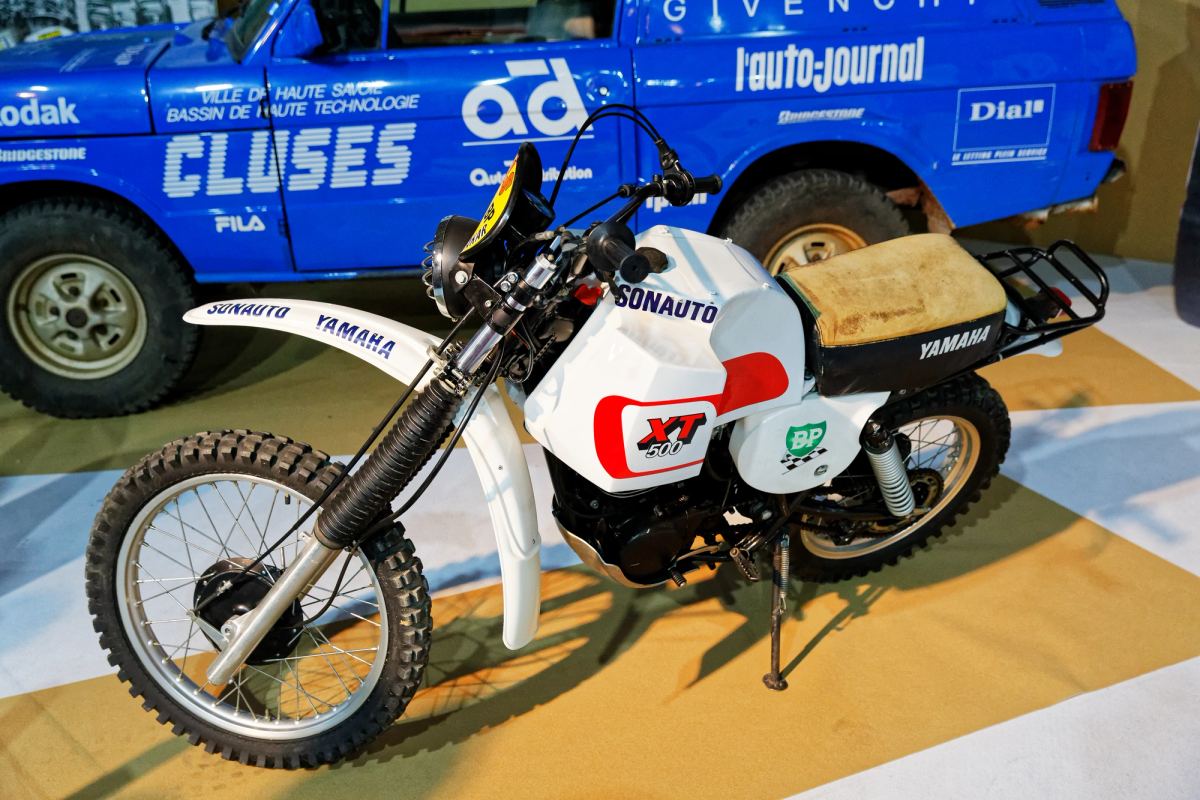
A Sonauto-liveried Yamaha XT500 rally bike, shown at the 2018 Paris Motor Show.. Photo: Thesupermat / Wikimedia Commons (CC BY-SA 4.0)
Dakar 1979 ended on the shore of the Lac Rose, outside the Senegalese capital, on 14 January. The first rider home overall was Cyril Neveu, 22 years old, on a Yamaha XT500: a 500cc single-cylinder trail bike you could buy from a French dealer.
Behind him, in the same results table, sat Range Rovers, Toyotas, a Renault 4 and a six-wheeled Pinzgauer truck. The first Paris–Dakar Rally ranked every vehicle together, and Neveu had beaten all of them.
Few people had picked him. Neveu was a small man on a tall, awkward-to-start single, and his support crew was his father, who was waiting at every overnight stop. What he did have was the knack of almost never falling off. Over almost three weeks, that turned out to be worth more than speed.
The top three were all motorcycles: Neveu, Gilles Comte on another XT500 and Philippe Vassard on a 250cc Honda. The best car, Alain Génestier's Range Rover, finished fourth.
Dakar 1979: what the first Paris–Dakar actually was
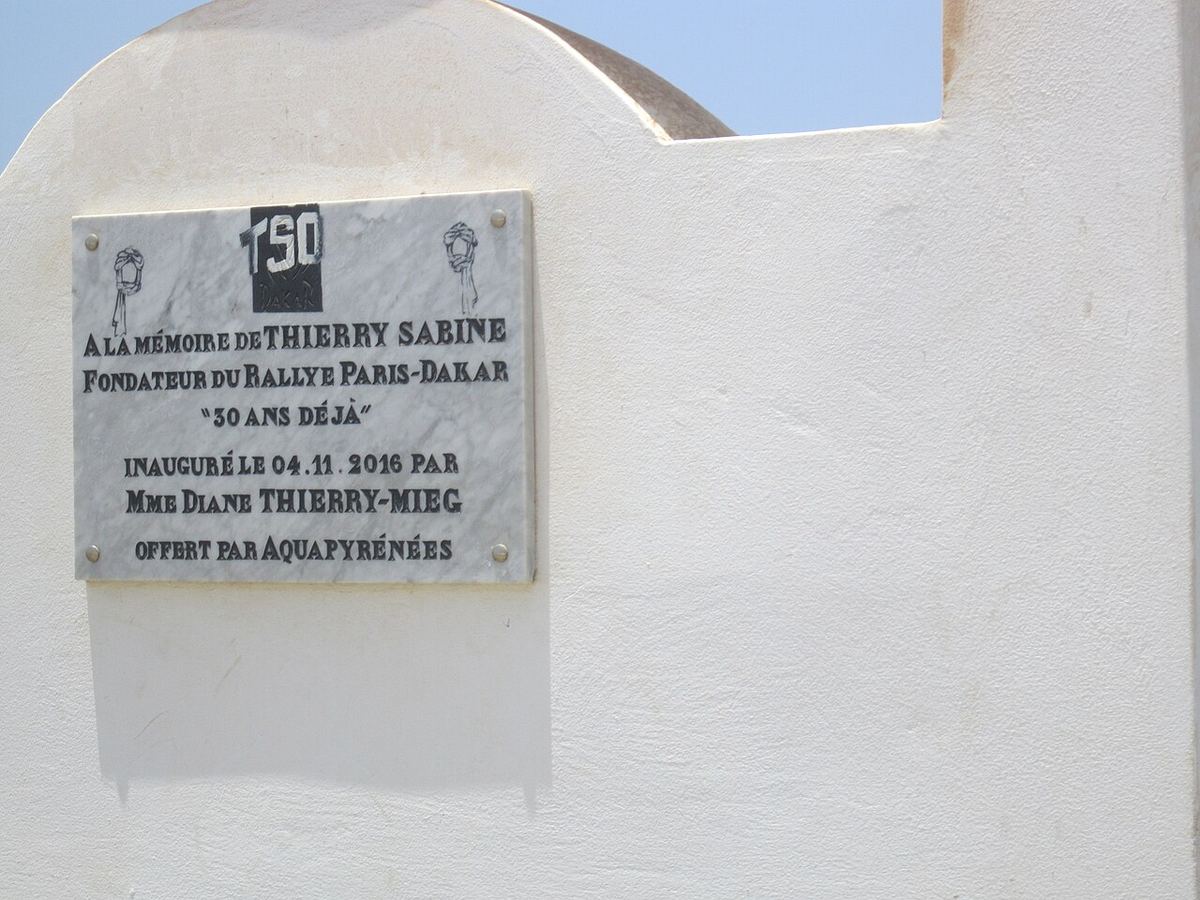
The 1979 Paris–Dakar Rally was the idea of Thierry Sabine, a French racer who got lost on a Yamaha XT500 during the 1977 Abidjan–Nice rally and spent three days in the Sahara before the pilot Jean-Michel Sinet spotted him. Accounts place him in the Libyan desert or on the edge of the Ténéré; the Ténéré is the version the Dakar's organisers tell today. He came home wanting to take other people to that desert.
The start was at the Place du Trocadéro in Paris on 26 December 1978. Competitors drove to Marseille, took the ferry to Algiers and crossed Algeria, Niger, Mali and Upper Volta (now Burkina Faso) to Senegal: about 10,000 km. The usual count is 182 starters, 90 of them on motorcycles, 80 in cars and 12 in trucks, although some retellings give 170.
The scoring was simple and brutal. Each timed section, called a special, came with an allotted time, and every minute over it cost one penalty point. Lowest total won. There was no separate bike or car classification: everyone raced for the same result.
The Sonauto team and the wrong track out of Assamaka
Sonauto, the French Yamaha importer, arrived as the closest thing the rally had to a works team. Jean-Claude Olivier, who would later run Yamaha Motor France, rode with Gilles Comte, Christian Rayer and Rudy Potisek, a late replacement for Serge Bacou after the French federation suspended him days before the start.
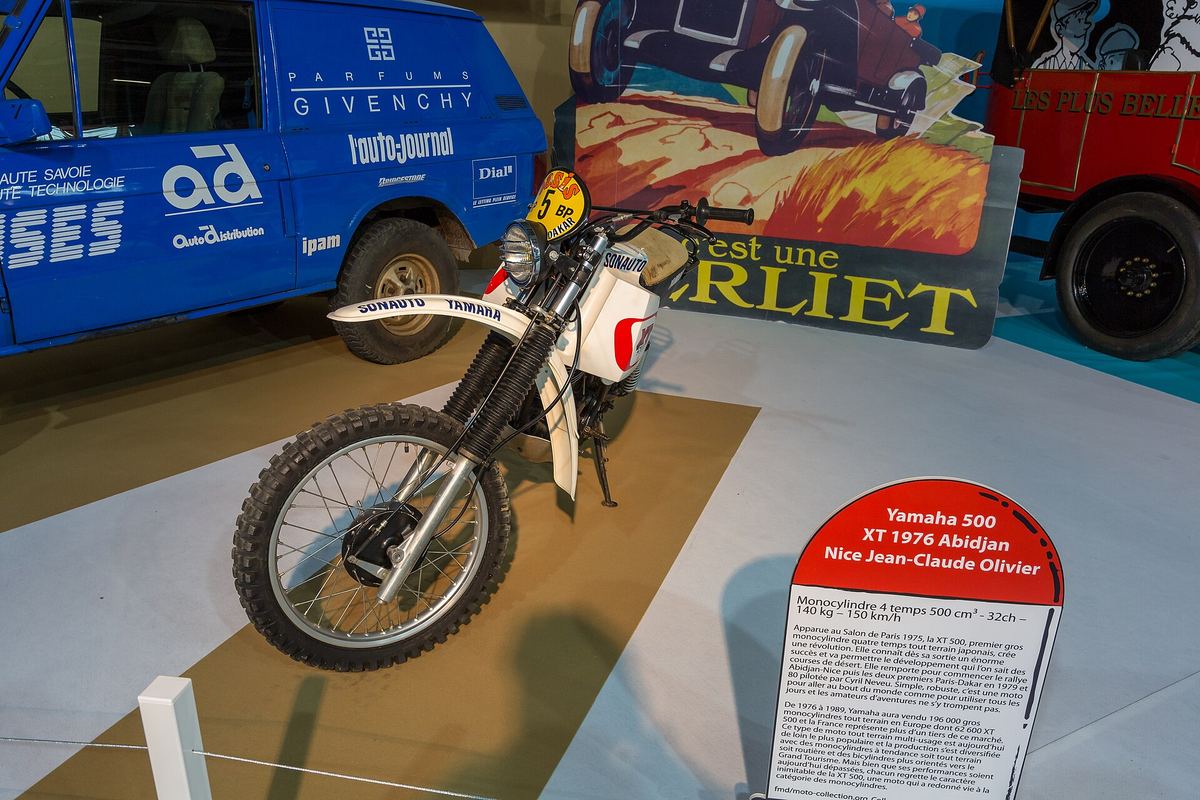
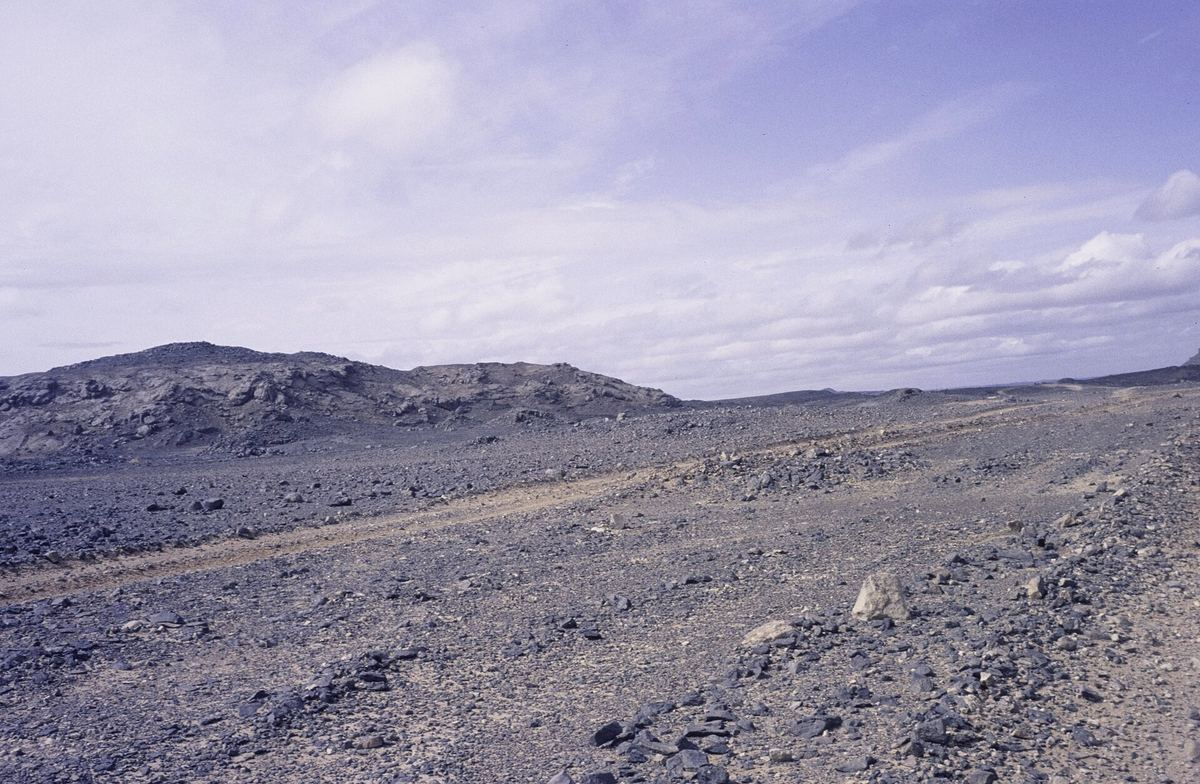
On the section from In Guezzam into Niger, several favourites took the wrong track out of Assamaka and rode flat out for close to 250 km before they noticed. Potisek, Olivier and Rayer each collected seven hours of penalties. Within days Potisek had broken a leg in the rocks before Agadez, and Olivier had broken his radius while overtaking, finished the special at around 60 km/h, won it, and retired.
Patrick Schaal, on an XT500 for the Moto Verte team, was the man who profited. By the rest day at Gao he led the rally, with Neveu and Jean-Claude Morellet, who raced as "Fenouil" on a BMW, close behind.
The rally had already claimed its first life. Patrice Dodin, a French rider on an XT500, fell at Agadez on his way to the start of the stage to Tahoua and later died of his injuries.
From Gao to the Lac Rose: Neveu takes the lead
The longest special, 600 km from Gao to Mopti, decided the motorcycle race. After a fuel stop, Schaal fell while putting his goggles back on and broke his little finger. He stopped there, and Neveu inherited a lead he never gave back.
The special from Bamako to Nioro du Sahel was so rough that the time allowance was extended. Only Philippe Vassard, on his Honda 250, had made it inside the original time; everyone else took seven hours of penalties, and Vassard climbed the order.
The final days thinned the field again. Fenouil broke a connecting rod in his BMW on the long special to Saint-Louis, a day from the finish. Hubert Auriol, then third and Neveu's teammate, blew his XT500's engine. According to Caradisiac's stage-by-stage reconstruction, he carried on with a spare engine from the Neveu camp and dropped to 12th. Other accounts say it was Neveu's own bike that needed the engine change before the last push. Auriol would later win the Dakar twice on a BMW.
Neveu finished first, Comte second and Vassard third. Most accounts say he won without taking a single stage, although Caradisiac's reconstruction has him fastest between Agadez and Tahoua. Either way, he was the one still in one piece at the end.
What it took to finish on a Yamaha XT500
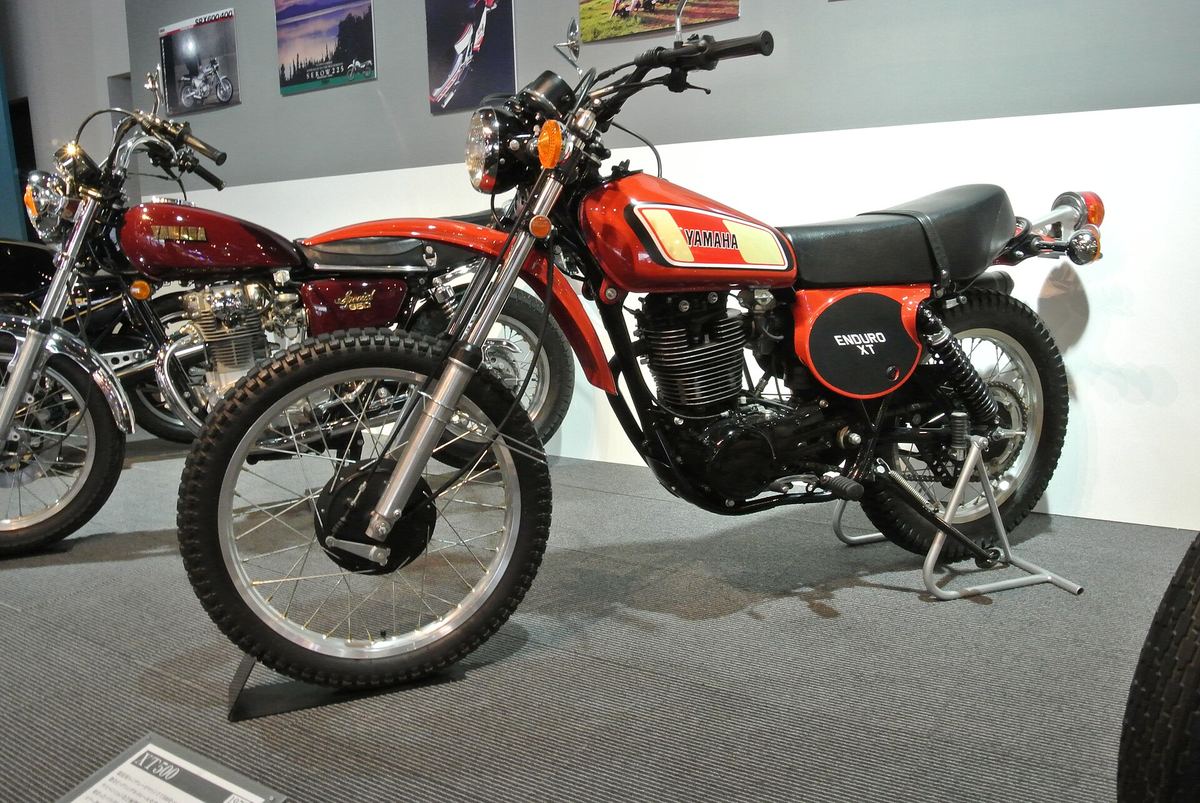
The Yamaha XT500 was the bike of the field: 38 of the 90 motorcycles that left Paris, by most counts. Yamaha put it on sale in 1976 as a road-legal trail bike derived from its TT500 competition machine. It had an air-cooled, 499cc, two-valve single-cylinder engine rated at 30 PS at 5,800 rpm, and weighed 139 kg as sold. A big single like this one makes its pull low in the rev range, which is exactly what you want in sand.
Support was the real dividing line. Sonauto had a light aircraft, a Piper Aztec, to shadow its riders, and Honda chartered a DC-3 for its customers' spares. Neveu had his dad.
The XT500 was also hard to kick-start for anyone short in the leg. Neveu's trick, recalled by the Dakar d'Antan archive, was to swing a leg over, fire it up first time and ride off in the same movement.
Others had less luck. All five Moto Guzzi TT500s ran dry on the first special; only Bernard Rigoni's reached Dakar. Grégoire Verhaeghe rode into one bivouac at night, without lights, sitting on the tank of a tired Honda 125 whose rear frame had broken in four places, held together with spoke keys pushed into the tubes. He finished 65th.
Of the 90 motorcycles, 34 reached Dakar, as the full classification shows. Three of those finishers were women: Martine de Cortanze (19th), Marie Ertaud (34th) and Pascale Geurie (45th).
Why the first Dakar still matters
The 1979 Paris–Dakar is the only edition with a single classification for every vehicle, so it is the only one a motorcycle won outright. From 1981, according to Yamaha, the rally was sanctioned by the FIA and FIM, and the factories moved in with purpose-built machines.
Neveu stayed. He won again in 1980 on an XT500, then in 1982, 1986 and 1987 with Honda. Five motorcycle wins stood as the record until Stéphane Peterhansel matched it in 1997 and beat it in 1998.
Then the footnote. Thierry Sabine's own XT500, the one he lost in the desert in 1977, came back out of the desert in 1986, the same year Sabine died in a helicopter crash during the rally. Its plaque at Rétromobile in Paris in 2024 says the desert returned the bike and took the man. According to the Italian magazine inSella, his father, Gilbert, gave it to that year's winner: Cyril Neveu. In November 2025 both machines, Sabine's XT500 and Neveu's 1979 winner, stood together at the Desert Queens exhibition at EICMA in Milan.
Two singles under one roof: the one that got lost, and the one that found the way.
Quick answers
Who won the first Dakar Rally in 1979?
Cyril Neveu of France won the first Paris–Dakar Rally, which finished on 14 January 1979, riding a Yamaha XT500. Because every vehicle shared one classification that year, he was also the overall winner, ahead of Gilles Comte (Yamaha) and Philippe Vassard (Honda). The best car, a Range Rover, finished fourth.
What motorcycle won the first Paris–Dakar Rally?
A Yamaha XT500 won the first Paris–Dakar Rally in 1979. The XT500 was a road-legal 499cc single-cylinder trail bike that Yamaha put on sale in 1976, rated at 30 PS. Cyril Neveu won on one in 1979 and again in 1980, and XT500s finished first and second in 1979.
How many vehicles started and finished the 1979 Dakar Rally?
The 1979 Paris–Dakar Rally is usually counted at 182 starters: 90 motorcycles, 80 cars and 12 trucks, although some retellings give 170. Only 74 vehicles reached Dakar, including 34 of the 90 motorcycles.
When and where did the first Dakar Rally start?
The first Dakar Rally started at the Place du Trocadéro in Paris on 26 December 1978 and finished in Dakar, Senegal, on 14 January 1979, which is why it is called the 1979 edition. The route crossed Algeria, Niger, Mali and Upper Volta, covering about 10,000 km.