Indian Scout: the 1920 V-twin you couldn't wear out, from the Wall of Death to Burt Munro's record
The Indian Scout of 1920 was smaller and lighter than Indian's big twins, and built to last. It saved its maker, became the Wall of Death favourite and still holds a land speed record.
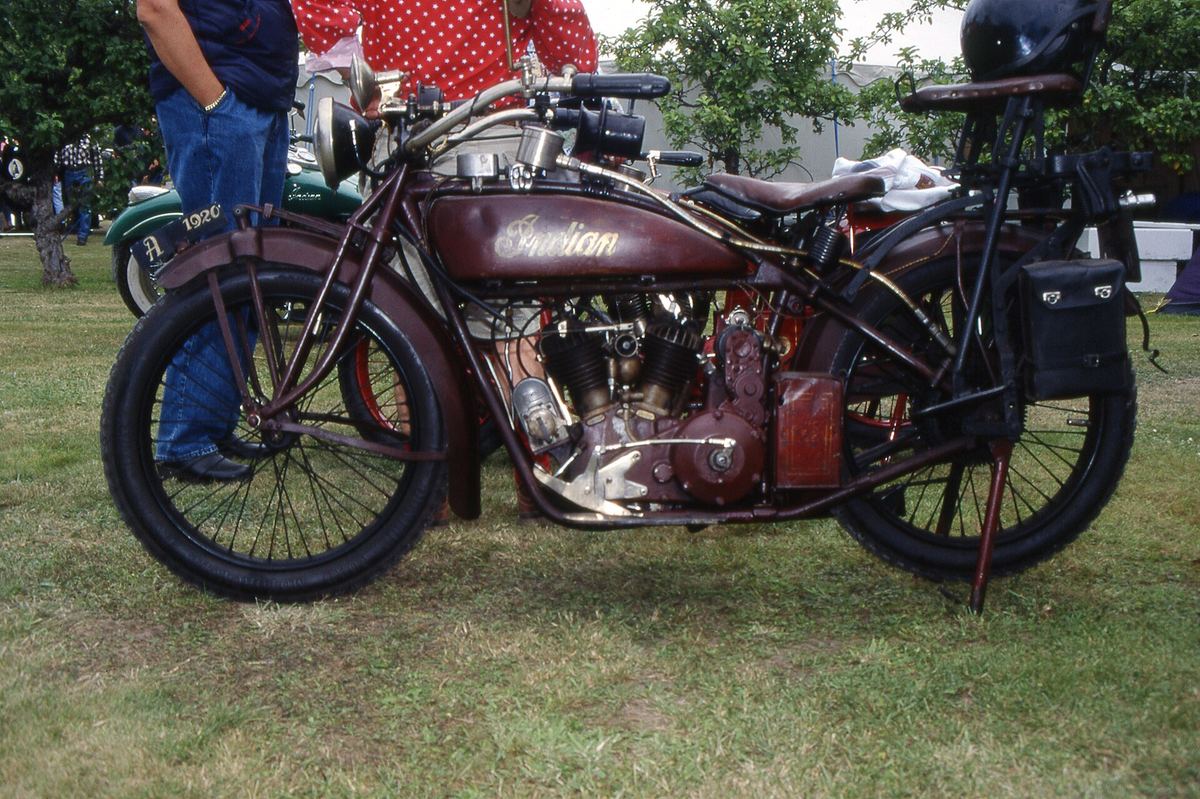
A 1920 Indian Scout, the first year of the model, at an Indian owners' rally at Traquair House, Scotland.. Photo: Qflieger / Wikimedia Commons, CC BY-SA 3.0
Burt Munro was 21 when he bought a new Indian Scout in 1920. It was the 627th Scout built, Indian says, and as delivered it had a top speed of about 55mph. In 1926 the young New Zealander started to modify it.
Forty-one years later, at the Bonneville Salt Flats in Utah, the same machine set a world record for motorcycles under 1,000cc. That record still stands.
Munro's story is the most famous one attached to the Indian Scout, but it is not the only one. Charles Franklin's middleweight V-twin rescued Indian in the early 1920s, outsold its Harley-Davidson rival and became the bike that carnival riders took round the Wall of Death. Its 101 version of 1928 is often called the best motorcycle Indian ever built.
Why Indian built the Scout
Indian needed a new direction after the First World War. Wartime contracts had brought in money, but military supply came at the expense of the civilian market, Old Bike Australasia explains, and many dealers had moved to Harley-Davidson. The big Powerplus twins were tired, and car ownership was growing fast.
The man who solved the problem was Charles Franklin, an Irish racer and former Indian dealer who joined the company's design department in November 1916. His first attempt, the Light Twin, was slow and unexciting and was dropped after two years. The second had to be considerably lighter than the Powerplus, less bulky, more manoeuvrable and easier to maintain.
Indian's accountants also wanted fewer parts, which favoured side valves over the overhead valves of the racing engines. That suited Franklin. He had discovered the "squish" principle in 1914 while working on an Indian engine, Silodrome notes, and Kevin Cameron writes in Cycle World that he understood the value of big valves and free-flowing ports in getting the most from a side-valve layout.
A prototype ran during 1919. Indian showed the Scout to the public at the National Motorcycle Show in Chicago, held from 18 to 21 November 1919, as a 1920 model, the G-20. The first bikes reached dealers before Christmas. Indian's advertising called the Scout the most remarkable engineering achievement in the history of the motorcycle industry, and buyers soon agreed.
What made the Indian Scout different
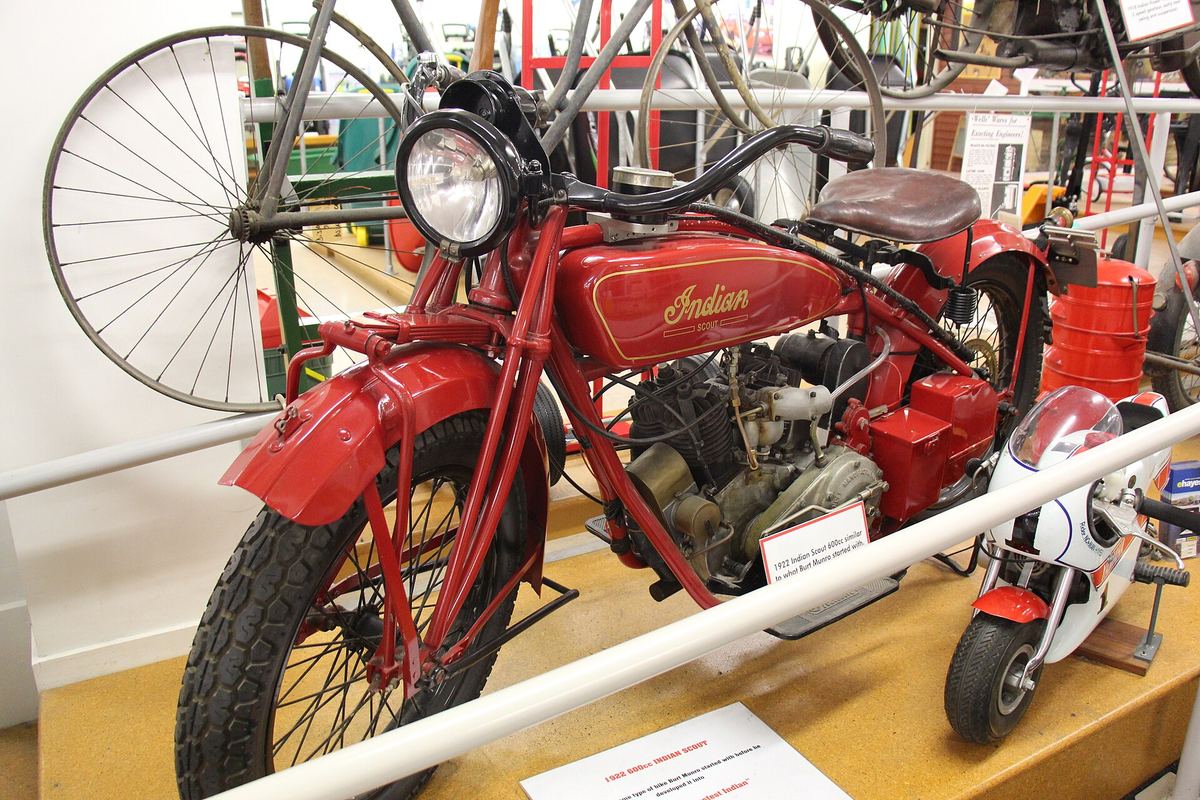
The Indian Scout had a 596cc side-valve V-twin with its cylinders set at 42 degrees and a bore and stroke of 2¾ x 3 1/16 inches. It drove through a three-speed gearbox, and the National Motorcycle Museum in Iowa lists 18hp for a 1926 example of the 37 cubic inch engine.
The big idea was the primary drive. Franklin bolted the gearbox to the engine and joined them with helical gears instead of a chain. No other American V-twin used the system, Wikipedia notes. The gears ran in an oil bath, needed no adjustment and were so strong that, as Motorcycle Classics puts it, they would outlast the motorcycle.
The semi-unit engine was held in the frame at three points, which made it quick to remove and created a stiff structure that resisted twisting. A double-loop cradle frame ran two tubes from the steering head down each side of the engine to the rear axle, and a leaf-sprung trailing-link fork took care of the front.
Indian sold the result on toughness. "You can't wear out an Indian Scout," its advertising claimed.
The Scout grew with time. Detachable cylinder heads arrived for 1925, and in January 1927 Indian launched a 45 cubic inch, or 750cc, version called the Police Special, with a claimed top speed of over 80mph.
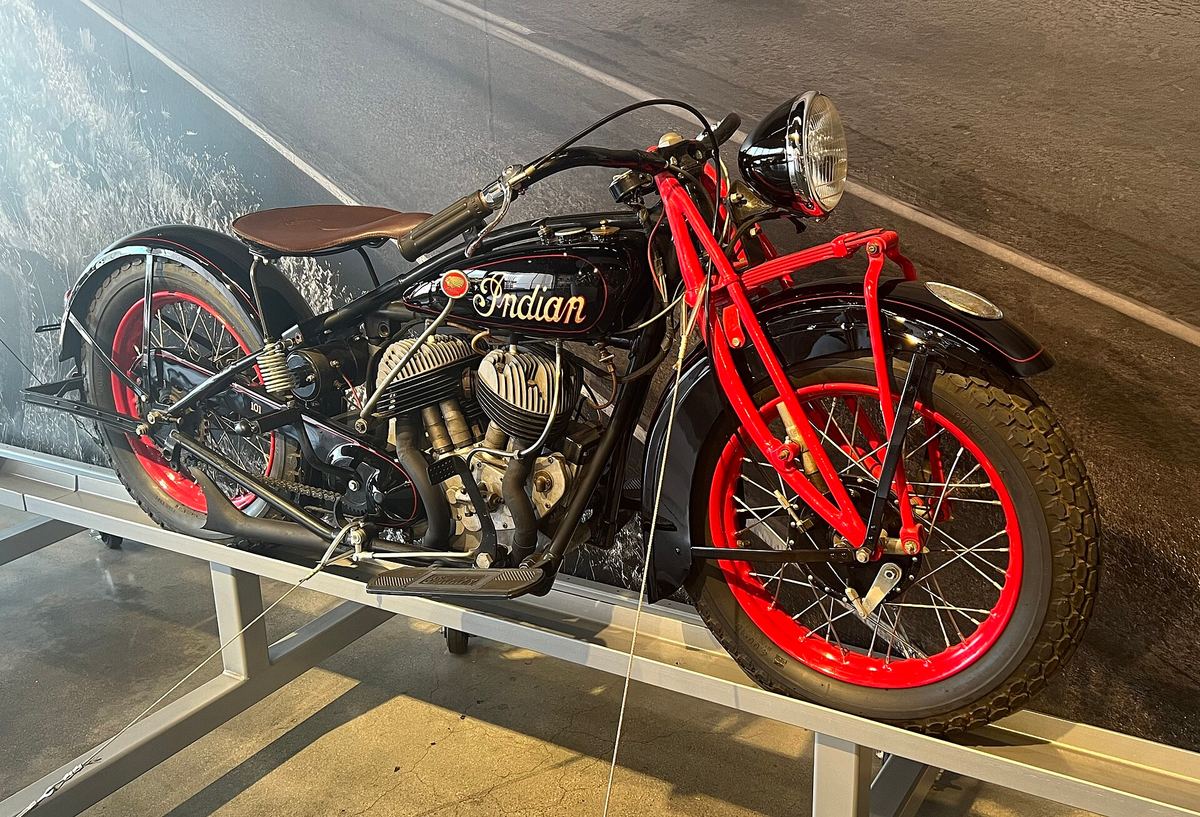
In mid-1928 Franklin redesigned it as the 101 Scout. It had more fork rake, a wheelbase about three inches longer and a seat only 26¼ inches from the ground. It was also the first standard Indian with a front brake.
On the road
The Indian Scout was built for ordinary riders, and that was where it made its money. Until then, Harley-Davidson and Indian had concentrated on 1,000cc twins and small singles. With the Scout, the National Motorcycle Museum in Iowa notes, Indian turned its attention to a middleweight, and the new machine served police departments and the military well.
It was also easy to live with. With no primary chain to adjust, the Scout removed one of the messiest and most annoying jobs for the home mechanic, Old Bike Australasia says. The engine and gearbox came out of the frame as one unit, held at only three points.
Owners found it fast enough. The Slovenian motorcycle museum Muzej Motociklov puts the first Scout's top speed at about 60mph, quick enough for the roads of the day. When the 45 cubic inch version arrived, police forces that already liked the smaller Scout took to it, the Iowa museum says, and sport riders were satisfied too.
The 101 made it better still. The Iowa museum calls it the Scout at the peak of its performance, combining power, light weight, a low seat and easy handling. Its stable, comfortable ride and durability are what set it apart, eBay Motors' history of the model argues. Even today, the museum adds, 45 cubic inch Scouts, especially the 101, are highly sought after by vintage racers and collectors.
In competition
The Scout was an immediate success in the showroom and on the track. It demolished its direct rival, Harley-Davidson's 600cc Sport, which Harley dropped from its range in 1923, Old Bike Australasia says. At first Indian could not build Scouts fast enough. Harley did not have a real answer until its 750cc Model D of 1928.
The Scout proved its toughness in public. In Australia, Harold "Ranji" Parsons rode one 1,114.25 miles in 24 hours on a triangular course between Maffra and Sale in Victoria, averaging more than 50mph. That beat the 1916 record set by Erwin "Cannonball" Baker on a Powerplus by 250 miles. Hillclimbers, including Indian factory rider Orie Steele, also won on Scouts, Motorcycle Classics notes.
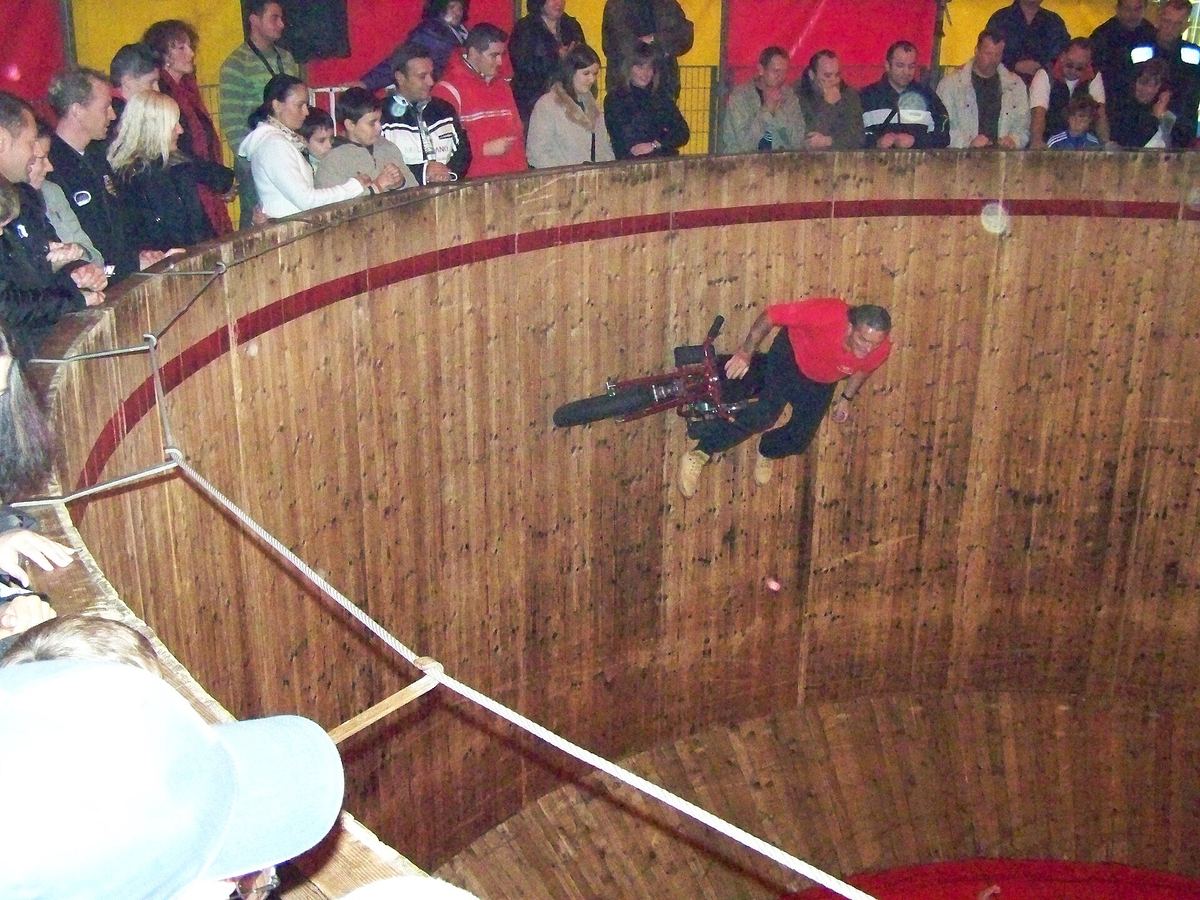
The 101 took the Scout's reputation further. Its low centre of gravity and near-even weight distribution made it ideal for hillclimbs and the Wall of Death, RM Sotheby's notes, and racers, hillclimbers and trick riders all favoured it. The 101 is still used in Wall of Death shows today. Later Sport Scouts kept winning: a specially tuned one won the first Daytona 200 in 1937, and Floyd Emde won the race again on a postwar 648 Sport Scout in 1948.
The Indian Scout today
The original Scout did not survive the Depression. Charles Franklin died on 19 October 1932, aged 52. That same year Indian, by then owned by the DuPont family, replaced the 101 with a Standard Scout built on the heavier Chief frame to cut costs. It was less successful, and enthusiasts still argue about the decision. Civilian Scout production ended in 1942, although Indian built more than 30,000 military 741B models during the war.
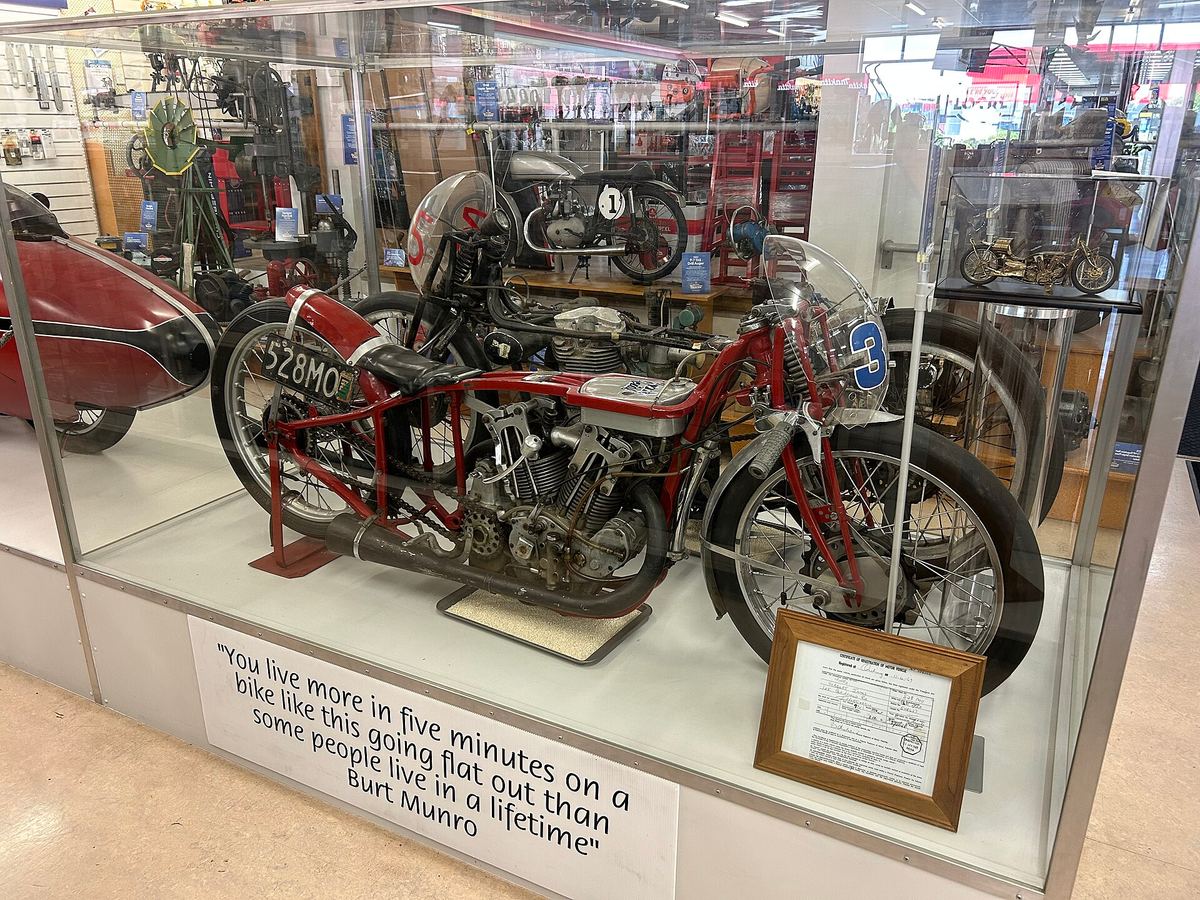
Munro kept his Scout for the rest of his life. He converted the engine to overhead valves, enlarged it to about 950cc and ran it on methanol inside a homemade streamliner. At Bonneville he set records in 1962, 1966 and 1967. The last, on 26 August 1967, was originally timed at 183.586mph. In 2014, after his son John spotted a calculation error, it was corrected to 184.087mph. Munro was 68. His story became the 2005 film The World's Fastest Indian.
The name lives on. Polaris, which bought Indian in 2011, launched a new 1,133cc Scout for 2015, and in 2017 Munro's great-nephew Lee Munro rode a modified one at Bonneville to mark the record's 50th anniversary.
Original Scouts remain sought after, and the National Motorcycle Museum in Iowa says a good 101 can fetch as much as, or more than, a Chief. In October 2025 Bonhams sold a 1931 Indian 101 Scout for £20,125 at its Stafford sale, according to Classic.com.
Quick answers
Who designed the Indian Scout?
The Indian Scout was designed by Charles B. Franklin, an Irish racer and former Indian dealer who joined the company's design team in 1916. It was launched at the Chicago motorcycle show in November 1919 as a 1920 model. Franklin also designed the 101 Scout of 1928.
What was special about the Indian Scout's engine?
The Scout's 596cc side-valve V-twin was bolted to its gearbox and drove it through helical gears instead of a chain. No other American V-twin used this system, which needed no adjustment and was strong enough to outlast the motorcycle.
What motorcycle did Burt Munro ride?
Burt Munro rode a 1920 Indian Scout that he bought new and modified for more than 40 years. In 1967, at Bonneville, it set an under-1,000cc record now listed as 184.087mph, corrected in 2014 from 183.586mph. The record still stands.
Why is the Indian 101 Scout used on the Wall of Death?
The 101 Scout of 1928 to 1931 had a low seat, a long wheelbase, a low centre of gravity and near-even weight distribution. That made it stable and easy to control on the vertical wall, and showmen still use it today.