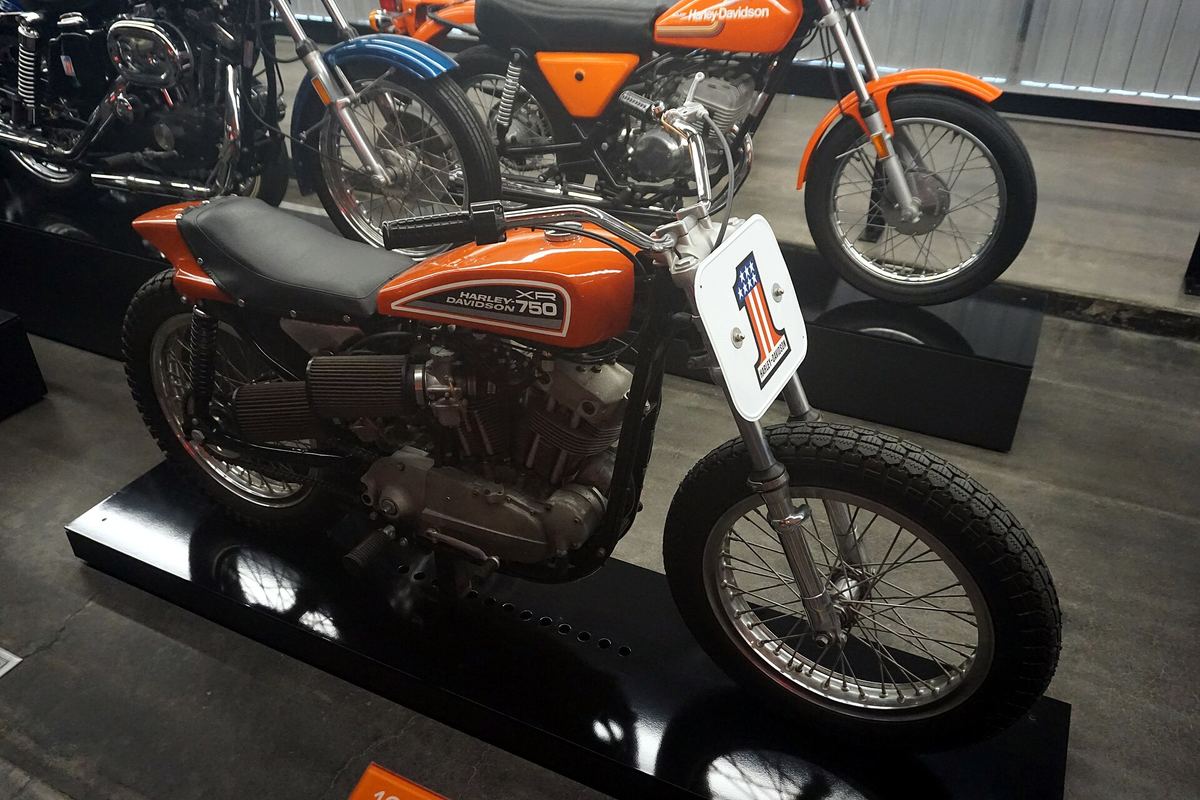
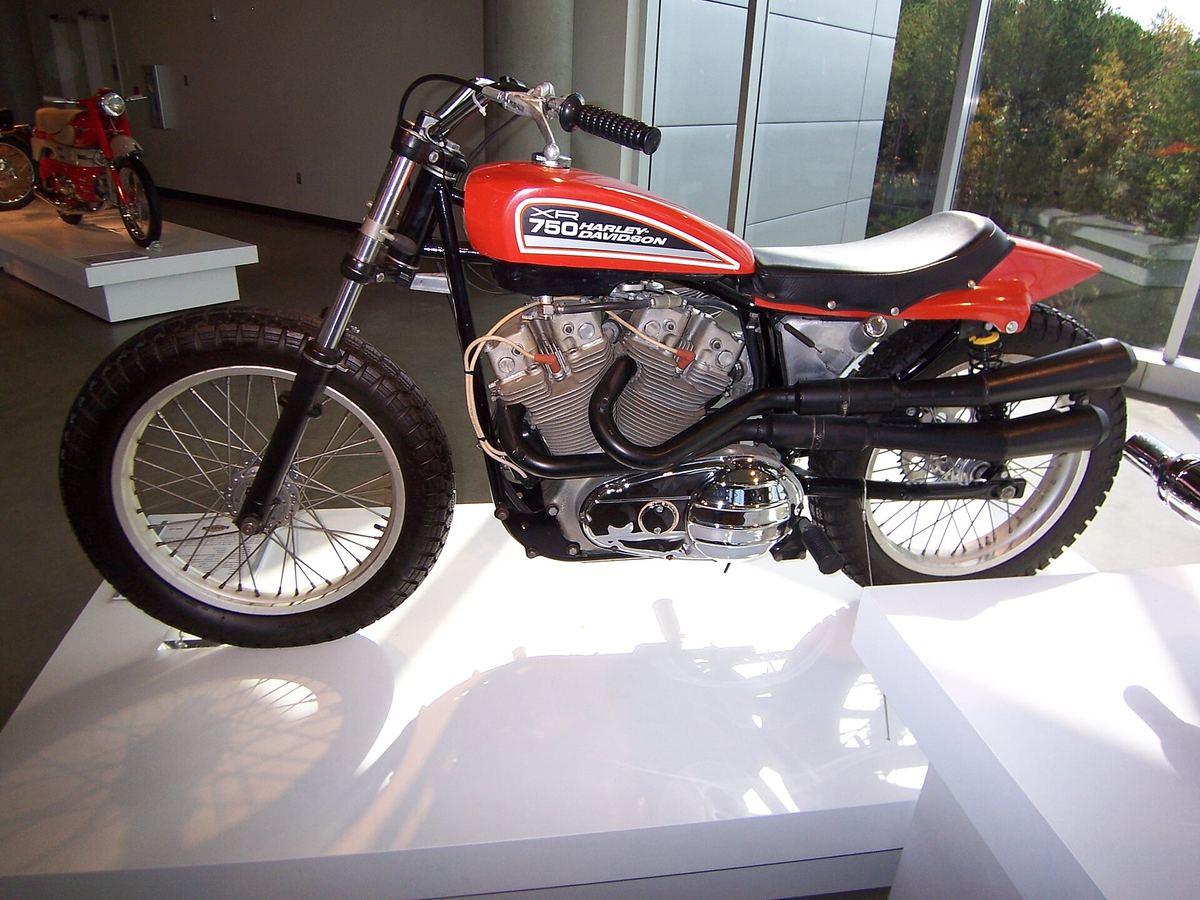
A 1975 XR750 dirt-track racer at the Harley-Davidson Museum, Milwaukee.. Photo: Michael Barera / Wikimedia Commons, CC BY-SA 4.0
Houston, 1970. In the lobby of the Astrodome, at the opening round of the AMA Grand National season, Harley-Davidson parked its new racing motorcycle: the Harley-Davidson XR750. Cycle World's Allan Girdler later described it as "as clean, functional, and attractive as any motorcycle ever made", and wrote that nobody has improved on its profile since.
The looks were right first time. The engine was not. That first XR750 had cast-iron cylinders and heads, and at the 1970 Daytona 200 every factory team bike dropped out. Girdler called the original machine "a mitigated disaster".
Two years later, Harley-Davidson tried again with an aluminium engine, and the result became the most successful racing motorcycle in American history. Between 1972 and 2008 the XR750 won 28 of 37 AMA Grand National Championships, according to Harley-Davidson, and more AMA races than any other motorcycle. Along the way, it also became the bike Evel Knievel jumped.
Why Harley-Davidson built the XR750
The Harley-Davidson XR750 was built because the rules changed. For more than 30 years, American national championship racing had matched side-valve 750cc engines against overhead-valve 500s, a formula dating from 1934 under which Harley-Davidson raced its side-valve KR. In 1968, the AMA's competition committee decided that era was over, according to Cycle World.
From 1969, four-strokes up to 750cc would race on the miles, half-miles, TTs and road courses, and 250cc singles on the short tracks, as long as they came from production bikes built in batches of at least 200. The British importers were ready with their 650cc twins. Harley-Davidson was not. It was in financial trouble, and its nearest road engine was the 883cc Sportster.
The racing department did what it could with what it had. Under race team manager Dick O'Brien, it took the Sportster-based XLR racing engine and shortened its stroke to bring it down to about 747cc, with bigger valves, magneto ignition and a single carburettor. Harley-Davidson missed the 1969 season because it had not built the 200 bikes in time. The old guard still had one surprise left: at the Nazareth mile that year, Cycle World recalls, Fred Nix beat Gary Nixon's brand-new Triumph 750 on a rigid-framed, brakeless Harley KR.
The rest of the bike was bought in. Harley-Davidson made the engines and designed the frames, but ordered frames, fibreglass tanks and seats from outside suppliers, and fitted Ceriani forks and Girling shocks, Cycle World reports. The National Motorcycle Museum credits the bodywork design to the Wixom brothers. The finished bikes were sold to racers through Harley-Davidson dealers.
What made the XR750 different
The iron XR750 overheated. Its cast-iron heads and barrels came from the road-going Sportster, and Cycle World's Girdler wrote that, tuned for racing, the engine made too much heat and too little power. About 100 iron XRs were sold, followed by factory bulletins telling owners how to cool them down by giving up power.
The iron bike had one great moment. In 1972, Cal Rayborn took a road-racing iron XR, the XRTT, to England for the Transatlantic Match Races. He won three of the six races and finished second in the other three, Cycle World reported in 1995, while his mechanic rebuilt the fragile engine between heats.
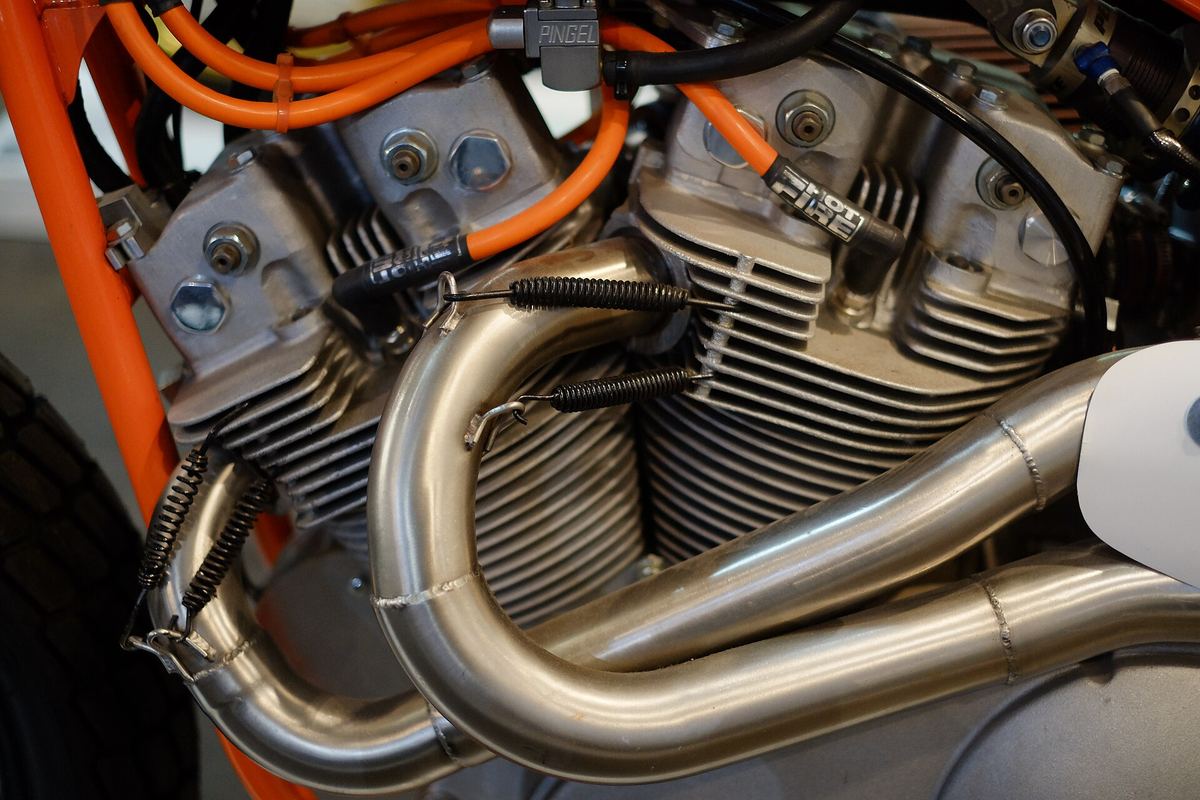
The alloy XR750 arrived early in 1972. Its cylinder heads and barrels were aluminium, which carries heat away far better than iron. The bore was wider and the stroke shorter, the flywheels were one-piece forgings, and each cylinder got its own carburettor. The camshafts stayed in the classic Harley-Davidson layout: four separate cams working the valves through pushrods.
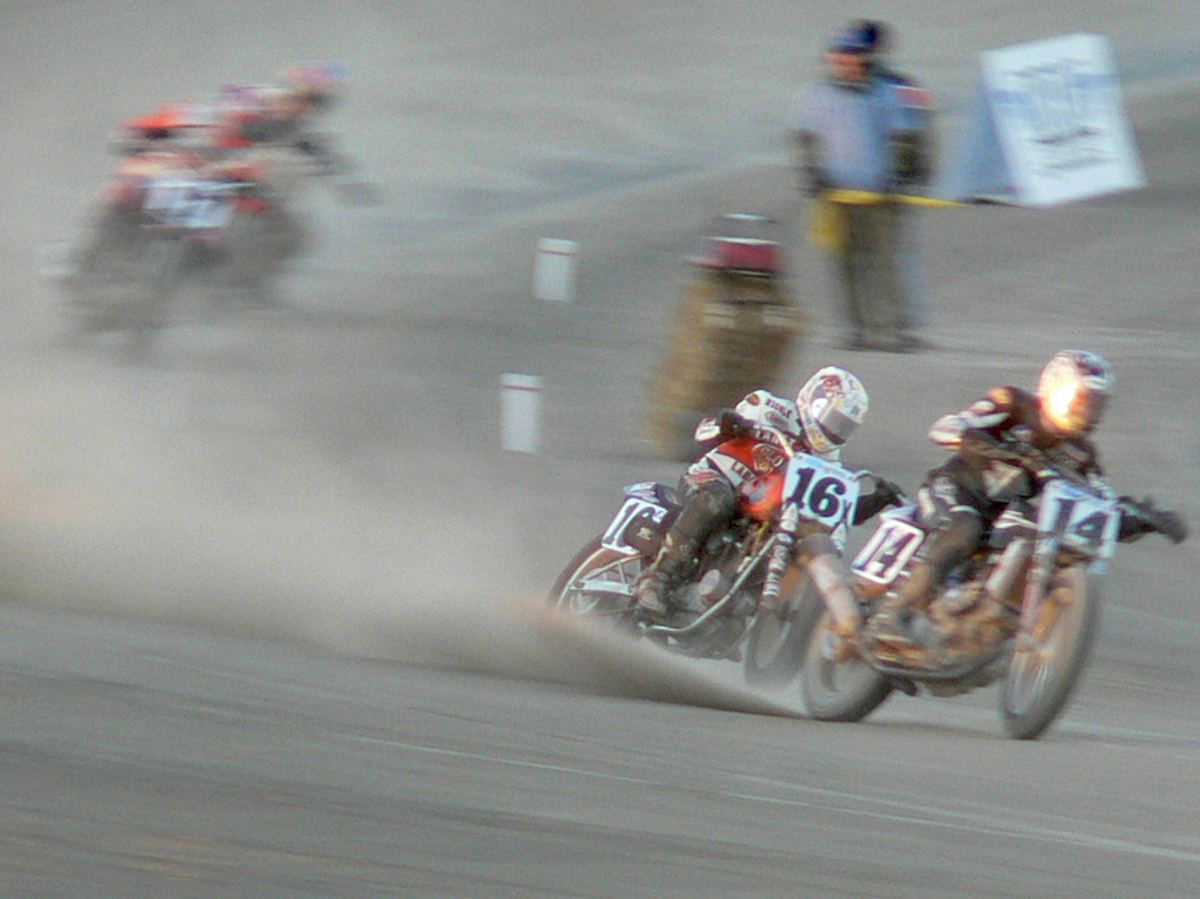
It was light and simple. The National Motorcycle Museum lists the 1972–1980 bike at 295 lb (134 kg), with a four-speed gearbox and a rear disc brake only. Dirt-track racers on ovals ran without front brakes. Motor Sport magazine describes those races as left turns only, at speeds of up to 120 mph (193 km/h).
The XR750 kept growing in small ways. According to Cycle World, power rose from 73 bhp in 1971 to 85 bhp with the 1975 batch, and over the years the engine went from magneto to electronic ignition and from one spark plug per cylinder to two. A 1970 and a 1990 XR still look like the same motorcycle.
In competition: the XR750 on the mile
The alloy Harley-Davidson XR750 won the championship in its first season. Mark Brelsford took the 1972 AMA Grand National title on one, according to Cycle World and Motor Sport. Yamaha's Kenny Roberts won the next two, in 1973 and 1974, but from 1975 the XR began a long run of titles.
Through the rest of the 1970s and the 1980s, the names became a roll call of American dirt track. Gary Scott won in 1975, and Jay Springsteen followed with three straight titles. Scott Parker won 94 Grand National races and nine national championships, records Cycle World believes are unlikely ever to be broken. Chris Carr added seven more titles on an XR. Crucially, privateers could buy the same machine: Cycle World points out that the XR was always sold through dealers, not kept for a single factory star.
Honda was the only serious challenge. It bought at least one XR750, took it apart and built its own V-twin, the RS750, with overhead camshafts and four valves per cylinder. Ricky Graham won the title on it in 1984 and Bubba Shobert in 1985. The Hondas, Graham said, "are just a better bike". Honda later quit dirt track; the XR stayed.
The bike outlived its own factory support. In 1985 Harley-Davidson, in financial trouble, closed its racing department and handed Springsteen and Parker bikes, parts and a budget to run themselves.
The XR750 and Evel Knievel
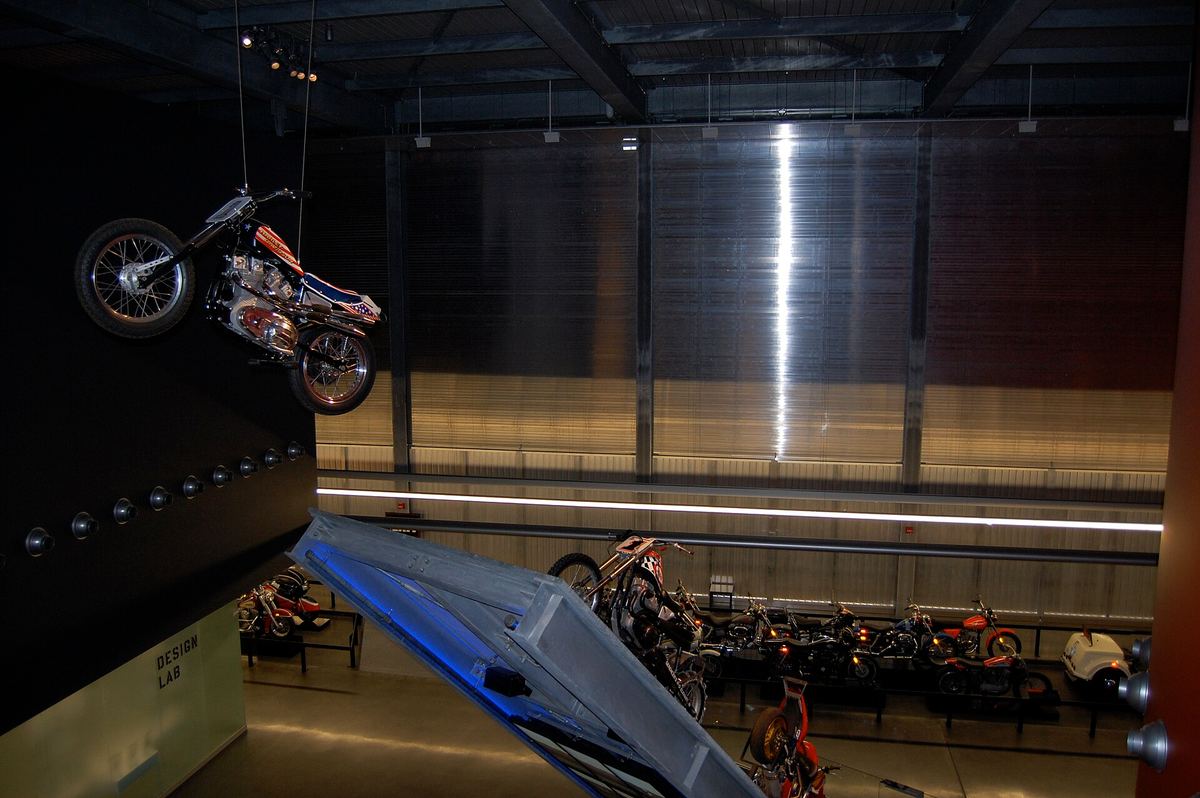
Evel Knievel jumped an XR750 from 1970 to 1976, at the height of his fame, according to Harley-Davidson, which sponsored him for most of the 1970s. The Smithsonian, whose collection includes a 1972 XR750 that Knievel rode, says he chose it because it was "a light, dependable racing machine". His take-off speeds reached 90 to 100 mph, and he flew up to 165 ft.
His longest successful jump came at Kings Island, Ohio, in 1975: 140 ft over 14 Greyhound buses, according to Motorcycle News. Earlier that year, on 26 May 1975, he tried to clear 13 buses at Wembley Stadium in London in front of about 90,000 people. He crashed on landing, broke his pelvis and his hand, and announced his retirement to the crowd, according to Wembley Stadium's own history.
Motorcycle News says Knievel owned five XR750s, and their serial numbers are all accounted for, so any other "original" is a replica.
The XR750 today
The Harley-Davidson XR750 was never really replaced; it just slowly stopped being built. Complete factory bikes ended after 1980, and the last factory-spec frame shipped in 1989, according to Cycle World. After that, racers bought engines and fitted frames from specialist builders. The XR750 made its final factory team appearance at the Indy Mile in 2016.
In 2020 Harley-Davidson marked the XR750's 50th anniversary, calling it "the winningest motorcycle in AMA Pro Racing motorcycle history", and launched its water-cooled XG750R as a successor. Cycle World noted that year that the new bike struggled against Indian's purpose-built FTR750, while the old XR remained eligible for national racing, with enough parts and expertise around to keep it running.
Collectors pay most for the race history. In January 2020, Sideburn magazine reported that Mark Brelsford's 1972 championship XR750 had sold at Mecum Auctions for $135,000.
Harley-Davidson built the XR750 to win races on dirt ovals. It did that for almost four decades, and in between it taught a generation that a motorcycle could also fly.
Quick answers
What is a Harley-Davidson XR750?
The Harley-Davidson XR750 is a 750cc V-twin racing motorcycle built for American dirt-track racing from 1970. The first version had iron cylinders; the aluminium-engined version of 1972 won 28 of 37 AMA Grand National Championships between 1972 and 2008, according to Harley-Davidson.
What motorcycle did Evel Knievel use?
Evel Knievel jumped a Harley-Davidson XR750 from 1970 to 1976, according to Harley-Davidson. Earlier he used Triumph and other machines. His longest successful jump, 140 ft over 14 buses at Kings Island in 1975, was on a 1972 XR750, according to Motorcycle News.
How many Harley-Davidson XR750s were made?
About 100 iron-engined XR750s were sold in 1970, according to Cycle World. The National Motorcycle Museum puts production of complete aluminium-engined bikes at about 530, built in batches in 1972, 1975, 1978 and 1980. After that, Harley-Davidson sold engines for racers to fit their own frames.
Why did the first Harley XR750 fail?
The first XR750 of 1970 used cast-iron cylinders and heads derived from the Sportster road bike. Tuned for racing, the engine overheated and broke down; at the 1970 Daytona 200 every factory team bike retired. The aluminium-engined XR750 replaced it in 1972.