Dieter Braun, Sachsenring 1971: the West German win East Germany tried to silence
On 11 July 1971 West German Dieter Braun won the 250cc race at the Sachsenring, in East Germany. Officials switched off the loudspeakers for his anthem. Two years later, Western riders were no longer invited.
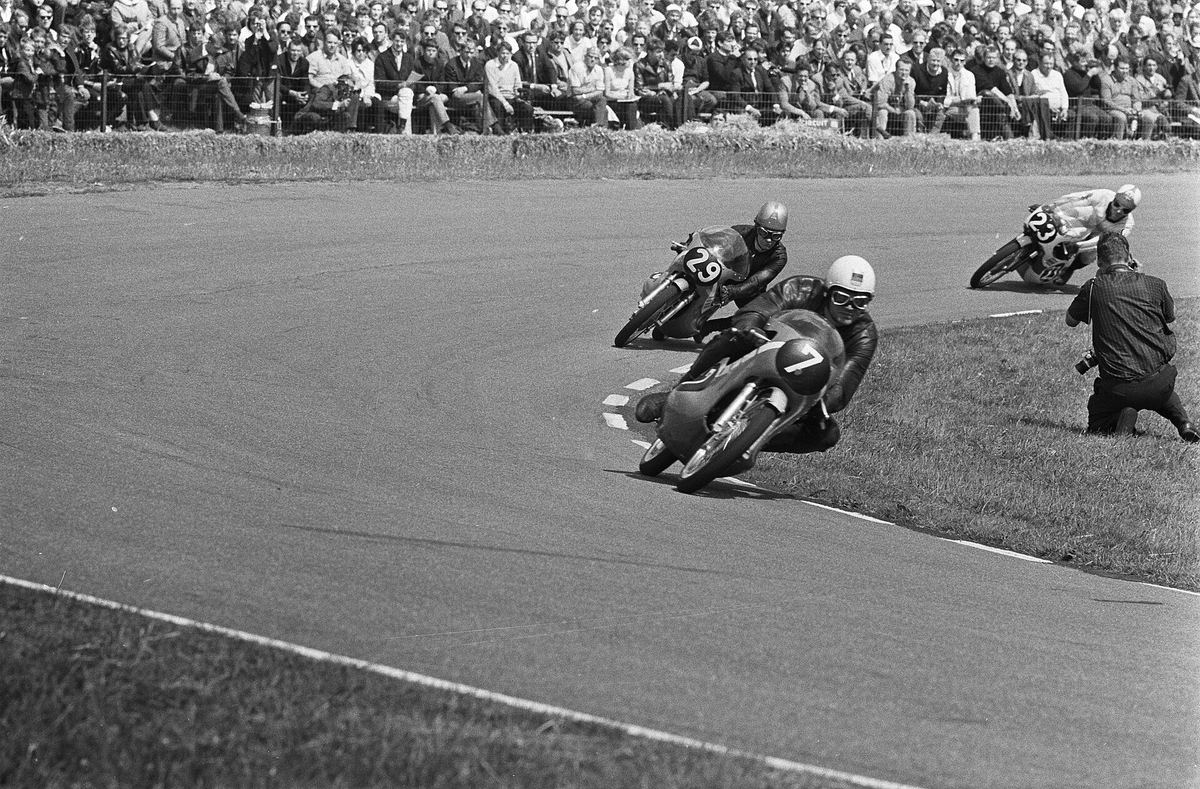
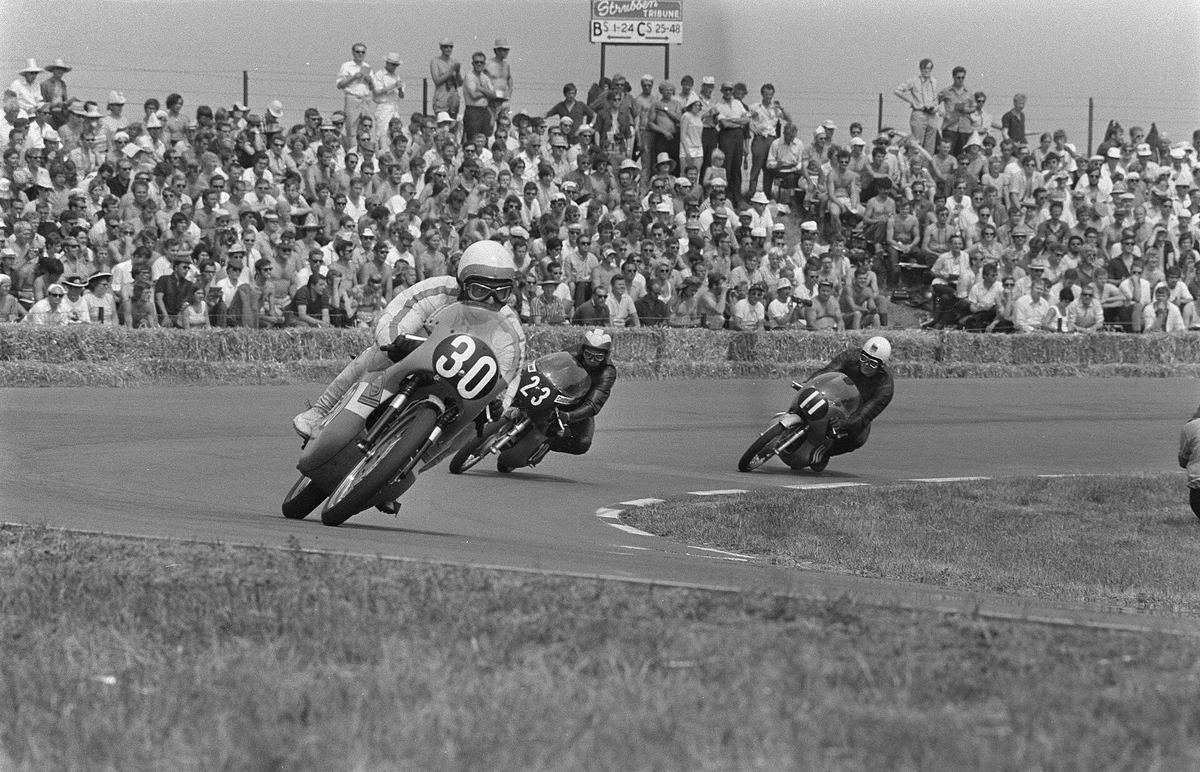
Dieter Braun (7) ahead of Cees van Dongen and Kent Andersson in the 125cc race at Assen.. Photo: Anefo / Nationaal Archief (CC0)
Ten laps into the 250cc race at the 1971 East German Grand Prix, a bright orange helmet appeared at the front of the field at the Sachsenring. It belonged to Dieter Braun, a West German on a Yamaha. According to Speedweek, the East German sports officials panicked at the thought of having to play the West German anthem. They ordered the race director, Hans Zacharias, to throw Braun out for crossing the white line at the exit of the forest section.
Zacharias refused. Braun knew nothing about it and kept riding. Along the 8.6 km of public roads around Hohenstein-Ernstthal, a crowd that Nick Harris puts at 280,000 was cheering a rider from the other side of the Iron Curtain.
Five laps later, Braun crossed the line first. The problem of the anthem had just begun.
The stakes: a West German at the East German Grand Prix
The East German Grand Prix at the Sachsenring was a round of the World Championship from 1961 to 1972. For the fans who came, the visiting riders and machines stood for independence and freedom, according to a 2026 history published by the German Federal Archives. Winners from the West were cheered loudly, which the state disliked. Stasi files held by the archives include reports on "incidents" at the race as early as 1962.
Dieter Braun arrived in July 1971 as the reigning 125cc world champion. He was born in Ulm in 1943, stood about 1.90 m tall, and had won the 1970 title on a Suzuki. In 1971 he rode Yamahas in the 250cc and 350cc classes. In the 250cc race the favourites were the British riders Phil Read and Rodney Gould.
The weekend had already brought tragedy. Günter Bartusch, an East German MZ rider, was killed in practice for the 350cc class. The races went ahead, and Ángel Nieto won both the 50cc and 125cc races on race day.
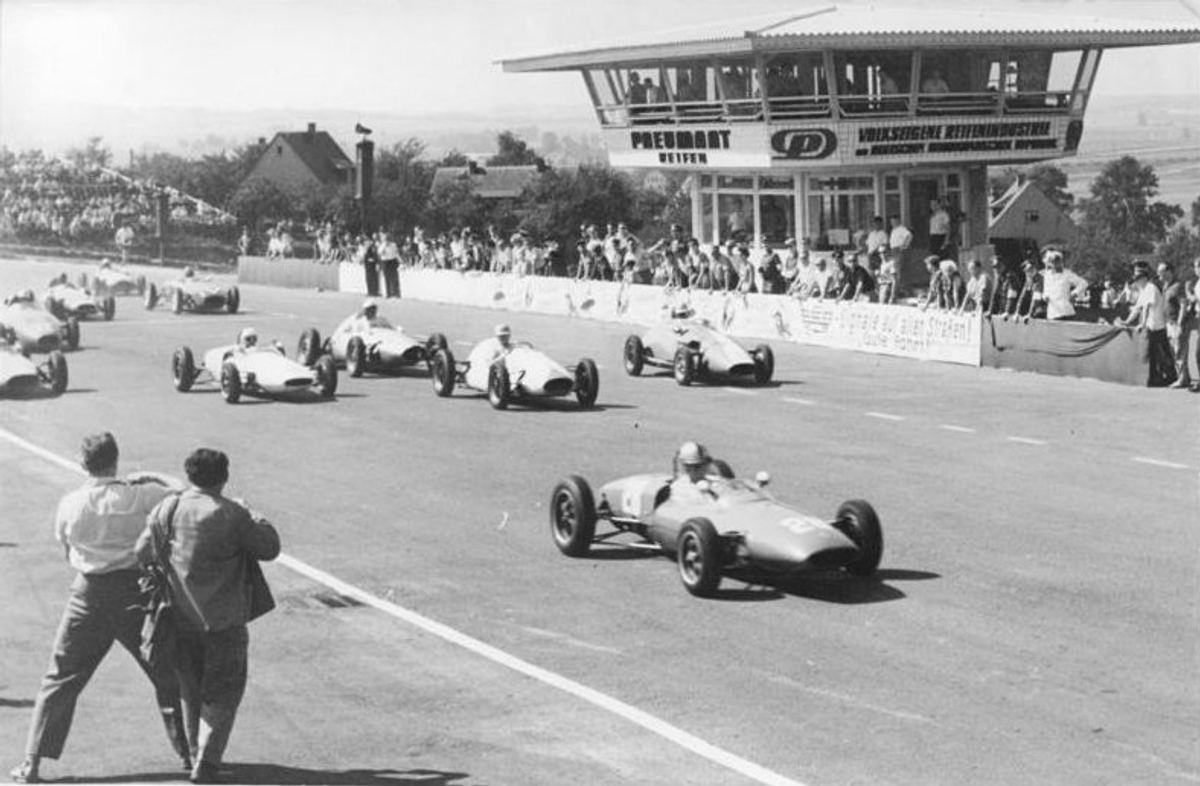
From tenth to first: the 250cc race at the Sachsenring
The 250cc race was the last event of the day: 15 laps, 129.27 km. Dieter Braun had qualified third, but at the end of the first lap he was only tenth as he climbed the Queckenberg hill.
Then he started chasing. According to Speedweek, after five laps Braun was within striking distance of Read and Gould, who had pulled clear at the start. On lap ten he led for the first time, and that was when the officials turned to Zacharias.
Read and Gould tried everything in the last five laps and found no way past. Braun won by 0.5 seconds from Gould, with Read 1.6 seconds behind.
The anthem nobody heard: what happened on the podium
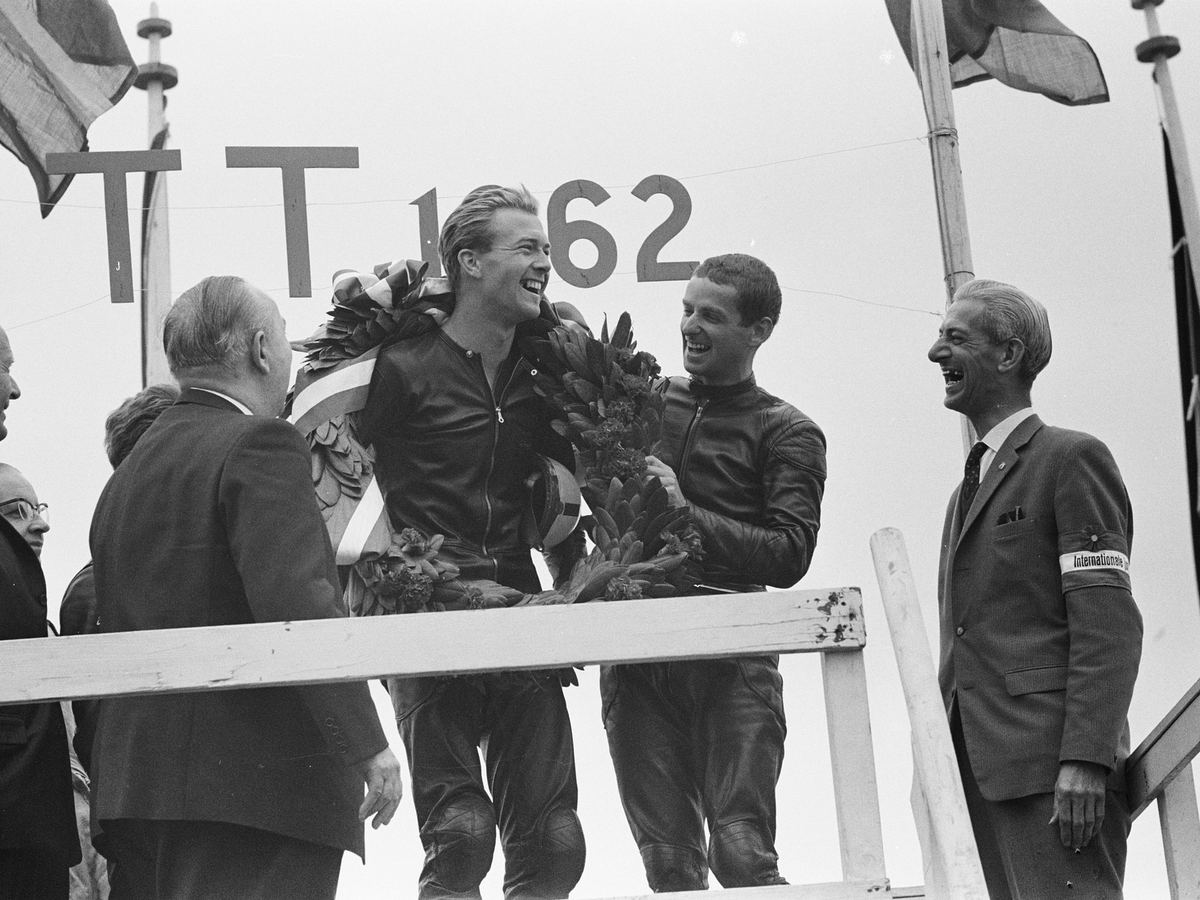
The West German anthem had to be played for Dieter Braun, because the FIM officials were present. According to Speedweek, it was played only at the start-finish area, where the podium ceremony took place. Everywhere else on the circuit the loudspeakers were switched off, and the crowd was told there was a technical fault. Nick Harris describes the same thing and adds that there were police and dogs among the spectators.
What happened next is disputed. Many accounts say that thousands of East Germans sang the West German anthem anyway. Speedweek's Thorsten Horn quotes eyewitnesses who call that a myth. Their arguments: the police presence after the finish was huge, plain-clothes agents were everywhere, and few East Germans knew the words.
Both sides agree on one thing: the race became a political issue on the same afternoon.
After the flag: the end of the East German Grand Prix
Hans Zacharias paid for his refusal: according to Speedweek, he soon lost the post he had held for years.
The East German Grand Prix ran once more as a World Championship round, in 1972. From 1973 East Germany no longer invited Western riders, according to the German Federal Archives. Many accounts connect that decision directly to Braun's win, though the official explanations from the time spoke of other reasons. Fans who wanted to see the Western stars travelled to the Grand Prix at Brno, in Czechoslovakia.
Braun went on to win the 1973 250cc world title on a Yamaha. He finished his career with two world championships and 14 Grand Prix wins, according to the summary published on his 80th birthday.
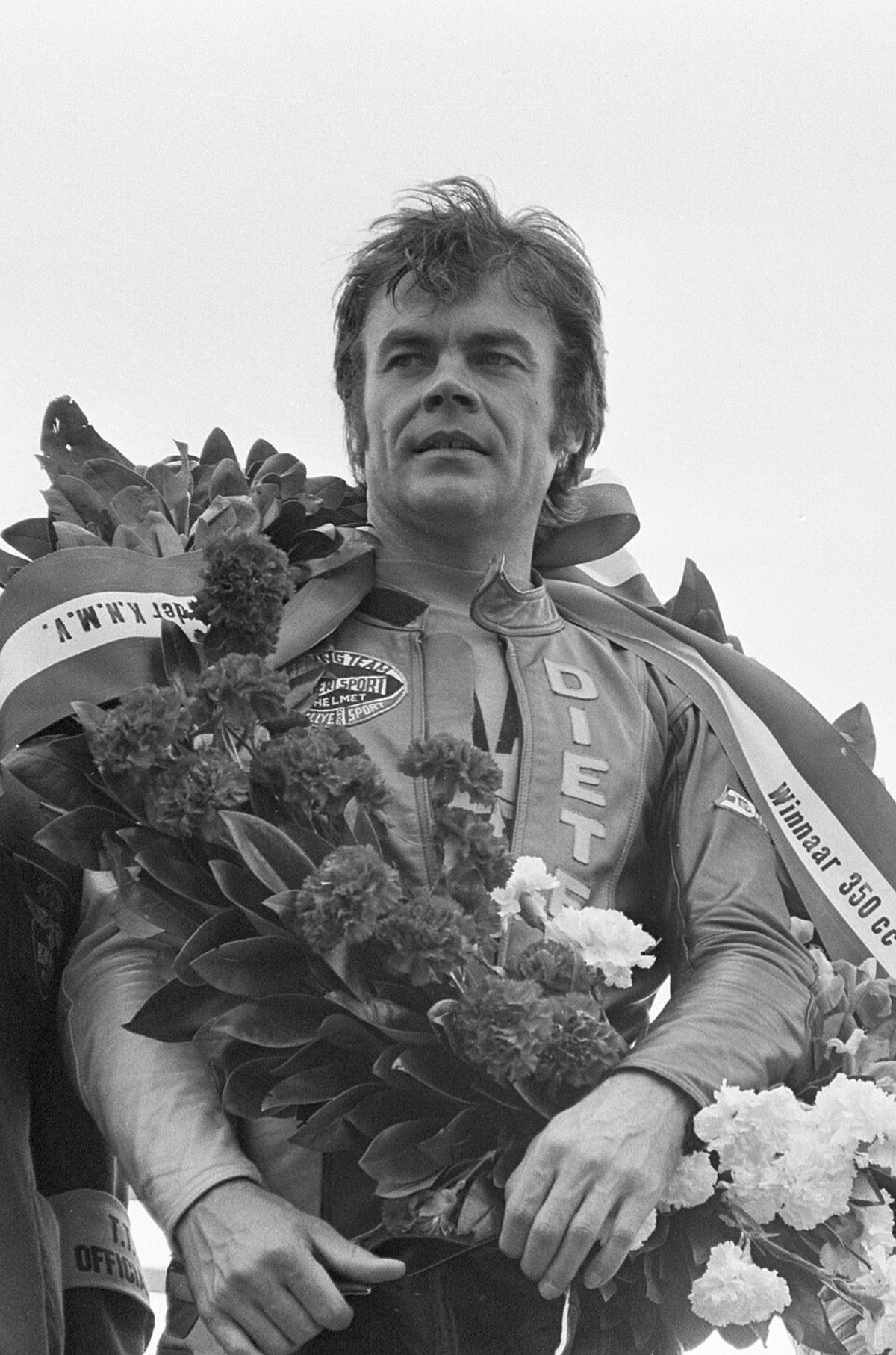
The World Championship did not return to the Sachsenring until 1998, eight years after German reunification, on a new circuit built on the site of the old one.
Why Braun's Sachsenring win still matters
Dieter Braun's 1971 win shows how seriously East Germany took a motorcycle race. Ten years earlier, Ernst Degner had defected from the East German MZ team in the middle of a title fight. In 1971 the problem was a West German on the top step.
In 2026 the German Federal Archives and the Stasi Records Archive published a book on racing and surveillance at the Sachsenring between 1961 and 1989. The race that officials tried to keep quiet is now part of the official record.
Braun still goes back. Speedweek reports that he cannot visit the Sachsenring without being asked about that afternoon. East Germany managed to switch off the loudspeakers. It never managed to switch off the story.
Quick answers
Why was Dieter Braun's 1971 Sachsenring win controversial?
Dieter Braun was a West German who won the 250cc race at the 1971 East German Grand Prix at the Sachsenring. His win meant the West German anthem had to be played in East Germany, so officials played it only at the start-finish area and switched off the loudspeakers around the rest of the circuit.
Did the crowd sing the West German anthem at the Sachsenring in 1971?
Accounts differ. Many histories say East German fans sang the West German anthem after Dieter Braun's 250cc win in 1971. Speedweek's Thorsten Horn quotes eyewitnesses who call it a myth, pointing to the heavy police presence and to how few East Germans knew the words.
Why did the East German Grand Prix leave the World Championship?
The 1972 race at the Sachsenring was the last East German round of the World Championship. From 1973 East Germany no longer invited Western riders, according to the German Federal Archives. Many accounts link the decision to Dieter Braun's 250cc win in 1971.
How many world titles did Dieter Braun win?
Two. Dieter Braun won the 1970 125cc world championship on a Suzuki and the 1973 250cc title on a Yamaha. He won 14 Grands Prix in his career, according to the summary published on his 80th birthday in 2023.