Gerrit Wolsink: the Dutch dentist who won the US motocross Grand Prix five times at Carlsbad
Gerrit Wolsink qualified as a dentist, then rode works Suzukis beside Roger De Coster. He never won a world title, but between 1974 and 1979 nobody could beat him at Carlsbad, California, except once.
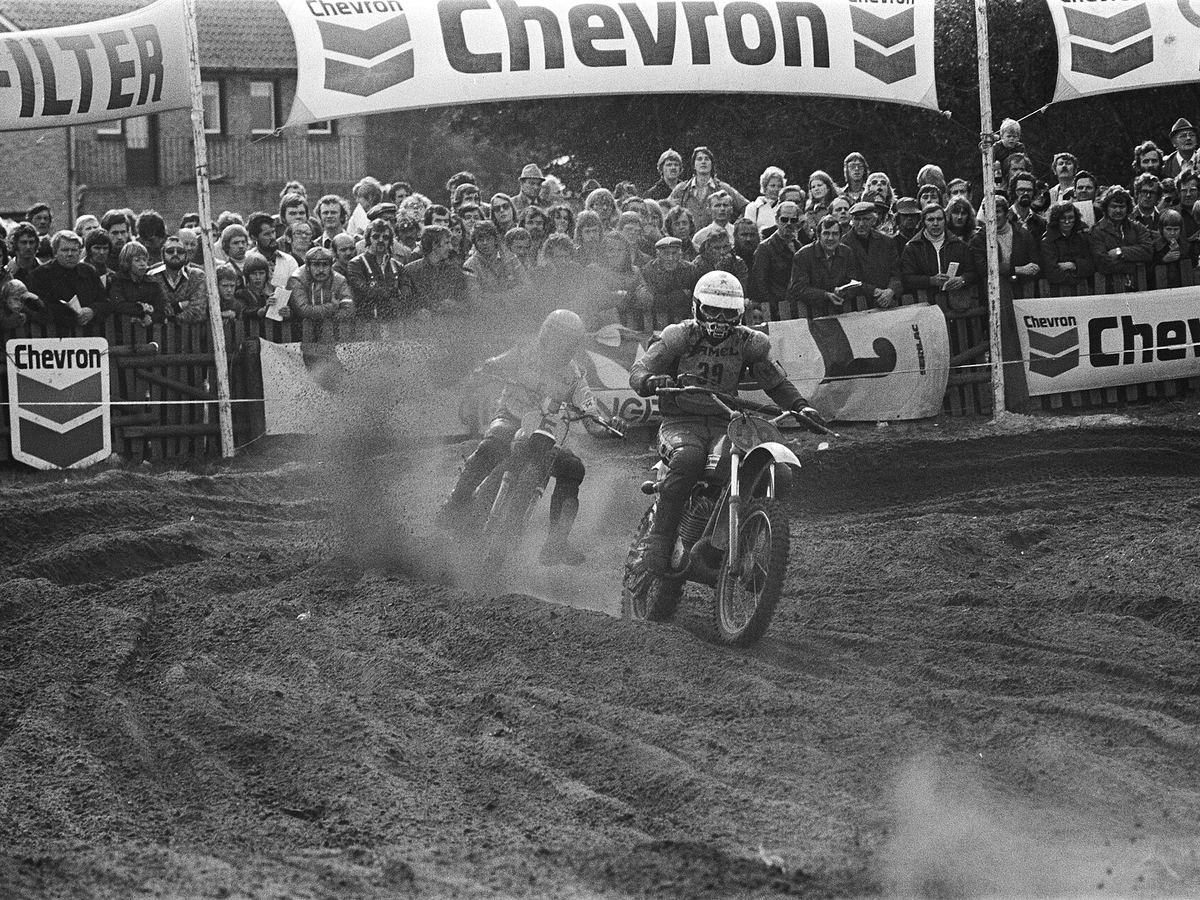
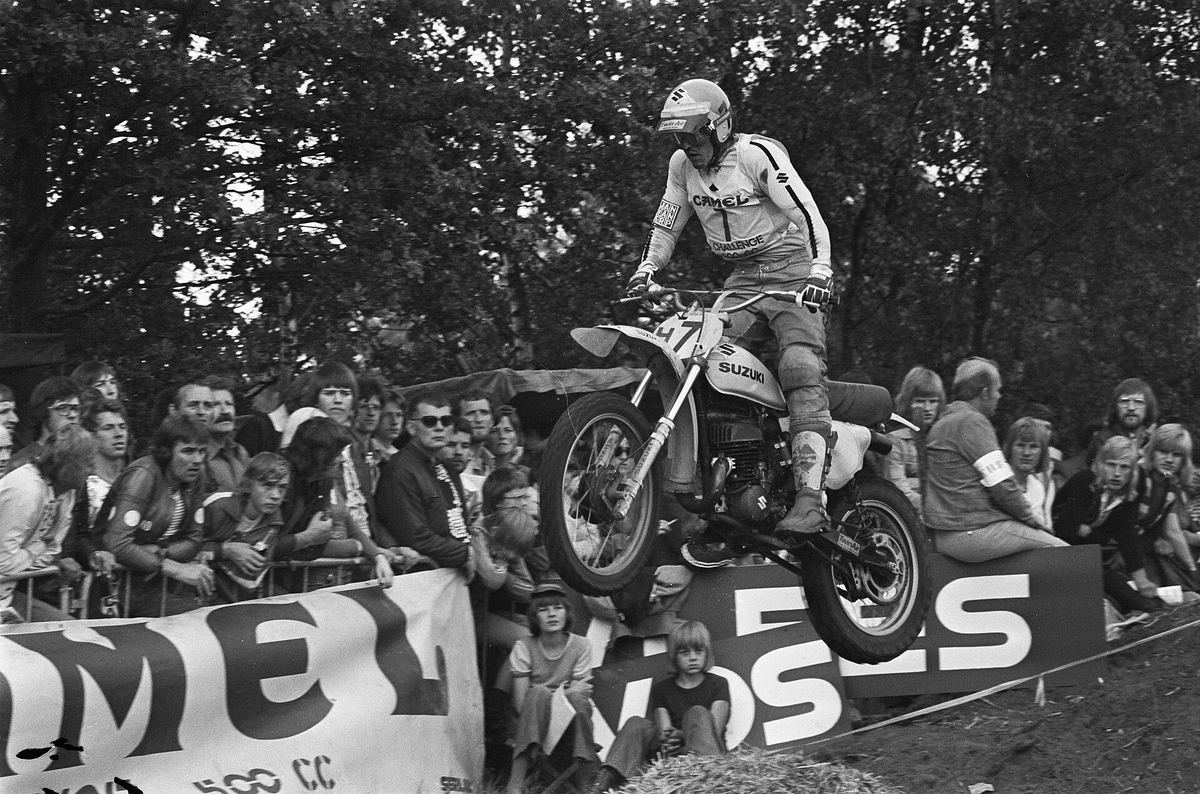
Gerrit Wolsink at the 500cc Grand Prix in Lichtenvoorde, the Netherlands, on 27 July 1975. The Nationaal Archief caption names him as the winner.. Photo: Anefo, Nationaal Archief (CC0)
The second moto of the 1974 United States 500cc motocross Grand Prix at Carlsbad, California, ended at a 12-foot drop just before the finish line. Gerrit Wolsink, a 26-year-old Dutchman on a works Suzuki, was leading. Heikki Mikkola of Finland, who was on his way to the world title, had closed to less than a bike length.
Wolsink was halfway down the drop when Mikkola's front wheel left the lip, Cycle magazine reported. The Dutchman turned inside, where there was no berm, hit the dirt bank at full throttle and cartwheeled across the line. His margin looked like "the space of a front wheel and a gas tank". He bit his tongue and cracked his chin on the handlebars, and he won the Grand Prix overall.
"I went under the flag and into the wall to win," he told Motocross Action years later. ABC's Wide World of Sports showed it to America.
It was the first of five Carlsbad wins in six years for Gerrit Wolsink. He had graduated from dental school in Holland more than a year earlier, Cycle noted, and had put the drill aside to race.
Gerrit Wolsink, from Hengelo to the Grand Prix
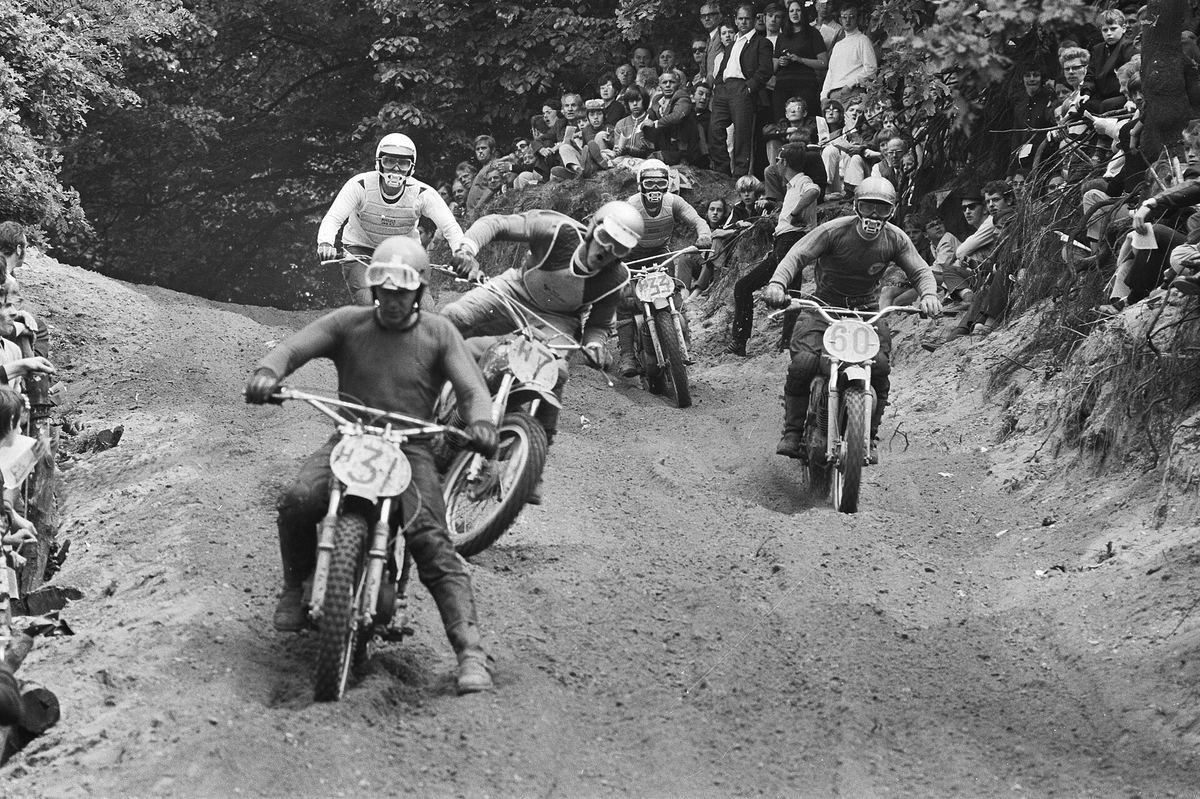
Wolsink was born in Hengelo, in Gelderland, in 1947. His father ran a shop selling bicycles, mopeds, motorcycles and cars, and his uncle, Bennie Hartelman, was a Grand Prix racer who lived with the family and built his own bikes around BSA Gold Star engines, Wolsink told Motocross Action. "I grew up in a time when people had to build their own bikes," he said.
He raced mopeds at about 10 and had a BSA Gold Star at 12. His mother told him to go to university rather than work in his father's shop for low pay, and he paid for dental school by racing in the summers. A Husqvarna factory engineer offered him support if he finished his degree. "You can make more money being a dentist than in motocross," the engineer told him.
He was Dutch champion in 1968 and took out an international licence the same year. At Namur, in Belgium, Roger De Coster lapped him. "I have to do something different," Wolsink decided. He finished his studies at the end of 1972, the year he was fifth in the world championship on a Maico. In January 1973 he signed with Maico as a full professional, and he won the first 500cc Grand Prix of that season, in France.
Suzuki, and five wins in California
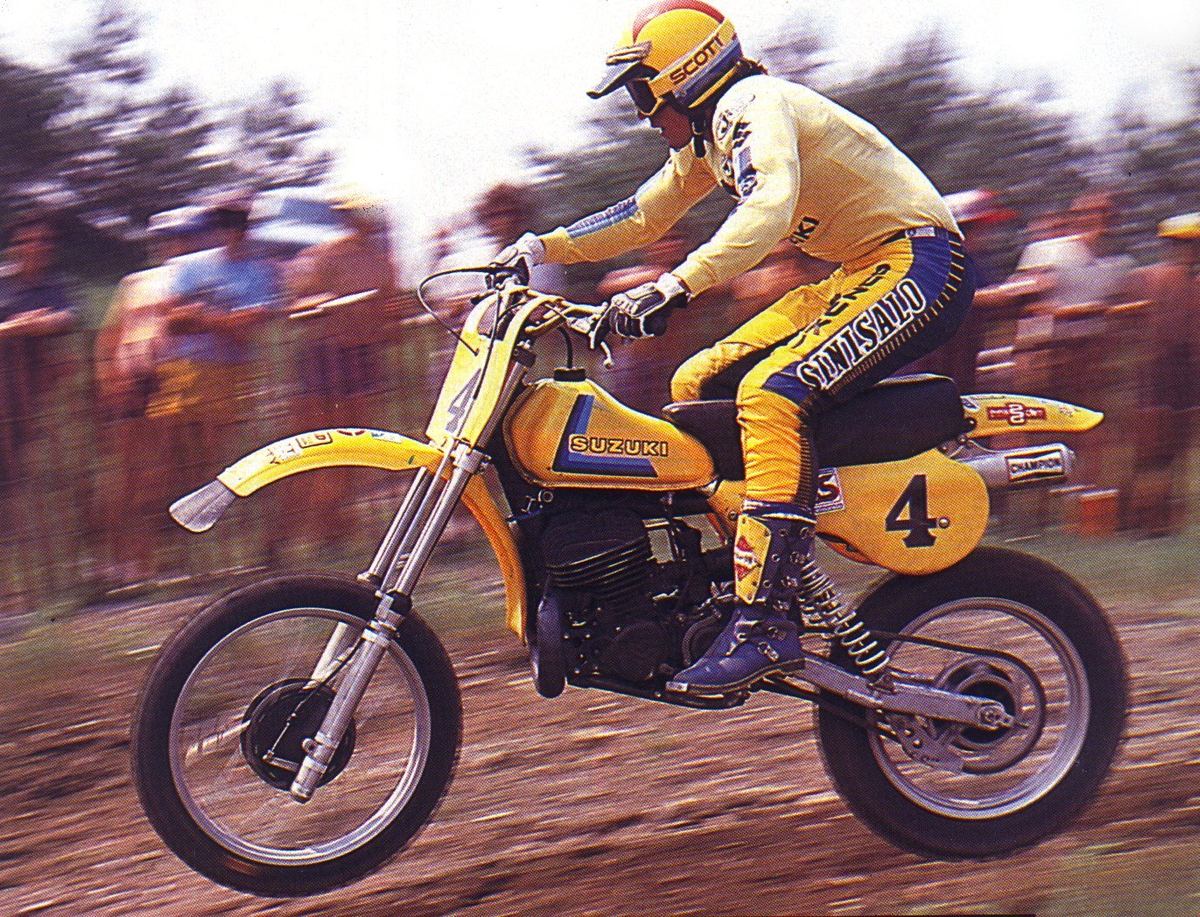
Maico took him to Carlsbad in 1973, and to the Trans-AMA series that followed. "I loved the United States. There is an easiness to the country," he said. At Carlsbad he saw Suzuki's set-up next to Maico's and told himself: "Gerrit, if you want to succeed, you have to make a move." Suzuki needed a second rider beside De Coster, and Wolsink thought De Coster wanted him because he was not a threat. His first Suzuki ride was De Coster's short-stroke RM370, which De Coster called "the dog".
Carlsbad was not even on the provisional 1974 calendar, Racer X says; Czechoslovakia gave up its date in return for hosting the 1975 Motocross des Nations. The track ran for two miles, "half wet clay, half dry dirt", Cycle said. Wolsink was second to De Coster in the first moto, his gearbox acting up, while Mikkola's front tyre went flat two laps from the end. De Coster, who said his bike had broken five times while he was leading a race, was blunt about the stakes: "Only firsts count now." Then came the second moto, and the drop.
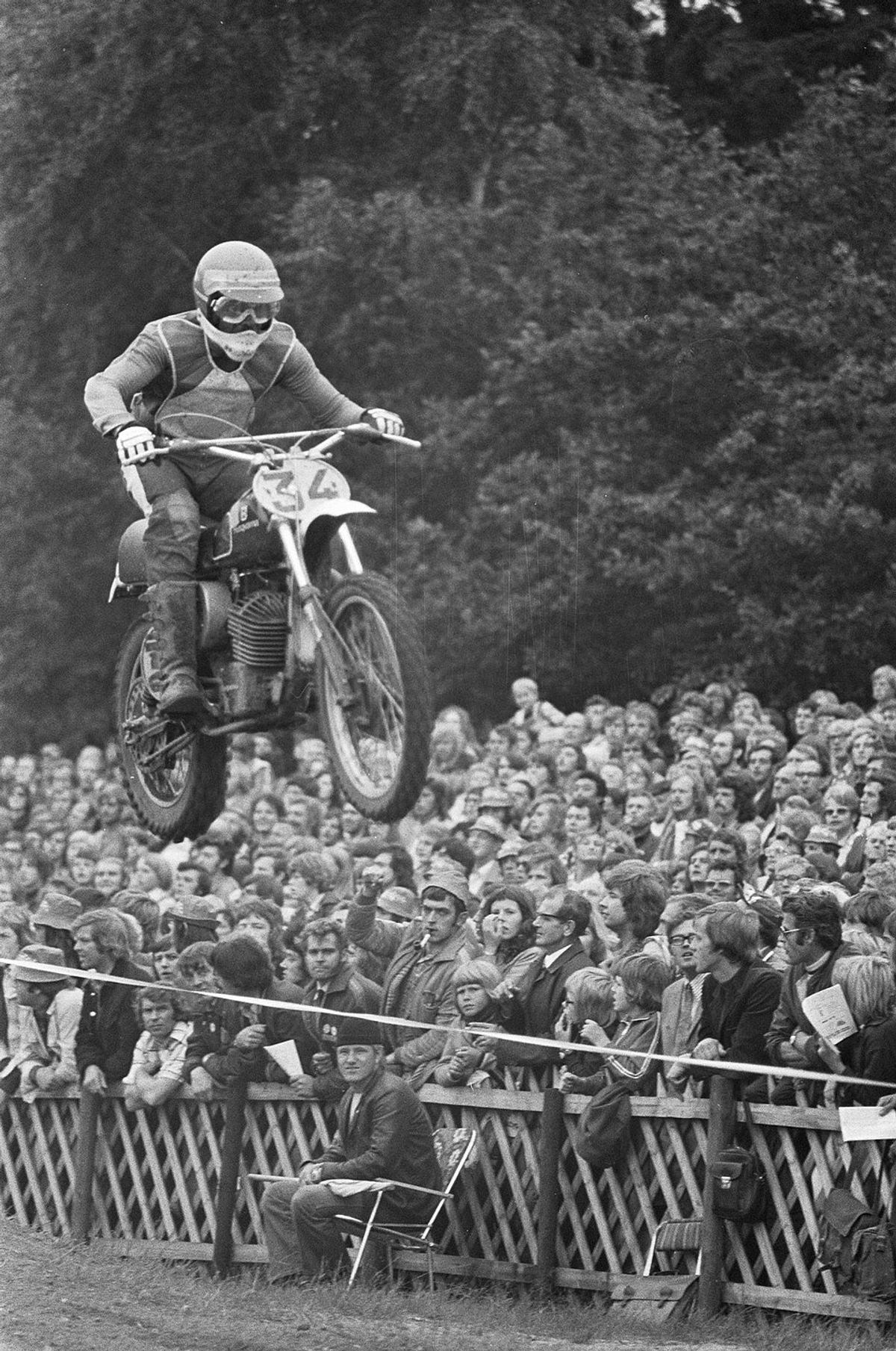
He won again in 1975 and 1976. Carlsbad suited him, he said: "It was not a stop-and-go track. You had to pick good lines." He liked the heat. While local riders followed the hard "blue groove", he rode its edges to find loose dirt.
In 1977 the FIM still decided Grands Prix on total elapsed time. Mikkola scored 4-1, Wolsink 3-2, and Wolsink's time was better. Under the American points system Mikkola would have won by 23 points to 22, Racer X says. In 1978 Mikkola did win at Carlsbad, the only man to beat Wolsink there between 1974 and 1979.
He came back in 1979, in temperatures in the high 90s Fahrenheit, Cycle World reported. Mike Bell led the first moto and wilted, and Wolsink won it by 15 seconds from De Coster. He was third in the second, which was enough for his fifth win. "Last year I did poorly on the circuit and many people felt I should have quit," he said. "I showed today that with the right bike I can still win." A Grand Prix, he told Cycle News from the podium, was the highest form of racing, higher than national-class racing.
What it took, and what it cost
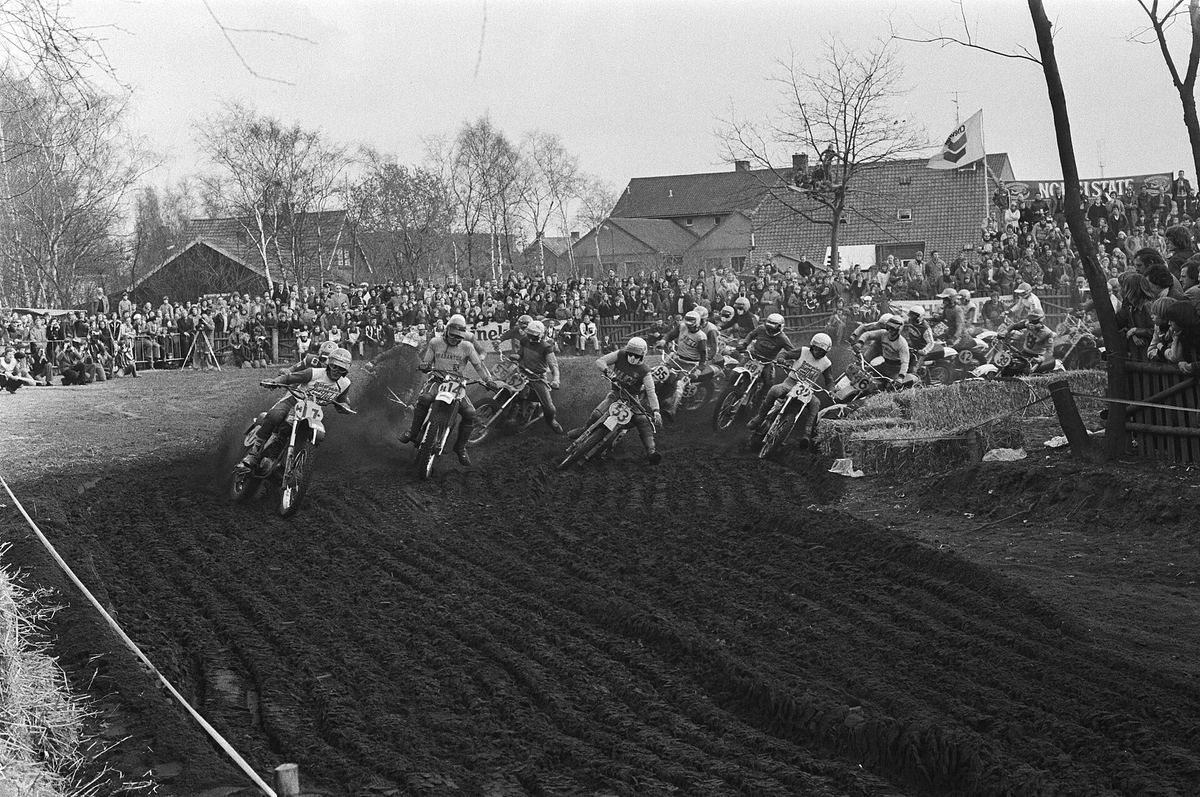
Wolsink was never world champion. In six seasons with Suzuki he was fourth, third, second, third, fifth and second, Motocross Action records. In 1976 he and De Coster fought for the title to the last round, in Luxembourg, where, he says, a Belgian rider blocked him; it was not De Coster, Motocross Action adds. De Coster won by a few points. In 1977, he said, "the chains came off many times." In 1979 Graham Noyce won the title for Honda.
Carlsbad rewarded preparation. While De Coster's time there went on his wife's California connections, Wolsink stayed in a hotel and trained to his own schedule, and he set his bike up so the shocks still worked at the end of a 45-minute moto, he told Motocross Action.
He did not ride for the crowd. "My style is not too spectacular and nobody sees where my positions are," he told Cycle in 1974, smiling. The same magazine noted that he was the organising force behind the Grand Prix Riders Association, and its president. "We always had fair fights between DeCoster, Mikkola, Aberg and me," he told Motocross Action.
Why it still matters
Near the end of 1979 Suzuki let both Wolsink and De Coster go; they were "too old", Wolsink recalls being told. He went back to Maico, then rode Hondas for the Dutch importer in 1981. That year he was second in the first moto at Carlsbad, behind Chuck Sun, and crashed in the second. He also won the four-stroke class at the 1981 Six Days.
De Coster never won Carlsbad, Racer X notes, and neither did Brad Lackey, in 1974 the fastest American in the field, according to Cycle. Wolsink went back to dentistry, specialising in periodontics, and once placed 88th in a list of about 7,500 Dutch dentists, he told Motocross Action. Every January he still takes restored motocross bikes to the Mecum auction in Las Vegas. In 2016 he was honoured in San Diego and sat down with the old Carlsbad promoter Gavin Trippe to relive the race's best years, Cycle News reported.
Quick answers
Who was Gerrit Wolsink?
Gerrit Wolsink is a Dutch motocross rider, born in Hengelo in 1947, who qualified as a dentist and raced in the 500cc world championship from the late 1960s to 1981. He rode works Suzukis beside Roger De Coster from 1974 to 1979 and was runner-up in the world championship in 1976 and 1979.
How many times did Gerrit Wolsink win the US Grand Prix at Carlsbad?
Gerrit Wolsink won the 500cc United States motocross Grand Prix at Carlsbad, California, five times: 1974, 1975, 1976, 1977 and 1979. The only rider to beat him there in that run was Heikki Mikkola, in 1978. Neither Roger De Coster nor Brad Lackey ever won at Carlsbad.
Was Gerrit Wolsink really a dentist?
Yes. Gerrit Wolsink paid for dental school by racing in the summers and finished his studies at the end of 1972, then put dentistry aside for a works racing career. After he retired he went back to it, specialising in periodontics, and Motocross Action reported he was still practising.
Did Gerrit Wolsink win a world title?
No. Gerrit Wolsink won 500cc Grands Prix but never the championship. He was fourth in 1974, third in 1975, second to De Coster in 1976, third in 1977, fifth in 1978 and second in 1979, when Graham Noyce won. He did win the four-stroke class at the 1981 Six Days.